Proposed TRIO cuts to impact around 1,300 BBCC students
MOSES LAKE – Big Bend Community College held its monthly board of trustees meeting last Thursday. They discussed their meeting with Congressman Dan Newhouse’s team on the topic of the One Big Beautiful Bill and 2025 graduation stats.
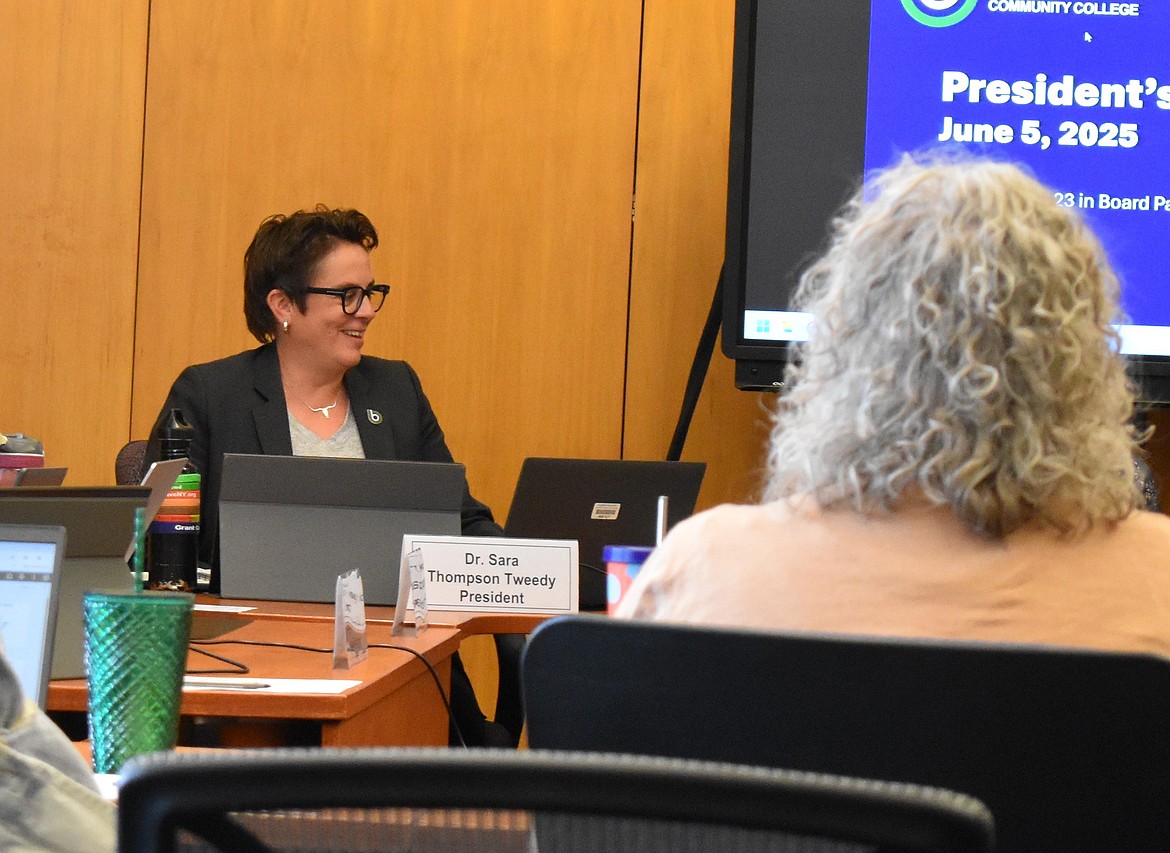
“In the One Big, Beautiful Bill, there are some proposals in there to make some significant cuts to programs that really matter to our students and to our service district,” said BBCC President Sara Thompson Tweedy. “We wanted to make sure that anybody who was going to vote on that bill (is) aware of those direct impacts to their constituents.”
One of the major components of the bill is the elimination of TRIO programs, of which BBCC has four, said Thompson Tweedy. These programs serve around 1,300 Big Bend students in and provide direct support for them to get through college.
TRIO programs are designed to help students from disadvantaged backgrounds complete education programs after high school. This includes students who are low-income, first-generation, those who have disabilities and who face other challenges. It was established in law under the Higher Education Act of 1965 and has since expanded, according to the U.S. Department of Education. TRIO programs also assist veterans with getting into and completing college programs.
Many students who attend BBCC are the first in their family to go to college, which means they often don’t have the resources to navigate through college and financial aid, Thompson Tweedy said. Programs like TRIO provide support for those students to make it easier for them to have the opportunity to earn college degrees.
“The outcomes from those programs are tremendous. Those students do well,” she said. “Statistically, you look at the students who are in those programs and you look at the students who don’t have that support and you look at the outcomes, those TRIO students do so much better – hands down.”
Background
The Big Beautiful Bill proposes the removal of funding from the Pell Grant, which is the primary funding source for TRIO programs. TRIO cuts were also included in the May 2 budget proposal.
“TRIO and GEAR UP are a relic of the past when financial incentives were needed to motivate Institutions of Higher Education (IHEs) to engage with low-income students and increase access,” reads the May 2 Budget Proposal from Director of the United States Office of Management and Budget Russell Vought. “The lack of action by IHEs also meant that States and local school districts needed additional support to prepare low-income students for college.”
The budget proposal suggests cutting TRIO by nearly $1.6 billion. According to a report from Congress titled “The Trio Programs: A primer,” the program served more than 880,000 secondary, post-secondary and adult students nationwide in 2024.
“Today, the pendulum has swung and access to college is not the obstacle it was for students of limited means,” the May 2 Budget Proposal reads. “IHEs should be using their own resources to engage with K-12 schools in their communities to recruit students, and then once those students are on campus, aid in their success through to graduation. A renewed focus on academics and scholastic accomplishment by IHEs, rather than engaging in woke ideology with Federal taxpayer subsidies, would be a welcome change for students and the future of the Nation.”
Local impact
On May 22, several TRIO students and advisors met with Newhouse’s team to discuss the importance of TRIO programs and how their elimination through the One Big Beautiful Bill will affect Big Bend students.
Around 30 people showed up to speak in favor of the TRIO program. One advisor said she had gone through the program while she was in college and came back to help other students who were in her shoes.
“This program helps students to achieve their goals,” she said. “I would not be standing here asking for this program to stay if it didn’t dramatically impact lives. I would not have the degree I have, the career I have or anything without TRIO.”
Another student said he had not received support from his parents to attend school. He said TRIO helped him figure out how to pay for school and navigate higher ed.
“FAFSA and tuition bills are confusing. Having access to adults who can help you through that process is so important,” he said. “I had no idea what I was doing when I got here and these folks made sure I didn’t drown in the process.”
Another student said she became a first-generation higher education graduate with the help of TRIO. She said her parents immigrated to the United States and heavily pushed education on her growing up. She ended up attending BBCC, and TRIO staff were able to help her navigate the complexities of college.
“Another thing that helped me is there are tutors,” she said. “I got through the getting into and paying for college and then I found out the classes were hard too. TRIO helped me succeed getting into school and while I was there, too.”
Newhouse’s office was contacted several times for this story, with no response.
Graduation
“What I want the public to know is all of the great work that’s happening at the college,” said Thompson Tweedy. “Our graduation numbers are increasing, the number of available programs are increasing and we’re about to launch our second bachelor’s degree.”
BBCC will be graduating 663 students tomorrow and distributing a total of 685 degrees to those graduates. Last year's reported graduating class was included 593 degrees, said Thompson Tweedy.
The 685 degrees distributed by the college will be 41 bachelor's degrees, 316 associate degrees and 94 Associate of Arts degrees handed out, as well as 172 for Running Start. One hundred fifty-nine will receive their high school diploma.
“When you hand somebody who is like 40 years old their high school diploma, it doesn’t get better than that,” said Thompson Tweedy.