
Thursday, December 04, 2025
35.0°F

$30M hospital bond goes before Ephrata voters
by R. HANS MILLER
Managing Editor | July 22, 2025 3:20 AM

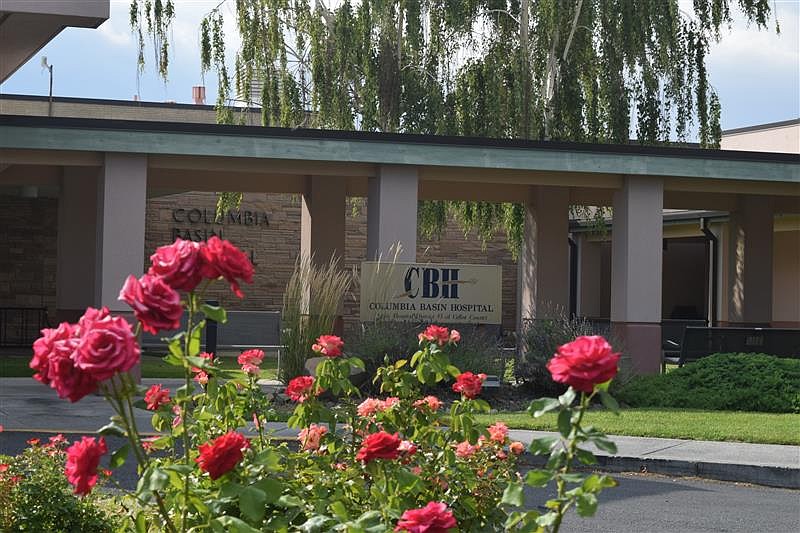
EPHRATA – Those living in and around Ephrata will see a measure on their ballot for the Aug. 5 election for a $30 million bond measure requested by Grant County Public Hospital District 3, which most residents likely know as Columbia Basin Hospital. The measure has been in the works for some time.  

“The board started talking about this more seriously right before COVID, and then COVID hit, and everything took a back burner to that,” said GCPHD 3 Board President Amy Paynter.  

Columbia Basin Hospital Administrator Rosalinda Kibby said Paynter was correct and that the need for an expansion at the hospital has grown over time, leading the district's board back to placing a ballot measure before voters. With a growing population in and near Ephrata, the need for additional services at the hospital has become obvious. The need to increase capacity and add specialty care such as pediatrics – what Kibby said is a top request from the community – is an ongoing trend.  

Materials provided by the hospital show an increase in the demand for services. Visits to the Emergency Department are up 28% over the past five years and more than 30,000 patient visits were completed in 2024. 

At the same time, the hospital has been able to maintain a 2.6% income margin, with any profit being reinvested back into the facilities and services the hospital provides. Combined with fundraising, that’s allowed the hospital to make a variety of improvements, Kibby said.  

“Some of the things that we ... self-funded (were) mammography, the (Emergency Department) remodel. We just bought new beds, and we also updated our kitchen,” Kibby said.  

Those and other improvements like energy-efficient upgrades to various systems, including the HVAC for the hospital, were paid for by smart budgeting, she said. Now though, the expansion needed at the hospital is too large for that to be the funding method. Those upgrades have not only saved money in energy costs for the publicly owned hospital, they’ve also put the hospital district ahead when it comes to the Clean Buildings Act, a state law that requires large buildings to be more energy efficient. 

If approved by voters, the total property tax rate for the hospital district’s portion of landowners' tax bills would be $1.83 per $1,000 of assessed value. This would be the hospital district’s fifth bond measure since the hospital was built in 1954. That $1.83 consists of three parts. The first is a roughly 60-cent portion covering the last bond in 2012, which is set to be paid off in 2035. The second would be the new bond, and the remainder would be the maintenance and operations levy that averages around 30 cents per $1,000. The three combine to make that $1.83.  

Projections from the district’s accounting team show that rate would go down each year through 2040, with the rate being $1.81 per $1,000 in 2027; $1.69 per $1,000 in 2030; $1.52 per $1,000 in 2035, and a drop to less than $1 per $1,000 of assessed value thereafter.  

Kibby explained that the $1.83 is the total rate for 2026 if the bond is approved. There will not be an additional $1.83 added to the current rate. The new bond would make up 91 cents of the $1.83 per $1,000 of assessed value. 

Kibby said the district hopes to provide the community with solid resources if they vote in favor of the bond. A two-story add-on to the current hospital is planned. The first floor would extend the family medicine clinic out into the area where the current parking lot is. Above that would be a flexible use space that had meeting rooms for the public to use. The second floor would also allow rooms to be configured for specialist providers to visit the hospital and keep Ephratans from having to travel for medical appointments.  

As an example, she said, planning includes a possible pharmacy in the new extension and rooms where visiting specialists can set up.  

The largest advantage in an expansion is making care affordable, Kibby and Paynter said. With an expanded facility, added hours and staffing will allow for convenience and help people avoid a trip to the ER when their primary care physician could take care of nonemergency health care concerns for them.  

Kibby said having increased access to a primary care doctor or lab saves patients money in the long run. Primary care or non-emergency labwork is less expensive than a trip to the ER. It also results in better health outcomes and allows people to recover at home rather than using inpatient care. 

The hospital also uses medical assistants in positions where nurses might have been employed, because that saves patients money as well. That trend will likely continue, Kibby said, though additional nursing staff would also likely come with the facility’s expansion. 

The idea is to save money in the long term for the hospital district and the community, they said. 

Kibby said the hospital will continue to be conservative and open about its expenses, which are publicly available through the hospital’s website.  

“I think we are conservative. I mean, we are (publicly owned). I feel that, while we need a profit margin to be able to reinvest in ourselves like we have, we also owe it to our community to keep things as inexpensive as possible,” she said.  

Kibby and Paynter encouraged anyone with additional questions about the bond to email [email protected] or call 509-717-5203 to have their questions answered.