
Tuesday, December 23, 2025
37.0°F

WSP warns of scams in wake of trooper's death
by R. HANS MILLER
Managing Editor | December 23, 2025 6:04 PM

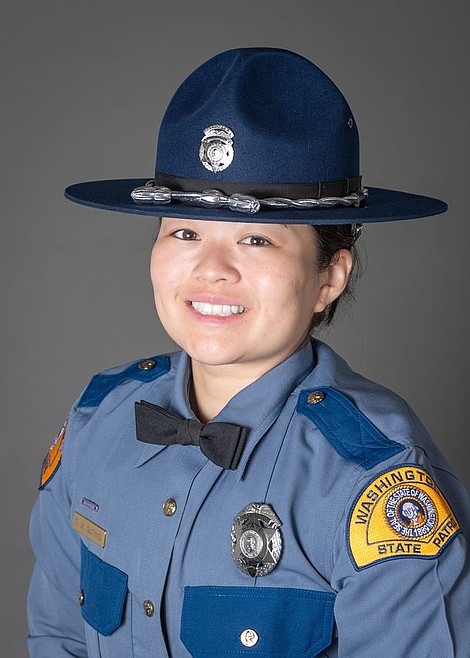
OLYMPIA — The Washington State Patrol is asking the public to respect the family’s privacy and to be mindful of potential scams after Trooper Tara-Marysa Guting was killed in a roadside accident near Tacoma on Friday.  

“Though we are grateful for the intended kindness and support, the Washington State Patrol does not accept monetary donations from the public,” said WSP Director of Public Affairs in a statement released Tuesday.  

Attempts to scam members of the public who have reached out to help Guting’s family have raised concerns. With the holiday season ongoing, flooding in various parts of the state and Guting’s tragic death in the news, scammers are often looking for ways to take advantage of the situation. However, Loftis said the best thing to do to help the Guting family is to donate to the Washington State Patrol Memorial Foundation at wspmf.org. The foundation may also be reached through WSPMF Executive Director Megan King at [email protected].  

“The Washington State Patrol Memorial Foundation is a legitimate, recognized, and independent charitable organization dedicated to assisting the families of fallen troopers.  Sadly, scammers are trying to mimic their Venmo account, taking advantage of the surge of generosity stemming from Trooper Guting’s loss,” Loftis said in the statement.  

The appropriate Venmo account is @WSP-MemorialFoundation, according to the WSP statement.    

The Tacoma Police Department is investigating the incident that led to Guting’s death and WSP has asked that the public respect the family’s privacy.  

With regional flooding from recent rainstorms, Guting’s situation isn’t the only one tempting scammers. Flooding in and around the Cascades, such as that seen near Leavenworth, is also an opportunity for scammers.  

President Donald Trump approved an emergency disaster declaration Dec. 9 for the state of Washington that includes 16 counties and the Samish Indian Nation. In similar situations, such as flooding in Texas after Hurricane Harvey and other natural disasters, fraudsters posed a variety of scams to the public. 

A Dec. 4 FEMA press release said people should verify that anyone saying they’re with FEMA provides a photo ID badge and not take a FEMA shirt or jacket as proof someone is with the agency. Additionally, impacted Washingtonians should be aware that FEMA does not charge for assistance, inspections or application aid.  

“Never trust anyone asking for money in exchange for disaster aid or promising grants in return for large deposits,” the FEMA announcement reads. 

According to the Federal Trade Commission, anyone dealing with a natural disaster or anything that sounds like a scam should avoid providing personal information such as their Social Security number, bank account or credit card information.  

The Federal Bureau of Investigation encourages people to “Take a Beat” and not allow themselves to be rushed into financial decisions in emergencies. From January to August 2024, more than $1.6 billion was lost due to scams in the U.S., more than $300 million more than the prior year.  

"Fraud remains one of the most devastating violations the FBI works due to the number of victims and the number of losses," said Executive Assistant Director Michael D. Nordwall of the FBI’s Criminal, Cyber, Response and Services Branch. "In addition to the immediate financial harm, victims can experience other harm to include emotional and sometimes physical. Preventing fraud victimization takes a whole of community approach, so we encourage conversation between you and your loved ones in signs of potential scams, what to do if you fall victim, and how to report."