
Gas prices climb in Wash. with elevated August prices
MOSES LAKE — After falling steadily from late spring into early summer, gasoline prices across Washington state have climbed sharply since July, mirroring national concerns over global oil markets and making August 2026 one of the most expensive months drivers have faced at the pump.
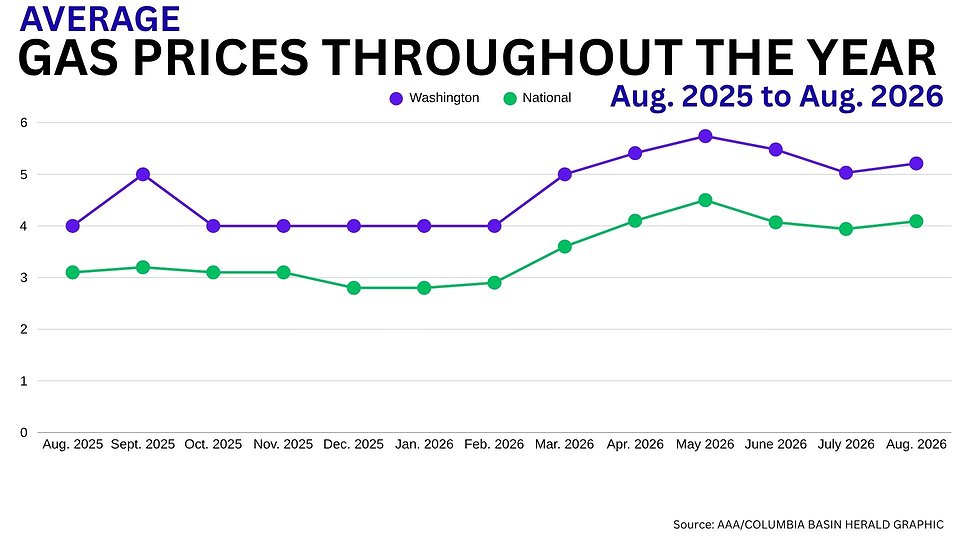
AAA data shows Washington's average price for a gallon of regular gasoline started the year at $3.83 in January and rose consistently through the spring, reaching a high monthly average of $5.74 in May. Prices then eased during June and July before reversing course and climbing throughout August.
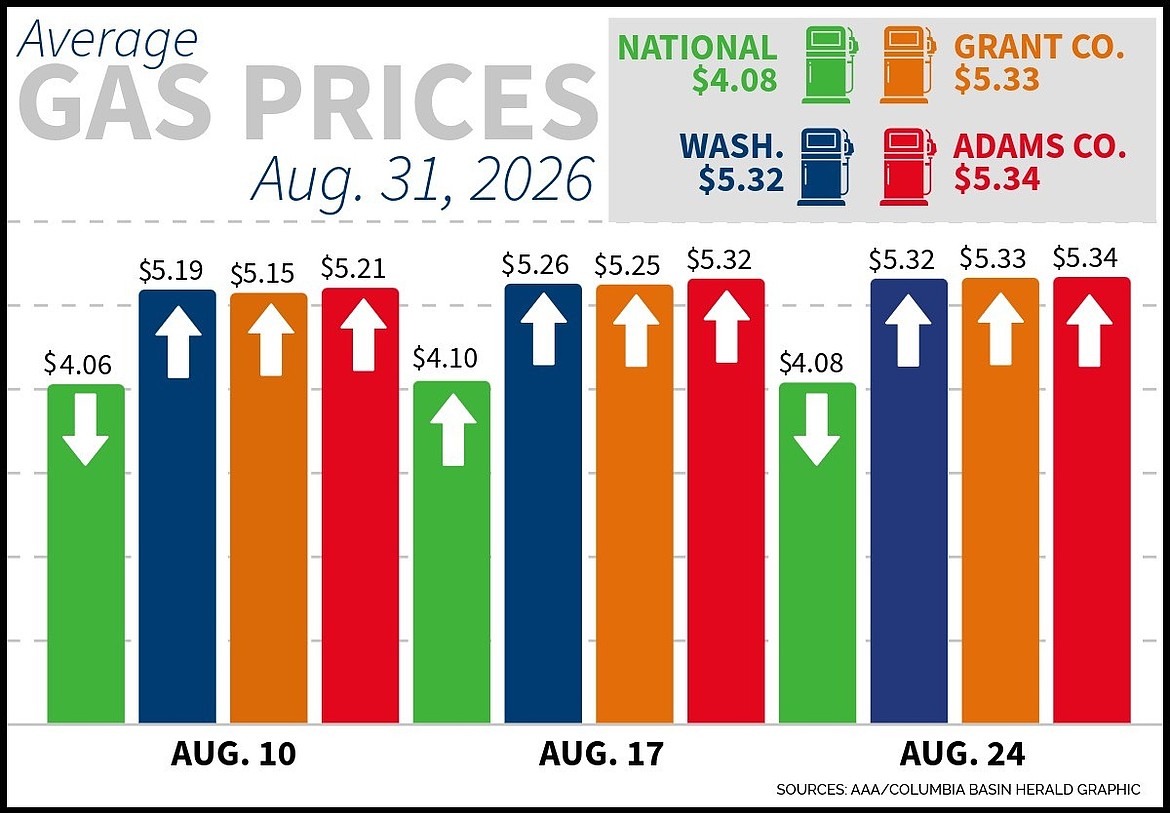
The statewide average stood at $5.32 per gallon on Aug. 31, up from $5.03 at the beginning of July and nearly $1.50 higher than the January average.
Grant and Adams counties followed a similar pattern. Grant County's average price rose from $3.79 per gallon on Jan. 5 to $5.33 on Aug. 31, while Adams County increased from $3.85 to $5.34 over the same period.
The year's largest increases occurred between February and May. Washington's average climbed from $3.94 per gallon on Feb. 2 to $5.78 on May 18, an increase of $1.84 per gallon in just over three months.
Grant County followed a nearly identical trend, rising from $3.87 to $5.60 during the same period.
Prices then moved lower through June. Washington's average declined from $5.71 on June 1 to $5.19 by June 29, while Grant County fell from $5.50 to $4.97.
July brought relative stability, with statewide averages hovering near $5 per gallon and Grant County remaining below $5 for most of the month.
The downward trend ended in August.
Washington's average climbed from $5.13 on Aug. 3 to $5.32 on Aug. 31. Grant County increased from $5.03 to $5.33, while Adams County rose from $4.96 to $5.34.
The increases come as national fuel prices remain elevated. AAA reported the national average was $4.08 per gallon on Aug. 31, down only slightly from $4.10 earlier in the month.
"Due to continued volatility in the Strait of Hormuz, crude oil prices remain in the $80 per barrel range," AAA said in an Aug. 27 statement. "For the first time ever, the national average in August has been above $4 per gallon every day."
AAA said August 2026 is on track to become the most expensive August on record for U.S. motorists, surpassing the previous record set in 2022.
One consistent trend throughout 2026 has been Washington's substantial price premium over the national average.
The gap was approximately $1 per gallon in January and widened through much of the spring and summer. On Aug. 31, Washington drivers paid an average of $1.24 more per gallon than the national average. Taxes continue to be a factor in Washington fuel prices.
According to the Washington Department of Revenue, the state tax increased July 1, 2026, to 56.5 cents per gallon. When combined with the unchanged federal tax of 18.4 cents per gallon, drivers now pay 74.9 cents per gallon in state and federal gasoline taxes before other fees and costs are added.
Grant and Adams County motorists generally paid slightly less than the statewide average, though local prices mirrored statewide movements.
According to GasBuddy petroleum analyst Patrick De Haan, global events continue to have an outsized influence on fuel costs.
"Average gasoline prices fell in slightly more than half of states over the last week while diesel declined in roughly half, as oil prices moved lower and offered some modest relief at the pump," De Haan said.
He noted that although the Trump administration recently reached an agreement with Venezuela aimed in part at increasing oil production, any impact is unlikely to be felt quickly.
"Any benefits from increased Venezuelan output will take years to fully materialize and are unlikely to move the needle in the near term," De Haan said.
Instead, De Haan pointed to tensions involving Iran and attacks on Russian oil infrastructure as major factors influencing the market.
"The factors with the most immediate impact on where prices go from here remain the ongoing developments between the U.S. and Iran and continued Ukrainian attacks on Russian oil refineries, both of which continue to exert outsized influence on global fuel markets," he said. "Motorists should expect continued volatility in the weeks ahead."