


Endless battle
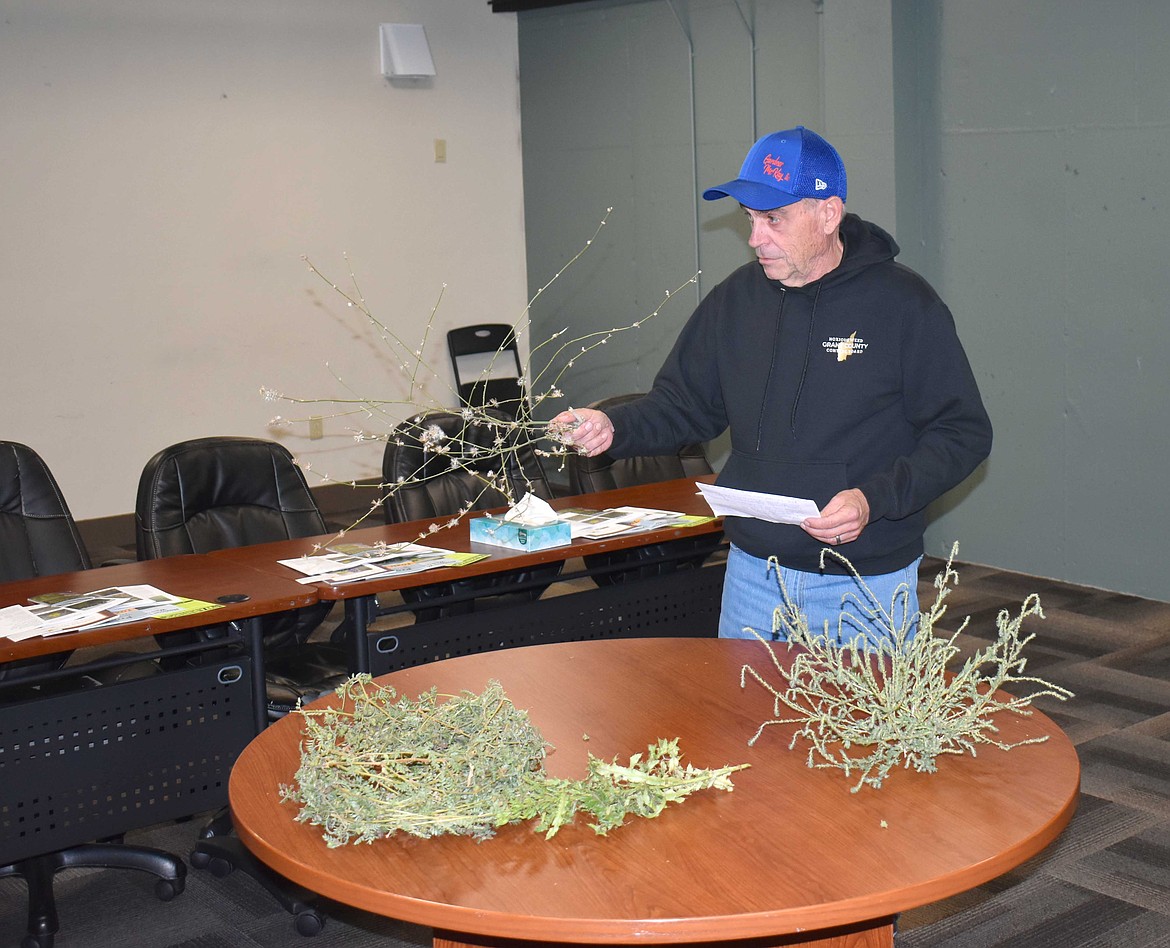
Grant County Noxious Weed Control Board Consultant Jay Johnson holds up a piece of rush skeletonweed at a class hosted by Habitat for Humanity Tuesday. On the table, from left, are samples of puncturevine, creeping thistle and kochia.
JOEL MARTIN/COLUMBIA BASIN HERALD
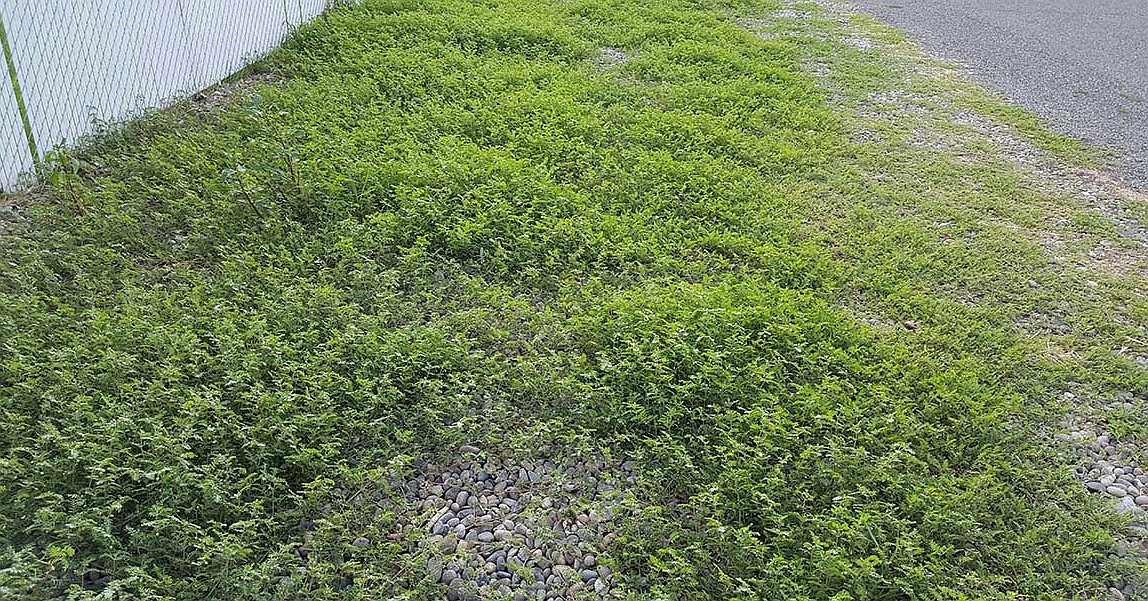
Puncturevine, which produced those hard, sharp seed pods called goatheads, spreads like a mat on the ground in tendrils that can be as much as six feet long.
COURTESY PHOTO/KONRAD KAUER/BENTON COUNTY NOXIOUS WEED CONTROL BOARD
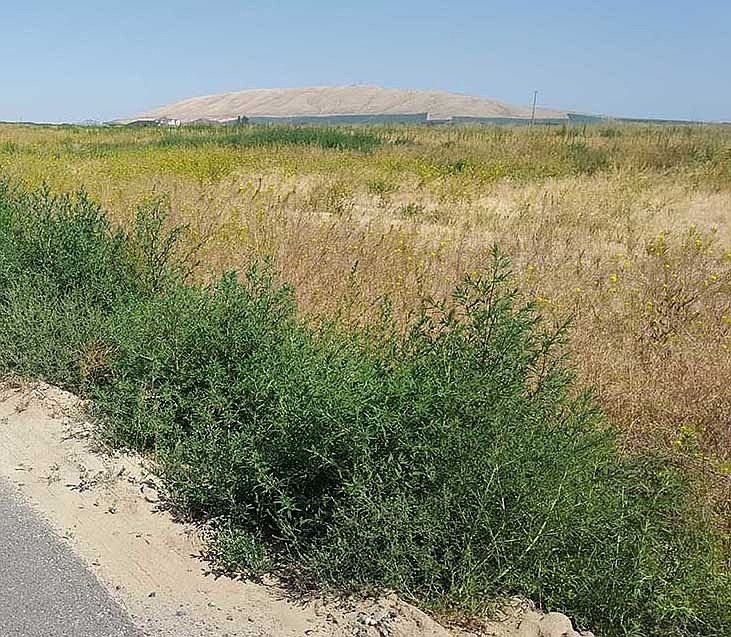
Kochia can often be found growing by the side of the road. It’s a hardy plant that can grow taproots as much as 16 feet deep.
COURTESY PHOTO/KONRAD KAUER/BENTON COUNTY NOXIOUS WEED CONTROL BOARD
MOSES LAKE — Some of the nastiest plants in Grant County were the topic of a class led by Jay Johnson, a consultant with the Grant County Noxious Weed Control Board, Tuesday.
The Noxious Weed Control Board, as its name would suggest, is tasked with keeping weeds under control in Grant County. That’s not a small job; the board’s website lists 129 species of noxious weeds that are found around Grant County. A noxious weed is defined as an invasive, non-native plant that threatens agricultural crops, local ecosystems or fish and wildlife habitat, according to the Noxious Weed Control Board. Washington state law requires that these weeds be identified and their spread kept to a minimum, if not completely eradicated.
“We’re one of those agencies a lot of people don’t really understand,” Johnson said. “We’re a county office and … our funding is tax-based assessment. When you get your tax bill and you look down at all the expenses that you pay for, there we are.”
The class was hosted by Habitat for Humanity of Greater Moses Lake. Habitat has its own struggles with weeds, because the organization purchases empty lots and then sometimes has to wait a while before putting a house on them. In the meantime, weeds creep in and make themselves at home, said Executive Director Rebecca Mabius. Her team of volunteers will clear the land of weeds before the new owners take possession, but that’s not permanent, she said.
“We know that in the spring it’ll most likely come back,” Mabius said. “But this is good information to be able to give whoever becomes the homeowners, because the stuff will still pop up and you’re going to have to deal with it. As a homeowner, we try to hand-pull all of the weeds in our yard every year, and I swear to goodness, all I do is make it tenfold.”
Johnson had samples of some of the most common weeds found in Grant County. One would be recognizable to anyone who has ever walked barefoot outside: puncturevine, also called goathead.
“Those little things puncture bicycle tires or tear your skin apart,” Johnson said.
Puncturevine grows in trailing stems as much as six feet long that become tangled in a mat on the ground, according to information from the board. Not only are the pointy little burs the bane of bicyclists, but they also get into hay and harm livestock. The leaves of puncturevine are also toxic to sheep. Puncturevine is especially hard to control in urban areas, Johnson said.
“The garbage truck comes down the alley, it runs over the puncturevine, it picks up all the goatheads in its tires and it carries them out to where the dump is (dropping) those seeds along the way,” he said.
By far the weed the Noxious Weed Control Board deals with most is kochia, Johnson said. Kochia thrives in dry climates, because it puts down a taproot that can go as much as 16 feet deep into the ground, making it very difficult to pull up and sucking all the water out of the ground.
“If you drive down the roadsides in Grant County, you look at the sides and everything that’s coming in there, typically, is kochia,” Johnson said. “Some of that stuff you see is seven, eight feet tall.”
Noxious weeds fall into three classes, A, B and C. Class A is for the nastiest plants, the ones that must be eradicated any time they crop up. Class B weeds, which includes puncturevine and kochia, are already present and the primary goal is to keep them from spreading, according to the Noxious Weed Control Board website. Class C weeds aren’t as high a priority; they’re the object of long-term programs to keep their population down.
Staff from the NWCB drive around the county looking at properties for signs of noxious weeds, Johnson said. If they see weeds, they make contact with the landowner. If they can’t do that by knocking on the door, Johnson said, they’ll take a photo of the plant and attach it to a stake in the ground, along with a sign explaining what the owner is required to do about it.
“We draft a warning letter, and that gives you 10 days to take care of the situation,” Johnson said. “I try to stretch it out to 12 or 13 days because I know the mail takes a little bit of time. I come back out to the property (after that time) and I’ll take a look and see if you’ve taken care of it. And if I see that you haven’t done a thing, then I write up a certified letter and send it.”
If that gets no response, Johnson said, the board sends a final letter, and if that still doesn’t work, then it takes matters into its own hands and hires contractors from a pre-vetted list.
“We hire those guys, and they use chemical control methods,” Johnson said. “We will pay for it out of our enforcement budget, and then we put a lien on your property.”
Technically, the NWCB could levy fines, but it doesn’t, Johnson said. However, many of the larger towns in Grant County have code enforcement officers, and they do issue fines. Under state law, that can be as much as $1,000 per parcel, per species, per day. That applies to the landowner, not necessarily the resident, Johnson said.
“Often times the landowner says, well, it’s a rental, and the renters are responsible for taking care of the yard,” Johnson said. “Well, according to (law), it's the landowner’s responsibility, and that’s who we deal with. Sometimes that goes over well; sometimes it doesn’t go over well.”
Weeds can be controlled in a number of ways. The simplest is simply to mow it down, Johnson said. They can be controlled through chemistry, sprayed either by the owner or a professional. In some cases, there are bugs that can keep the weed’s population down naturally.
The NWCB has only a small staff, four consultants to keep track of something in the neighborhood of 60,000 parcels of land. That’s a lot of ground to cover, Johnson said.
“We win battles, but we don’t win the war,” he said. “Every year it seems to get worse, but then we pick away at it and by this time of year, we look back and think, well, we’ve done a pretty good job. We’ve got some properties cleaned up, we’ve got some weeds eradicated. And then spring comes and we start all over again. But we feel like we make some progress.”
 Puncturevine, which produced those hard, sharp seed pods called goatheads, spreads like a mat on the ground in tendrils that can be as much as six feet long.
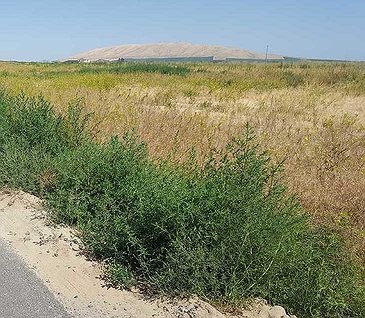 Kochia can often be found growing by the side of the road. It’s a hardy plant that can grow taproots as much as 16 feet deep.