


Wilson Creek harvests some community fun
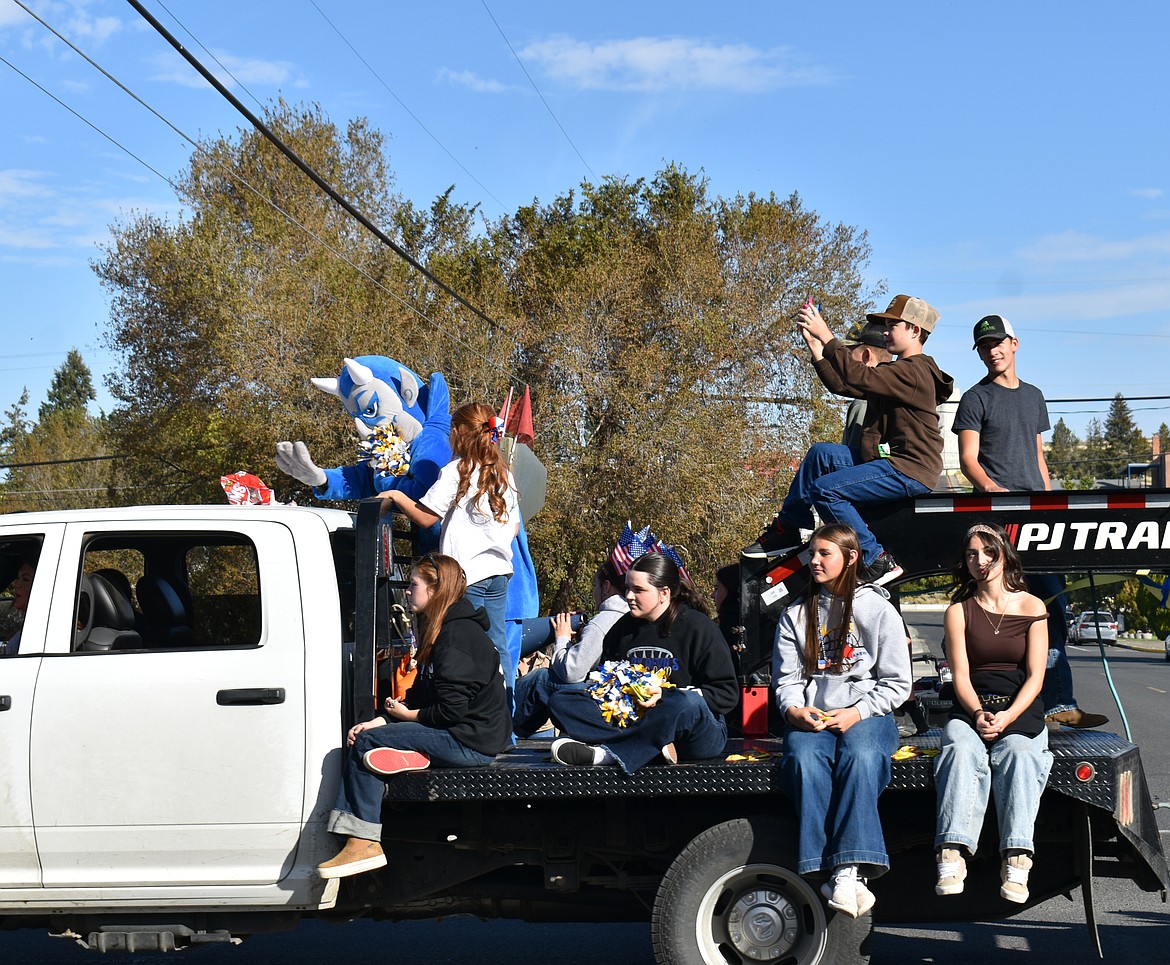
The Wilson Creek Devil leads students from Wilson Creek High School in chants and cheers in the Harvest Festival parade Saturday.
JOEL MARTIN/COLUMBIA BASIN HERALD
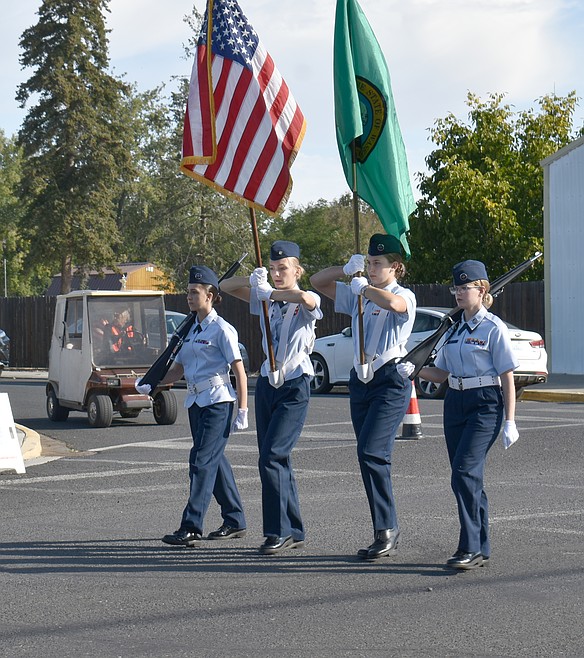
A color guard of cadets from the Civil Air Patrol leads the Harvest Festival parade Saturday morning in Wilson Creek.
JOEL MARTIN/COLUMBIA BASIN HERALD
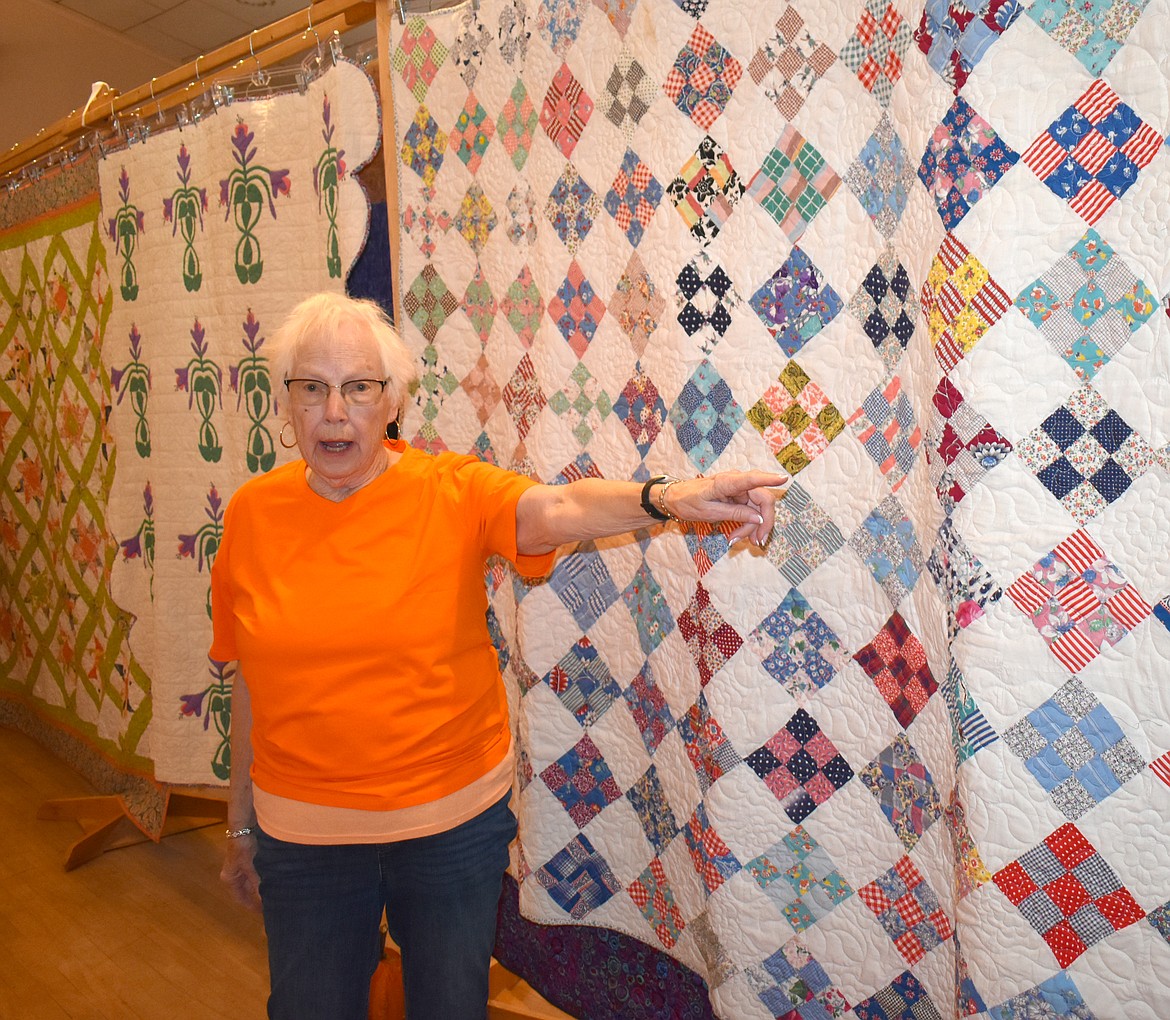
Bonnie Valentine shows the antique quilt she restored and finished at the Wilson Creek Grange Hall Saturday.
JOEL MARTIN/COLUMBIA BASIN HERALD

Rae Espe, 8, scoops up some candy at the Harvest Festival Parade Saturday.
JOEL MARTIN/COLUMBIA BASIN HERALD
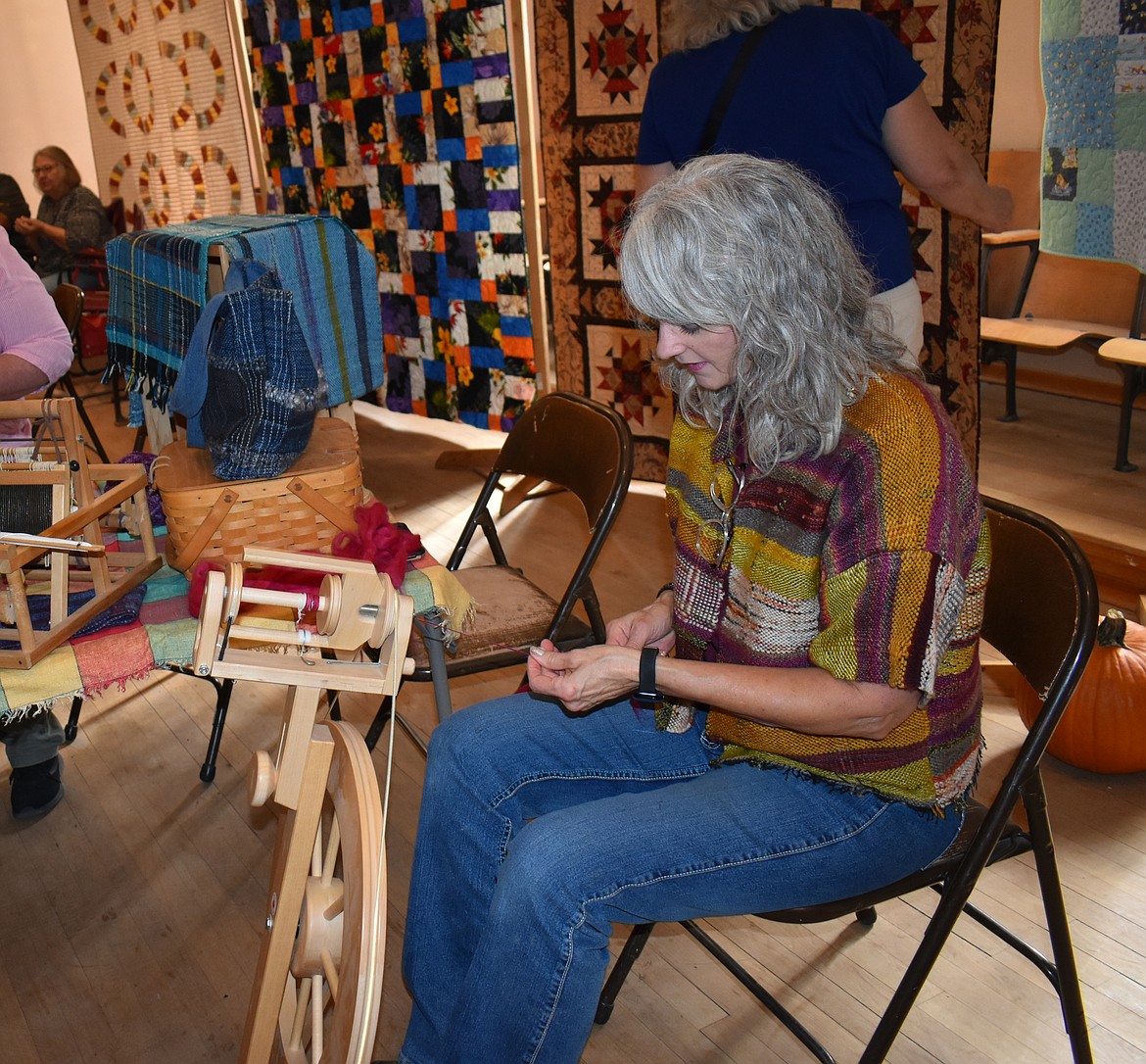
Tracy Wilson of Hartline shows how to make yarn with a wooden spinning wheel at Harvest Festival in Wilson Creek Saturday.
JOEL MARTIN/COLUMBIA BASIN HERALD
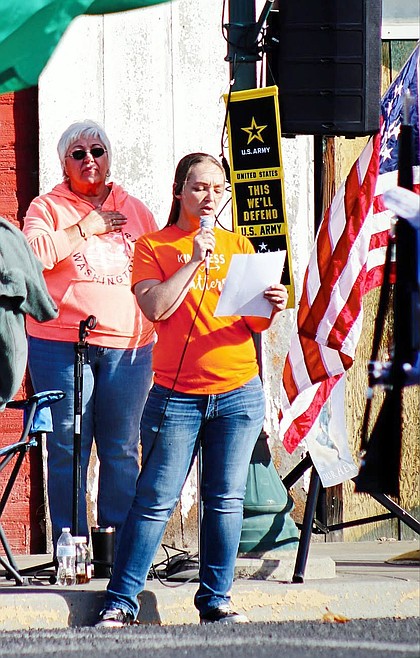
Paisley Schabel sings the national anthem to kick off the parade at Wilson Creek Harvest Festival Saturday.
COURTESY PHOTO/JESSIKA HERREID
WILSON CREEK — Whatever Wilson Creek’s Harvest Festival may have lacked in fancy, large-scale attractions, it more than made up for in good community fun.
“It’s just kind of a ‘Relax, have fun, visit with your neighbor’ (way) to bring the community together,” said Shirley Billings, leader of the committee that organizes the festival.
The committee consisted of about 12 people, Billings said, and they could be easily spotted around town by their bright orange shirts. The fun was all home-grown and mostly free, including a fun run that also included plenty of people walking and ambling, and a parade that ran down the length of Railroad Street, Wilson Creek’s main drag.
A color guard of four Civil Air Patrol cadets led the parade, followed by trucks, trailers, tractors and floats, with Billings and fellow committee member Clint O’Keefe announcing the floats as they went past Third Street.
After the parade, the event spread out to the town park, where there were games and vendor booths set up, and the former Wilson Creek Grange Hall. The hall’s owner, Wilson Creek Elementary School paraprofessional Michael Borella, opened the upper floor for demonstrations of some lost arts.
Most of the hall was draped with quilts, both hand- and machine-made.
“Some of these quilts are antiques,” said committee member Karen Ertz. “(They’re found) in Granny’s stash and then somebody finishes them.”
One of those belonged to Bonnie Valentine of Royal City and dated to about the 1930s or ’40s, Valentine estimated. She bought it at a yard sale in Waterville in 1991 or 1992, she said.
“The top was hand-pieced and I bought it for, I don’t know, $20,” she said. “It’s been sitting until recently. I decided we should finish it.”
The quilt consisted only of the top side, which was patchwork sewn entirely by hand. The handiwork was identifiable because the corners didn’t line up exactly and the fabric had color variations that wouldn’t be seen in a modern machine-made quilt.
“These women used what they had,” Valentine said. “The (squares) are probably all old clothes or flour sacks that they put together. To me, that’s part of the beauty. Some woman put a lot of time into this.”
Valentine and her mother, who lives in Wilson Creek, put a back on the quilt, a single piece of fabric, and filled it with batting for warmth.
I’ve come to the conclusion that it’s all about preservation,” Valentine said. “This hand stitching, compared to something put together by a machine, is kind of fragile. So we’ve stabilized and preserved it. My kids will have to worry about it in another 40, 50 years.”
On the other side of the former Grange hall, Tracy Wilson of Hartline was spinning bright pink wool into yarn on a wooden spinning wheel.
“One thing that’s nice about spinning your own yarn is you get to decide what kind of yarn you spin,” she said. “You can have it super thin, you can have it super thick, you can choose whatever color you want. You don’t have to buy it from the store.”
The Wilson Creek museum was open during the festival as well. The museum is tucked away on one side of the town hall building, which used to be a bank back when Wilson Creek was one of the more thriving towns of Grant County. Gayle Matthews Price, whose grandfather W. Gale Matthews was instrumental in the creation of Grant County in 1909, was showing the museum’s collection of Grant County memorabilia.
In 1909, Wilson Creek was in the running to be the county seat, Price said, in competition with Ephrata and also the unincorporated hamlet of Adrian, which was then between Soap Lake and Stratford.
“It was quite the bone of contention,” Price said. “Because of the railroad, Wilson Creek was a bigger town than Ephrata was.”
After the games and exhibits, the Harvest Festival veered off into a lawnmower – and almost anything else people could ride – race, and then horseshoes and karaoke at the Harvest Moon Tavern.
The Harvest Festival was almost completely volunteer-run, said Town Clerk Kaci Anderson; the town helped with insurance, but that was all.
“This community worked hard to put this all together,” Billings said.
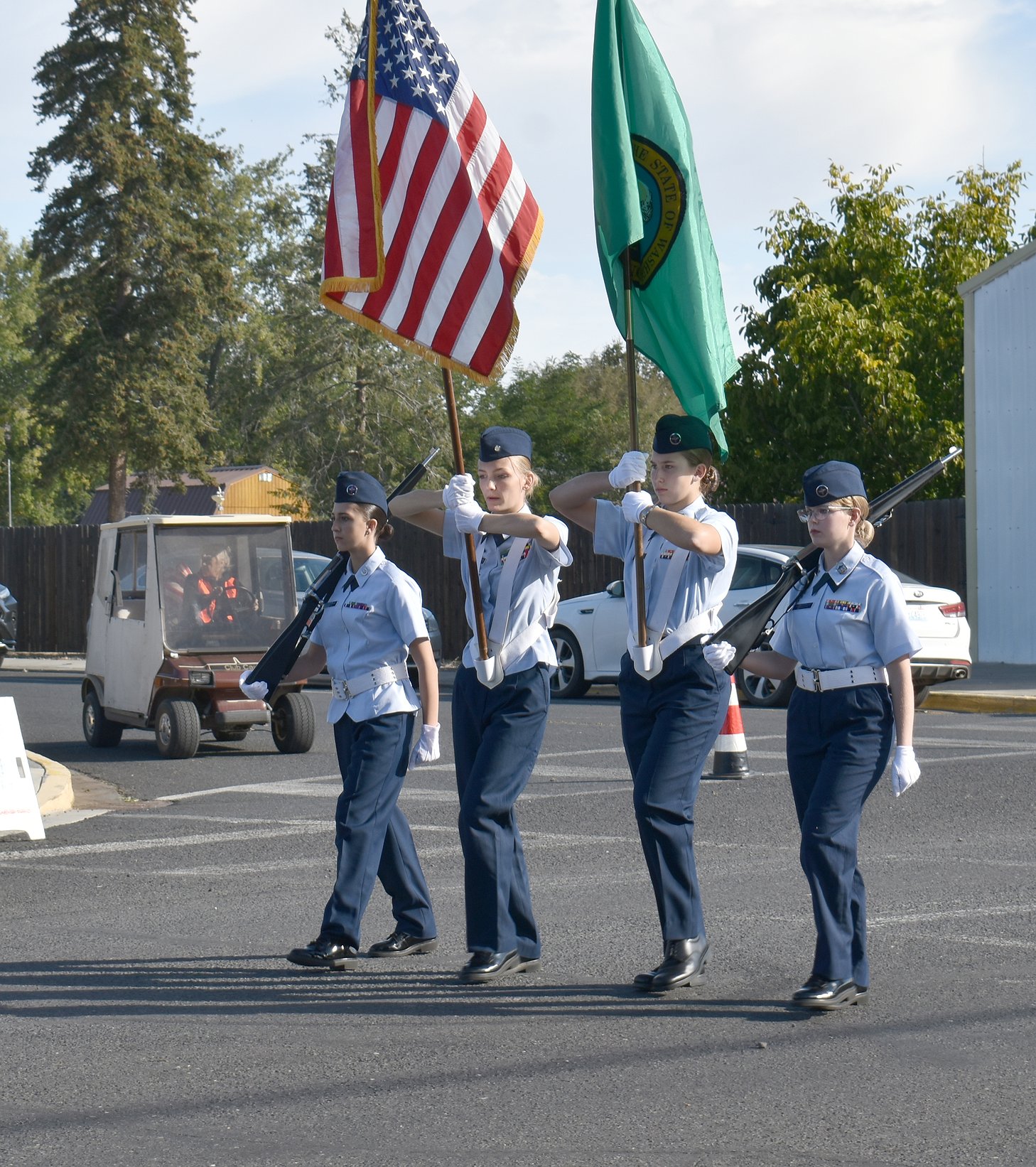 A color guard of cadets from the Civil Air Patrol leads the Harvest Festival parade Saturday morning in Wilson Creek.
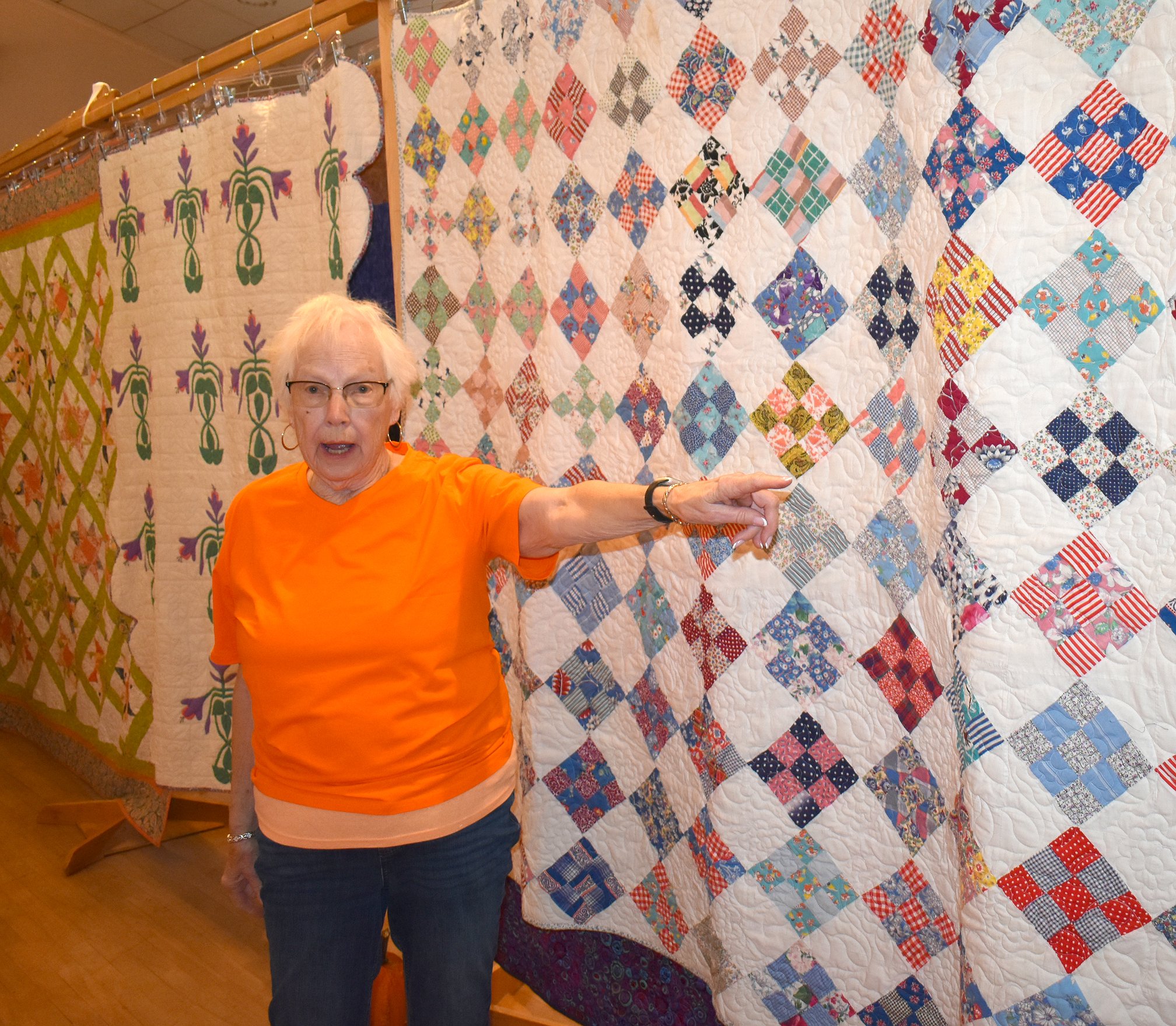 Bonnie Valentine shows the antique quilt she restored and finished at the Wilson Creek Grange Hall Saturday.
 Rae Espe, 8, scoops up some candy at the Harvest Festival Parade Saturday.
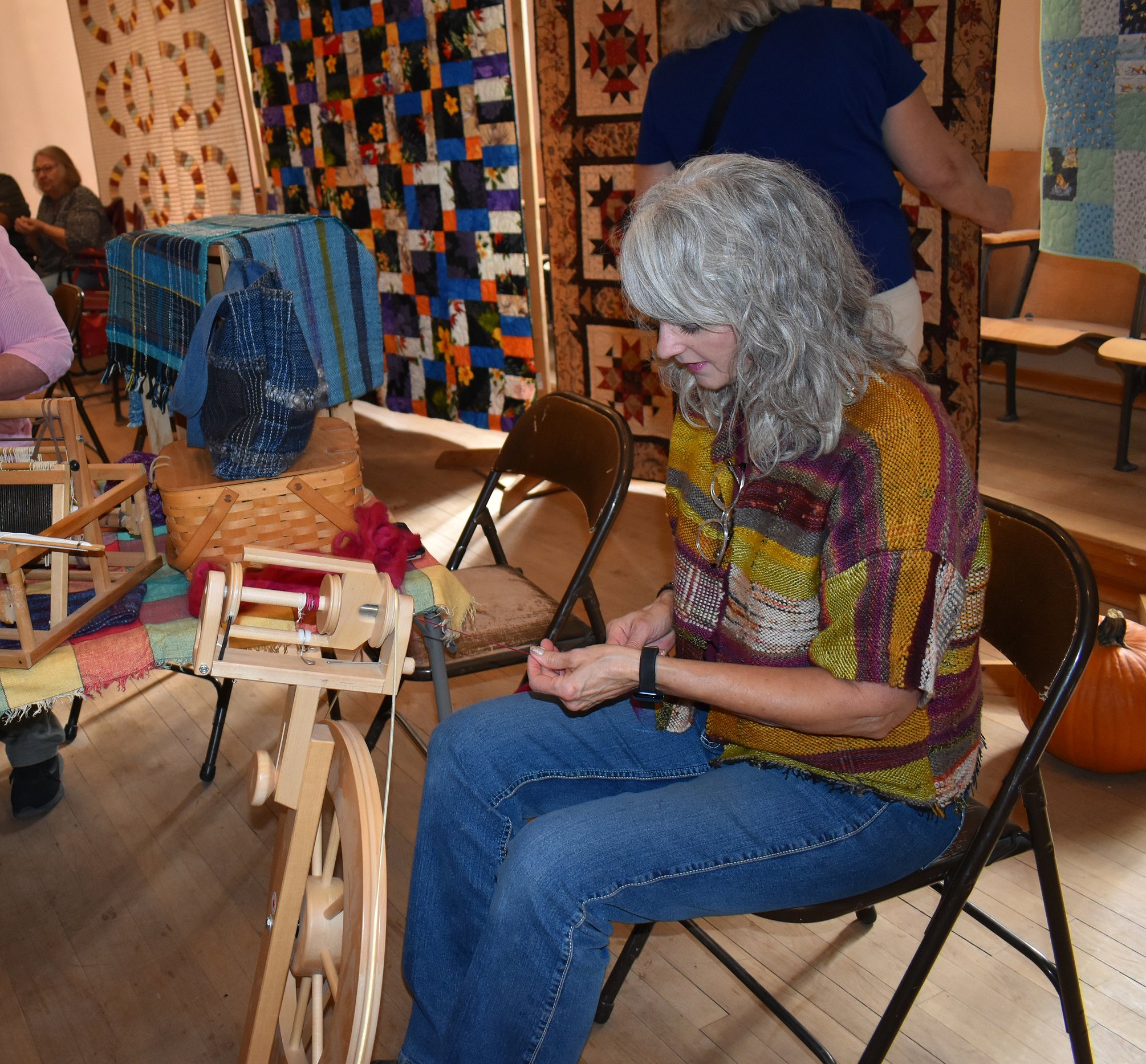 Tracy Wilson of Hartline shows how to make yarn with a wooden spinning wheel at Harvest Festival in Wilson Creek Saturday.
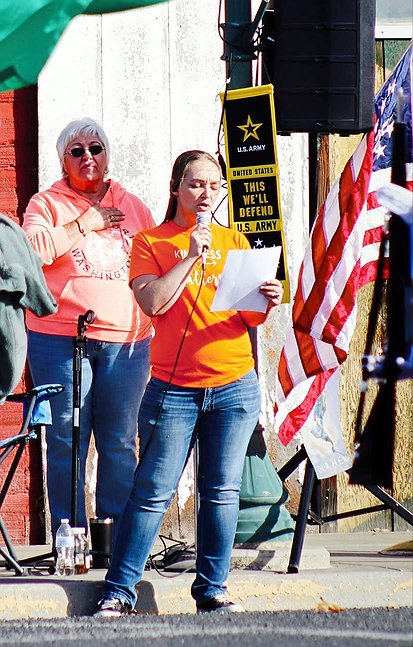 Paisley Schabel sings the national anthem to kick off the parade at Wilson Creek Harvest Festival Saturday.