
4th District Q&A
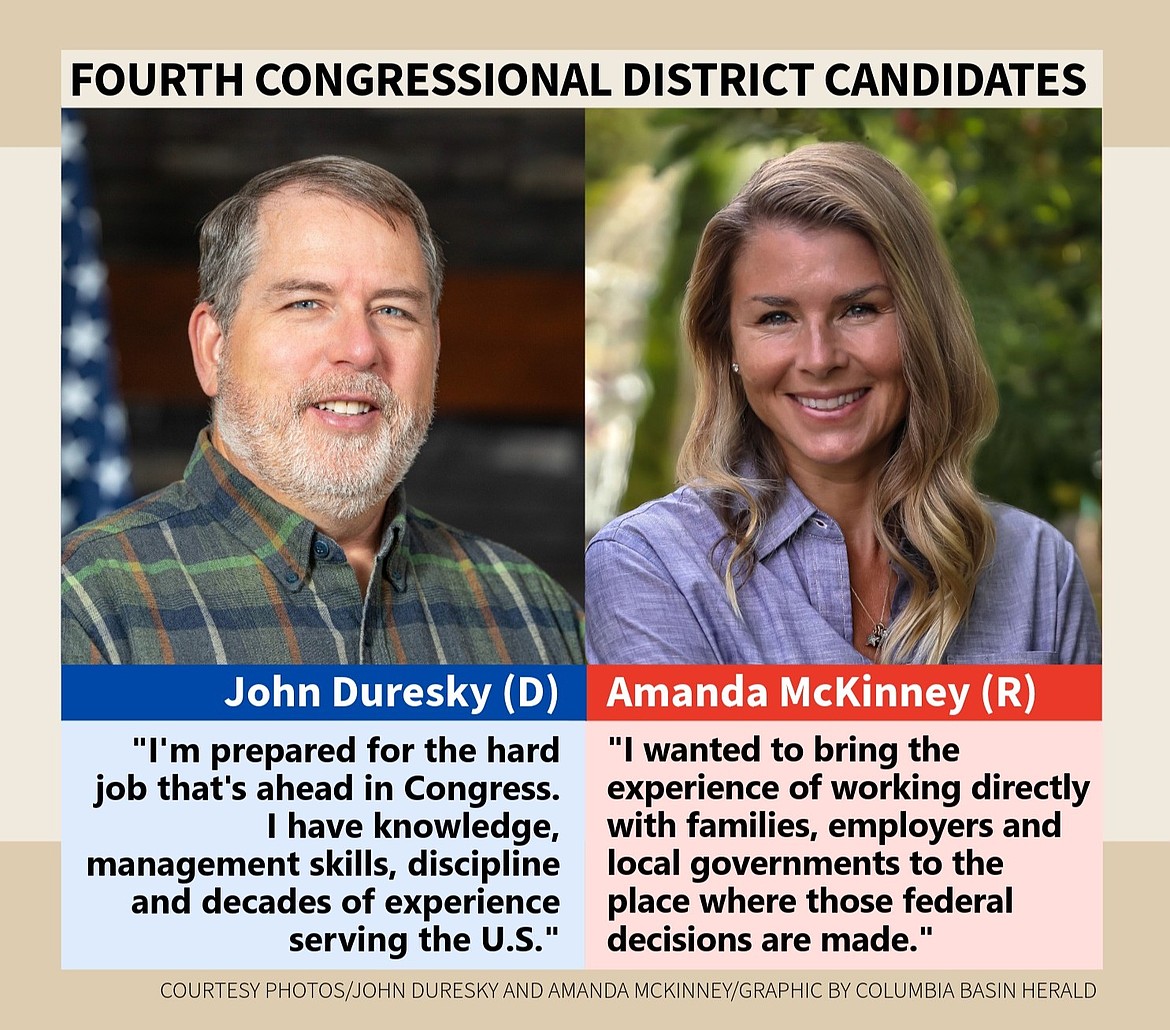
EPHRATA — The race to represent Washington's 4th Congressional District will send a new member of Congress to Washington, D.C., for the first time in more than a decade after Dan Newhouse opted not to seek reelection.
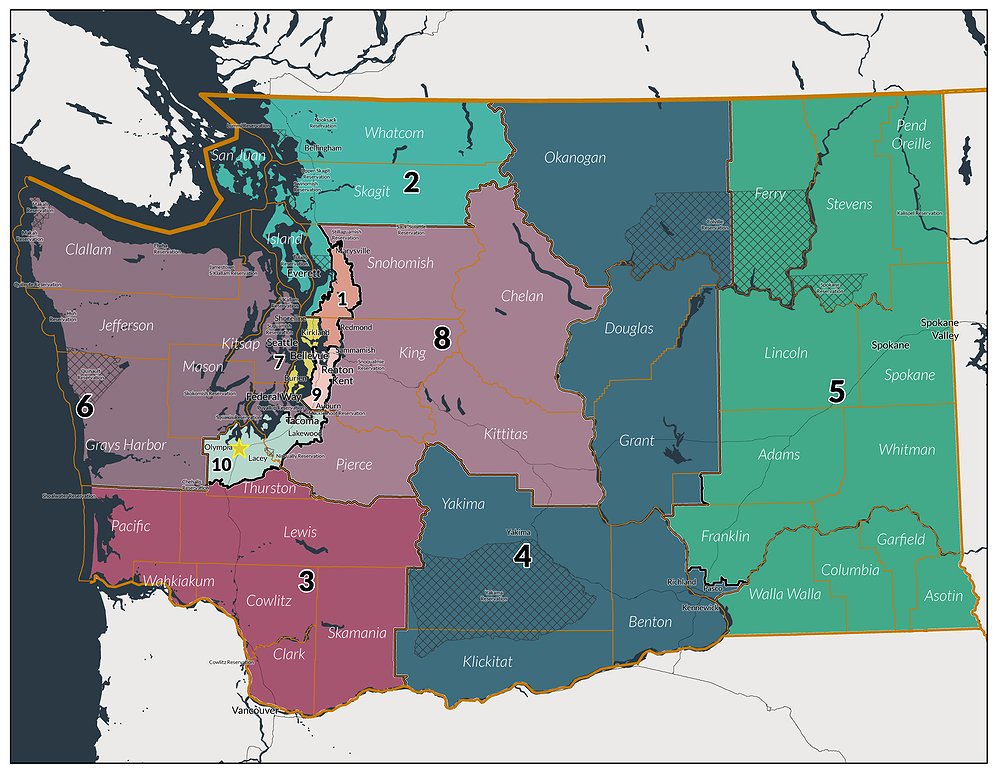
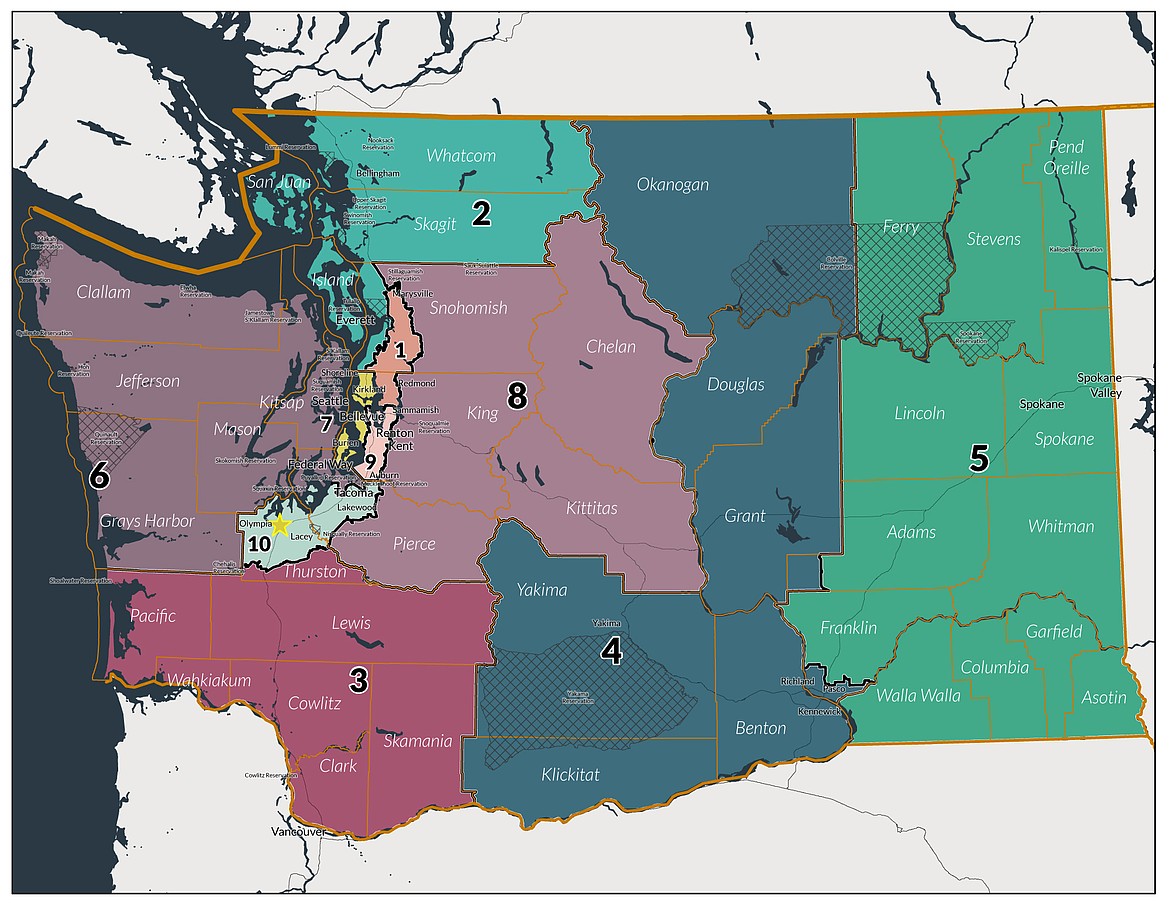
Republican Amanda McKinney, a Yakima County commissioner, and Democrat John Duresky, a retired federal employee and military veteran, are competing to represent a district that encompasses much of Central Washington, including Grant, Adams, Benton, Franklin, Yakima and portions of several neighboring counties.
As voters prepare to cast their ballots in the Nov. 3 general election, the Columbia Basin Herald asked both candidates a series of questions about their backgrounds, priorities and vision for the district. The responses will be published in a three-part Q&A series, with this being the first.
In this first installment, McKinney and Duresky discuss the moments that led them to seek a seat in Congress and outline how they would approach federal spending decisions amid growing concerns about the national debt and long-term budget challenges.
Ballots must be postmarked or returned to an official ballot drop box by Nov. 3. Voters can verify their registration status and access election information through VoteWA. Grant County voters may also contact the Grant County Elections Office at 509-754-2011 ext. 2704 with election-related questions.
Question: Tell voters about the moment you decided to run for Congress. What happened, what were you thinking, and what convinced you that serving in Washington, D.C., was the best way to help the people of Central Washington?
Duresky: At 19 years old I swore an oath to the Constitution and to the United States, and the country I once knew has been diminished. I’ve always been engaged in the democratic process, but after accepting an early retirement as a result of the DOGE cuts, I realized I couldn’t sit on the sidelines. I knew I could act.
I understand how the Federal government is supposed to work, and what’s been broken in the last two years. Massive budget cuts that weren’t sanctioned by Congress, the gutting of federal agencies and the firing of federal workers have left our country ill-prepared for the future and less able to manage current government responsibilities. Taxpayer money siphoned off to pay for vanity projects while cutting congressionally approved funding for SNAP benefits that feed children – this isn’t the way the Federal government lawfully operates.
I’m prepared for the hard job that’s ahead in Congress. I have knowledge, management skills, discipline and decades of experience serving the U.S. I’ll bring my know-how to Congress to help make things right in the Federal Government and will always honor my oath to the Constitution – to represent the people of Central Washington and the United States – not the billionaire and corporate donors, and not a party or a man.
McKinney: My decision grew out of serving as a Yakima County commissioner. Working on water, public safety, agriculture and county budgets, I kept seeing how decisions made in Washington, D.C., affected the problems we were trying to solve here at home. Local leaders were expected to deliver results while navigating federal rules and decisions they had little ability to change.
I began thinking seriously about where I could make the greatest difference. I wanted to bring the experience of working directly with families, employers and local governments to the place where those federal decisions are made.
Central Washington is my home. I understand what is at stake when a farm loses access to water, a family cannot afford housing or a community struggles with fentanyl. I decided to run because our district deserves someone who understands those challenges and can build the relationships necessary to deliver results.
Question: The national debt continues to grow while Congress struggles to pass long-term budgets. Name one federal program, tax break or spending priority you would reduce or eliminate, and one you would invest more heavily in. Why are those choices the best use of taxpayer dollars?
McKinney: I would reduce federal administrative spending at the Department of Education, beginning with duplicative grant administration, reporting requirements and bureaucracy. I would protect assistance for students with disabilities while giving states, local school districts and parents more authority over education. Taxpayer dollars should reach classrooms and support students.
I would invest more heavily in water storage, conservation and irrigation infrastructure, including the Odessa Groundwater Replacement Program. Reliable water sustains family farms, agricultural jobs, food production and the tax base that supports our communities.
Those choices reflect a straightforward principle: reduce administrative overhead and prioritize infrastructure that delivers lasting public benefits. Every investment should have measurable goals, transparent costs and accountability for results.
Neither choice alone will balance the federal budget. Congress also needs to pass timely budgets, review programs regularly and stop treating borrowed money as an unlimited resource.
Duresky: The war in Iran and tariffs are costing Central Washington families more than they can afford. I'd vote to end our involvement in the war in Iran, which is draining taxpayer dollars and driving price increases in fuel, freight and fertilizer. Additionally, I'd vote to roll back the tariffs.
Where I'd invest is Social Security and healthcare. About 40% of Social Security recipients nationwide rely on it as their sole income, and we have a moral obligation to keep it solvent. Today, Social Security taxes are capped at about $184,000 in wages. Removing the cap keeps full benefits flowing to recipients with no cuts, no higher retirement age and no privatization.
Workforce housing would be another priority of mine. Employers across the valley can't hire the people they need because those people can't afford to live here. Federal tools like the Low-Income Housing Tax Credit, USDA rural housing programs, and financing for water and sewer infrastructure that unlocks new development are part of the solution.