
Young scientists shine at Little House in the Desert science fair
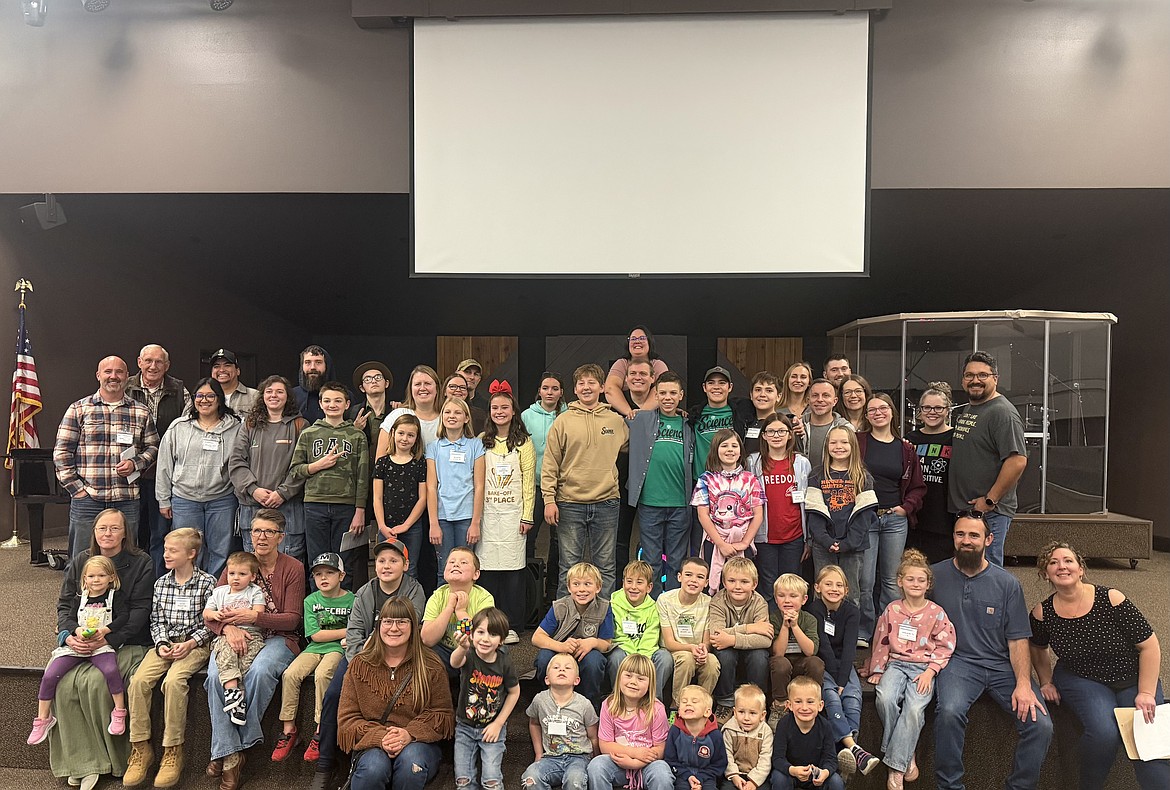
A group photo of all the young scientists at the fifth annual Little House in the Desert science fair, including parents, judges and siblings.
NANCE BESTON/COLUMBIA BASIN HERALD
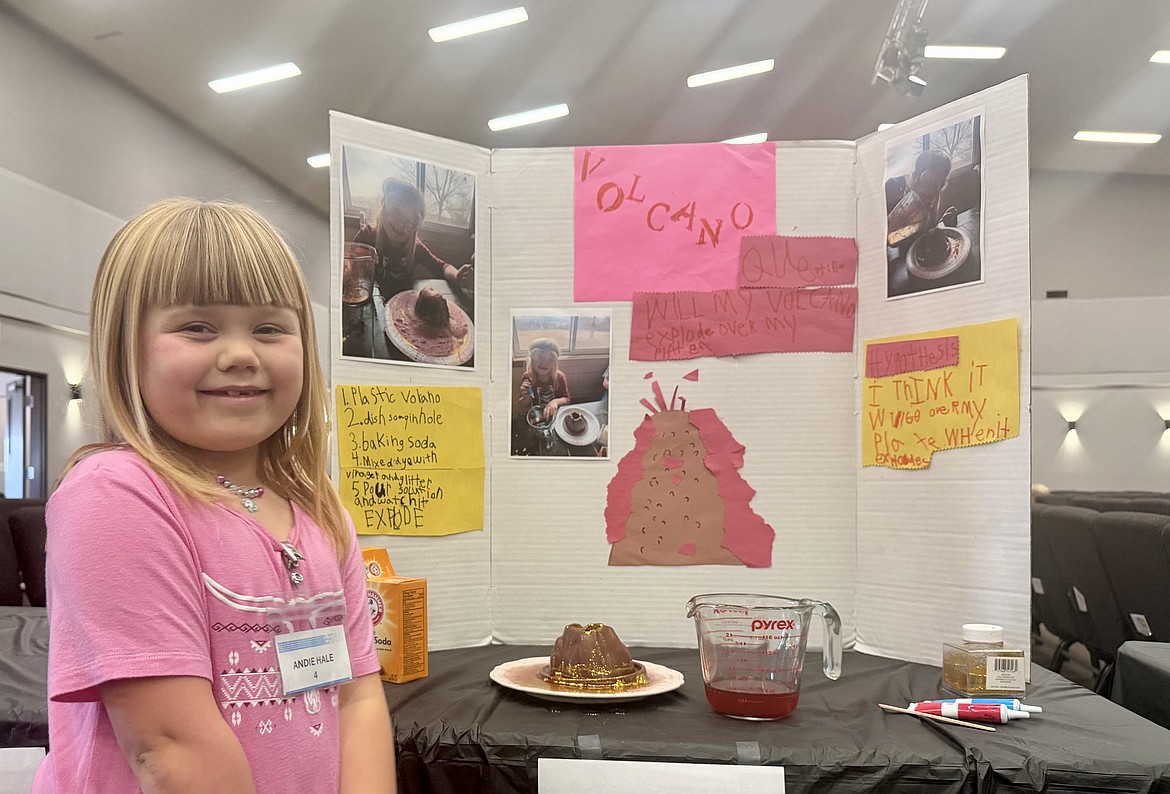
Andre Hale, 6, won first place in the pre-K through second grade category. Hale, with the help of her grandma and mom, created a volcano that erupted pretty pink with glitter.
NANCE BESTON/COLUMBIA BASIN HERALD
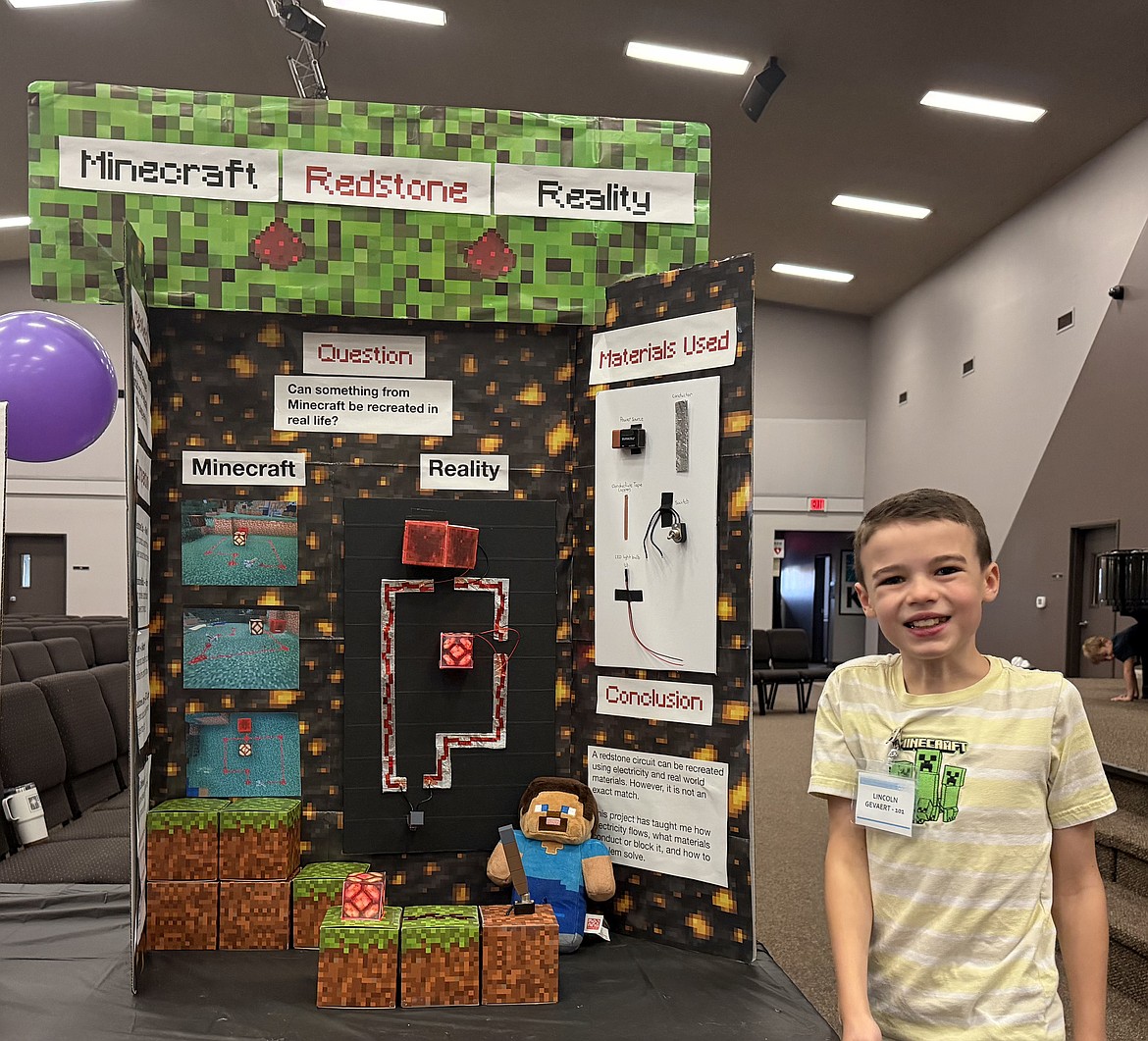
Lincoln Gevaert won first place in the third grade through fifth grade category. Working with electricity, he built two Redstone lights that worked similarly to those found in the Minecraft game.
NANCE BESTON/COLUMBIA BASIN HERALD
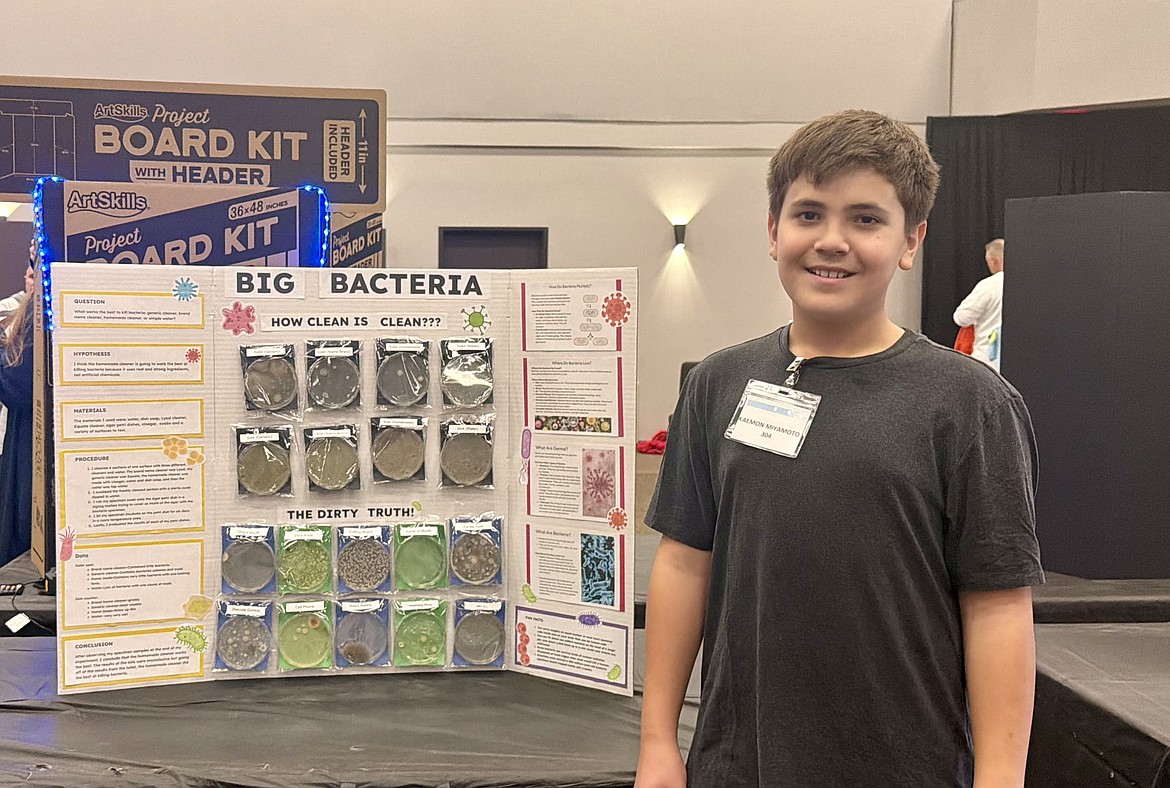
Kaemon Miyamoto won first place in the sixth grade through eighth grade category with his “The Dirty Truth” experiment. Miyamoto took bacteria samples and tested several different cleaners to discover what works best. He found out that a homemade cleaner works the best.
NANCE BESTON/COLUMBIA BASIN HERALD
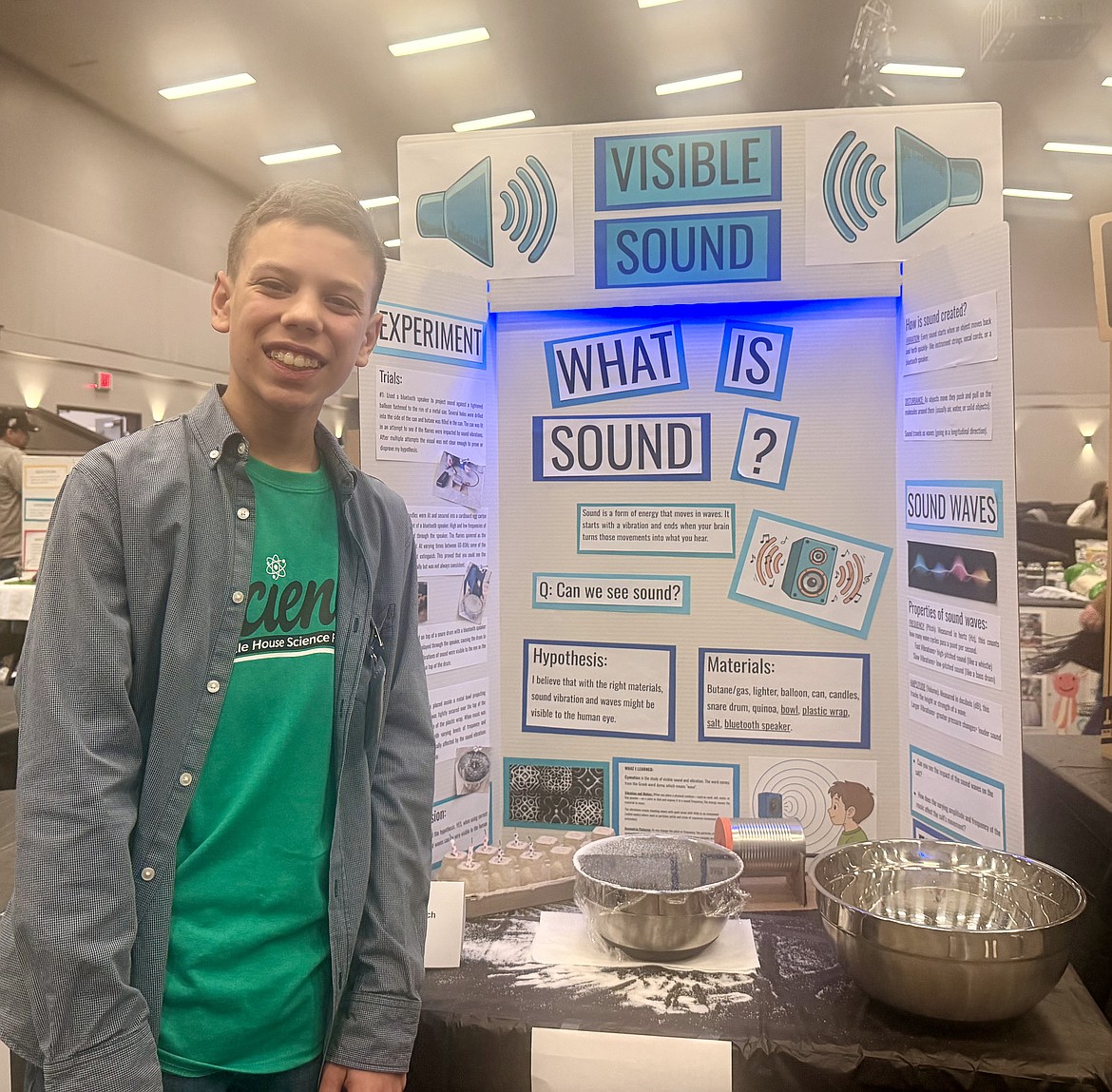
Elijah Hart won the high school category with his study of cymatics, the visible study of sound. Working through several attempts, Hart was able to successfully show that sound can be seen by the eye.
NANCE BESTON/COLUMBIA BASIN HERALD
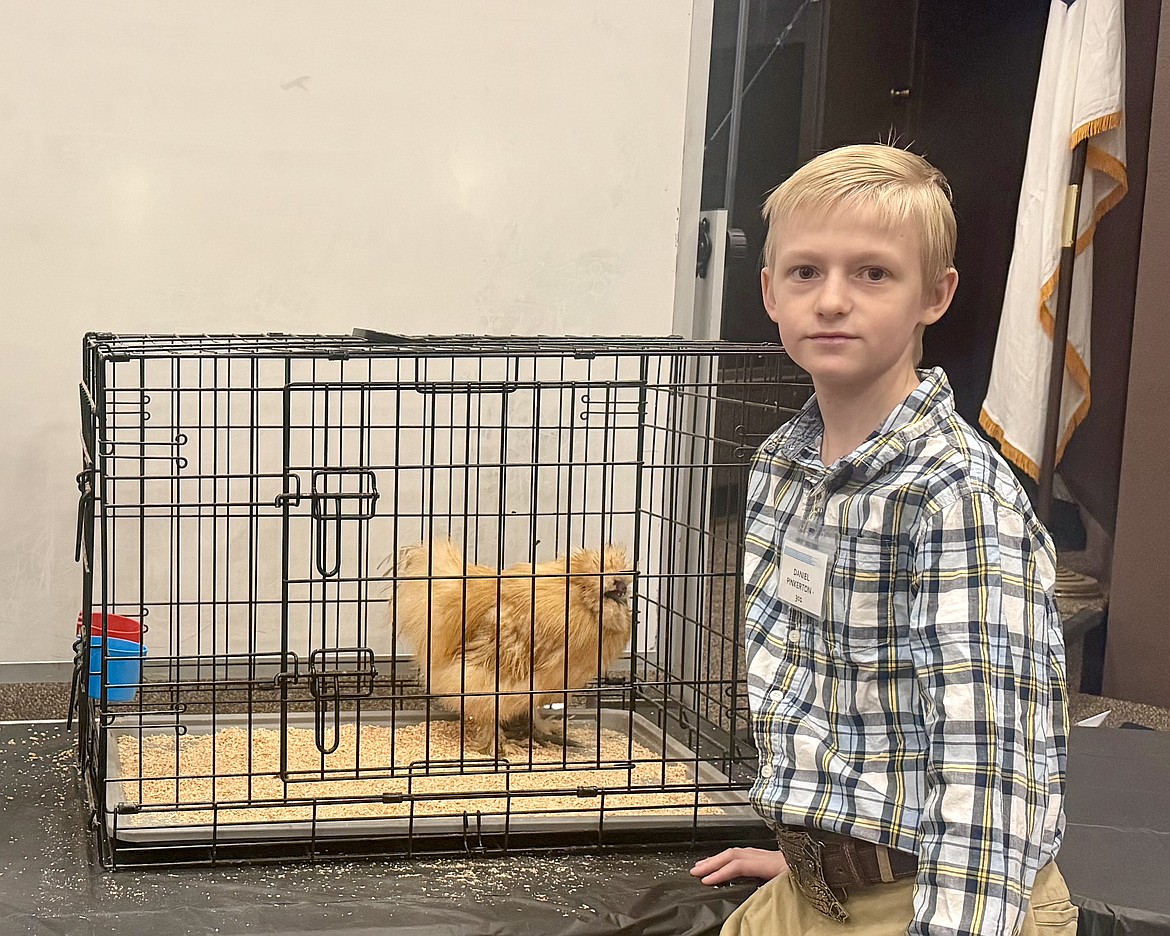
Daniel Pinkerton and his silkie chicken “Fluffy” worked together to teach people the differences between a normal chicken and a silkie chicken.
NANCE BESTON/COLUMBIA BASIN HERALD
EPHRATA — From erupting volcanoes and bouncing salt grains to homemade cleaners and Minecraft-inspired electrical circuits, students put curiosity on display Saturday as Little House in the Desert hosted its fifth annual homeschool science fair.
The event brought together students from preschool through high school, allowing them to explore questions that interested them and present their findings to judges and visitors. Projects ranged from testing bacteria-killing cleaners to examining chicken breeds, air pressure, water filtration and sound vibrations.
For organizer Hannah Gustafson, watching children learn through experimentation is exactly what the annual event is all about.
“This is an investment in our next generation to continue asking questions and learning to be innovative,” Gustafson said. “We have problems we need solutions for, and this is a way to open up that door.”
The science fair began five years ago through the Little House in the Desert homeschool group and has become an annual tradition for many participating families.
“I personally enjoy the fellowship of just being with everyone,” Gustafson said. “And seeing the kids grow and their creativity, how they present themselves and their experiment. It gives them an opportunity to learn how to speak to a judge or just in front of a crowd.”
This year's judges were Brian Saunders, Juan Mungaray, Maribel Mungaray and Phil O'Neil.
Pre-K through second grade
The youngest division featured projects on volcanoes, milk chemistry, bouncing balls, air pressure and bubbles.
Taking first place was 6-year-old Andre Hale, whose colorful volcano project asked a simple question: “Will my volcano explode over my plate?”
Using baking soda, vinegar, food coloring and glitter, Hale created a sparkling eruption that quickly caught visitors' attention.
“Well, my grandma told me how to make a volcano,” Hale said. “She told me, ‘How about a volcano?’ and I wanted to do it. So, we did it.”
The young scientist said her favorite part of the project was the colorful effect created during the eruption.
“Probably the glitter and dye,” she said. “Because it's really pretty when it erupts.”
The win came during Hale’s first science fair experience.
Asked how it felt to earn first place, she offered a simple answer.
“It's happy,” she said.
Fellow student Luke Leuty explored whether crater size affects lava flow in volcanoes. His project compared volcanoes with different-sized craters and how the eruptions behaved.
Leuty said his favorite part of the project wasn't the eruption itself but building and decorating the models.
“Painting it,” he said when asked what he enjoyed most.
Nearby, other students investigated topics such as why milk separates during the classic "magic milk" experiment, which ball bounces highest, whether bubbles can be made more durable and how air pressure changes when molecules are compressed.
Grades three through five
For older elementary students, projects became increasingly complex.
The first-place award went to Lincoln Gevaert, who combined a love of science with a passion for video games through his project, “Minecraft Redstone Reality.”
Gevaert set out to determine whether electrical systems inspired by Minecraft's Redstone mechanics could be recreated in real life. Using batteries, switches, conductive materials and lights, he built interactive demonstrations that visitors could test themselves.
“I pretty much did electricity, but with a little Minecraft twist,” Gevaert said.
The project connected real-world circuitry to concepts found in the popular video game.
One of Gevaert’s favorite discoveries was seeing electricity bring his creations to life.
“My favorite part is about how the thing glows,” he said. “That is really cool.”
The first-place finish was especially meaningful because Gevaert had competed in previous years.
“Last year I got second place,” he said. “This year I got first place.”
The project may also have inspired future inventions.
“The coolest thing I learned was that I could build Redstone contraptions in the future, like make a little nightlight for my bedroom,” he said.
Other projects in the division included water filtration experiments, carbonated beverage reactions and the stretching properties of slime.
Grades six through eight
Middle school students tackled more advanced scientific questions involving microbiology, chemistry and agriculture.
The division champion was Kaemon Miyamoto, whose project, “The Dirty Truth,” investigated the effectiveness of various household cleaners against bacteria.
Miyamoto collected samples from surfaces including a cutting board, cellphone and karate gear before growing cultures in agar dishes to compare results.
“I had an experiment about bacteria, and I wanted to test which cleaner works the best,” Miyamoto said.
After testing multiple products, including Lysol, water and homemade cleaning solutions, he arrived at an unexpected conclusion.
“I found out that homemade cleaner works the best,” he said.
The project also revealed some surprising discoveries about where germs tend to accumulate.
“The cellphone had a huge virus,” Miyamoto said while discussing one of the dirtier items tested.
He was equally surprised by one result that contradicted common assumptions.
“The dog's mouth and my mouth isn't as dirty as I thought it would be,” he said.
The first-place award marked another milestone for the young scientist.
“This is my third time,” Miyamoto said of his participation in the fair. “I won the last two years.”
He said his success has been fueled by a genuine interest in experimenting and learning. A homeschool science lesson on bacteria originally inspired the project, he said.
Nearby, Daniel Pinkerton introduced visitors to the unique characteristics of silkie chickens.
His display explained how silkies differ from traditional breeds, including their unusual feathers, dark skin and feather-covered legs.
“One of the things they have for feathers, they don't have those hooks that keep them together,” Pinkerton explained while comparing the breed to standard chickens.
Pinkerton brought firsthand experience to the project through his involvement in 4-H and poultry exhibitions.
Reflecting on his first year showing birds, he described earning a top award at the county fair.
“I was very amazed when I got a call back,” he said. “I got grand champion.”
Grades 9 through 12
The oldest competitors tackled topics ranging from exercise science to phone usage habits and caffeine consumption.
First place went to Elijah Hart, whose project explored whether sound could be made visible.
His experiment investigated cymatics, the study of visible sound vibrations.
Using a speaker, bowl, plastic wrap and salt, Hart demonstrated how sound waves could create visible movement patterns.
“The study of visible sound is called cymatics,” Hart said.
He began with the question, “Can we see sound?” and spent several weeks testing different approaches. Not every attempt worked.
One idea involving a butane can, consumed nearly two weeks of effort before he abandoned it. Instead of giving up, Hart adapted.
“I realized that science, it's all about trial and error,” he said.
Eventually, his revised design successfully demonstrated that sound vibrations could be observed through the movement of salt particles.
“The coolest thing I learned was just how effective sound vibration can be,” he said.
Winning first place during his first science fair appearance made the experience even more memorable.
“It honestly feels awesome,” Hart said. “I'm really glad for this opportunity, and I'm glad that I can show everybody how you can see sound.”
More than ribbons and trophies
While ribbons recognized standout projects, organizers said the true value of the science fair lies in encouraging students to ask questions and seek answers.
Many projects grew from simple childhood curiosities: Why do bubbles pop? What makes a volcano erupt? Can electricity work like it does in Minecraft?
Gustafson said those questions often become opportunities for families to learn together.
“We live in a technological society,” she said. “People are inundated with their screens, and there's so much more to life.”
The science fair allows students to explore the world around them through observation, experimentation and problem-solving while also developing public-speaking skills and confidence.
As the event concluded, students packed away volcanoes, circuit boards, petri dishes and sound experiments, already discussing ideas for next year.
For Gustafson, that excitement is exactly what she hopes participants take home.
“Come join us at the science fair,” she said. “The more the merrier.”
Little House in the Desert meets at Bethlehem Chapel in Ephrata. Organizers said families interested in participating in next year's science fair can find the group through its Facebook page, Little House in the Desert Homeschoolers.
2026 Participants:
Grades Pre-K to 2
Luke Luety - Volcano Crater: Does the crater size affect the lava flow of a volcano?
Jack Hale - Magic Milk: Why does the milk stay separated?
Luke Peterson - Bouncy Balls: Which ball will bounce the highest?
Andre Hale – Volcano: Will my volcano explode over my plate?
Amelia Ritts - Ballooning with science: Which liquid will inflate the balloon the most?
Torie Acheson - Bubble Science: Can we make bubbles that don’t pop?
Elias Gustafson - Exploring Air Pressure: What happens when you shrink the molecules in the air?
Grades 3-5
Lincoln Gevaert - Minecraft Redstone: Can something from Minecraft be recreated in real life?
Hank Leuty - Water Filtration: What is the best method for water clarity?
Lyla Petersen - Soda Science: When I pour carbonated water fast, why does it explode?
Ward Hale – Slime: It will stretch but not bounce.
Grades 6-8
Daniel Pinkerton - Chickens: What are the differences between silkie and regular chickens?
Maddison Little - Water Filter: Can I filter water with the simple resources that I have?
Lydia Carpenter - Cupcake Chemistry: How do alternative ingredients affect cupcakes?
Kaemon Miyamoto - The Dirty Truth: Do all the cleaners work on the same bacteria?
Beatrix Owens - Water Memory: Can words change how water freezes?
Grades 9-12
Asher Gustafson - Creating a Lightbulb Using Batteries: Which conductor will work the best?
Joel Carpenter - Pick Me Up a Drink: Which caffeine drink is the healthiest?
Elijah Hart - Visible Sound: Can we see sound?
Pierce Owens - Gray Scale Phone: Will grayscale screens reduce use?
Sayde Gustafson - Muscle Movements: What is the best way to move and work muscles to make them stronger without hurting them?
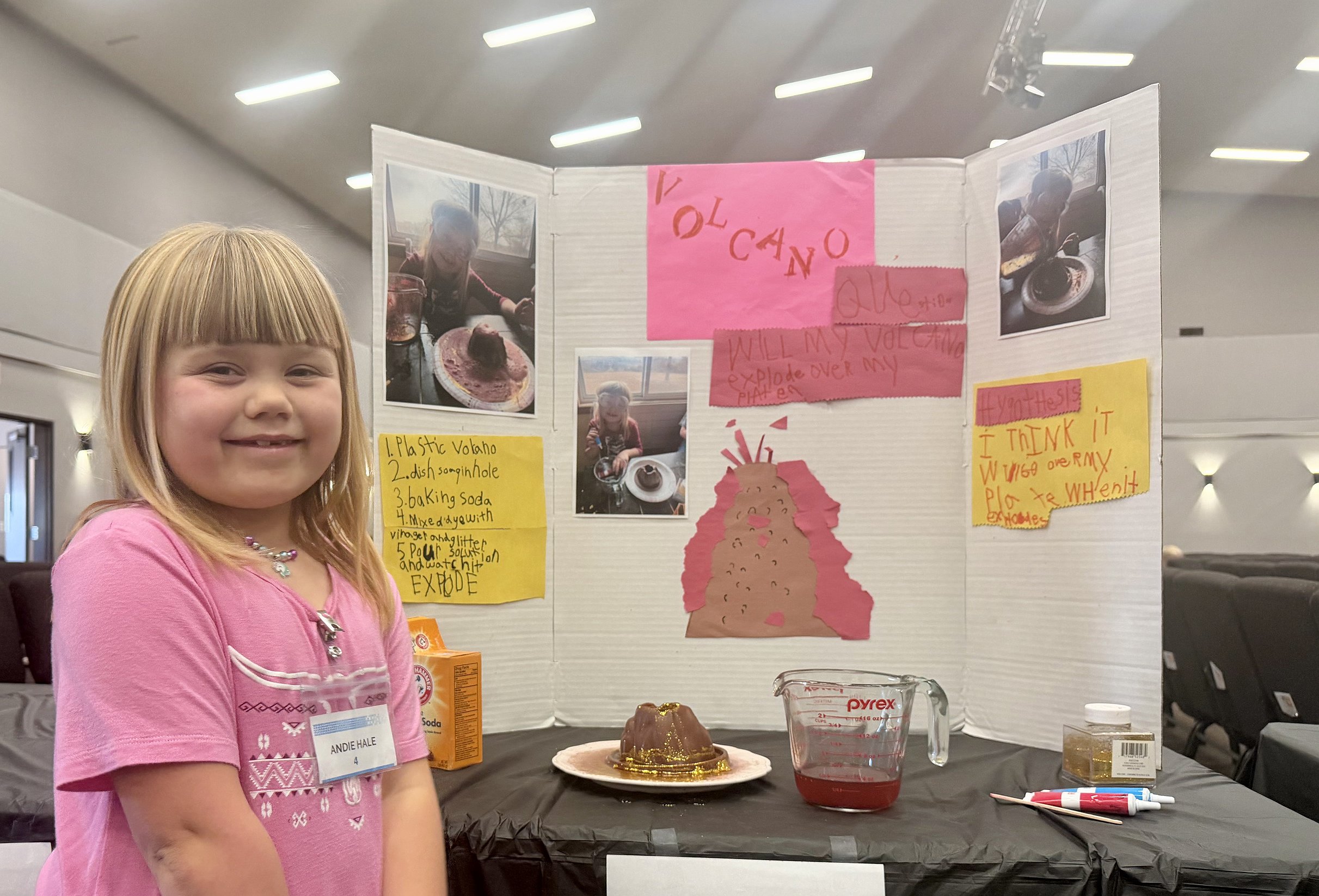 Andre Hale, 6, won first place in the pre-K through second grade category. Hale, with the help of her grandma and mom, created a volcano that erupted pretty pink with glitter.
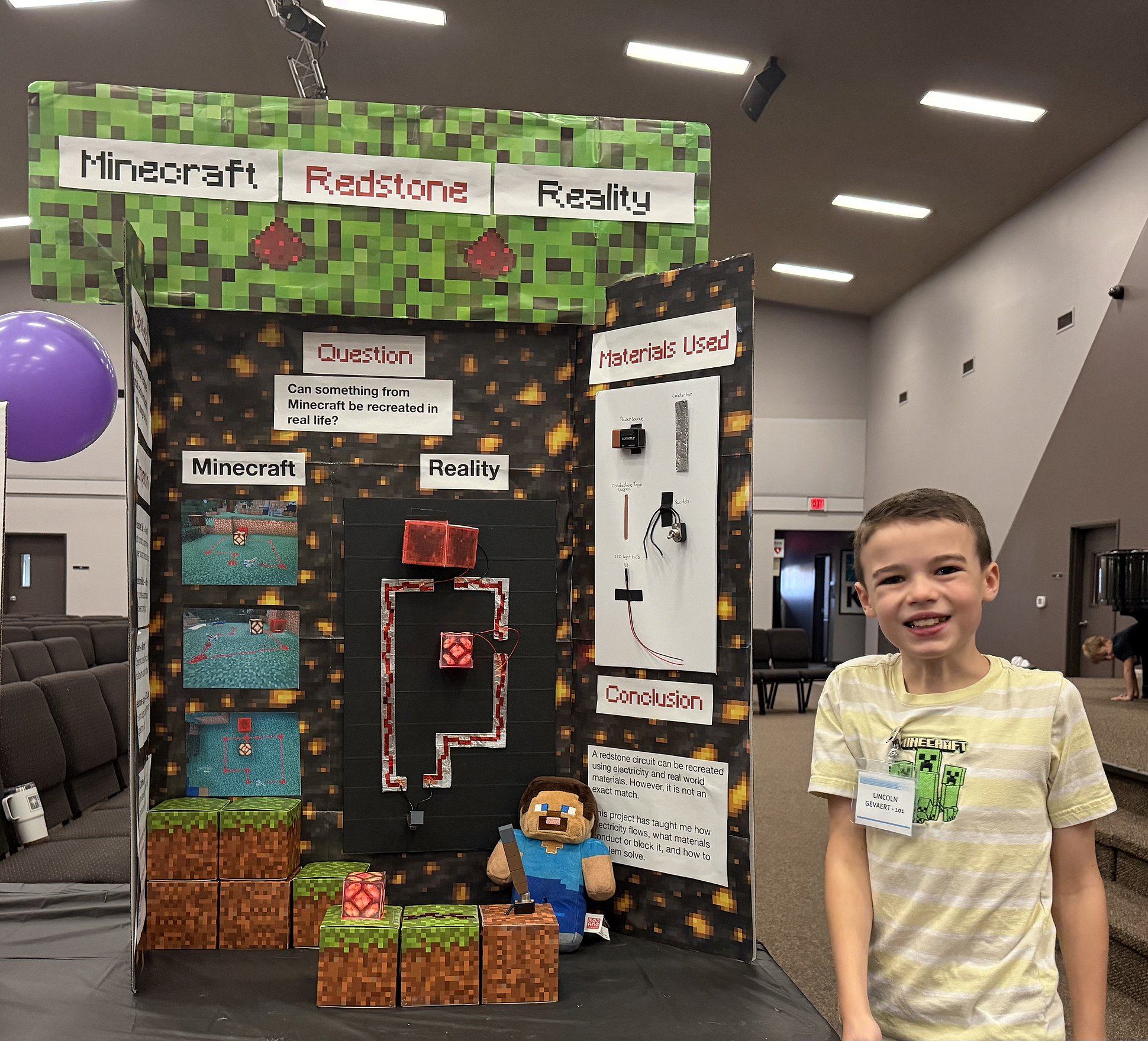 Lincoln Gevaert won first place in the third grade through fifth grade category. Working with electricity, he built two Redstone lights that worked similarly to those found in the Minecraft game.
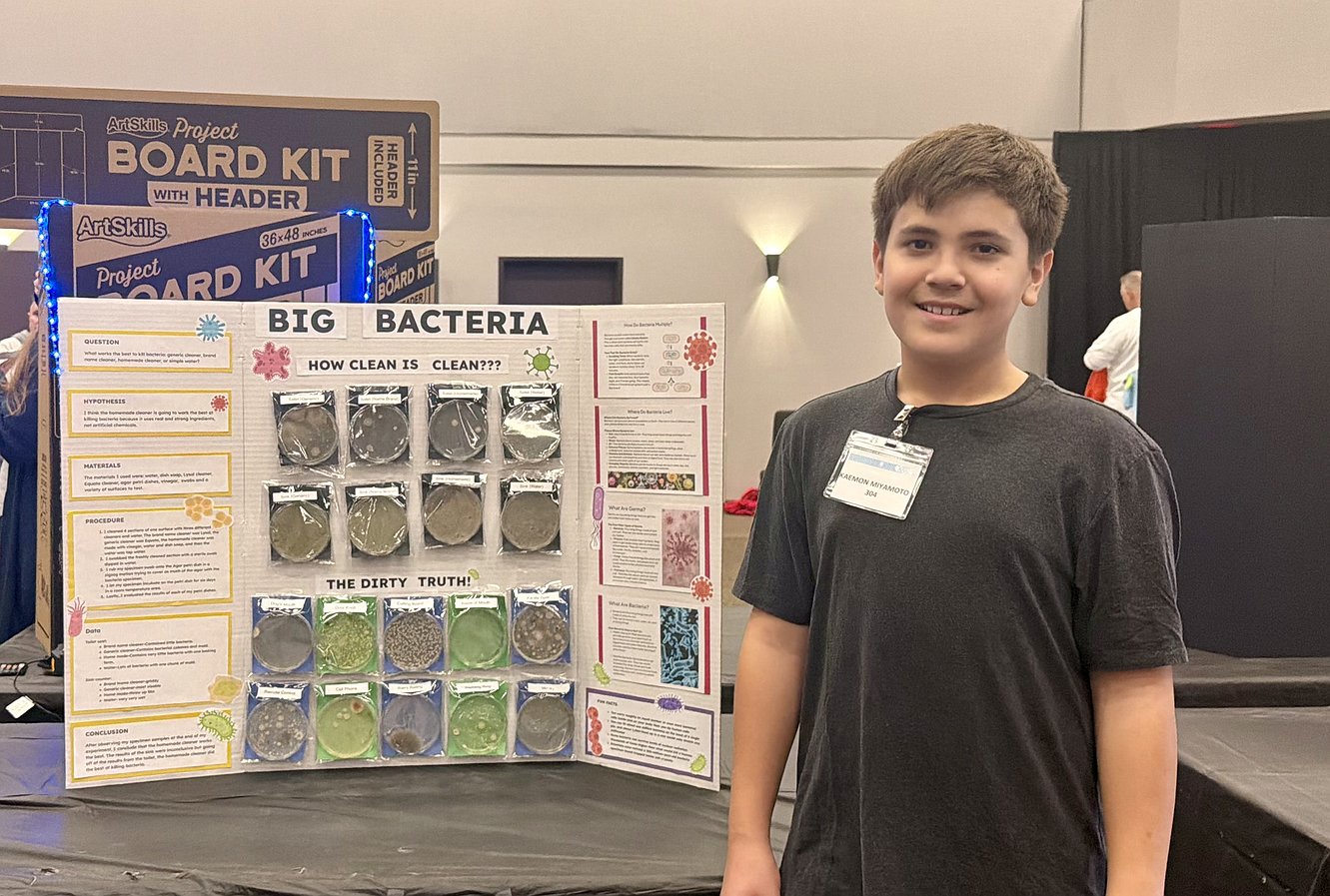 Kaemon Miyamoto won first place in the sixth grade through eighth grade category with his “The Dirty Truth” experiment. Miyamoto took bacteria samples and tested several different cleaners to discover what works best. He found out that a homemade cleaner works the best.
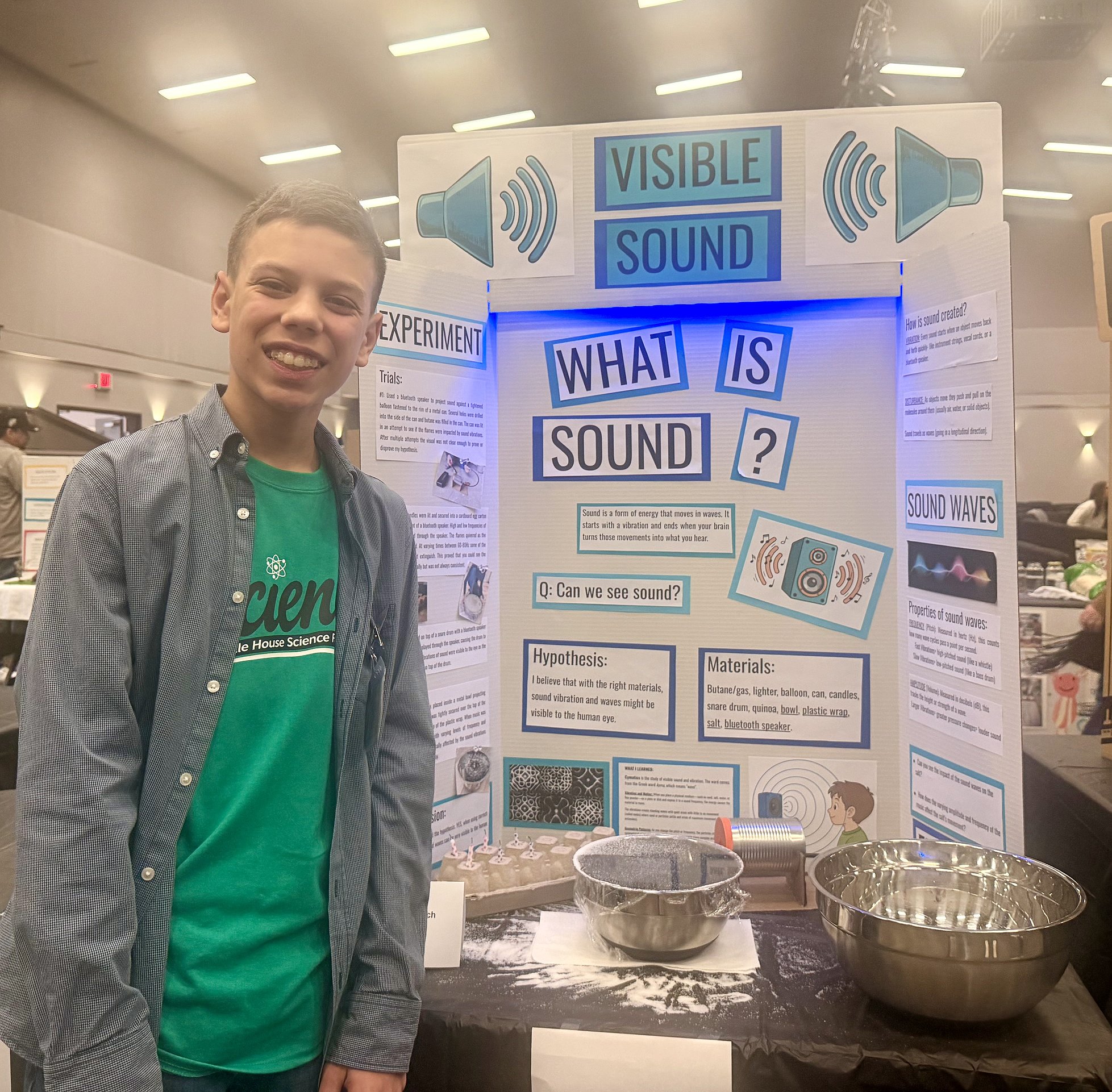 Elijah Hart won the high school category with his study of cymatics, the visible study of sound. Working through several attempts, Hart was able to successfully show that sound can be seen by the eye.
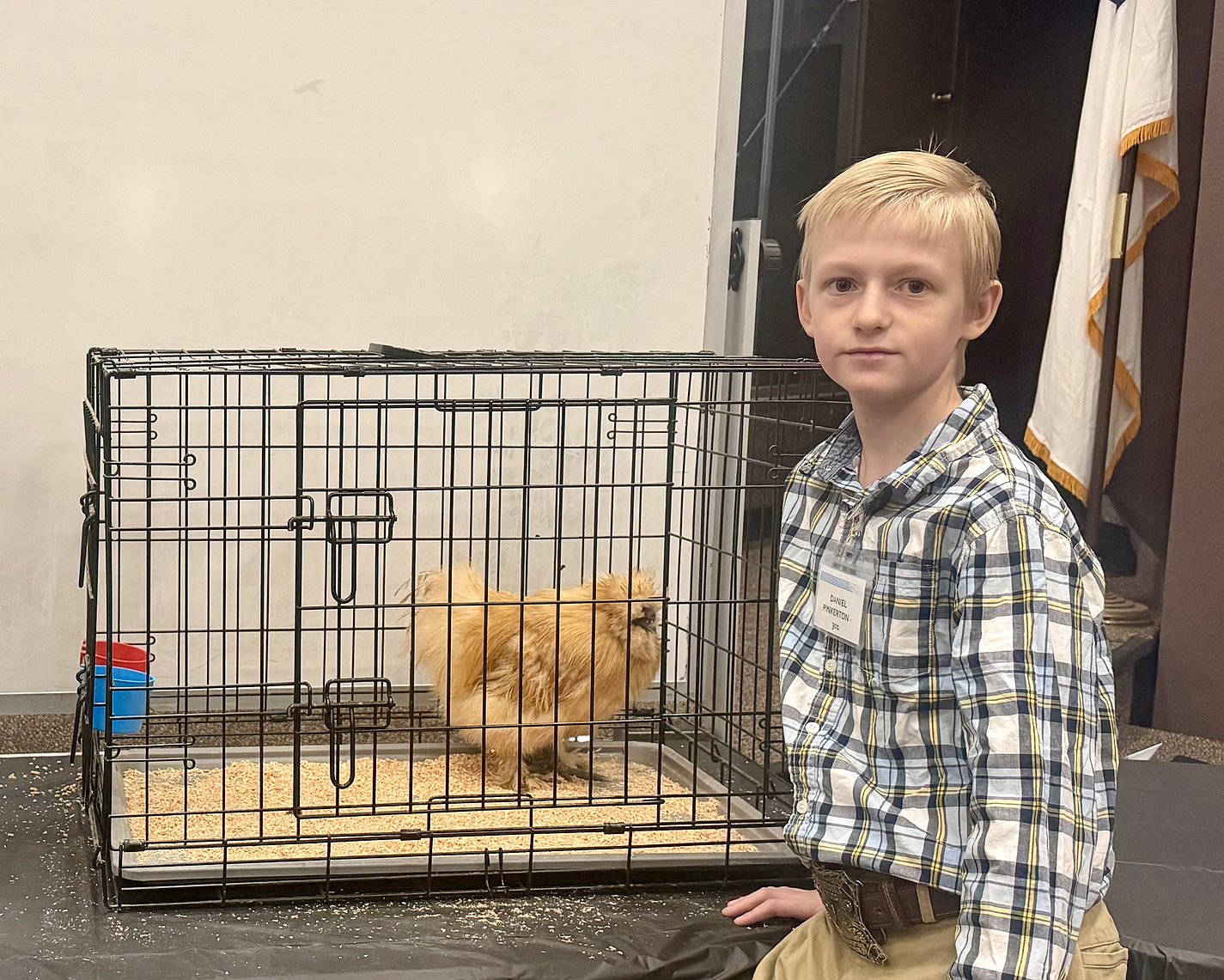 Daniel Pinkerton and his silkie chicken “Fluffy” worked together to teach people the differences between a normal chicken and a silkie chicken.