Keep your lawn in shape this summer
MOSES LAKE — It’s getting warmer, and that means it’s time to take a good look at the lawn and get it ready to enjoy.
A major consideration in the Basin will be watering. With the limited water supply, a homeowner needs to get the most out of what water is available. Overwatering causes soggy conditions that encourage weeds, starve the grass roots of oxygen and leach out plant nutrients, according to Washington State University Extension. On the other hand, watering lightly and frequently encourages shallow roots on the grass, which makes it less able to withstand sudden changes in temperature or moisture.
Dig a little way into your soil and see if the top two inches are dry and crumbly. If they are, irrigate to 12 inches deep, assuming your soil is that deep.
The best time to water is in the early hours of the morning, around 4 a.m., according to the WSU Extension. If that’s too early, make it late at night instead, around 11 p.m.
Most cities and towns don’t have specific restrictions on when lawns may be watered, but Moses Lake does. Moses Lake homeowners with odd-numbered addresses can water at night or early in the morning Wednesday, Friday and Sunday, while even numbered homes water Tuesday, Thursday and Saturday, according to the Moses Lake Municipal Code. No watering is allowed on Mondays, or between 10 a.m. and 7 p.m.
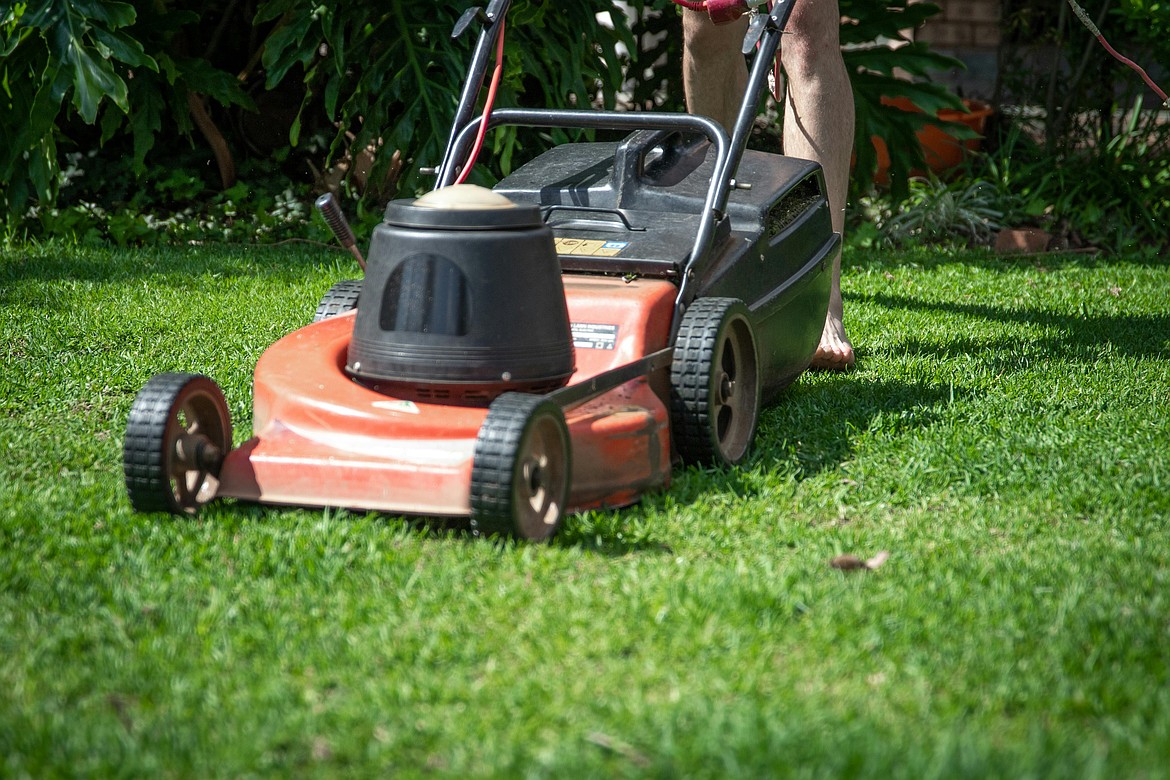
Along with watering, lawns need to be mowed regularly. Mower blades should be kept sharp, according to the WSU Extension; a dull mower blade can cause the ends of the grass to be ragged and give the lawn an off-color look. Set the mower blade 1.5-2 inches high. If you want to cut shorter, do it gradually, moving the blade down no more than half an inch per mowing.
Fertilizer is an important consideration for maintaining a lawn. Lawns on the West Side need a mixture of fertilizers, but here in eastern Washington, we only need nitrogen, according to the WSU Extension. A good measurement is four pounds per 1,000 square feet per year, split up into four applications through the year. The Extension recommends applying nitrogen Nov. 1–15, May 1, June 15, and Sept. 1.
Of course, a lawn doesn’t have to be just grass. A paving-stone walkway can make the yard look cozier and create an easy walkway, but it’s important to be careful where those stones go, according to the gardening website Lawnstarter.com. Take a walk through the yard after a rainstorm or a good, thorough watering and see where puddles are forming. Those are exactly where you don’t want to put pavers. Another common mistake is simply laying out the stones on top of the dirt with no preparation. The soil will shift under them and leave them uneven. Take the time to compact the soil and add a gravel foundation under your walkway.
Finally, consider replacing some of the green grass with natural plants that need less water. The Columbia Basin Conservation District’s Heritage Garden Project has helped homeowners in the Basin design attractive, sustainable yards. The CBCD has experts who will come to your home and help plan out the yard and garden, and give tips for maintaining it. More information can be found at www.columbiabasincd.org.