
‘I’m a hope dealer’
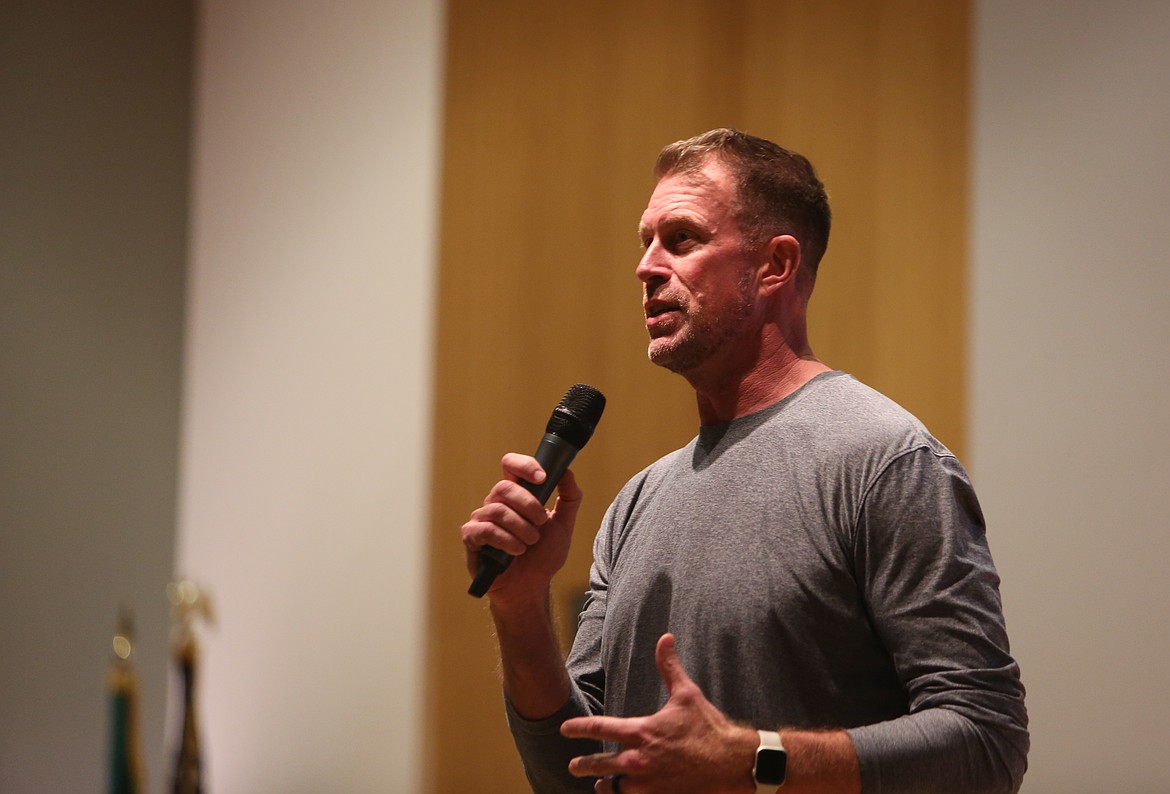
Former NFL quarterback Ryan Leaf speaks to members of the Grant County Community court Thursday. Leaf shared his story on mental health struggles, addiction and recovery.
MIKE MAYNARD/COLUMBIA BASIN HERALD
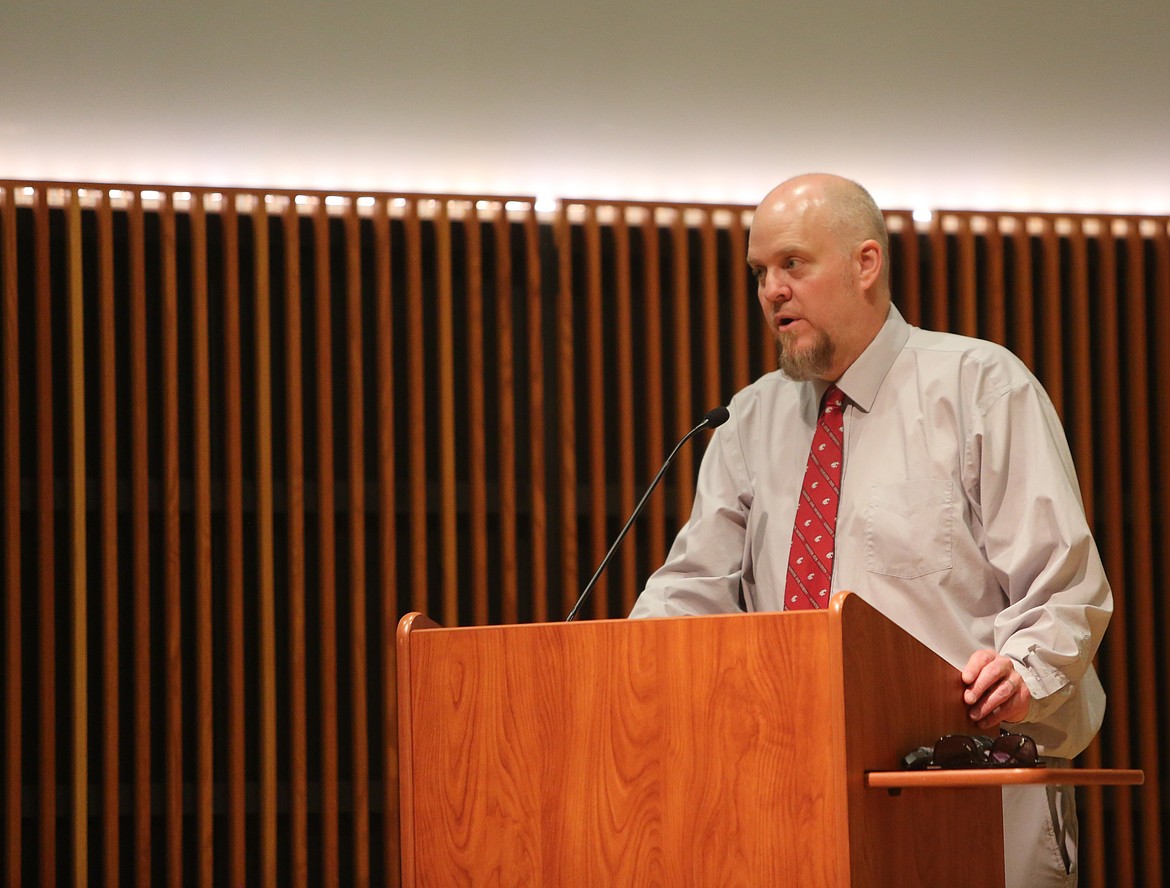
Judge Brian Gwinn gives his opening remarks Thursday before inviting Ryan Leaf up to speak.
MIKE MAYNARD/COLUMBIA BASIN HERALD
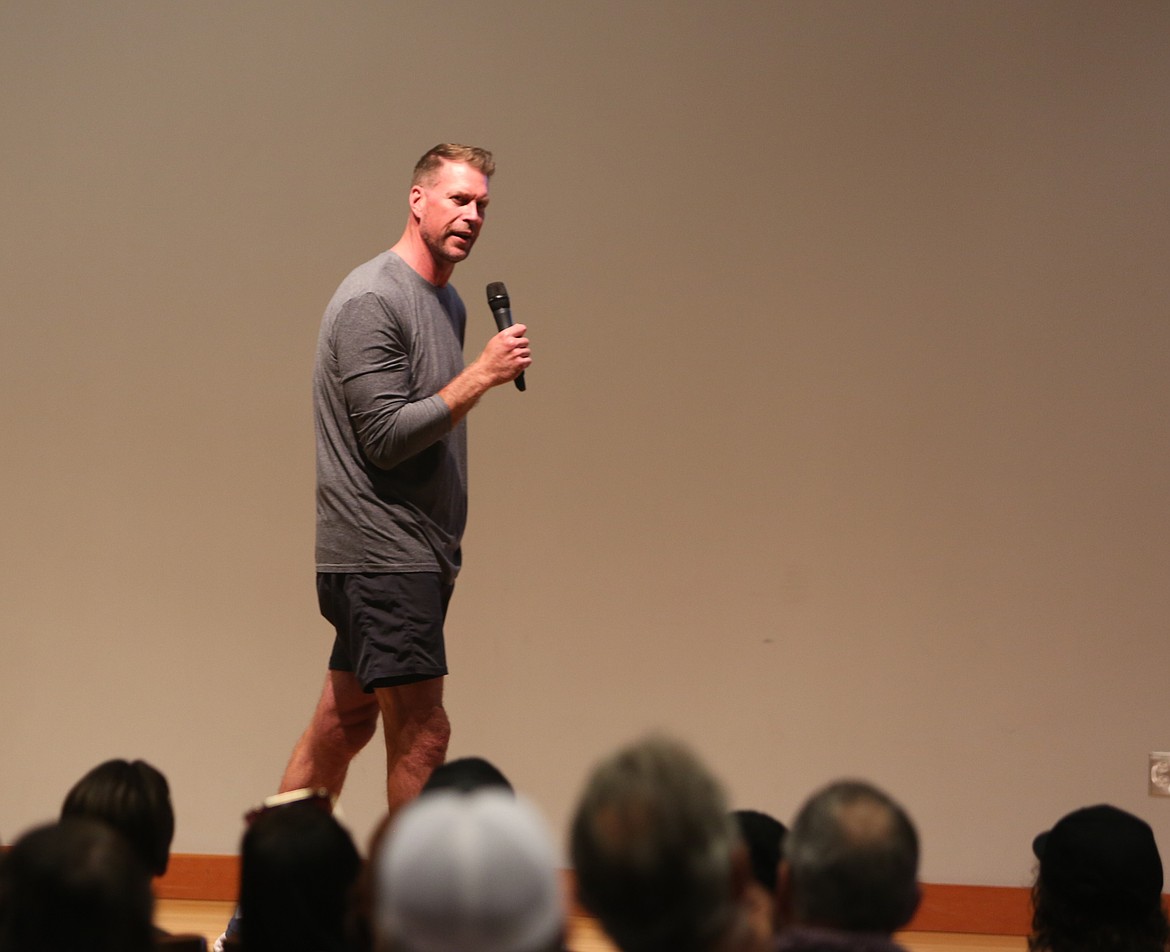
Ryan Leaf speaks to a crowd at the Moses Lake Civic Center on his story of redemption.
MIKE MAYNARD/COLUMBIA BASIN HERALD
MOSES LAKE — The Grant County Community Court hosted an event Thursday headlined by guest speaker and former NFL quarterback Ryan Leaf. When introducing Leaf, Judge Brian Gwinn spoke about the purpose of community court.
“The reason we call it community court is because we don't discriminate who comes in. We'll take veterans, people who are suffering from substance use disorders, people who are suffering from mental health, and that's what we do, is help people out,” he said.
Gwinn expressed his Washington State Cougar pride and explained why he thought Leaf was brought in to speak for them.
“It is a great thing for our community, but also a great reflection of the road to recovery, and that's what we preach at the community court,” said Gwinn. “Unfortunately, (Leaf) never got that opportunity, and I wish he did, but a lot of people in this room have seen what it does (for them), what it has done for our community.”
Who is Leaf?
Leaf was an outstanding quarterback in Great Falls, Montana, recruited to Washington State. Leaf led the Cougars through three successful years including their first Rose Bowl appearance in 67 years, while also finishing in the top three in Heisman voting his junior season.
He was selected second overall to the – at the time – San Diego Chargers in the 1998 NFL Draft.
However, Leaf’s NFL career was relatively short lived due to character mistakes – something he acknowledges today.
Competition was his drug
Early in his talk, Leaf said he was an addict before he ever took a drug.
“I just loved sports and I loved to compete. I was a drug addict long before I ever took a drug, and my first drug of choice was competition,” he said.
From a young age, he was driven to win, and if he didn’t he wasn’t going to stop until he did, he said. This drive and natural talent led him all the way to football stardom in high school and WSU. As he became better known, his reputation created a halt in his emotional development, he said.
“When I got placed on that pedestal, probably around 13 years old, when I might have realized that I may have a golden right arm...my development was arrested,” he said. “I didn't really develop much more emotionally, because I never had to.”
He had a unique way of describing what it’s like being selected so high at one of the most important jobs in football.
“At 22 years old, I was handed 31 million dollars and was told, ‘Be the CEO of a Fortune 500 company.’ Now my emotional maturity was probably still stilted at 13 years old. That's like giving a 13-year-old $31 million. I was nowhere near prepared for what that would look like,” he said. “If you and your central nervous system isn't ready for failure, it's not going to happen... and I was certainly not ready for failure. I handled failure very poorly.”
Leaf admitted money changed him, citing a prioritization of money, power and prestige at the time.
“I don't know where I learned it, certainly not from my family. It had to be from the outside world, and I consumed it,” he said.
On the field, Leaf started his career 2-0. However, a pair of losses brought out some of his struggles with emotional development.
Incidents in the locker room became very public, including a video recording of him yelling at a reporter. These incidents all came before Leaf ever began abusing drugs. He noted his inability to handle failure, narcissism and lack of coping tools as key contributors to his issues at the time. Within a few weeks, Leaf said he went from a savior in San Diego to a scourge.
Life after football
By 2001, Leaf was out of the NFL but his internal struggles remained. At draft time he became a consistent reference point as the kind of player teams should avoid. He dealt with intense shame, judgement and fear in fallout of his NFL career, he said.
Leaf was out in Las Vegas where he was offered Vicodin at a party. This started his journey with substance use disorder, and a descent into an internal battle regulating emotions he struggled to process, he said.
Once the fame faded away the financial resources that may have supported his addiction dried up as well. He returned home to Montana and sought out any way to fulfill his needs by any means necessary.
Leaf was in and out of prison after he began stealing prescription medication from homes in Great Falls. Eventually he was sentenced to serve prison time.
Leaf rejected any sort of outreach from fellow inmates or officers who wanted to offer him a chance to turn his life around the first couple of years he was in there, he said. However, one inmate broke through to him and told him that he had a chance to turn his life around since he would get out one day.
From there, he was convinced to help fellow inmates in the library with literacy issues. It was there where Leaf said he witnessed another man ask for help for the first time, something he had never done before, he said.
This experience helped him find purpose through service and concluded that it be the foundation of his life after he is released from prison.
A hope dealer
Leaf has been sober for about 12 years, working to rebuild his life with service as his foundation. He tries to help others struggling with substance use disorder or other mental health challenges by talking about what he can control: attitude, behavior and effort.
To be able to have something to offer communities gives Leaf a surreal feeling, he said.
“It's incredibly humbling because this was never the plan... you wanted to be able to make an impact in some way. And it's cool to be able to come back to the community that I feel like is home, (and the people) who have supported me since I was 18, and (I’m) incredibly grateful for it,” Leaf said.
Leaf shares his story all over the country; in doing so he hopes someone who might need to hear it is motivated enough to seek the help they need. Part of his journey was breaking through the stigma that not only surrounds addiction, but also mental health.
“The reason why I didn't get the help that I needed was because of stigma, because the idea that men don't show feelings or don't admit to going through stuff,” he said.
In doing the work he does now, he said he found a new term to describe himself.
“I'm a hope dealer,” Leaf said. “My story isn't more important or less important. I just think the unique qualifiers sometimes get more people in the room, because there's a sports angle, or a celebrity angle to it, which is silly nonsense, but I'll take it if it can help somebody who's in the same spot I was. I know how miserable it was, and I don't want anybody to ever be as miserable as I was.”
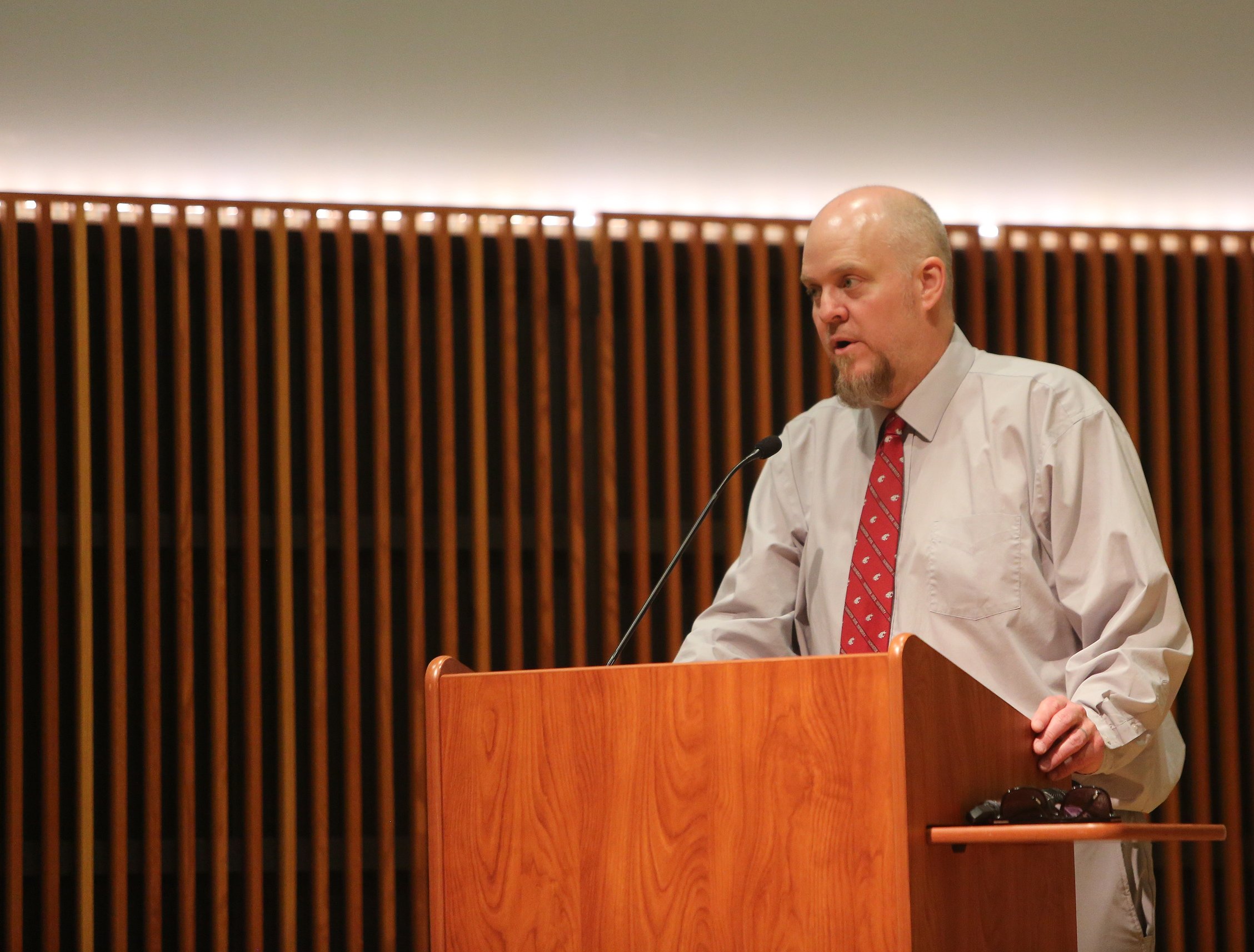 Judge Brian Gwinn gives his opening remarks Thursday before inviting Ryan Leaf up to speak.
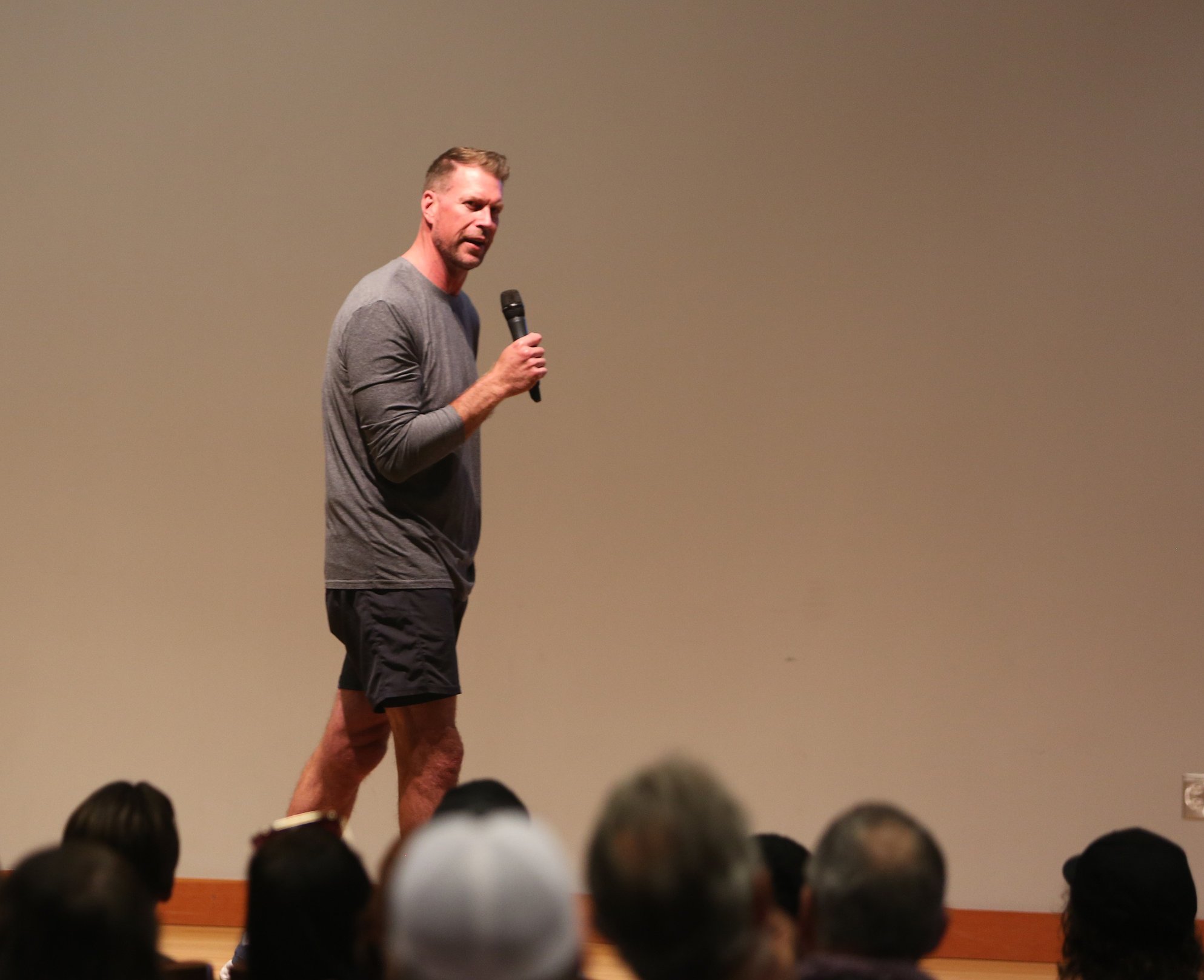 Ryan Leaf speaks to a crowd at the Moses Lake Civic Center on his story of redemption.