


Energy and energy alternatives discussed at Newhouse summit
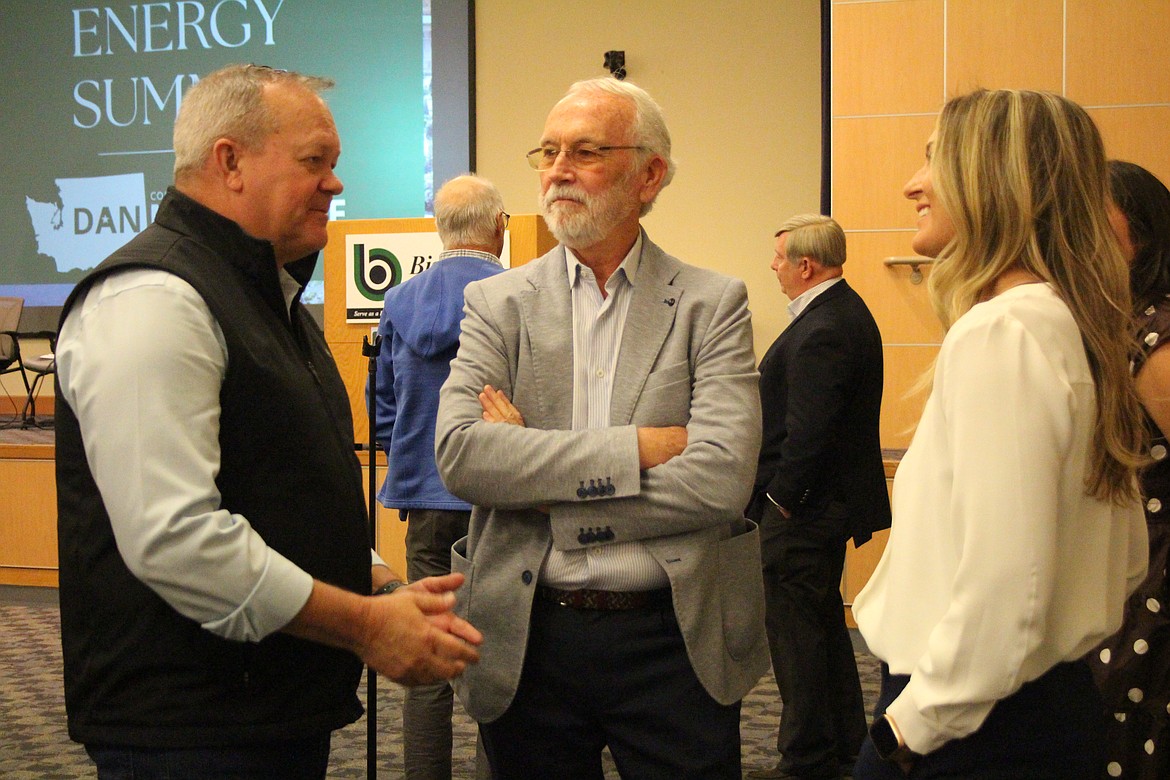
MOSES LAKE — Representatives of industry, government and power generation spent Monday discussing the present and future of power production at an Energy Summit hosted by Fourth District Congressman Dan Newhouse.
Newhouse said the goal was to talk about solutions as well as challenges.
“(The summit) focused on – well, a lot of different aspects of energy,” Newhouse said. “Tremendous need, that’s probably the best word for it. A shortage, which is not allowing our potential to be realized here in Central Washington. How do we address that? How do we increase the amount of energy production in a timeline that makes sense? We can’t wait years and years; we need to get things done as quickly as possible. How do we do that at a cost we can afford?”
The federal and state governments have a large presence in the Pacific Northwest hydropower system, and Newhouse that’s part of the discussion too.
“What are some of the obstacles, challenges, and whether things have to be policy decisions that are made to be made in Olympia or DC, or (do) minds have to be changed, hearts and minds of people?” he said.
Participants got together at Big Bend Community College to discuss the possibilities of nuclear power and what the Columbia River means to the Fourth District. Grant County PUD Commissioner Larry Schaapman was one of the panelists for that discussion and said he thinks there’s a disconnect between the policies surrounding hydropower and the public.
“What a consistent source of power means,” he said.
Molly Simpson, Douglas County PUD commissioner, said people don’t always understand the other contributions of the system, including flood control and irrigation.
“It’s underappreciated and undervalued in our region,” she said.
Other panelists addressed energy shortages and the impact on development, focusing on Moses Lake as an example. A fourth panel discussed the status of four dams along the lower Snake River that have been a target of efforts to decommission them.
Newhouse said the energy situation presents a lot of challenges.
“There are so many other factors that we have to take into account, too,” he said. “Every form of energy has what you could call a downside or a challenge. There’s a cost, so we have to do our best to minimize that cost, while at the same time producing as much affordable energy as possible. (It’s) easy to say, but it’s not easy to accomplish.”
Getting different players together is part of figuring out the solution, he said.
“Bringing people like this together. They’re literally experts in a lot of these fields and having these people come together and talk and ask each other questions, and get people thinking about (other perspectives). It’s just very valuable.”
Every region in the country is facing the same challenges, Newhouse said, but the answers will be different in different places.
“We have several assets available to us; the hydro system, for instance,” he said. “Solar has many components to it that in some places don’t work as well as other places. You can’t just say, ‘This is what we’re going to do.’ I think you have to have a conversation about all of these alternatives, because it depends on where you are in the county as to which one is going to apply.”