


Detective warns Ephrata parents of rising online threats to local youth
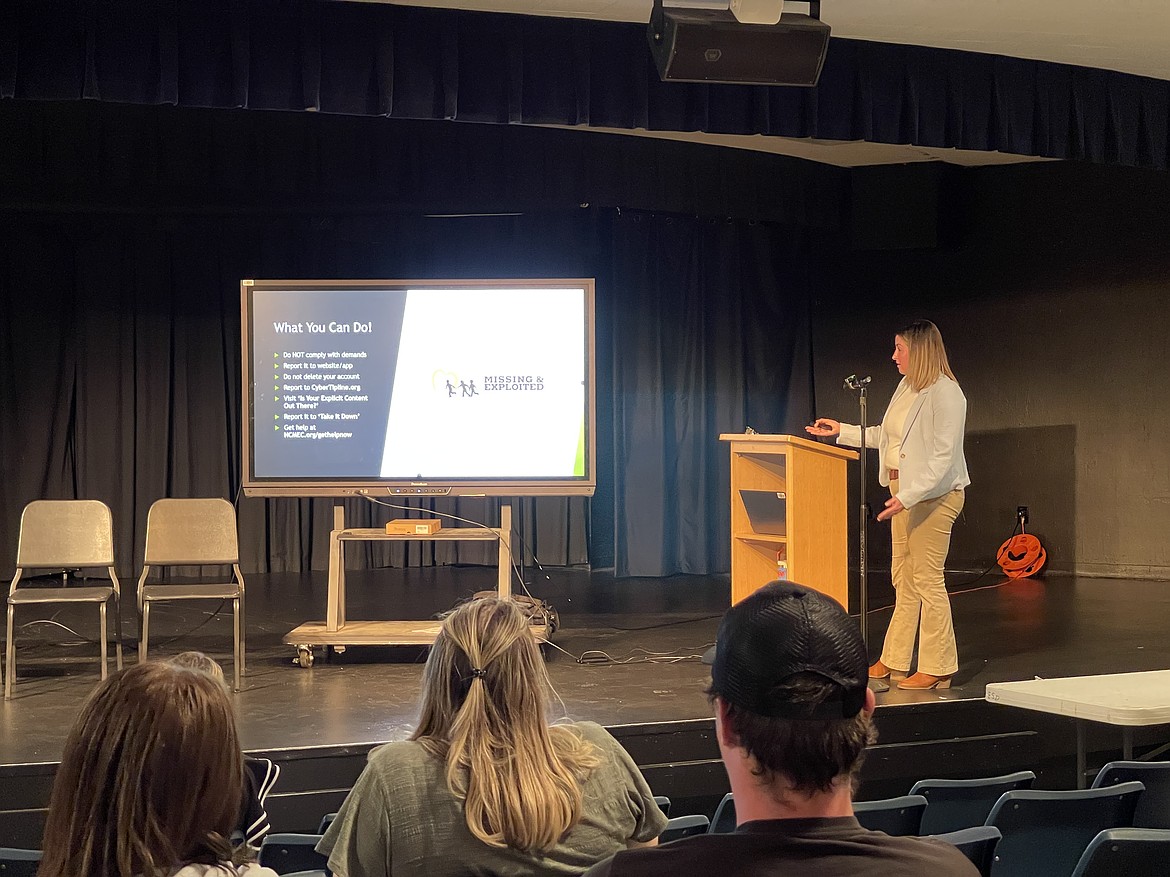
Detective Katrina Ball leads a presentation on online safety for parents to protect their youth on Wednesday night. She said crimes against children on the internet are happening in Grant County, and parents need to be engaging with their children to ensure they don’t become a victim.
COURTESY PHOTO/GRANT COUNTY SHERIFF’S OFFICE
EPHRATA — Grant County Sheriff’s Office Detective Katrina Ball didn’t mince words Wednesday night as she described the growing dangers facing children online, telling Ephrata School District parents that sextortion, online enticement and extremist recruitment are no longer distant threats.
“This is not just another internet safety presentation,” Ball said. “It is happening here, to our own kids.”
Ball, an Internet Crimes Against Children investigator, said sextortion cases involving Grant County teens have surged, with boys making up the majority of victims.
“These horrible people on the other side of the world know they can take advantage of teen boys,” she said. “They know they’re less likely to come forward to a trusted adult.”
She said many victims believe they will be punished if they tell their parents, a fear that keeps them silent even as threats escalate.
“It’s absolutely sickening,” Ball said. “They think they’re going to be in trouble, when really they’re the ones being exploited.”
Ball shared national data showing that 95 percent of teens use social media and that a third say they are online “almost constantly.”
She said heavy use is linked to anxiety, depression and addictive behavior.
“Their brains don’t know when to shut it down,” she said, adding that late-night phone use often goes unnoticed. “They can be on their phone until two in the morning, and we might not know that.”
One of the most dangerous trends, she said, is location‑sharing. Ball described a local case in which a teen girl left her Snapchat location settings on, allowing an older man she met online to come directly to her home.
“It doesn’t get more personal than sharing your exact location with strangers,” she said.
Sexting among teens is also widespread, Ball said, noting that more than a third of teens report receiving a sexual image.
“Screenshots are a thing,” she said. “What you post can spread very, very quickly, even if you think it’s only going to your friends.”
Ball read a statement from a Grant County mother whose 12‑year‑old son was victimized but hid the abuse. The parent described mood swings, aggression and secrecy around his phone.
“No parent is ever truly prepared for how real and invasive online exploitation can become,” the mother wrote. “By the time I became aware, the emotional toll had already taken hold.”
Ball also warned families about an online extremist network known as the “764” or “Gore Group,” which the FBI says targets children ages 10 to 17. She referenced a Gig Harbor case in which a 13‑year‑old boy died by suicide after being groomed by the group.
“They attack vulnerability,” she said. “They go to places where kids are seeking guidance, and they feed on them.”
Throughout the presentation, Ball urged parents to stay involved, monitor devices, set boundaries and talk openly with their children about online behavior. She encouraged families to report suspicious activity through social media platforms or the National Center for Missing and Exploited Children’s CyberTipline.
“Kids are smart, but we can be smarter,” Ball said. “Otherwise it could cost them their sanity — or their life.”
The full event can be watched on the Grant County Sheriff’s Office Facebook page.