Soap Lake Library teaches young gardeners how to help native bees thrive
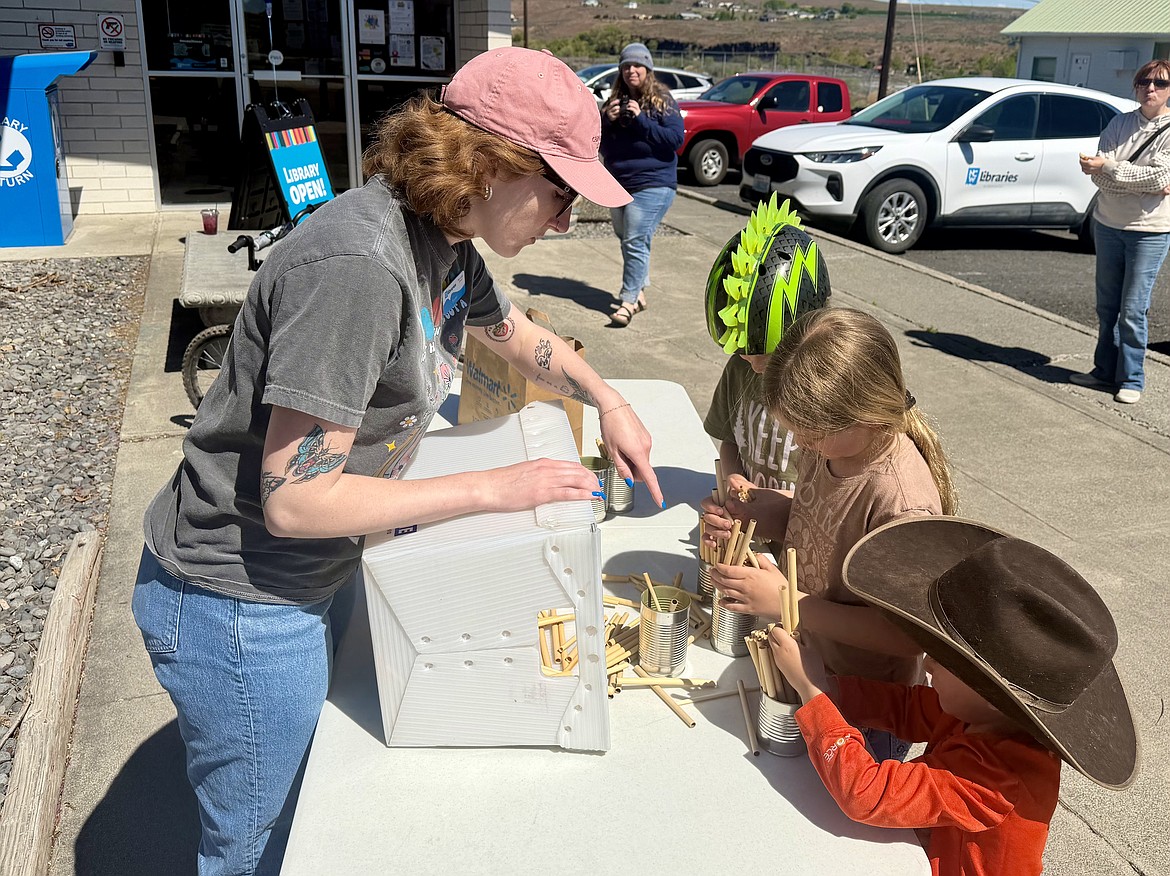
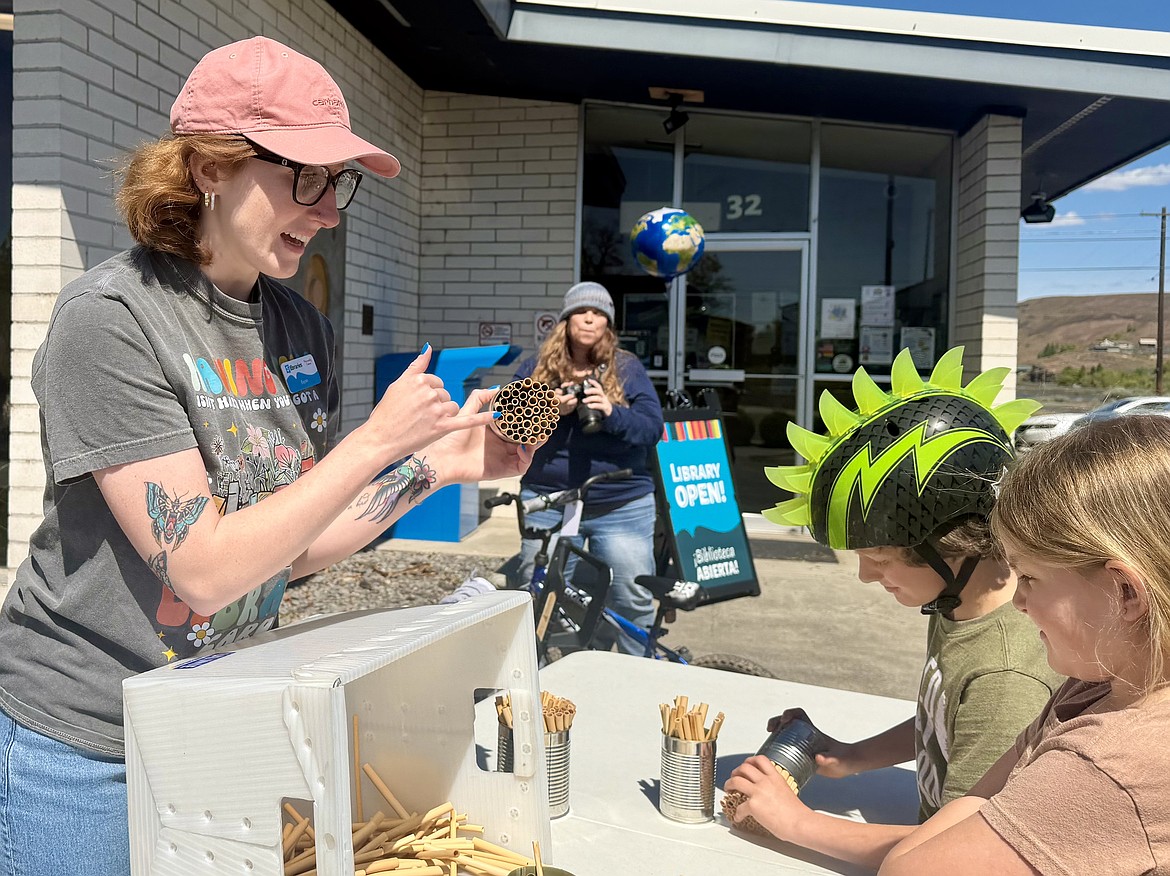
SOAP LAKE — Families visited the Soap Lake Library this week for an Earth Day program that turned tin cans, bamboo stems and paper tubes into “bee hotels” — small, handmade shelters designed to support the region’s solitary native bees.
Branch librarian Evynn Olson said the hands-on STEM activity introduces children to pollinators that often go unnoticed but play an outsized role in local gardens and ecosystems.
“This is a STEM program focused on natural pollinators in our local ecosystems that don’t use hives,” Olson said. “Leafcutter bees, mason bees – they are super important to gardens for them to thrive and grow, and they use tubes to plant their eggs and grow their families.”
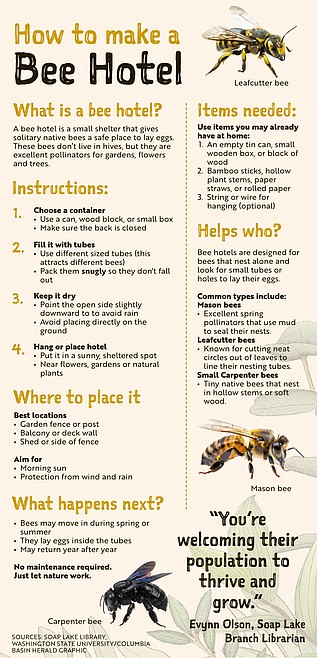
Unlike honeybees, solitary bees don’t live in colonies. Instead, they seek out narrow tubes, hollow stems, or small cavities where they can lay eggs and seal them off with leaves or mud. Bee hotels mimic those natural spaces, giving the insects a safe place to nest.
“We’re making bee hotels and adding them into our garden,” Olson said. “Soap Lake has a lot of great garden area and natural space for bees.”
The library offered a limited number of supplies, but participants were encouraged to bring extras – bamboo sticks, paper straws, rolled kraft paper, hollow stems and cardboard tubes – to customize their designs or continue building at home.
Finished hotels can be hung in a yard, garden or balcony.
Olson said the structures don’t need to be complicated and people can make them at home.
“All you need is some sort of wood structure with a closed back and an open face. It could be wood or a can, like we’re using today,” she said. “You put in all the different‑size tubes so the bees can pick what’s most comfortable for them, and then you stick it snugly into a spot at home.”
Once bees begin nesting, she said, they often return year after year. She said it may take them a while to begin using the new facility but once they do, they will return generation after generation.
“They’ll know, once they’re breeding their family in the bee hotels, they’ll be in the area,” Olson said. “You’re welcoming their population to thrive and grow.”
Adding natural grasses, leaves and twigs can expand the project into a full “bug hotel,” supporting a wider range of beneficial insects that help gardens flourish.
“It can support your gardens to grow beyond just normal garden growth,” Olson said. “Over the years the bees will keep coming back.”