Looking for sheds provides the fun of the hunt
PLAIN — For people who like to spend as much time outdoors than they do indoors – if not more time outdoors – the woods provide a plethora of things to do and see. Some, like camping, have a broad appeal, while others are known to a own special set of enthusiasts. Not everybody is a shed hunter, after all.
“What are you going in the woods for? Everybody has a reason why they go – hiking, enjoy the scenery, maybe see a deer or elk,” said DJ Sweet, Moses Lake. “Now add a twist to it.”
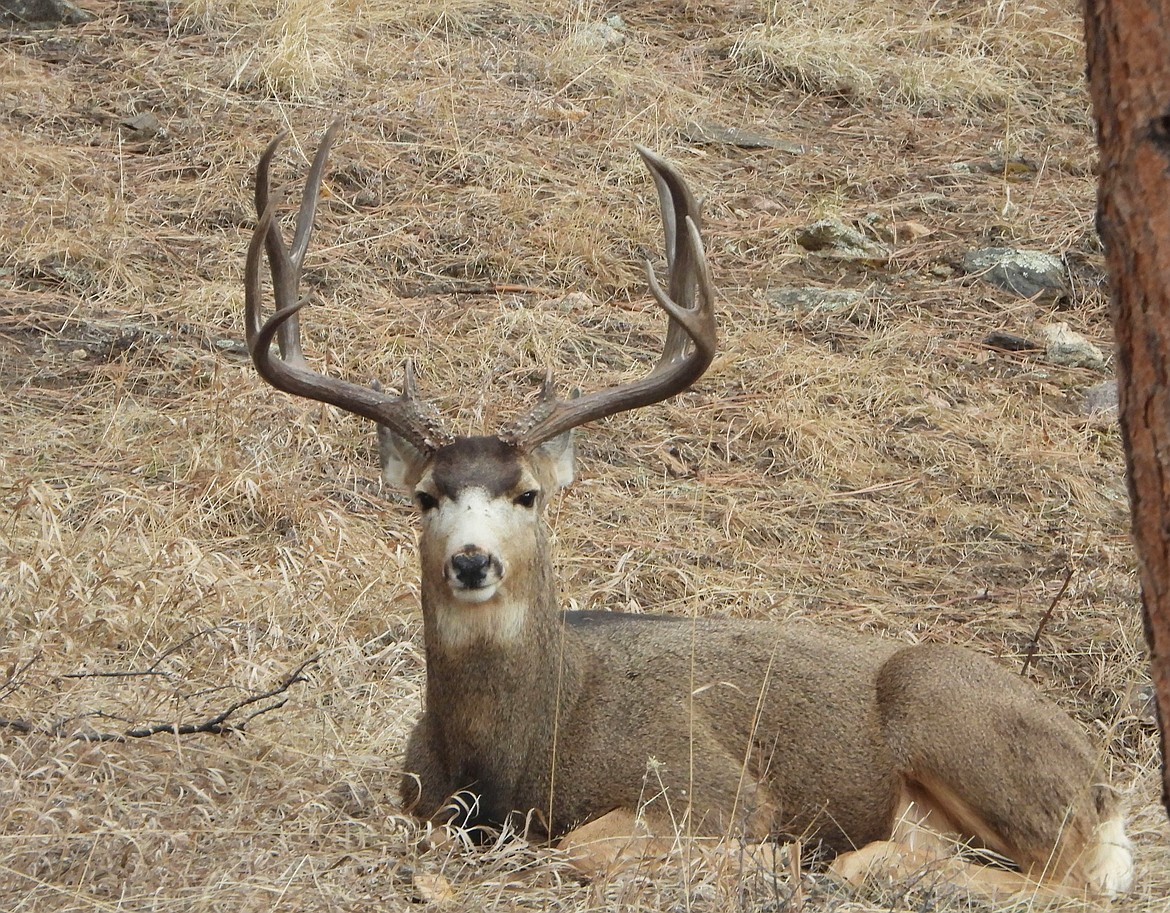
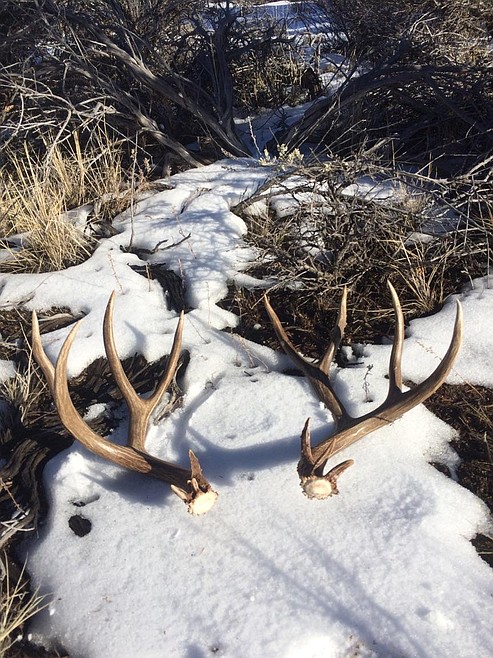
The twist comes from a natural phenomenon, the fact male deer, elk and moose shed their antlers every winter and spring. Being of no further use to the animals, they lie where they fell. Shed hunters go out in the woods or into the sagebrush to find them.
Thomas Hargett, Prineville, Ore., said originally it was a family hobby for him.
“I started in (about) 1994, when I was a little kid. It was just a way for my parents to get us out of the house and go to the woods, kill some time, exercise (and) hike,” he said.
Sweet compared it to finding Easter eggs, and said it’s a bonus for something that’s already fun.
“You put in a lot of work and finding one, you're rewarded. But not only (are you) rewarded, you're already out there seeing things and witnessing things and experience just pure nature and the beauty of it. Then then all sudden, boom; there's an Easter egg. You're like, ‘Heck, yeah,’” he said.
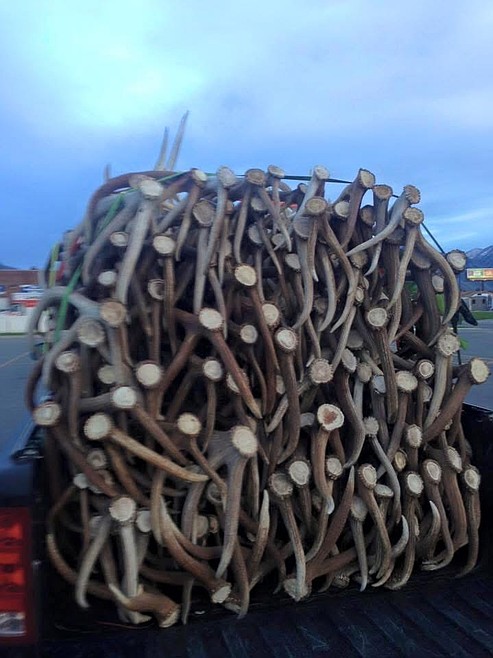
In addition to hunting on his own, Hargett buys and sells antlers, he said. Top-grade finds are used by artists and furniture makers; lower-grade finds go into items like dog chews.
Hargett said that while shed hunting is a year-round activity, deer and elk usually lose their antlers between early February and late March, when they’re eating the last forage of the previous fall.
“It’s usually the first spring activity that people can get outside and start doing,” he said.
As with any outdoor activity, however, Sweet said it’s best to be prepared. The possibility of selling antlers attracted more people, some of whom don’t prepare before they go out searching. Among other things people can accidentally end up in restricted areas or on private property.
There are phone apps that help people find their location if they get disoriented, and Sweet recommended people install one.
“Most shed hunters have an app on their phone that tells them where they're at. To make sure they're not on private property, to make sure they're not in closed areas,” he said. “(It) not only tracks where you're going or you've been, but let's say you leave the truck and you kind of get disoriented. You can also mark your vehicle so if it gets dark (and) you can't find your way back, you pull up your app, and it will take you right back to your vehicle.”
In fact, installing a location app should be the first thing, he said.
“Before you try anything, you look for an app so you won’t get lost, because that’s the biggest thing in the woods. My cell phone doesn’t always work up there, so if I get lost these apps will work without service,” he said.
Hargett also recommended taking precautions before going shed hunting.
“You definitely don't just want to go wandering if you're not familiar with the area, unless you have GPS or some way to mark where your vehicle is so you can return to the point you started,” he said.
An old-fashioned compass and map can work if you’re familiar with orienteering and don’t care for digital devices intruding on your time in nature.
Technology or other tools are only part of the preparation. People should have basic knowledge of the woods or the range and make sure they carry adequate water and a survival pack, Sweet said.
“When you go hiking, you already have a general idea what you're going to take for the day,” he said. “Same thing (with shed hunting).”
Deer and elk move with the seasons and the weather – one year the conditions will be good in one location, the next year they’re better in a different location. During the time of year when they’re shedding deer and elk enjoy places where they can get some sun and warm up. A shed hunter pays attention to wintering areas.
The antlers get itchy and uncomfortable before they fall off, and elk and deer will find a handy tree to scratch the itch. Shed hunters know the marks.
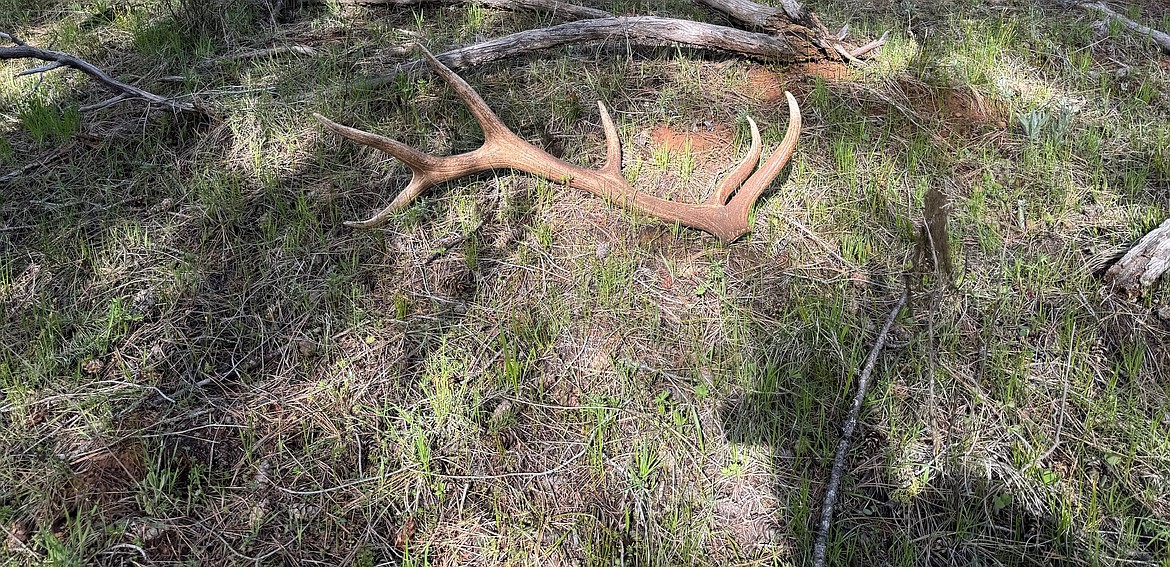
But finding a likely area doesn’t guarantee success. Newly shed antlers retain their brown color for about six to eight months, Hargett said, and they blend into the landscape. Sweet said antlers are quickly covered by moss and undergrowth in areas with significant rainfall.
After about six months the antlers start losing their color, Hargett said, but they’re still hard to see.
“Honestly, I guess I've done it so long that it's just a natural shape that I look for when I'm in the woods or out on a hike. I'd say it usually takes a year or two to get really good at it. The biggest thing is going slow,” Hargett said.
Sweet said he started shed hunting around 2012, and some years are more productive than others.
“I would say it’s 80% luck, 20% skill,” he said. “Your skill level is how much time you put into it.”
Sweet remembered one hunting spot he searched three years running.
“First year I lost my brand-new knife,” he said. “Second year I found my brand-new knife. The third year I found a shed that was there the whole time.”