
Wednesday, March 11, 2026
51.0°F

WA House approves 'millionaires tax’
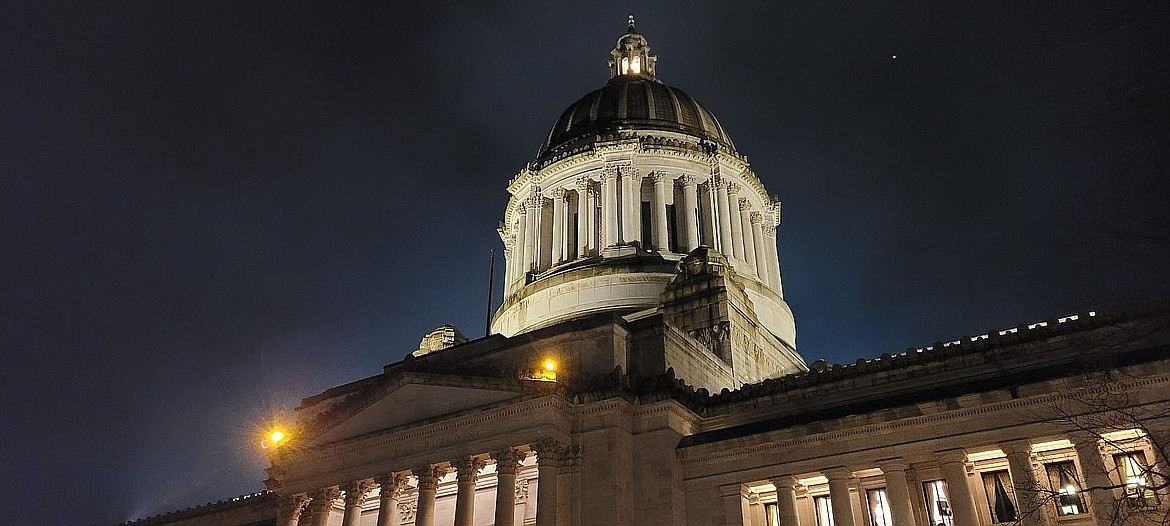
OLYMPIA — After a grueling 25 hours of debate, a bill taxing households earning more than $1 million a year advanced the Washington House on Tuesday, March 10, inching closer to shedding the state’s no-income tax status.  

The bill advanced with a 51-46 vote, with eight Democrats joining Republicans in opposition. The debate began around 5:30 p.m. Monday and ended at 6 p.m. the following day, as Democrats, one by one, rejected a majority of the more than 80 proposed amendments by Republicans and a few fellow party members.  

The bill will now return to the Senate for concurrence before being sent to Gov. Bob Ferguson’s desk  for signature. The governor, who rejected previous versions of the bill, pledged that he will sign this one.  

Democrats and supporters of the dubbed “millionaires tax” argue the bill is necessary to restructure Washington’s regressive tax code that disproportionately taxes low-income households compared to wealthier households. The state currently relies on excise and consumption taxes. 

“We've been debating this for hours but Madam Speaker, we've been on this path for decades,” said Rep. April Berg, D-Mill Creek, chair of the House Finance Committee on the floor. 

“As a state, we are struggling to fund vital services and we are in desperate need of structural tax reform — foundational tax reform,” Berg went on. “The millionaires tax that's before you, Madam Speaker, is a way to change that.”  

Republicans have emphatically criticized the bill since its introduction, warning that not only is the measure unconstitutional in Washington but will eventually trickle down to working-class Washingtonians and drive businesses elsewhere.  

“This is not a tax on millionaires, this is a tax on all of us,” Rep. Joshua Penner, R-Orting said. “It's just a matter of when we will be paying this tax.”  

The bill places a 9.9% tax on households earning more than $1 million and would take effect Jan. 1, 2028, with collections coming in by 2029. The tax would only apply to income above the million-dollar threshold, meaning someone making $1.3 million would be taxed on the $300,000 above $1 million. Lawmakers estimate it would apply to about 20,000 to 30,000 households in the state.  

According to the bill’s fiscal note, the tax is projected to generate about $3.5 to $4 billion annually with most funds directed to the state's general fund, which can be used for public schools, health care, and higher education.  

In the bill’s current form, 5% would be earmarked for the Fair Start Kids account that provides resources for childcare and early education, replacing the 7% chunk meant to support local public defense systems. It would also exempt small businesses grossing less than $300,000 a year from paying the state business and occupation tax, and eliminate sales tax on diapers, toothpaste and shampoo.  

In line with the governor’s request, the bill would expand the Working Families Tax Credit program, which offers sales tax rebates to lower-and moderate-income households to those 18 and older, extending eligibility to 460,000 additional households.  

Additionally, starting July 1, 2026, schools will be exempt from the recently passed sales tax on services, including live-presentations, temporary staffing, and security. It also would roll back the rest of the retail sales tax on services beginning in 2029, except the tax on advertising.  

With Democrats holding the supermajority, the fate of the bill was clear. Yet Republicans, determined to delay the legislation as much as possible, proposed more than 60 amendments, including some spearheaded by Rep. Tom Dent, R-Moses Lake, and Rep. Alex Ybarra, R-Quincy.  

Dent proposed a provision that would protect retiring farmers selling property, and Ybarra proposed one that would prohibit the bill from going into effect until the National Basketball Association approved a team in Washington. One of the reason the former Seattle Supersonics left the state, according to its owner at the time, is because taxes were becoming excessive. 

Another measure was introduced to send the bill to voter ballots to ratify or reject, and one that would require an approved change to the state constitution.  

Those amendments were ultimately not adopted.  

While Democrats celebrated the historic vote, Republicans remained frustrated.  

“The people that have been opposed to this not only don't feel like their voice was heard; they see the job about new taxes, and they see no objective benefits,” Rep. Matt Marshall, R-Eatonville said. “This is a dark day in Washington's history … and we have lost the trust of the people.”  

The legislation is now in the Senate where minor changes must be approved before sending it to the governor for signature. The short session adjourns Thursday.