
Asking questions, curiosity, knowledge focus of Wahluke FFA project

Students in Jan Bender’s fifth grade class from Morris Schott Elementary get a close look at an exotic bug.
CHERYL SCHWEIZER/COLUMBIA BASIN HERALD

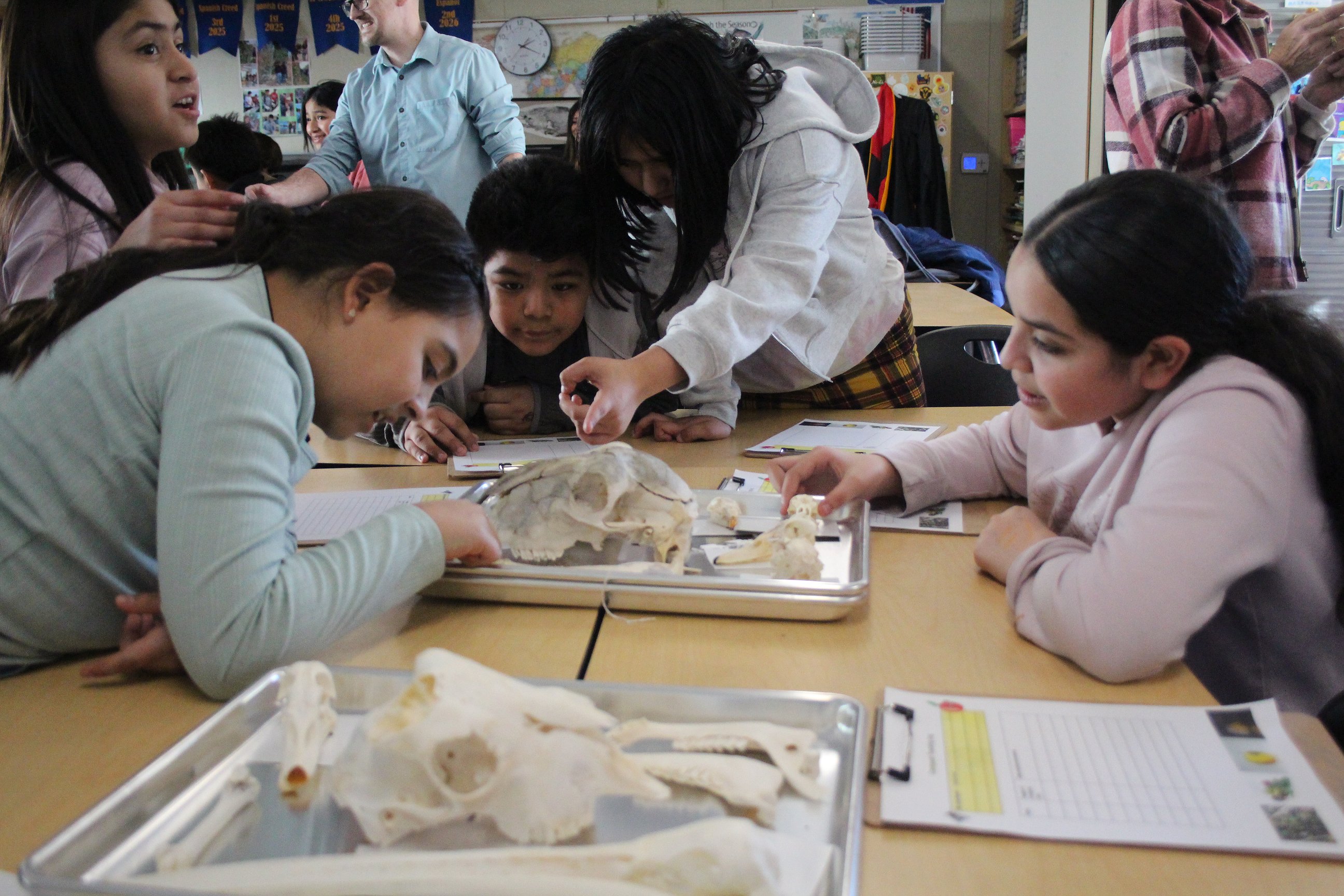
Identifying bones was among the lessons Wahluke FFA students taught fifth graders as part of the “Farm for Kids” program.
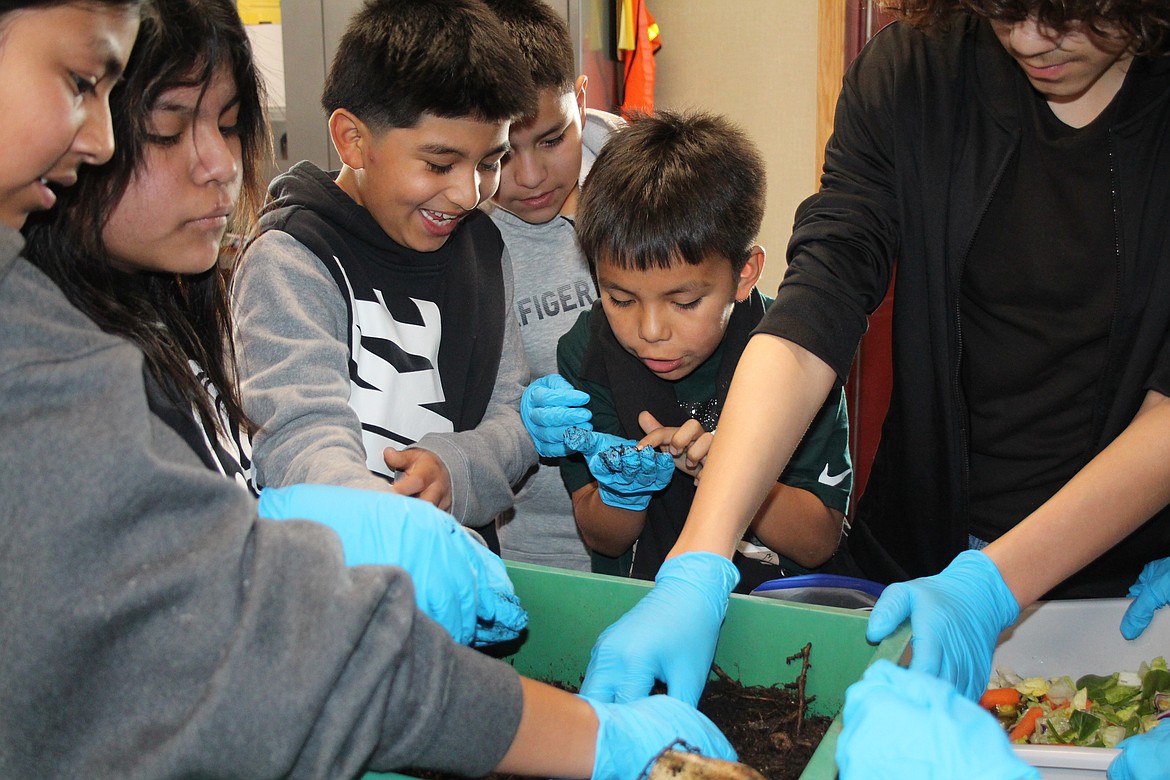
Fifth graders study the components of the compost pile in the Wahluke FFA classroom.
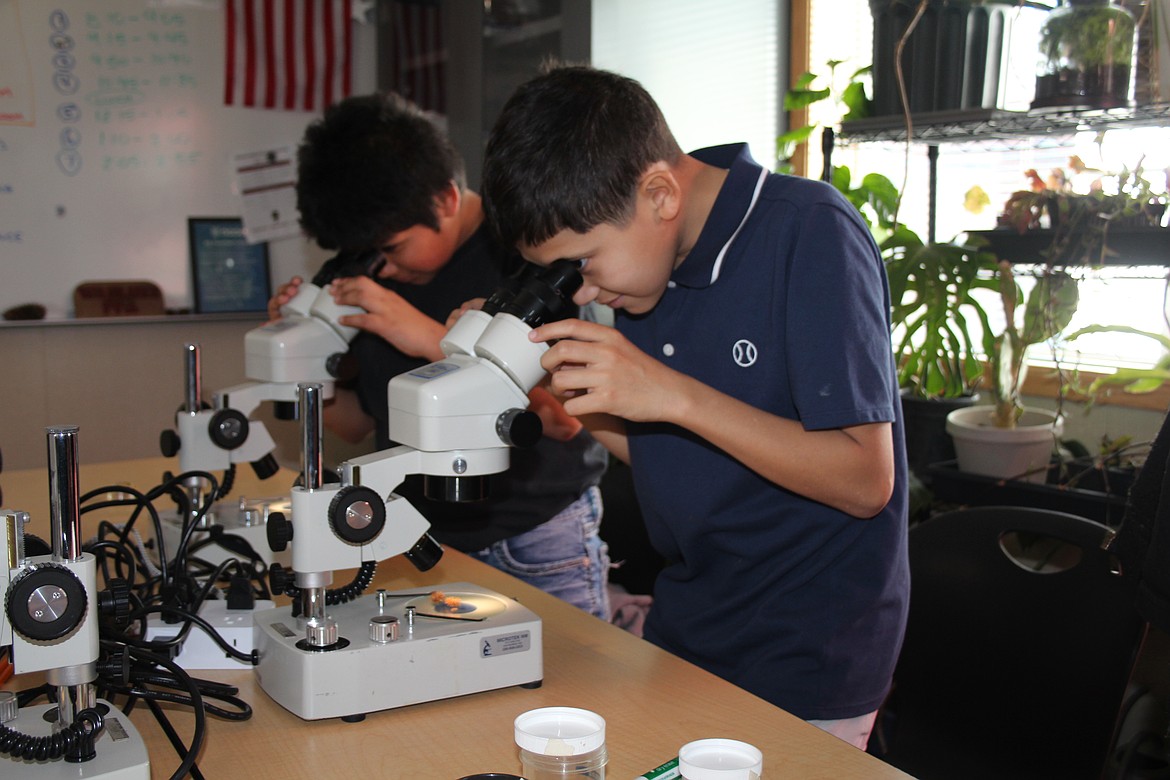
Fifth graders use the microscope to look at decomposing cells.

Animal identification was among the activities for fifth graders in the FFA class.
MATTAWA — The fifth graders from Morris Schott Elementary had seen bugs and gross worms and skulls and some gross compost during their lesson on decomposition from Wahluke High School Future Farmers of America students. Their last stop, said ag teacher and FFA advisor Jonathan Betts, was out in the greenhouse.
“We’ve got something a little bit grosser,” Betts said.
The fifth graders could opt out, he said, but most of them decided to take a look. As part of their project the FFA students had come into possession of a dead skunk, which s in the process of becoming a skunk skeleton.
“Ooooh,” said the fifth graders. “Ewwww.”
Bringing in the fifth graders is part of a FFA competition designed to introduce children to farm-focused science, Betts said.
“The focus is getting high school students to be educators for elementary school and/or junior high students,” Betts said.
The FFA students set up stations where fifth graders got to handle bugs and worms, feed the compost pile, examine skulls and bones, and look at cells through the microscope, among other things. Sandra Baltazar, who’s participated in the “Farm for Kids” program for three years, said she wants the fifth graders to indulge their curiosity.
“I hope it was a fun thing for them, (and) they got a better understanding of what decomposition is,” she said.
The high school students supervised each station, writing and conducting each lesson.
“They came in during lunchtime and made sure we had all the resources together,” he said.
The class was noisy and busy, and Betts said that’s a good way to do a science lesson.
“A little bit of curious chaos,” he said. “Where the kids are the ones investigating and asking questions and just excited. You’re motivating them with something that’s kind of fun and grabs their interest.”
All Wahluke School District fifth graders will be invited to the decomposition class; they were given some lessons to complete before the FFA class. During class, Betts was the focus of a group of curious fifth graders asking about cells.
“They did their homework,” he said. “I respect that.”
Once all the fifth graders have been through the science class, the FFA students will analyze the results.
“We’re probably all going to work together,” said FFA member Mayte Robles. “Gathering information like, what did the kids learn? Did they enjoy it? Were they interactive during our teaching?”
Betts said it’s the third year for Farm for Kids in his class.
“The past two years, FFA students did an after-school garden club and taught about seeds and how they spread,” Betts said. “Like dandelions, coconuts floating on the ocean, the seeds that pop open and spread. Each year we choose a different topic.”
Betts said FFA offers students a plethora of competitions to test their skills in everything from public speaking to analyzing commodities.
“This one's my favorite. I love the opportunity for high school students to kind of stretch themselves and see themselves as a teacher,” he said.
Sophia Ramirez said she wants the FFA project to be of value to the fifth graders.
“I would say I’m hoping that they actually learned something, like we actually left a mark on what they learned about decomposition and bones and insects,” she said.
 Identifying bones was among the lessons Wahluke FFA students taught fifth graders as part of the “Farm for Kids” program.
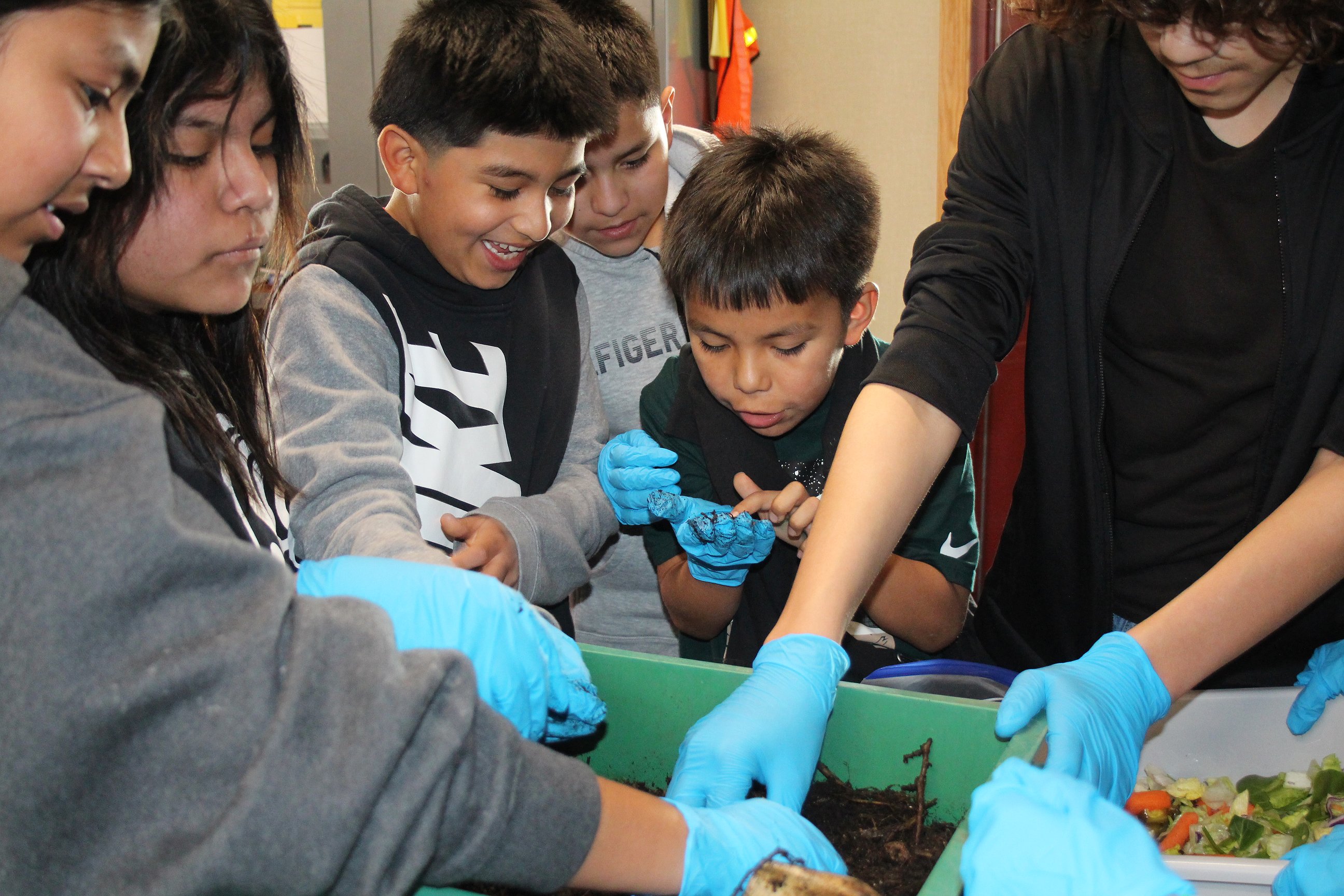 Fifth graders study the components of the compost pile in the Wahluke FFA classroom.
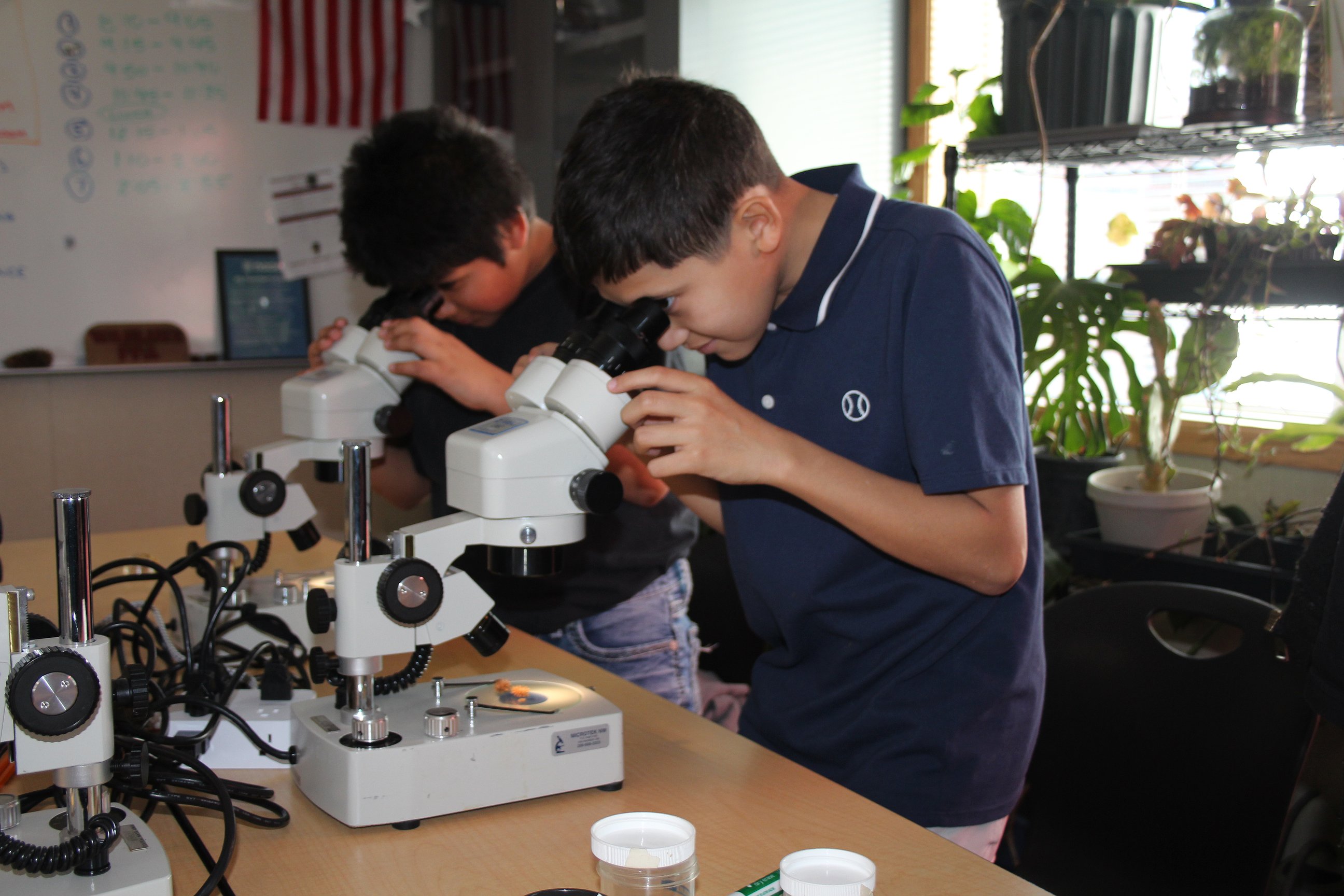 Fifth graders use the microscope to look at decomposing cells.
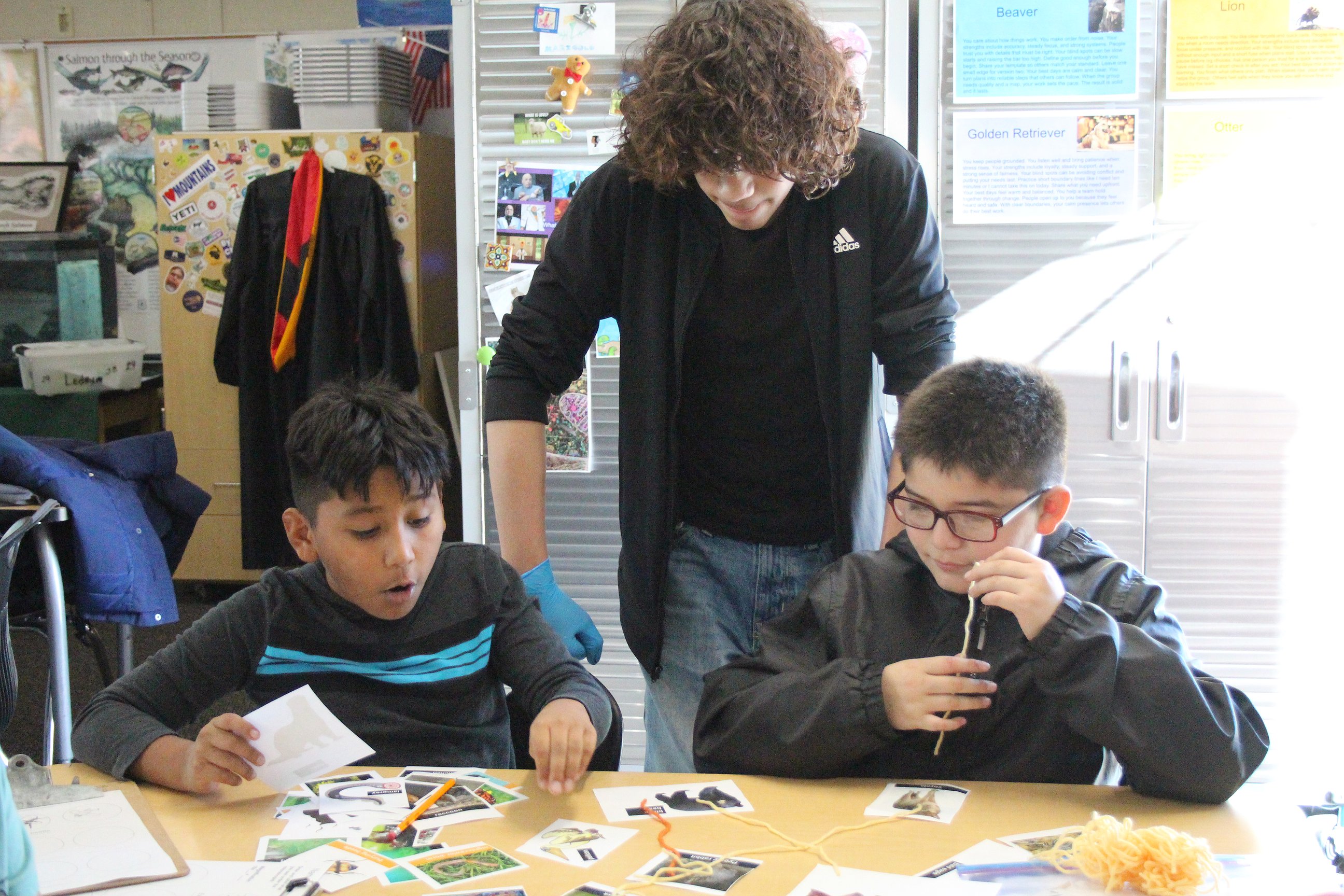 Animal identification was among the activities for fifth graders in the FFA class.