
Basin churches come together for Lent, fellowship
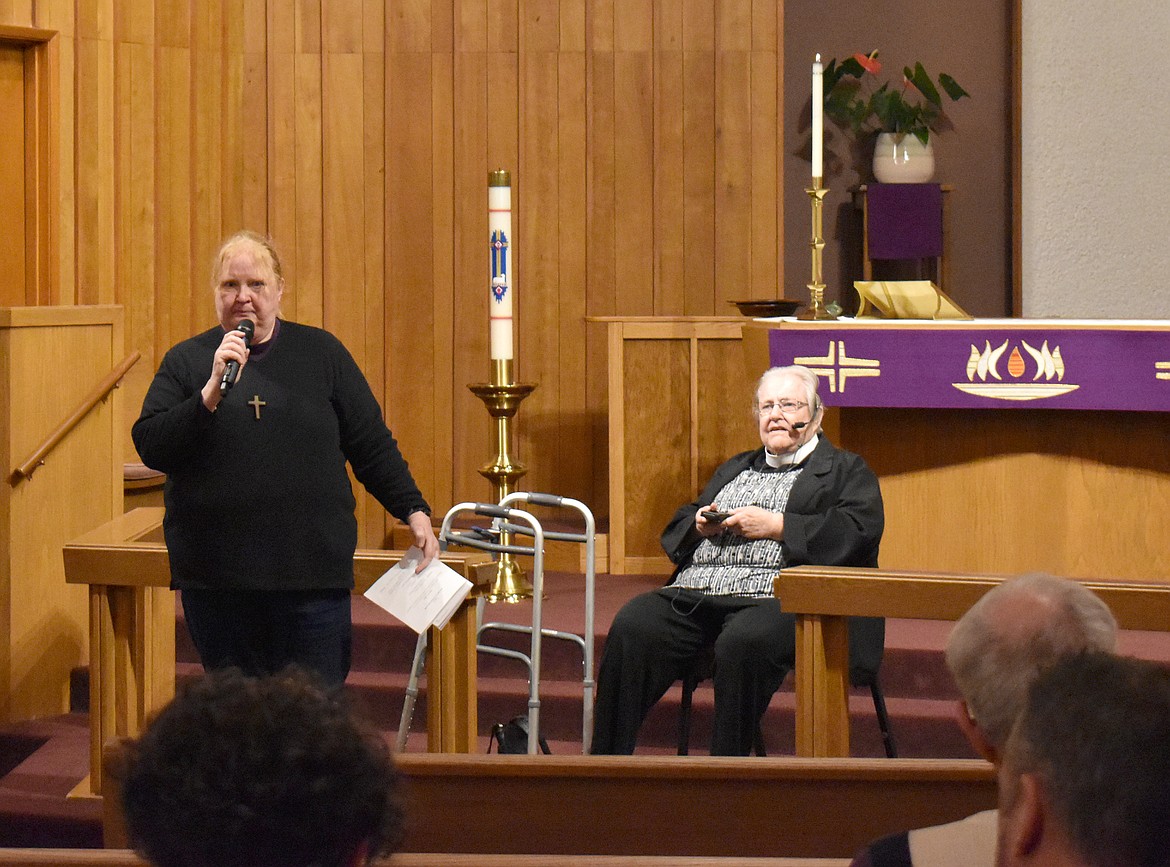
Immanuel Lutheran Church Interim Pastor Mary Anthony, left, and Rev. Ellie Shapton of St. Martin’s Episcopal Church lead a Lenten service at Immanuel Lutheran Wednesday. Churches in Moses Lake, Ephrata and Othello are marking Lent, the period leading up to Easter, with cross-denominational soup suppers and worship.
JOEL MARTIN/COLUMBIA BASIN HERALD
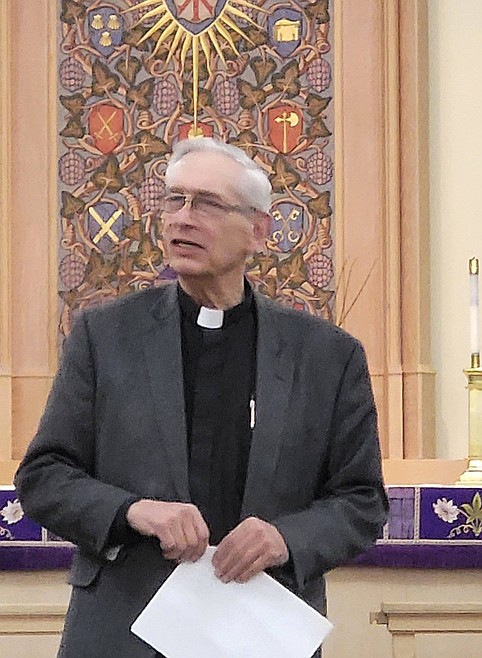
Fr. Jerome Bonneville conducts a traditional Compline service at St. John the Baptist Episcopal Church in Ephrata. St. John’s rotates with three other Ephrata churches to lead services during Lent.
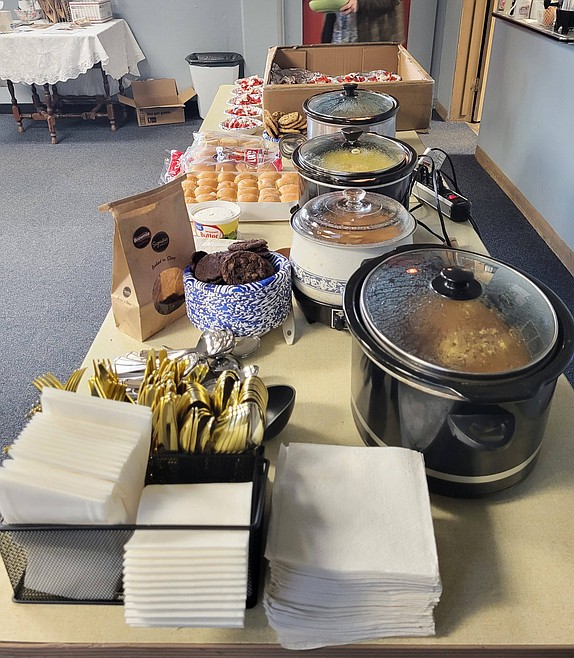
Soup and bread are laid out on a table at St. John the Baptist Episcopal Church in Ephrata for the weekly Lenten meal.
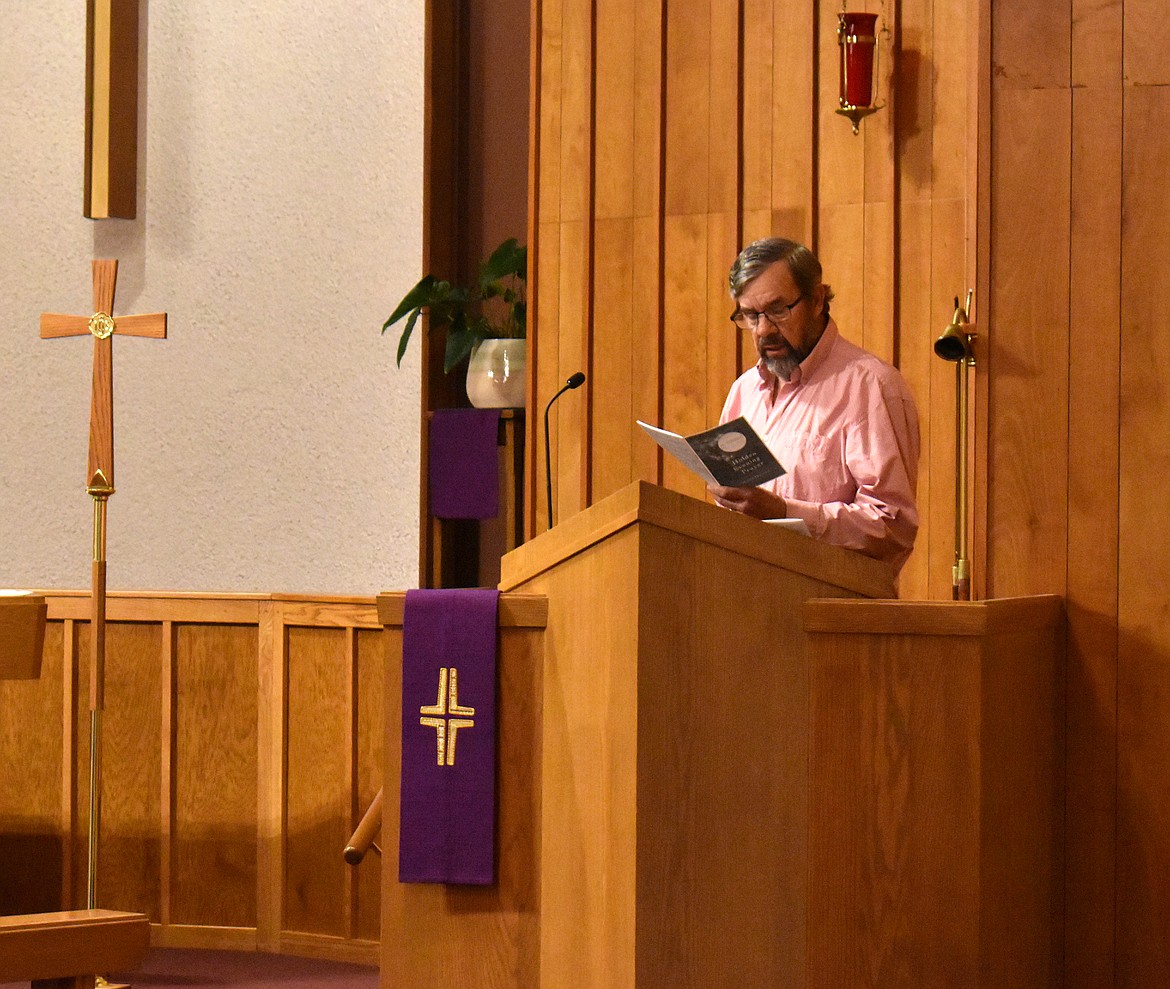
Mike Harris of Immanuel Lutheran Church serves as cantor at a Lenten service Wednesday.
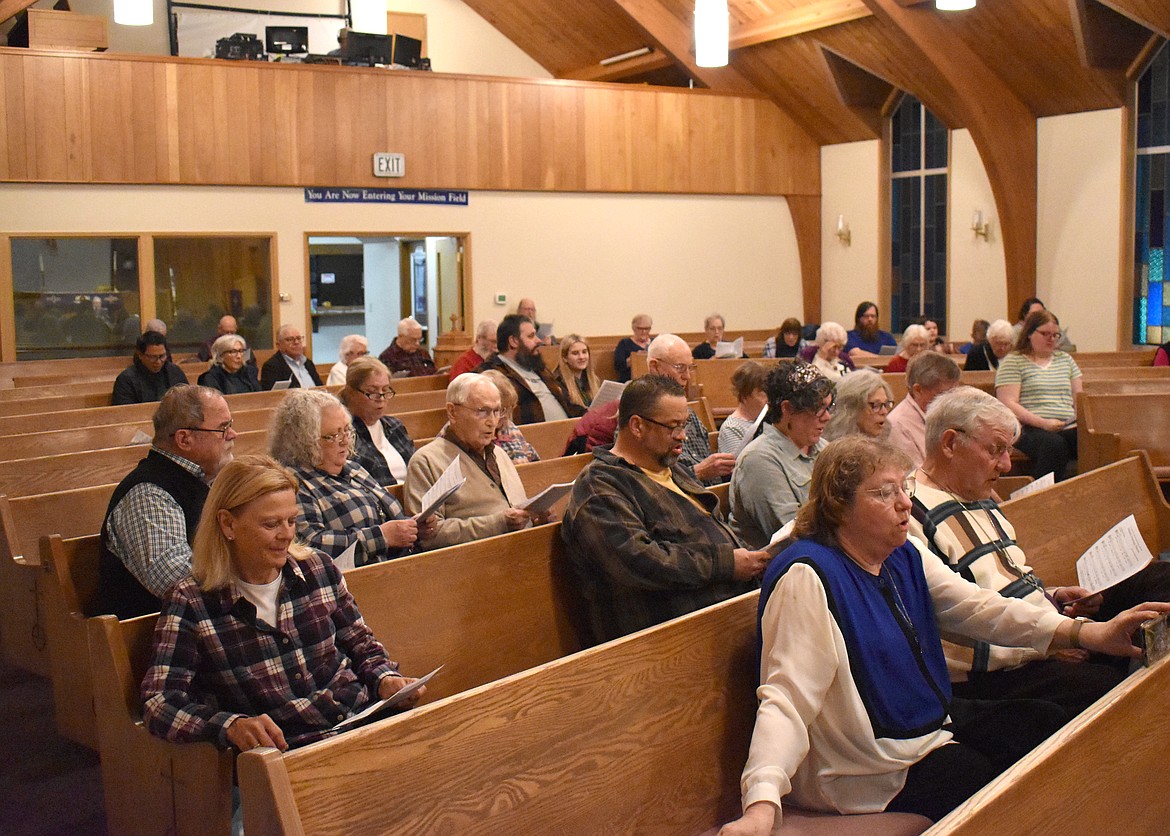
About 40 people from different churches sing the Holden Evening Prayer service at Immanuel Lutheran Church in Moses Lake Wednesday. The rotating services in Ephrata draws about 35 people every Wednesday, said Fr. Jerome Bonneville of St. John the Baptist Episcopal Church in Ephrata.
MOSES LAKE — For some local churches, Lent is more than a time for giving things up; it’s also a season of fellowship and community.
“Especially in rural churches, generally (we have) smaller congregations,” said Ben Schober, senior warden for St. Martin’s Episcopal Church. “By doing this, we’re bringing Methodists, Lutherans and Episcopalians all together to remember that we’re all here for God. Although the different churches might have different governances or slight (differences in) beliefs, we’re all here as one community.”
St. Martin’s is one of five congregations that gather in Moses Lake every Wednesday during Lent for a soup dinner followed by a service. The churches take turns every year hosting the events; this year it’s Immanuel Lutheran Church’s turn. Also participating are Living Word Lutheran Church, Moses Lake United Methodist Church and Church of the Resurrection, an Evangelical Anglican congregation that shares a building with Living Word Lutheran. A similar round robin takes place between four churches in Ephrata: Holy Trinity Lutheran, St. John the Baptist Episcopal, Our Redeemer Presbyterian and Ephrata United Methodist. Pilgrim Lutheran Church in Othello holds soup suppers to which other congregations are invited as well, according to Church Council member Kristi Spohr, both for the meal and to engage in meditation and prayer.
The practice of Lent goes back at least to the fourth century, according to the Encyclopedia Britannica, and was formalized at the Council of Nicea in A.D. 325. In Western Christendom the season of Lent begins on Ash Wednesday – Feb. 18 this year – and comprises the 40 days, excluding Sundays, leading up to Easter, which falls on April 5. The 40-day period recalls the 40 days Jesus spent fasting in the wilderness, as recounted in three of the four New Testament Gospels, and parallels the 40 days the Israelites spent wandering in the desert after the Exodus from Egypt. Lenten practices vary among denominations, and also among individuals. Fasting, prayer and giving up some earthly pleasure like sweets, caffeine or social media are common expressions.
“The importance of Lent is to realize that we’re all sinners and we need a redeemer,” said Pastor Lou Hesse, of Living Word Lutheran Church in Moses Lake. “(It’s) 40 days of repentance, recognizing that we are sinners … We’re preparing for Easter.”
Rev. Ellie Shapton, a retired Episcopal priest who attends St. Martin’s, said she sees Lent as a time of self-reflection.
“It’s not so much a give-up-the-donuts mentality as it is change and (asking yourself), ‘Is there more I could be doing?’” Shapton said.
Fr. Jerome Bonneville, of St. John the Baptist Episcopal Church in Ephrata, said Lenten sacrifice can take many positive forms.
“Many people fast for Lent,” Bonneville said. “One of the things I say to my people is that a form of fasting is taking on something new, sacrificing more of your time, more of your energy. More of your thoughts, more of your heart to see how you can serve God’s people. Maybe in prayer, maybe in public service, whatever you’re pulled into doing.”
The traditional Lenten color for clerical vestments is purple, and purple banners may be hung around the church as well. Many churches also change their liturgies, eliminating joyful singing and the word “Alleluia.”
“The rule in the Episcopal Church is that if the colors up front change, something important is happening,” Shapton said. “That’s how the kids know to pay attention.”
The service following the meal Wednesday in Moses Lake used the Holden Evening Prayer, which was mostly sung and chanted. Immanuel Lutheran member Mike Harris served as cantor, leading the singing. In the middle of the service is a scripture reading, followed by a short homily.
The five Moses Lake churches select a theme every year; this year’s was “God is All In With Us.” Shapton used that as a starting point for her homily, “From Slavery to Freedom.” She drew on the Israelites’ crossing of the Red Sea, when Moses parted the waters for them to cross, recounted in the book of Exodus.
“They're going to flee across the desert and go back to their promised land, back to what is now Israel,” Shapton said. “They get to the edge of the water, and they get caught – water on one side, Egyptians behind them. And they do what most very courageous people do: They whine. They whine to God, ‘If you're so great and wonderful and powerful and you're all in with us, we'd rather go back and serve the Egyptians. So, God causes a great barrier to come up. The angel of the Lord … goes around behind the Israelites and puts a barrier between them and Egyptians. And God tells Moses, ‘Lift your staff up and your arms up.’ And there is a dry path and the Israelites go forward..”
In the Biblical account, the soldiers of Egypt pursued the Israelites in chariots, and God caused the water to flow back, drowning them all and allowing the Israelites to escape.
“God is with us. God is among us. God loves us,” Shapton said. “But what happens in the hard times? (During Lent) we also think about how can we improve? How can we do better? How can we share God's love more? … God is always with us. We mean that whether it's those scared Israelites getting their feet wet, or whether it's us today in the 21st century trying to live as we're supposed to.”
In Ephrata, the round robin consists of four churches, which take turns both hosting the soup supper and conducting the services. Last Wednesday was the turn of St. John’s, and Bonneville led a compline service, the traditional service for the end of the day, and invited His Helping Hands founder Dawn Prince to speak about her ministry to those in need. The previous week, United Methodist Church hosted an evening prayer service from its own tradition.
“It’s really nice for all of us to get together,” Bonneville said. “When you consider all the division in the world today, it’s kind of nice to be able to put that aside and come together and worship one God.”
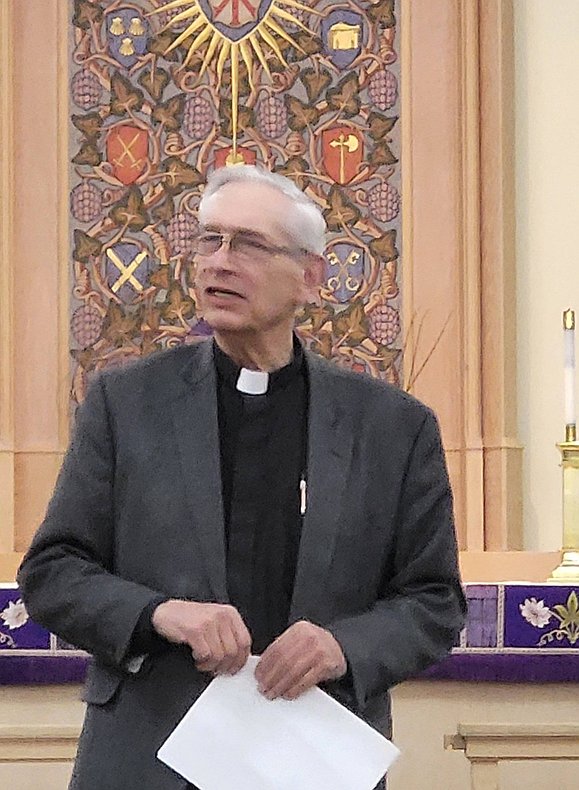 Fr. Jerome Bonneville conducts a traditional Compline service at St. John the Baptist Episcopal Church in Ephrata. St. John’s rotates with three other Ephrata churches to lead services during Lent.
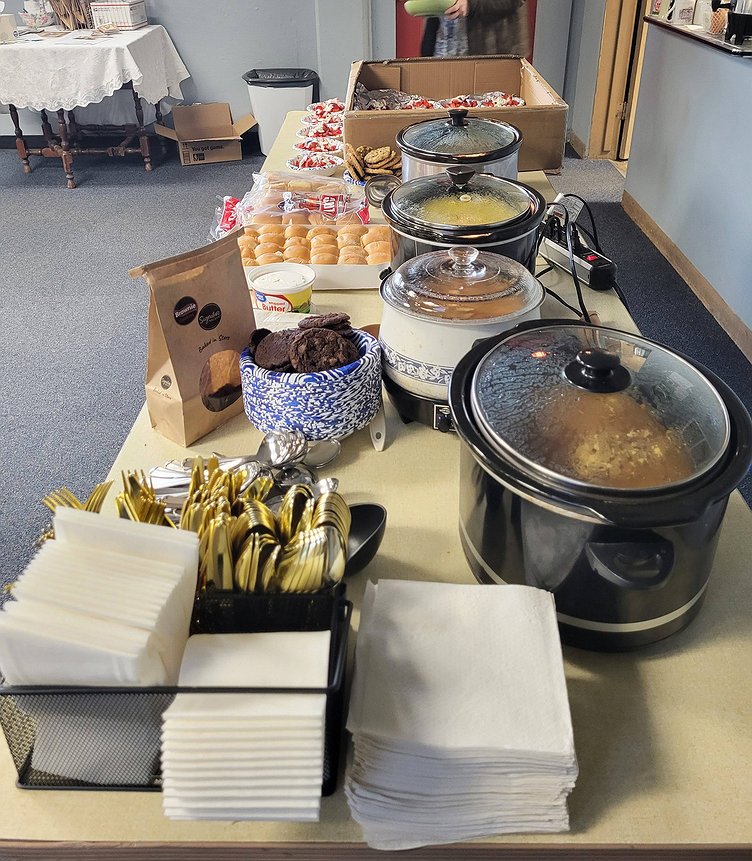 Soup and bread are laid out on a table at St. John the Baptist Episcopal Church in Ephrata for the weekly Lenten meal.
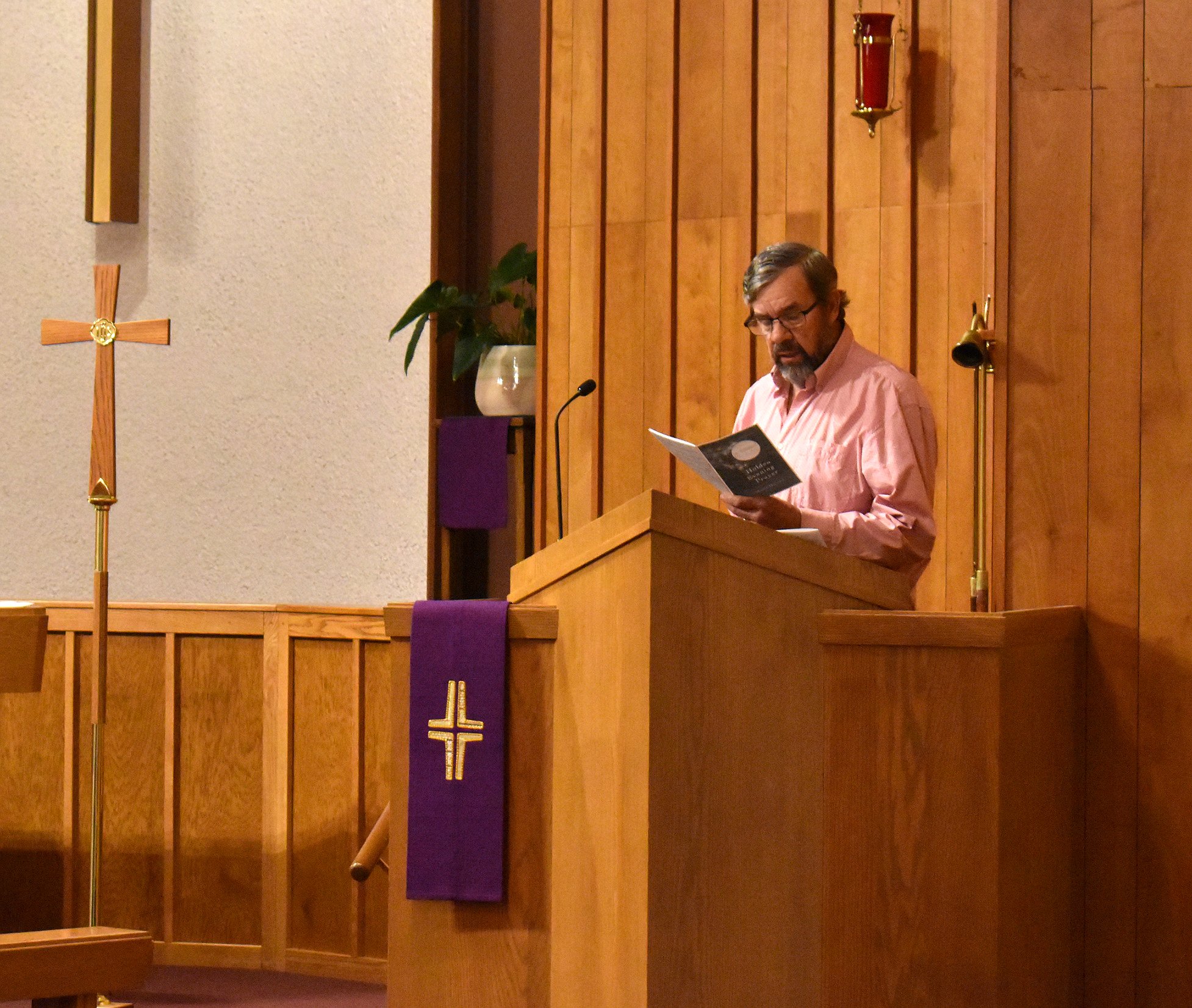 Mike Harris of Immanuel Lutheran Church serves as cantor at a Lenten service Wednesday.
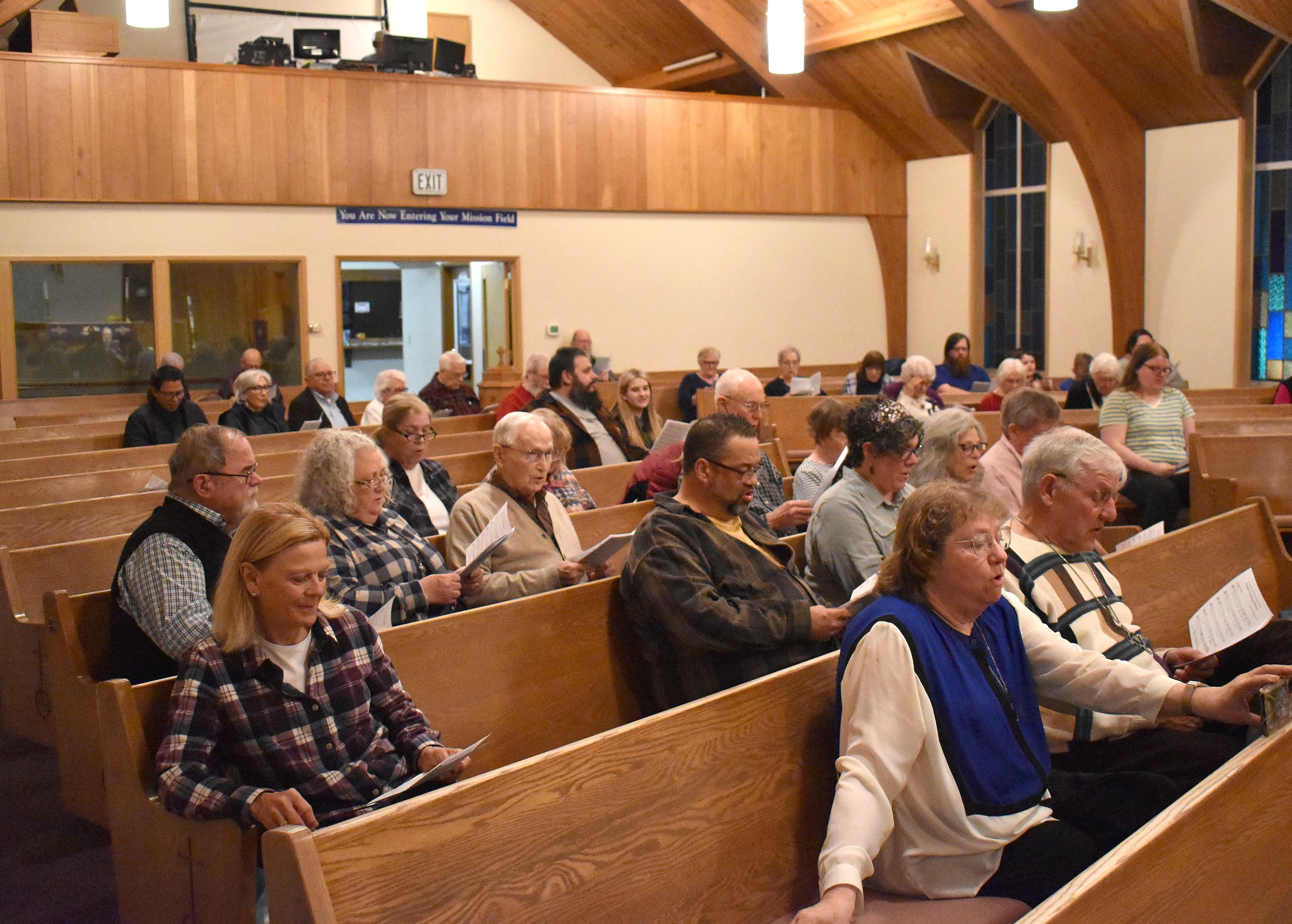 About 40 people from different churches sing the Holden Evening Prayer service at Immanuel Lutheran Church in Moses Lake Wednesday. The rotating services in Ephrata draws about 35 people every Wednesday, said Fr. Jerome Bonneville of St. John the Baptist Episcopal Church in Ephrata.