
With fewer applicants, Grant PUD trying to fill what’s left
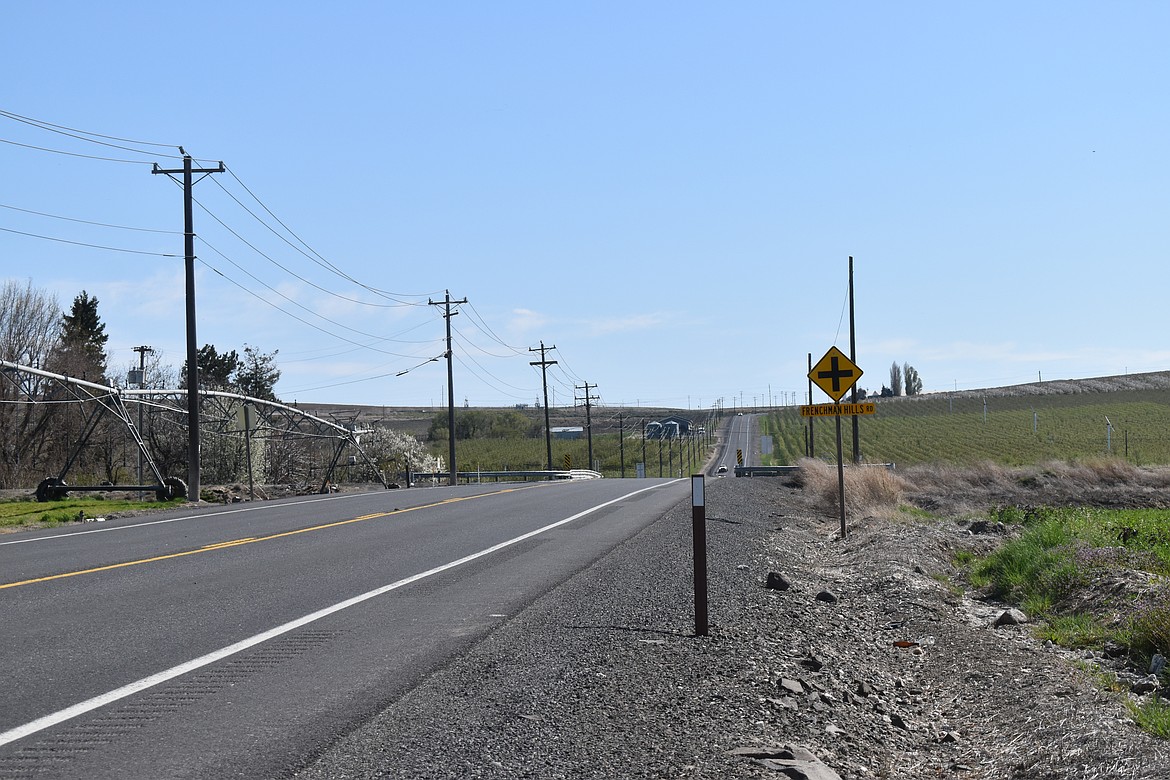
A new power line between Wanapum Dam and Quincy, across property along Frenchman Hills Road, is one way the Grant County PUD is trying to answer requests for its electricity.
FILE PHOTO
EPHRATA — A steep increase in application fees for Grant County PUD customers has reduced the number of pending applications dramatically. Andy Wendell, vice-president of customer experience, said that was one of the goals, but there were others.
“There were a number of things that we wanted to do. We wanted to become contemporary. What I mean by that is that we (want to) have application processes that are providing certainty in our queue,” Wendell said. “(We wanted to ensure) that when we dedicate engineering and planning staff to reviewing applications, we want to increase the probability that we're working on applications that are going to come to fruition as much as possible. So yes, we did achieve results that we had hoped for, which is to have applicants in the queue that are more certain (to) come to fruition.”
Customers on the waiting list were asking for 2,191 megawatts of electricity, Wendell said. The PUD instituted the higher fees in early 2025, which applied to customers already in line as well as new applications. The application fee schedule was also revised. A customer asking for 20 megawatts paid $15,000 per megawatt under the original schedule; that same customer paid $160,000 per megawatt on the new schedule.
Wendell said that when all customers had paid the new fees, applications for electricity shrank to 692 megawatts. That is, however, still a lot, he said.
“(It’s) close to a 66% reduction. It's pretty significant but to be honest with you, it was in the ballpark of what we anticipated.” Wendell said. “And it's still a large request, given that our annual average energy consumption of all our 55,000 customers in the county, data centers included, operates on an annual average of around 750 megawatts.”
The reduced application line is more manageable, Wendell said. Now it will be up to the PUD to deliver the power.
Customers were asked to pay a lot more money, in some cases on applications that had been pending for years. The shorter line helps customers in some cases, Wendell said.
“We now have the ability to be more responsive and process those applications in a shorter timeframe,” he said. “They’re smaller, they’re right-sized, and there are less applications to manage as well.”
Commissioners asked PUD administrators to meet with applicants, discuss their concerns and some of their expectations, he said.
“Those that stayed in improved their position. They gave us more certainty on what they’re asking for, and now the ball is in our court to take that into our planning models,” Wendell said.
The delivery timeline is still to be determined, he said.
“Now we're going into what we call a reconciliation,” Wendell said. “The reconciliation phase is taking a look at what projects we have on the docket today. We anticipate having that largely done in 2026.”
The utility district is working on six projects around Quincy, known collectively as the Quincy Transmission Expansion Project. That’s under construction, Wendell said, but that by itself won’t meet demand for all customers – and not even all customers in Quincy.
“There’s demand not just in Quincy. There’s demand in Moses Lake. The demand is in Warden, and the demand is in Ephrata,” he said.
Utility district planners are working to group requests in geographical areas.
“We started to move into what we call clustering,” Wendell said. “Warden is an example; we can take three or four applications that are in Warden, cluster them together, study them and come up with engineered solutions for all four of those applicants together as a cluster. Of course, folks would pay their pro rata share.”
One of the six QTEP projects is a transmission line directly from Wanapum Dam to Quincy that has generated protests from some of the landowners along the route. In some cases, the two sides have not been able to reach agreement, and the PUD has started condemnation proceedings.
Chuck Allen, senior manager of external affairs and communications, said other parts of QTEP are under construction.
“We actually have some projects in the Quincy area that we're going we're planning to begin construction on this year and look to finish by the end of this year,” Allen said.
If the whole QTEP project is on schedule, it should be completed by the end of 2029, Wendell said.