
Tuesday, March 10, 2026
33.0°F

WA Lawmakers pass bill allowing removal of decertified sheriffs
OLYMPIA — Washington lawmakers passed a controversial bill last week, strengthening eligibility requirements for sheriffs and other law enforcement leaders, while outlining a process for the state to remove decertified elected sheriffs from office.  

The bill advanced the House with a party-line vote and no Republican support, inching closer to becoming law as the short session adjourns March 12.  

Spearheaded by former Washington State Patrol trooper and Snohomish County sheriff, Sen. John Lovick, D-Mill Creek, Senate Bill 5974 aims to update eligibility requirements for law enforcement leaders, including being at least 25 years of age, passing a background check, and having at least five years of uninterrupted full-time law enforcement experience.  

The bill would also disqualify chiefs and sheriffs who do not meet the eligibility requirements or are decertified by the Criminal Justice Training Commission, effectively removing elected sheriffs and directing county officials to appoint a replacement if removal occurs.  

“This legislation is about accountability,” Lovick said during the House floor debate. “Under this Legislature, our law enforcement leaders, our police chiefs, our marshals, our sheriffs would be held to the same standards of eligibility and accountability that we ask of every law enforcement officer in our state and that they ask for their subordinates.”  

While proponents argued the bill is necessary to help build confidence between the public and law enforcement officers, Republicans and critics, including several elected sheriffs, contend the removal process shifts power away from voters.  

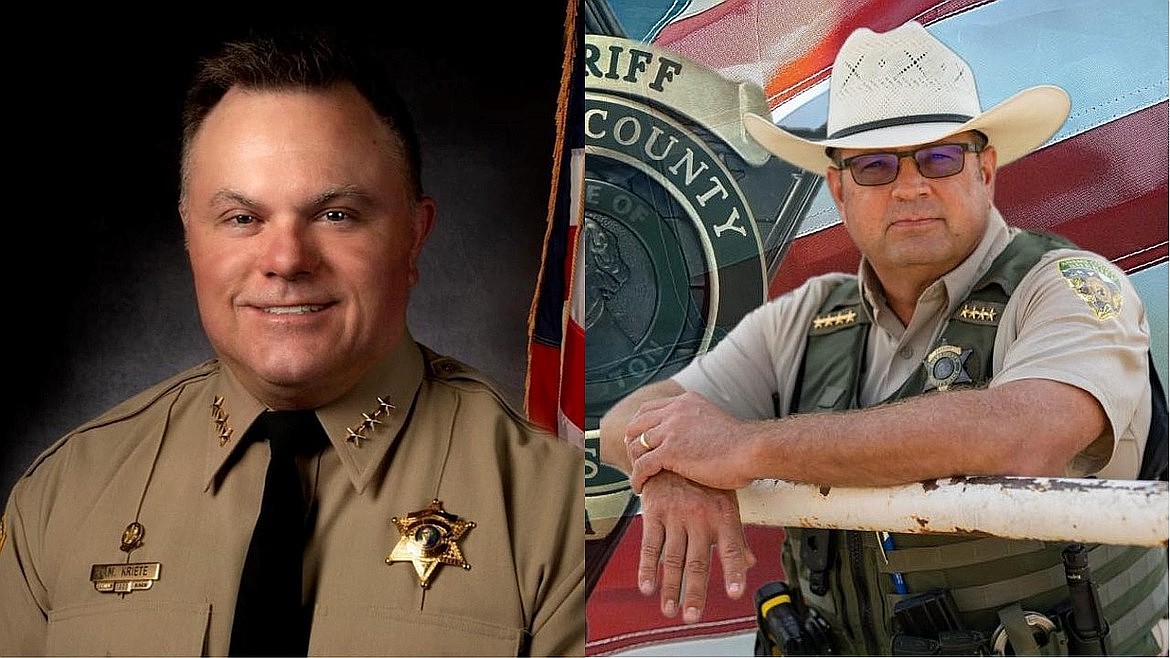
Grant County Sheriff Joe Kriete described the House’s decision to pass the bill as “extremely troubling.”  

“Sheriffs are the only law‑enforcement leaders in Washington directly elected by the people,” Kriete said in an email. “This bill weakens that democratic structure by giving the CJTC the authority to determine who is eligible to run and who may remain in office. The CJTC was created as a training commission. It was never intended to act as a gatekeeper for elected positions.”  

Currently, police chiefs are appointed by city officials, while county sheriffs are elected by voters and must receive certification from the CJTC within 12 months of assuming office.  

Existing law allows the CJTC board, consisting of 21 law enforcement officers, elected officials, and community members appointed by the governor, to decertify sheriffs and other officers if they are convicted of a gross misdemeanor or misconduct. Voters also already have the ability to remove sheriffs through a recall process or through a local prosecutor. 

Kriete, along with other elected sheriffs, championed an amendment proposed by The Washington Association of Sheriffs and Police Chiefs that would tie decertification to the existing recall process, with the goal of keeping removal decisions up to voters. However, the amendment was ultimately not adopted.  

“Electing sheriffs is one of the most important ways rural communities maintain control over their own public safety,” Kriete said. “In counties like Grant County, the sheriff is often the most visible and accessible elected official. Residents expect their sheriff to understand the realities of rural policing, build trust through community relationships, and reflect local values, not the political priorities of Olympia.”  

Kriete explained that while the Legislature clarified vacancy only occurs after a final CJTC decision or appeal, voters remain overridden by the process limiting local democratic control.  

“The office of sheriff belongs to the voters, not to the Legislature,” Kriete said. “SB 5974 undermines that principle by giving a state commission the power to decide who can serve, even if voters choose otherwise. Local elections matter. Rural voices matter. This bill ignores both.” 

Kriete will run for reelection this year and faces Moses Lake Police Officer Darrik Gregg and Grant County Sheriff's Office Sergeant Josh Sainsbury. The Columbia Basin Herald will cover that race as it unfolds in the coming months.

The legislation now will return to the Senate to approve the minor changes made in the House before being sent to the governor’s desk for signature. The short session will adjourn Thursday, March 12.