
‘I thank God for you’
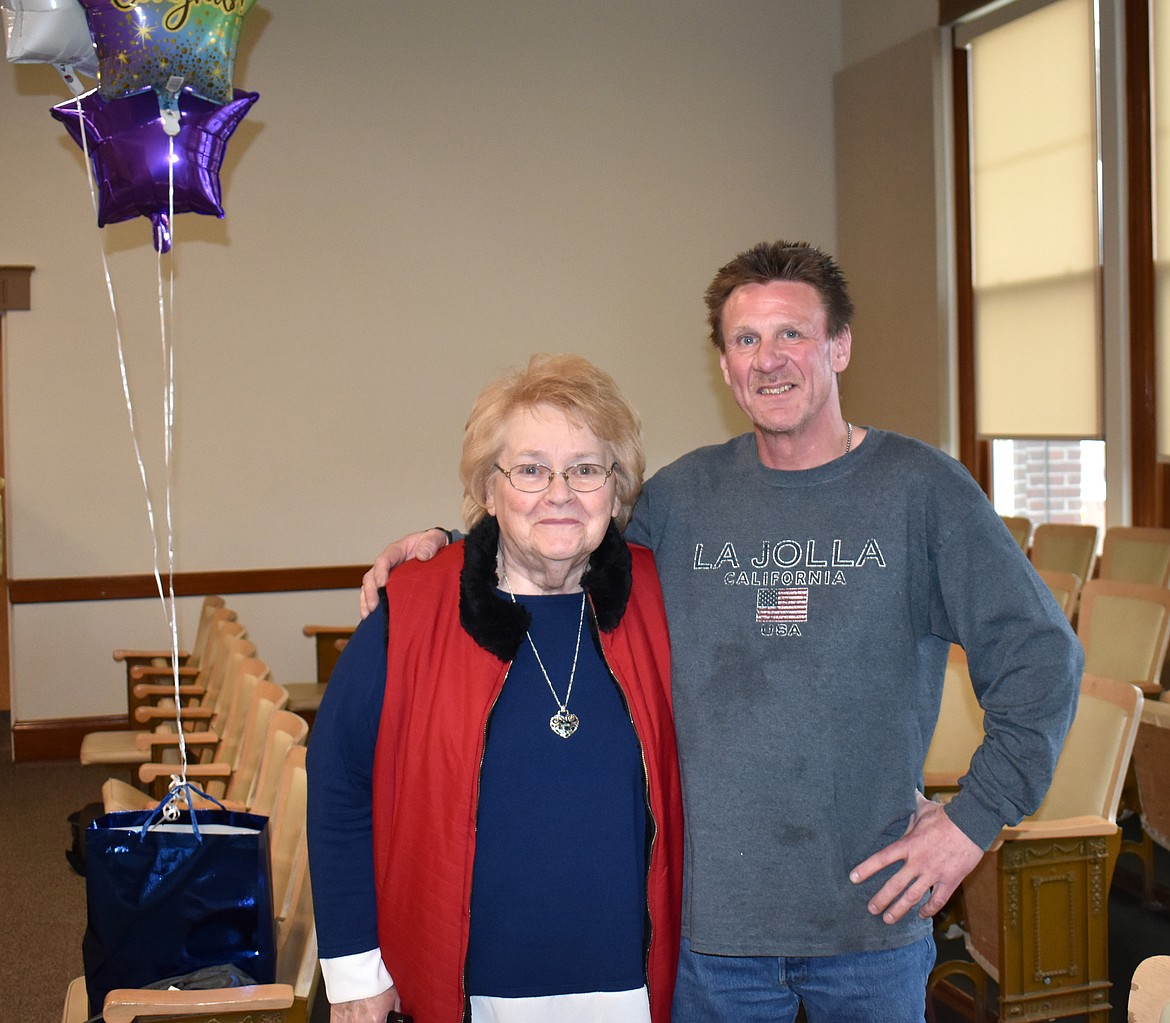
Shannon Robinson, right, stands with Patty Hash, a family member who has supported him through years of tough times. Robinson graduated Wednesday from Grant County Community Court, breaking a lifetime cycle of drugs and crime.
JOEL MARTIN/COLUMBIA BASIN HERALD
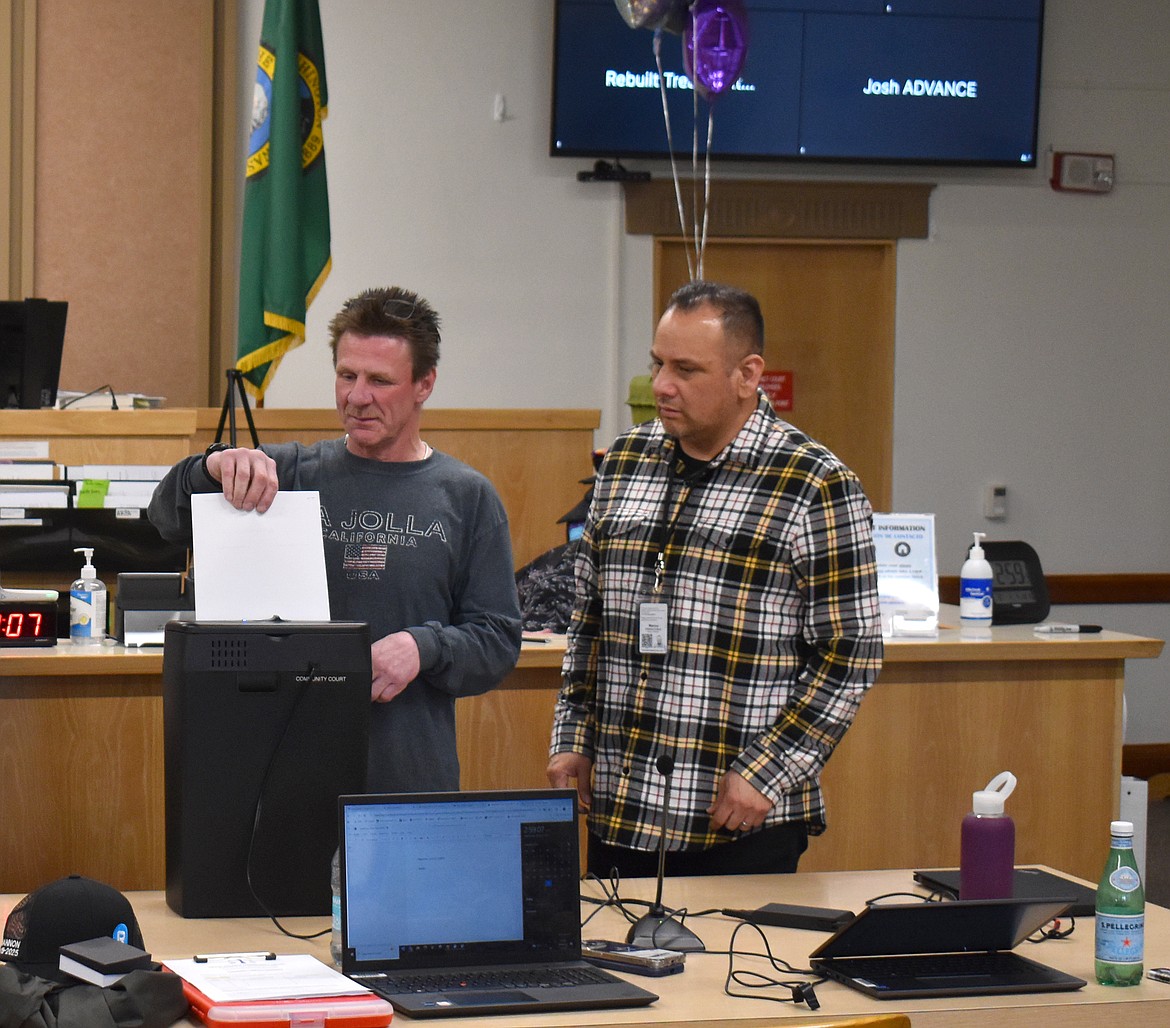
Shannon Robinson, left, feeds his criminal complaint into the shredder, backed by Community Court Specialist Manny Garcia.
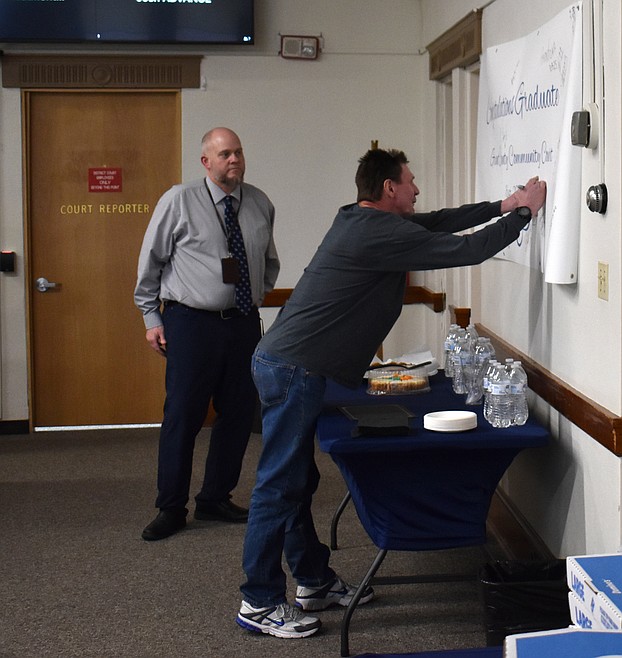
Shannon Robinson signs the banner alongside the names of the previous 15 Community Court graduates as Judge Brian Guinn looks on.
EPHRATA — Shannon Robinson never expected to be where he was Wednesday: hugging a judge and walking away a free man.
“I’ve been in and out of prison most of my life, with drug addiction being a big part of it,” Robinson said. “I really didn’t know anything other than that. So, every time I got out of prison, I kept going back to the drugs. And there was never any program that I could take advantage of that would show me anything different until this drug court came along. I thought, ‘Well, I’ve tried everything. I might as well try this.’”
Community Court is a relatively new program in Grant County which takes defendants who have charges related to drugs and alcohol and walks them through rehabilitation. Participants must adhere to strict guidelines during the program including complying with treatment programs, community service hours and other disciplinary actions for any slip-ups along the way. The end goal is to get the defendants permanently sober and with supports to help them become productive members of society.
Robinson, 55, has been in prison nine times, he said. But on Wednesday he became the 16th person to graduate from Grant County Community Court since its founding in 2023. His graduation Wednesday came after 17 months – long, hard months – of getting his life together.
“Shannon came in like a wrecking ball,” said Gavan Spies, with Rebuilt Treatment and Recovery in Spokane, where Robinson received treatment. “Shannon's one of those guys (that) you can't live with them, and you can't live without them. He tried time and time again to take the shortcut to the pasture. Every time. It reminds me of that ‘let go or be dragged’ mentality. And I truly believe Shannon has let go. You can see it in his relationships. He's found he's found a sense of joy and love for himself in how he treats other people and in doing the next right thing.”
“It’s been amazing watching your journey,” Rebuilt Executive Director Ryan Chaffins told Robinson. “I know you almost threw in the towel a couple of times early on, but you persevered. You got through it. To watch you now, we love seeing you come in bubbly with a smile on your face. It’s awesome.”
Robinson’s caseworker, Community Court Specialist Manny Garcia, said Robinson has come a long way.
“He found himself in a conundrum, because he’s so used to being on survival mode and instincts,” Garcia said. “He was thinking, ‘Maybe I could just do this on my own.’ And I think that's where he found a lot of challenges … Whereas before he was uncertain about how this was going to go, now he's saying, ‘I know who I am and I know who I'm not going to be. And these are the things that I've done, and these are the things kind of I'm sticking to my guns; I'm staying sober, I'm staying clean.’ I really admire that.”
Robinson’s family member Patty Hash has known him since he was 18, she said, and has been especially close to him for the last 12 or 13 years, some of his hardest times.
“I've seen him through two or three stints in prison,” Hash said. “Every time he gets out, he does OK for a little while. Then he starts drinking. Pretty soon he's into drugs, right back into jail. This time you guys have helped him so much. I thank God for you guys. I prayed for this man for so long, and he's finally clean and sober, and he's going to have a good life from now on.”
To mark Robinson’s graduation, Judge Brian Gwinn gave him a certificate, then called Garcia and Jeremiah Jensen, of the Grant County Prosecutor’s Office, to feed Robinson’s last criminal charges into the shredder.
Robinson said most people caught in the cycle of drugs and crime never have a chance to take advantage of a program like Community Court.
“They need a whole wraparound program,” he said. “They can’t just let people out with gate money and expect them to stay clean. About a third of those people, they just end up killing themselves. … If they had a program that was a little bit more like this, (with) the housing and the opportunity for job training and stuff like that, there would be more people who would complete the program.”
When it was all over, Gwinn brought Robinson to the banner hung on the courtroom wall to sign his name next to those of the other graduates.
“I’m really proud of Shannon,” Gwinn said. “He’s put in a lot of hard work. He’s done a lot of great things that he doesn’t even realize … (There are) good days and bad days, but he’s come through and he deserves every bit that he’s got.”
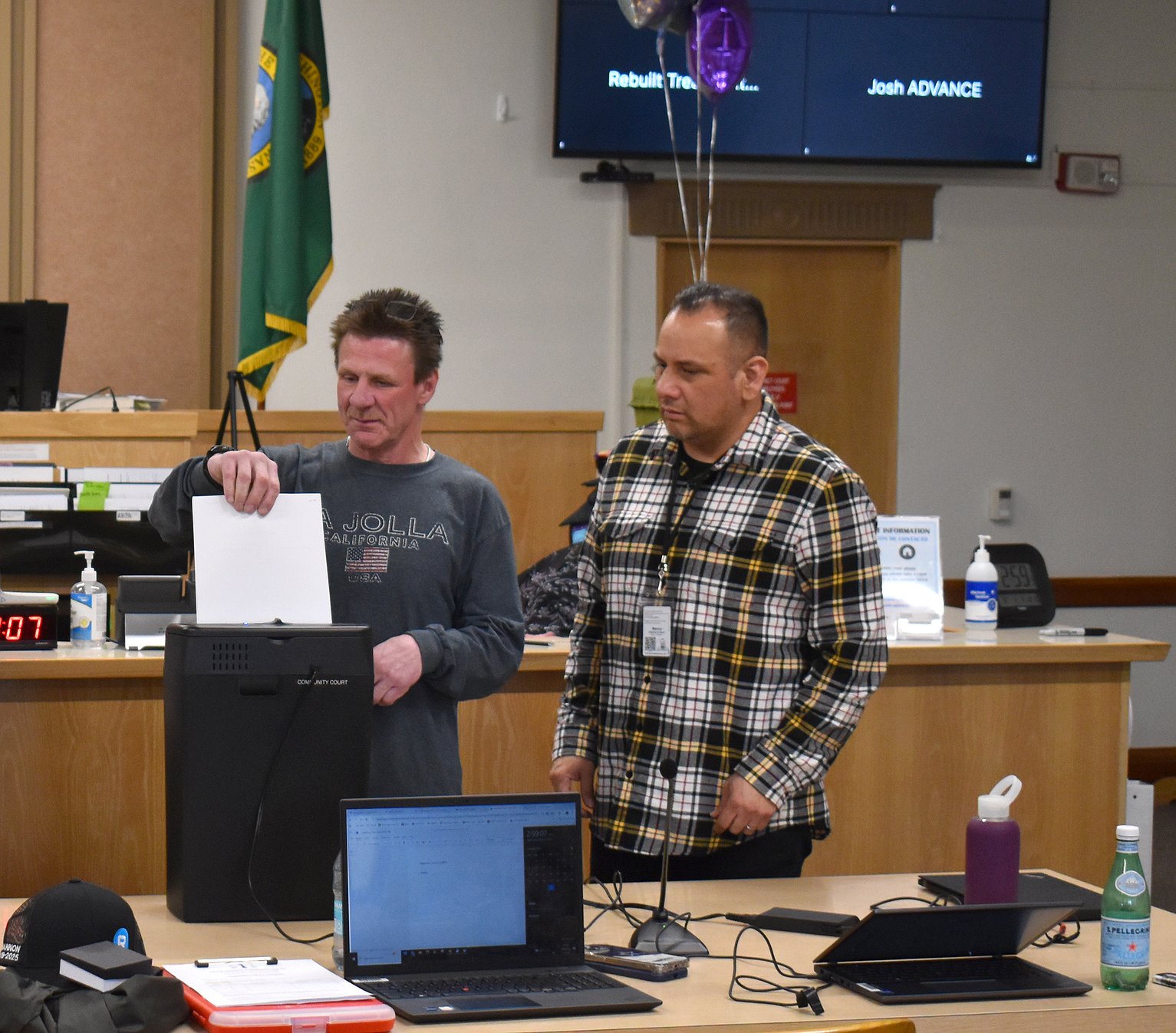 Shannon Robinson, left, feeds his criminal complaint into the shredder, backed by Community Court Specialist Manny Garcia.
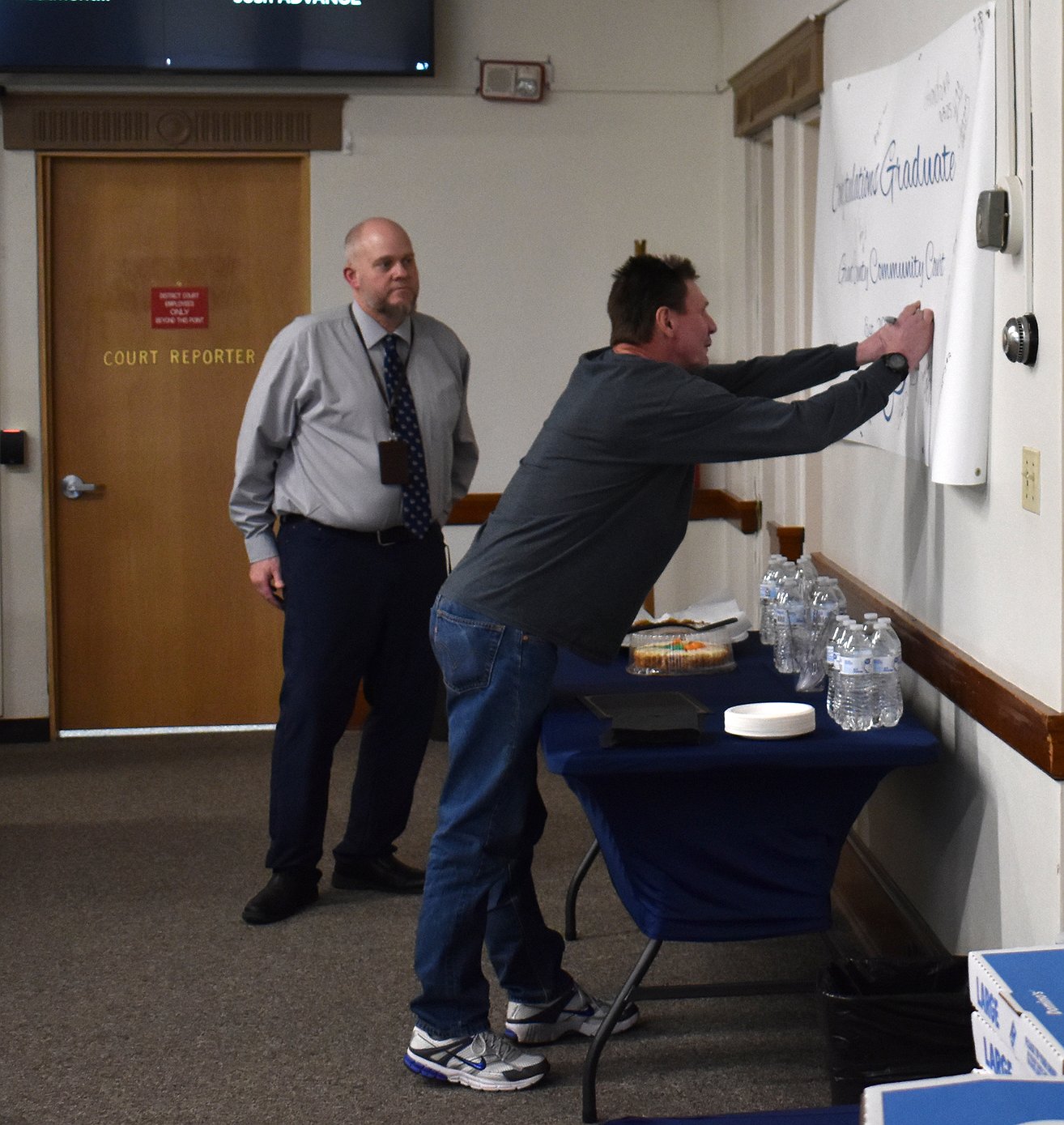 Shannon Robinson signs the banner alongside the names of the previous 15 Community Court graduates as Judge Brian Guinn looks on.