
Data center regulation stalls amid tech industry pushback
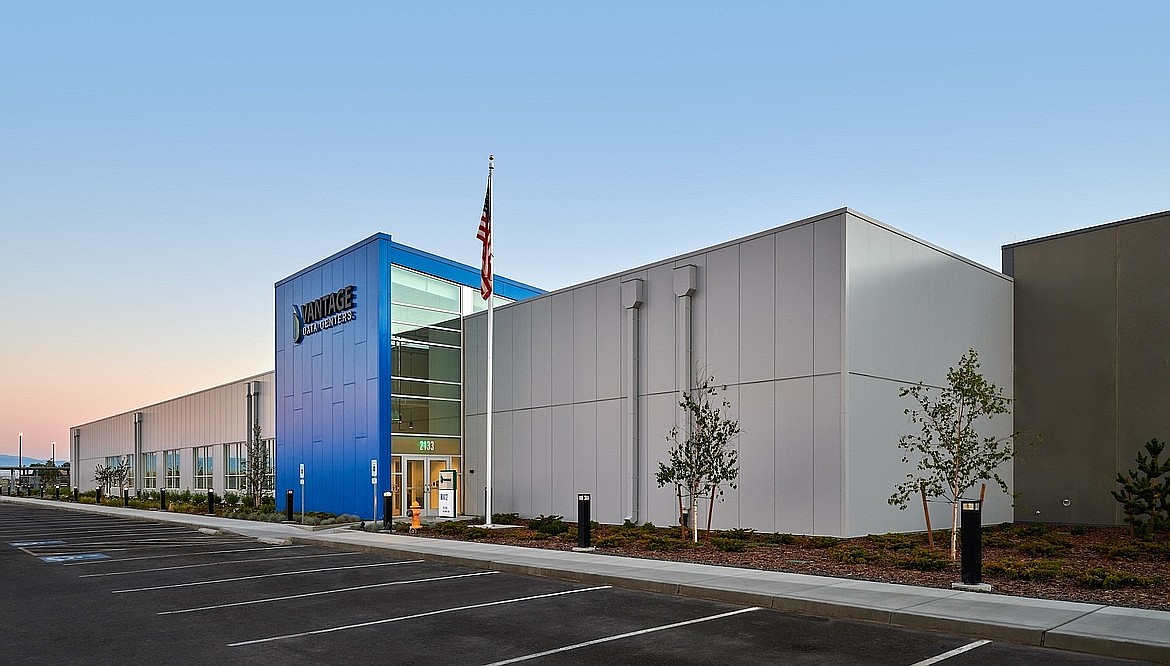
Data centers like this Vantage Data Centers facility near Quincy, have been the subject of a great deal of debate at multiple levels of government. While the facilities help the tax base and other economic aspects of communities, their draw on local power grids can cause challenges.
FILE PHOTO
OLYMPIA — Democratic lawmakers' effort to regulate data centers failed to advance this short legislative session.
House Bill 2515, spearheaded by Rep. Beth Doglio, D-Olympia, would have established new energy requirements on data centers, including increased transparency on energy and water usage and the creation of new agreements to ensure facilities cover the cost of higher demands instead of passing them on to regular ratepayers.
The bill ultimately did not receive a hearing ahead of the fiscal committee cutoff Monday, signaling the end of one of the most ambitious regulation efforts introduced this session.
“It’s easy for big tech to make big promises in a press release,” Doglio said in an email. “But when states ask for accountability to those promises, their commitment evaporates.”
Proponents of the bill argue the legislation is necessary to keep facilities in line with the state’s clean energy goals and confront increasing power demands amid the rapid data center growth, especially as more companies build infrastructure to support artificial intelligence.
Washington is currently home to about 134 data centers, the majority of which congregate around Quincy and Wenatchee. According to the Northwest Power and Conservation Council, data centers and chip fabrications are projected to add between 2,200 and 4,800 average megawatts of load by 2030.
Big tech companies, such as Microsoft and Amazon, however, have lobbied against the bill behind the scenes, according to The Seattle Times. Lauren McDonald, senior director of Washington government affairs for Microsoft, publicly opposed the legislation last week, describing it as "uniquely anti-competitive.”
“We respectfully urge the committee not to advance the bill without significant changes to address these concerns,” McDonald said in public testimony to the Senate Ways and Means Committee.
McDonald explained that despite Microsoft sharing the same intent as the bill, the curtailment provision would force data centers to utilize backup generators and risk crucial data infrastructure, especially needed for emergency dispatch and hospitals.
“Everything that we rely on today really goes through a data center,” McDonald said.
Zach Baker, regional and state policy director for the Northwest Energy Coalition, said the legislature not only missed its opportunity to protect regular Washingtonians from higher electricity rates, but also to hold major tech companies accountable.
In 2020, Microsoft committed to becoming carbon negative by 2030 and later announced a community-first initiative pledging to be good neighbors to the communities where it builds and operates data centers.
“Many of these companies have voluntarily committed to very similar climate and clean energy goals, and yet, when it was put into law, they opposed it,” Baker said.
Throughout the session, the legislation faced numerous changes, including the elimination of an annual state fee of a half a penny per-kilowatt of energy intended to fund low-income energy bill assistance, weatherization, and higher education. They also altered the timeline requiring data centers to use 100% clean energy from 2035 to 2045 and stripped a provision that would have required new data centers to develop and rely on their own renewable energy resources.
“The impacts of these facilities are real — on our power grid, our water resources, our greenhouse gas emissions and people’s utility bills,” Doglio said. “The longer we wait, the greater those impacts will be.”
Doglio said she remains committed to continuing the work into next year's session.