
More dead bills pile up in Olympia
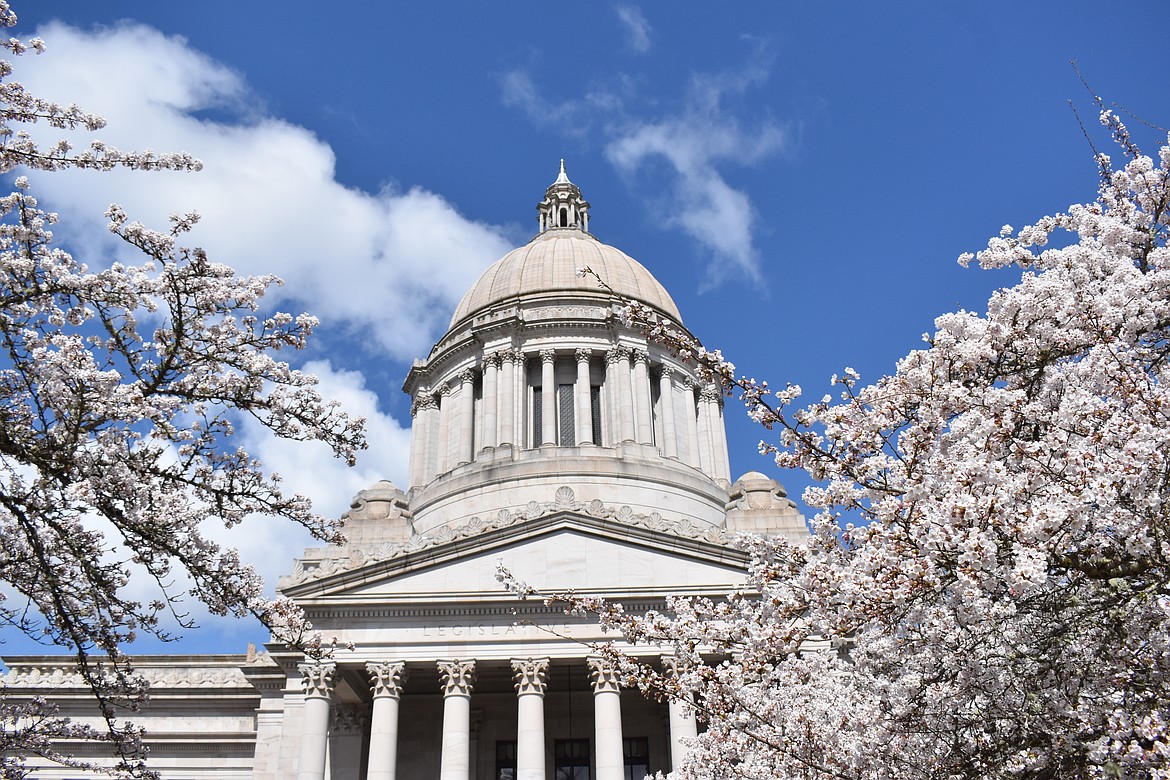
Several bills died over the last week in Olympia - at least for the 2026 Legislative Session.
FILE PHOTO
OLYMPIA — Numerous bills did not pass the opposite chamber policy committee cutoff earlier this week, marking the death of some high-profile legislation, including increasing protections for children in the child welfare system and lowering the legal blood-alcohol level.
Lawmakers now face increasing pressure as they finalize surviving bills and budget plans ahead of the fiscal cutoff yesterday, March 2.
Child safety
Several bills aimed at strengthening child endangerment laws failed to pass through the committee process. Senate Bill 5071, sponsored by Sen. John Braun, R-Centralia, and House Bill 1090, sponsored by Rep. Travis Couture, R-Allyn, would make it easier for the state to remove a child from a home where parents or legal guardians are using illegal drugs such as fentanyl or methamphetamine.
“Right now, we have a stunning crisis in child welfare,” Couture said on the floor last week in a final attempt to revive the legislation.
According to the Washington State Department of Children, Youth, and Families, in 2025 the state saw record-high fatalities and near-fatality incidents in the child welfare system with about 53% opioid-related.
Republican lawmakers point to the 2021 Keeping Families Together Act for the recent rise in child fatalities. The law, spearheaded by Rep. Lillian Ortiz-Self, created the threshold for “imminent physical harm” for removing a child from their home, aiming to reduce foster care placement and prevent possibly traumatic family separations.
“Every bill that we have considered here on this floor this session has gone through the committee process and has been subjected to the review and the scrutiny of the expertise of the members of that committee. This bill has not and for that reason I ask you to vote no,” House Majority Leader Rep. Joe Fitzgibbon, D-West Seattle, said.
Democrats asserted that all lawmakers care about children’s safety but differ in their approaches.
“We are not unanimous about the right way to go about that and the right way to also support keeping families together,” Fitzgibbon said in a press conference. “So, I know that committee has been looking at that issue and will continue to look at the issue.”
Pollution control
Additionally, after an uproar of opposition by Washington labor unions, farm groups and industry professionals, Senate Bill 5360 which would strengthen criminal penalties for violating environmental laws such as the Water Pollution Control Act and Clean Air Act, died in the House.
The bill, sponsored by Sen. Yasmin Trudeau, D-Tacoma, passed the Senate with a 27-22 vote with three Democrats voting against the “do pass” recommendation. According to Trudeau, the legislation aims to deter businesses from simply paying fines for polluting by establishing misdemeanor penalties for negligently violating air pollution regulations.
At a hearing Tuesday, lawmakers heard from a series of blue-collar professionals who argue the legislation would place ordinary workers at risk for failing to follow complex environmental regulations.
“We cannot allow our members to be caught in headwinds of pursuing bad polluters and be sacrificed at the intersection of enforcement and simply doing their job,” Joshua Estates, spokesperson for the Association of Western Pulp and Paperworkers, said. “This is too serious to get wrong, and protection must be explicit, enforceable and certain in statute.”
Despite narrowly surviving the first House-of-Origin cutoff earlier, the bill did not receive an executive session to pass the House.
Alcohol threshold
Another attempt to lower the legal blood-alcohol concentration limit failed to pass through the legislature as well. Senate Bill 5067, sponsored by Sen. John Lovick, D-Mill Creek, stalled in committee earlier this week, making it the fifth and most successful attempt lawmakers had so far in advancing the policy.
If passed, the legislation would have lowered the legal blood-alcohol concentration limit from 0.08% to 0.05%, following Utah, which lowered the limit in 2018.
According to the Washington Traffic Safety Commission, driving performance declines by between 25% and 50% at a BAC level of 0.05% and that drivers between with levels of 0.05 to 0.079% BAC are nearly five times more likely to be involved in fatal crashes compared to those with no alcohol in their system.
Critics of the bill argued that lowering the legal alcohol limit would not deter drinking and driving behaviors but increase liability risks for businesses that serve alcohol and potentially criminalize drivers who are not actually impaired.
“With this, by making it more illegal as we're hitting the point of diminishing returns,” Sen. Jeff Holy, R-Spokane said.
According to Lovick, the bill did not garner enough support from Republicans or Democrats as six from the majority party initially voted against advancing the measure out of the Senate Rules Committee.
“The evidence points to this being a really important step forward but clearly there's a lot of people of goodwill on all sides of the issue and we'll continue to work on it,” Sen. Marko Liias, D-Edmonds, said.
The 60-day legislative session now enters its final two weeks with lawmakers set to adjourn March 12.