Childhood tooth decay surges in Grant, Adams counties
MOSES LAKE — A new statewide report shows children in Grant and Adams counties are experiencing some of Washington’s highest rates of tooth decay, underscoring concerns from public‑health leaders as National Children’s Dental Health Month came to a close in February.
The findings come from the Smile Survey, Washington’s comprehensive oral‑health assessment of second- and third‑grade students. Data collected in 2023–24 show worsening cavity rates statewide and even more severe challenges in many rural counties.
Grant and Adams
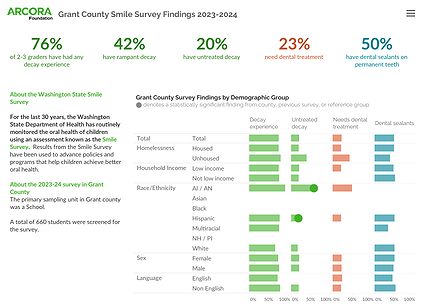
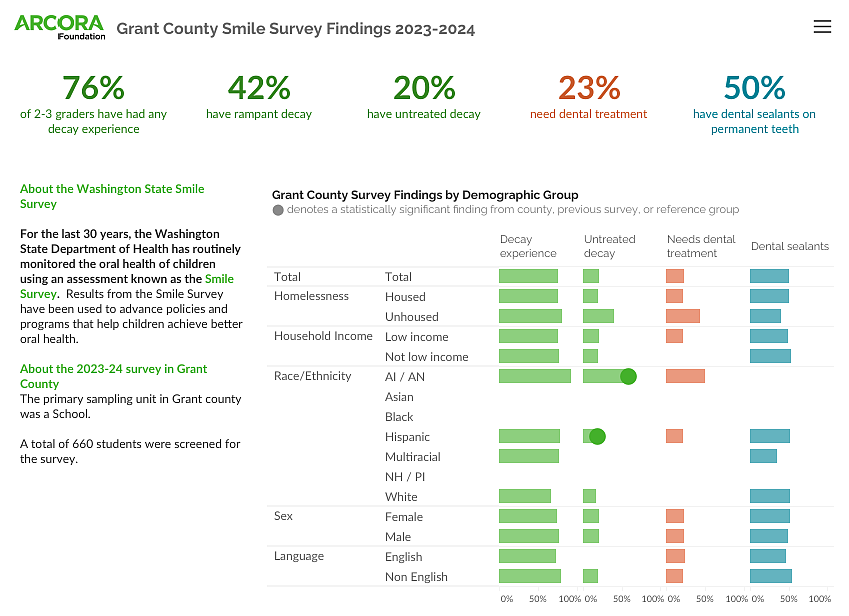
In Grant County, 76% of second- and third‑grade students experienced tooth decay in 2024. Nearly 42% had rampant decay – defined as decay in seven or more teeth. Around 20% had untreated cavities. About 23% of students needed dental treatment, and 2–3% required urgent care.
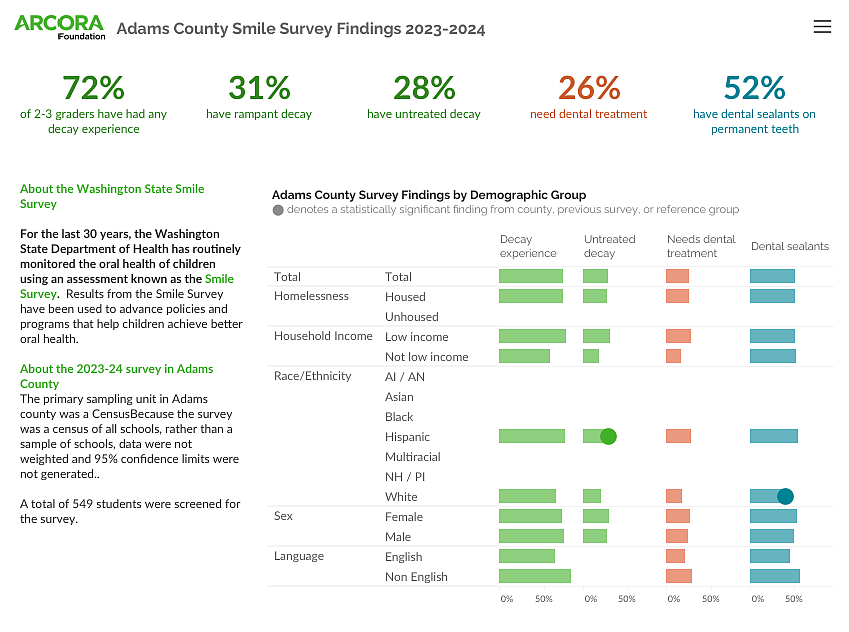
In Adams County, 72% of students had decay and 28% had untreated cavities – more than double the statewide rate reported a decade ago. Roughly 26% needed dental treatment, and 1% required urgent care.
Both counties saw improvements in dental sealant use since 2015, but the gains were not enough to offset rising decay. County-level data was obtained from the 2023–24 Smile Survey Tableau dashboard, provided through Arcora Foundation and the Washington State Department of Health.
In the state as a whole, 63% of second- and third-grade students experienced decay. Of that, around 24% had rampant decay and 19% needed dental treatment.
Local health officials say the numbers reflect both access challenges and the lingering effects of the COVID‑19 pandemic, which disrupted preventive care for many families.
“Good oral health is important for your child’s overall health and wellbeing,” said Maria Vargas, Healthy Communities & Families Manager at the Grant County Health District. “Cavities and tooth decay can cause pain and infections that make it harder for kids to eat, speak, play, and learn.”
Vargas urged parents to help children brush until they can do it independently and to talk with dentists about cavity‑preventing sealants. For families without a dentist, she said the county’s Access to Baby and Family Dentistry program can connect Apple Health–insured children with local providers.
Statewide alarm
The Arcora Foundation, which helped fund and plan the Smile Survey, said the statewide results show a dramatic backslide. The share of third graders with untreated cavities rose to 19%, returning to levels last seen in 2005.
“The Smile Survey results are sobering,” said Vanetta Abdellatif, Arcora Foundation president and CEO. “We are deeply troubled that our children are needlessly suffering and that oral health disparities persist in our state.”
The report found children of color, children from lower‑income households, and unhoused students had significantly higher rates of untreated decay and multiple cavities – trends also reflected in many rural counties, including Grant and Adams.
Arcora leaders are urging lawmakers to protect investments in children’s dental programs, especially as the state faces a projected $2 billion budget shortfall. While current House and Senate budget proposals maintain Apple Health dental funding, reimbursement cuts made last year remain in place.
Prevention programs public‑health officials emphasize that tooth decay is largely preventable. Arcora and local partners continue to expand programs including: ABCD, which connects Apple Health–insured children with specially trained dentists; SmileMobile, a mobile dental clinic that travels to rural communities, schools, and tribal areas and community water fluoridation, which research shows is one of the most effective and equitable ways to prevent cavities.
Family solution
With cavity rates rising, Vargas said Children’s Dental Health Month is a reminder for families to take small but important steps.
“If your child doesn’t have a dentist, our Access to Baby and Family Dentistry program can connect Apple Health–insured kids with local, specially trained dentists. This Children’s Dental Health Month, take a moment to check in on your child’s teeth,” Vargas said.
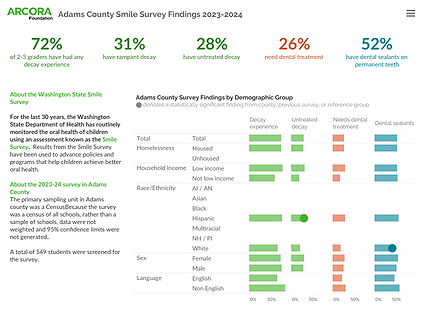 COURTESY GRAPHIC/ARCORA FOUNDATION/WASHINGTON DEPARTMENT OF HEALTH