


Changes and money needed for GC International Airport runway
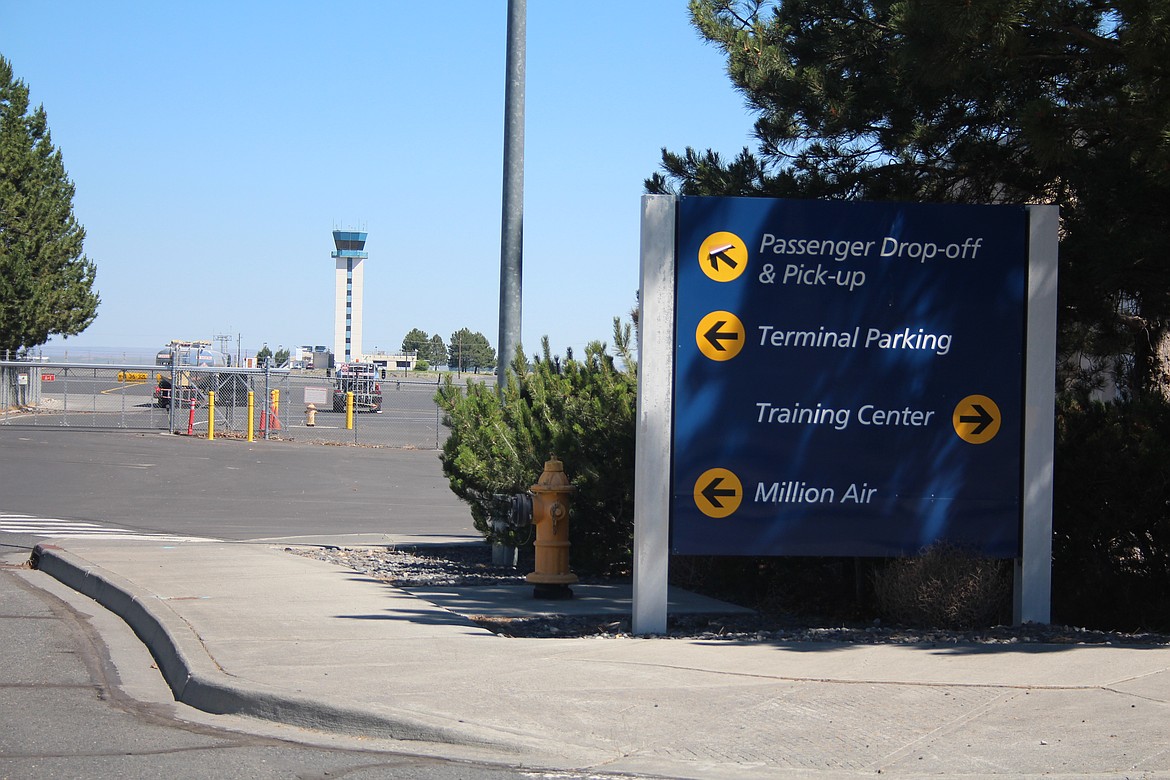
"The runways have to align themselves within 10 degrees of the compass heading. We're not within 10 degrees.”
Port of Moses Lake Commissioner Darrin Jackson
MOSES LAKE — Port of Moses Lake Commissioner Darrin Jackson said geography is the reason the Port of Moses Lake will have to spend about $900,000 to convert a runway back into a taxiway.
“We’re going to spend all this money on continental drift,” Jackson said at the regular commission meeting Monday.
Commissioners voted to spend about $890,800 – up to 95 percent of it reimbursable by the Federal Aviation Administration – to repurpose Runway 14R-32L. If the FFA pays 95 percent of the project, the port’s contribution will be about $44,500.
Originally the runway was built to help move aircraft from place to place, known as a taxiway.
“We have some runways out here, that even though we use them as runways, they’re not runways,” Jackson said. “They’re taxiways that were converted to runways.”
But time and geography have marched on, and the runway no longer meets FAA criteria.
“The United States is moving farther west, like every other country, so that means the (magnetic) North Pole is farther to the east. The runways have to align themselves within 10 degrees of the compass heading. We're not within 10 degrees,” Jackson said.
Aerial navigation relies in part on magnetic compasses to show pilots where they are going. A magnetic compass points north, but it points to magnetic north rather than the geographical North Pole.
Changing an airport landmark is an involved process, Jackson said. Part of it involves changing the designation of a second runway.
“It sounds like a huge (expense), but it's not just closing the runway and getting rid of the numbers on the runway. You have to change all the signage of the airport, because now you ‘ve got numbers that don't match what the pilot is looking at,” Jackson said.
The runways must be repainted to reflect the updates, and all information must be updated too, Jackson said, from online navigation programs to paper maps – anything that includes runway information. “Everything,” Jackson said.
Airport director Rich Mueller said project timing depends on the FAA.
“For planning and engineering we can go ahead of the grant, but for actually putting shovels in the ground or paint on anything, we have to have the money first,” Mueller said.
Kim Detrolio, director of finance and administration, said notification from the FAA can take a month to four months, if the port receives the grants,
“When you’re dealing with the FAA, the answer is, it depends,” said Commissioner Kent Jones.
Commissioners also voted to hire Century West Engineering to work on the first phase of rebuilding the taxiway at a separate runway. The first phase will cost about $925,800, with about 95 percent covered with an FAA grant.