

BBCC’s final TRIO students prepare to move on
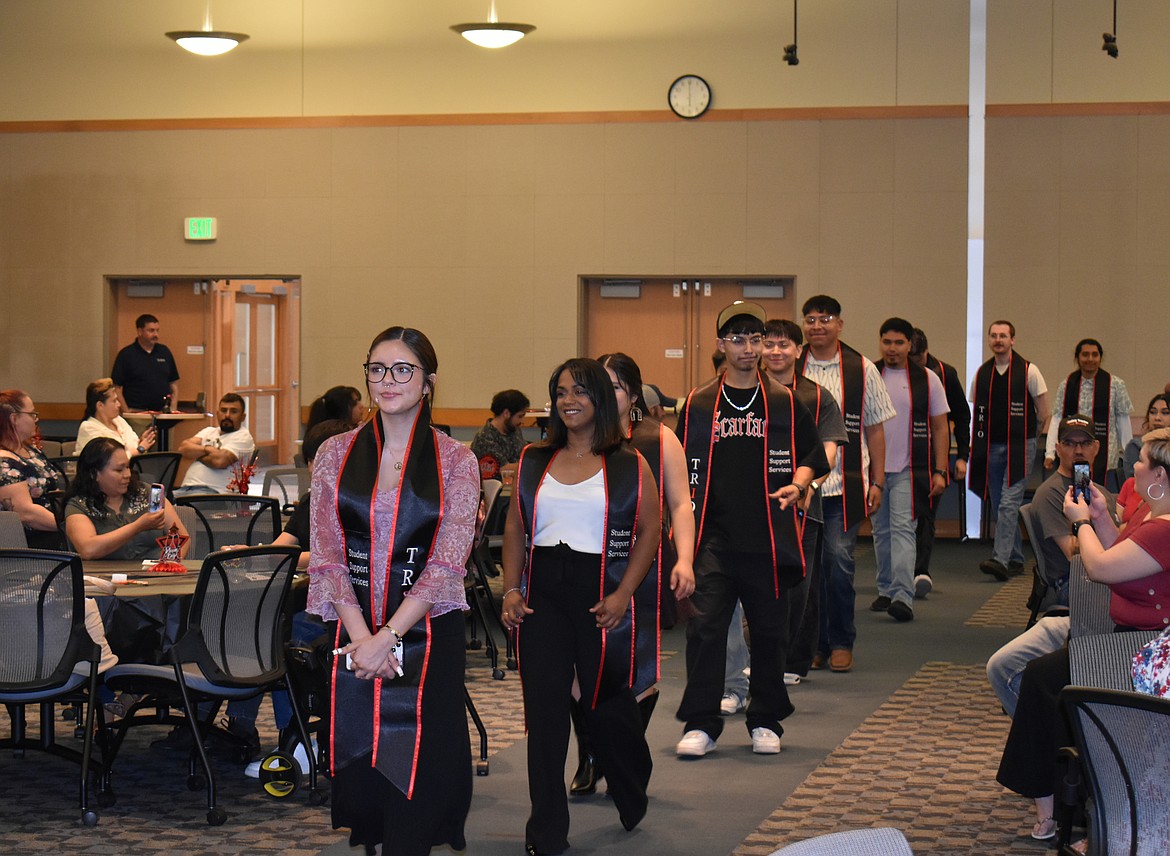
Big Bend Community College TRIO students process in for a graduation ceremony Tuesday evening. This class will be the last to graduate from the program in the foreseeable future; the program’s funding has been canceled.
JOEL MARTIN/COLUMBIA BASIN HERALD
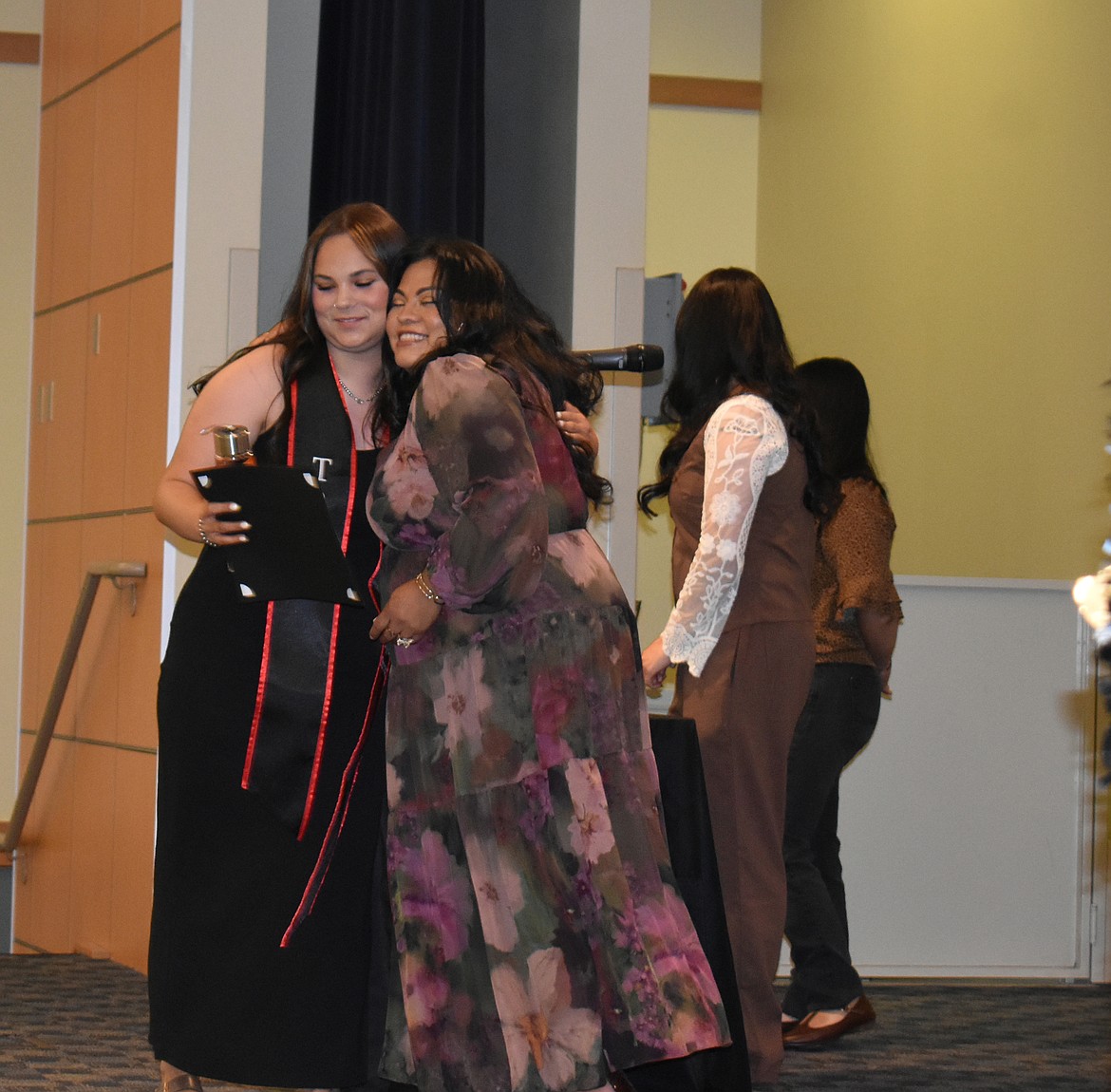
Kallie Kooistra hugs her advisor Astrid Chen at the TRIO program’s final graduation ceremony Tuesday.
JOEL MARTIN/COLUMBIA BASIN HERALD
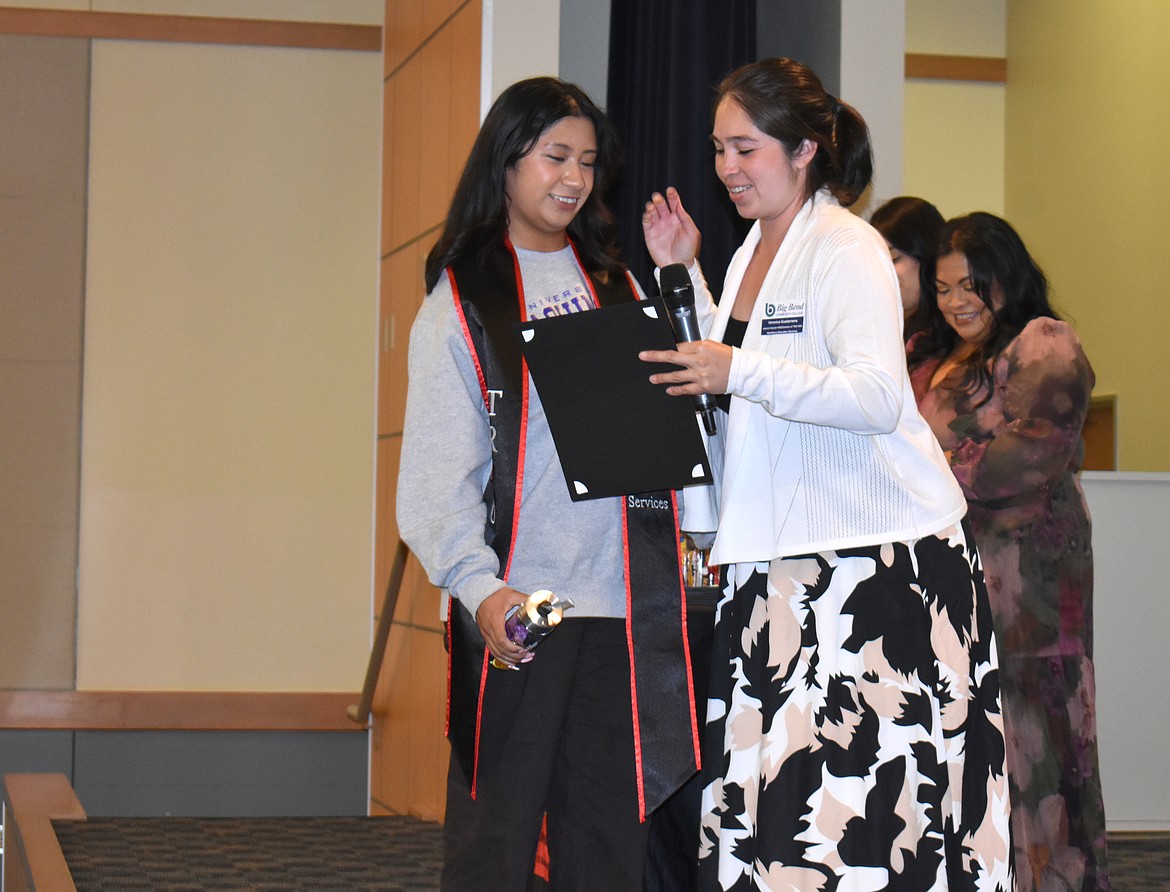
Hereli Mendez receives her TRIO certificate from program director Veronica Guadarrama Tuesday.
JOEL MARTIN/COLUMBIA BASIN HERALD
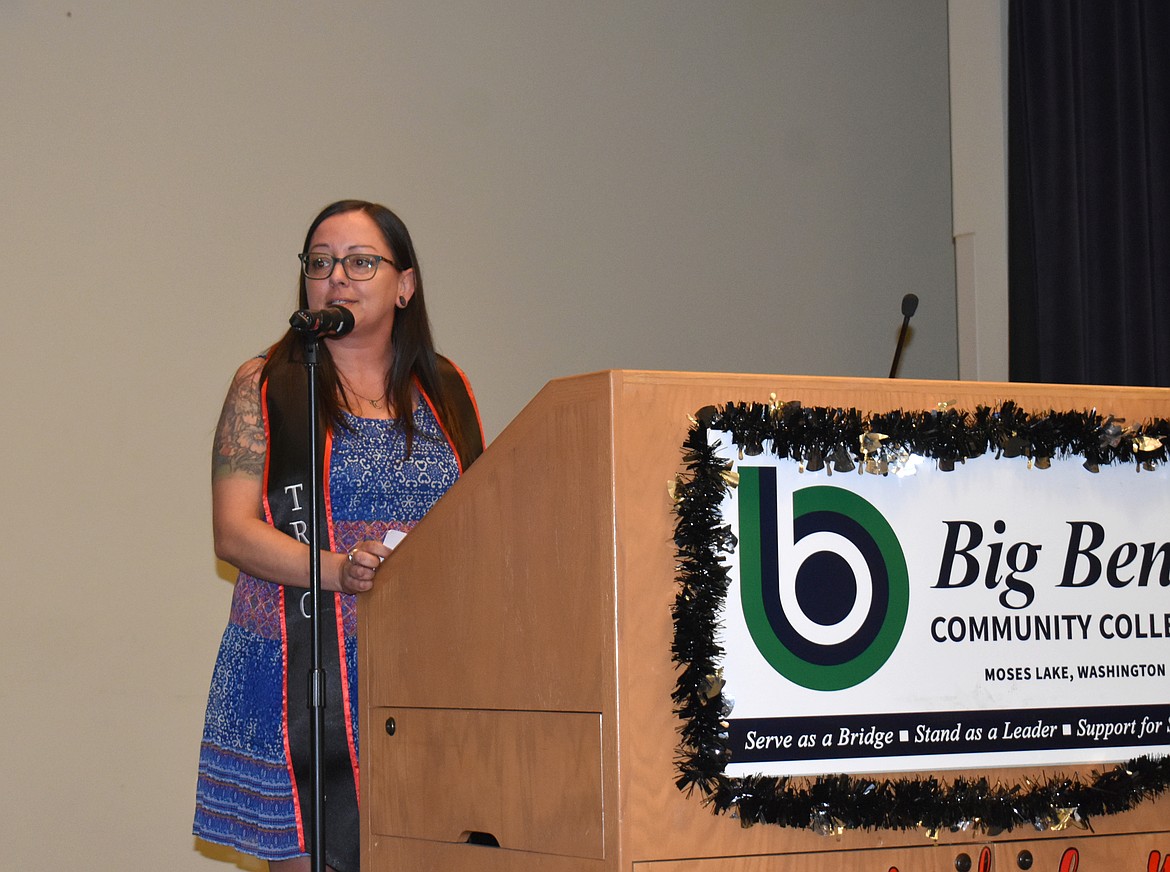
Jessica Huntley talks about what TRIO has meant to her at the program’s final graduation ceremony Tuesday.
JOEL MARTIN/COLUMBIA BASIN HERALD
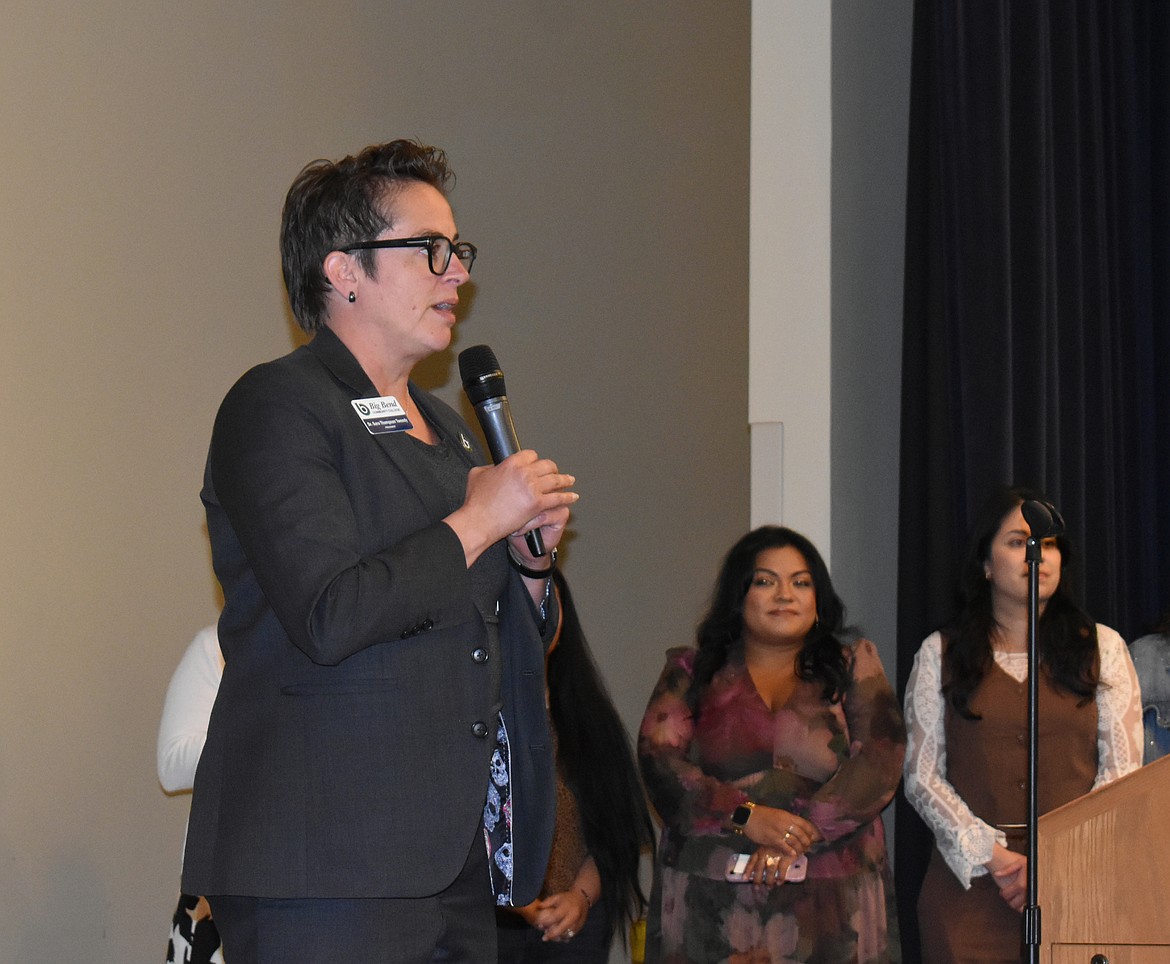
Big Bend Community College President Sara Thompson Tweedy speaks passionately about TRIO at the program’s graduation ceremony Tuesday.
JOEL MARTIN/COLUMBIA BASIN HERALD
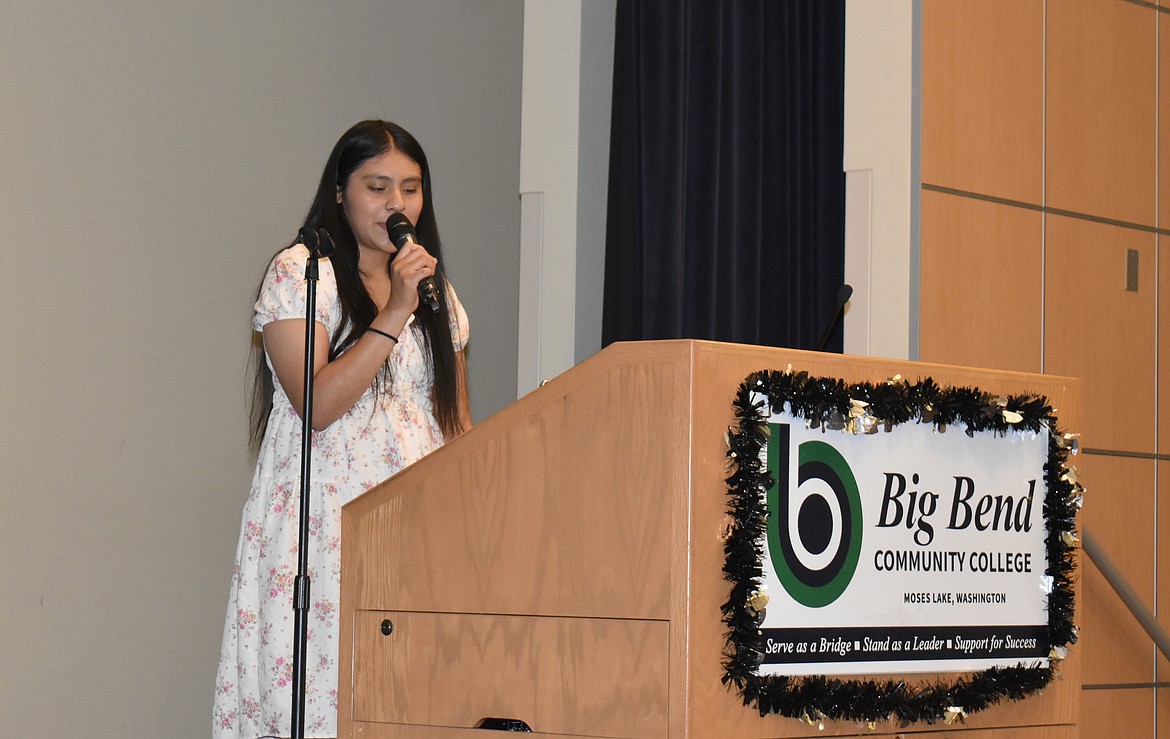
Graduating TRIO student Leslie Pineda thanks God, her parents and her TRIO advisors in both English and Spanish for their support in her educational success.
JOEL MARTIN/COLUMBIA BASIN HERALD
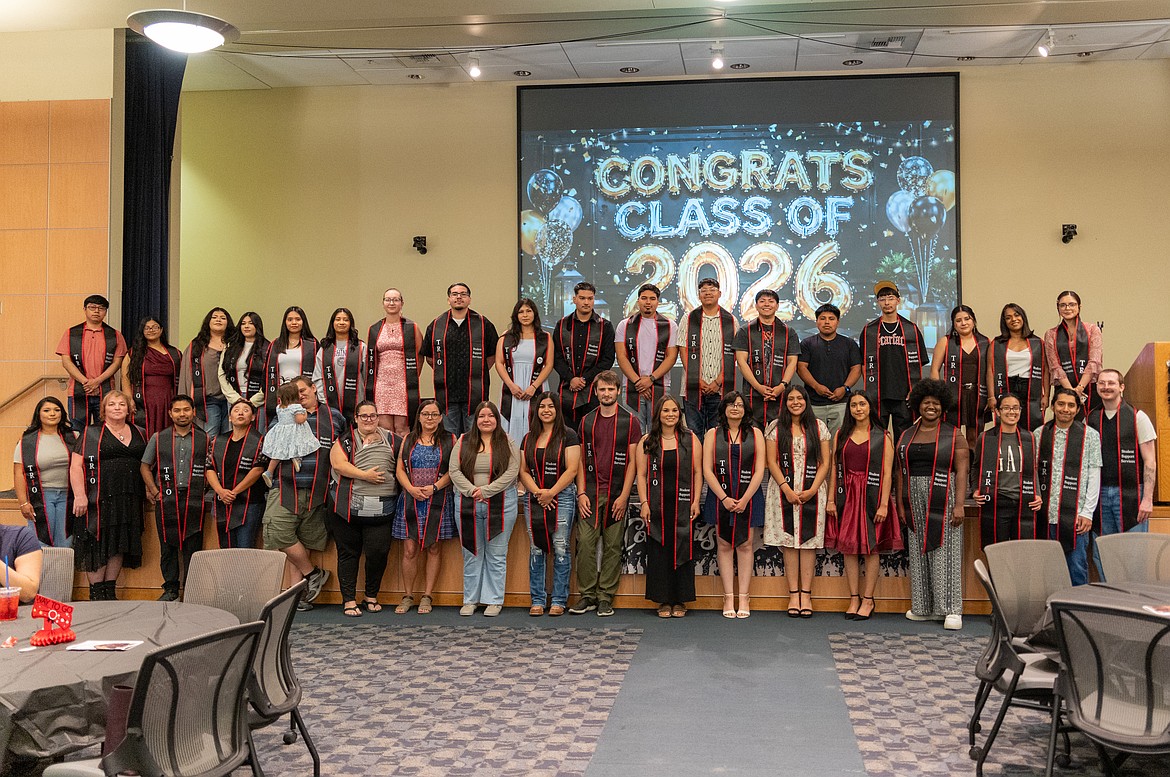
The 77 graduates of Big Bend Community College’s TRIO program take one last photo together Tuesday night.
COURTESY PHOTO/BIG BEND COMMUNITY COLLEGE
"There were a lot of colleges that were impacted by this injustice – let’s call it what it is – and three of us stood up. Three. And I am proud of that.” — BBCC President Sara Thompson Tweedy
MOSES LAKE — For more than 30 years, Big Bend Community College’s TRIO Student Support Services has helped low-income and first-generation college students succeed. On Tuesday evening, it came to an end.
“Without TRIO, I would not have had the support that I needed to get to where I am today,” said Adrian Deleon Marmolejo, one of 77 students graduating this year from Big Bend Community College’s TRIO SS program. “Coming from a home that severely affected my mental health and my grades in high school, I never thought I would succeed in higher education, but when I met the TRIO team, their passion for what they do helped me realize that I can do the same.”
TRIO was created in 1964, just two years after BBCC itself was established, as part of the Lyndon Johnson administration’s War on Poverty. TRIO programs are federally funded on a five-year cycle, explained Program Director Veronica Guadarrama, which means that programs must reapply every time for grants to fund it. Guadarrama and her team applied for the grants as usual in 2024, and in 2025 they were informed that they were not on the list of recipients for 2026.
“We found out that we were one of 18 institutions and one of 22 programs nationwide whose (applications) were rejected in this way,” Guadarrama said through tears. “Even though there have been valiant efforts in the fight to challenge this decision, we are still at a point where there is no resolution.”
The program funding is set to expire at the end of August, Guadarrama said. Big Bend is working with the nonprofit Council for Opportunity in Education to explore legal options for restoring the funding, she added.
BBCC President Sara Thompson Tweedy had planned her remarks for the ceremony, she said, but instead went off script and spoke from the heart.
“When I received a call from our vice president that our program was not funded by the U.S. Department of Education, I was absolutely devastated,” Tweedy said. “I was so upset that before I could call Veronica, I had to sit for a moment and absorb this news … There were a lot of colleges that were impacted by this injustice – let’s call it what it is – and three of us stood up. Three. And I am proud of that.”
TRIO students made up about 10 percent of the BBCC Class of 2026, according to Tweedy. The final TRIO cohort Tuesday spanned a range of life circumstances: some were not long out of high school, some old enough to be those students’ parents. Several of the students juggled family and school, and it showed in the small children who accompanied them Tuesday evening.
“I didn’t know what I was going to do or how I was going to do it,” said student Crista Ibarra, fighting back tears. “I felt scared and TRIO was there every step of the way.”
Guadarrama and her team – Program Specialist 2 Allyssa Martinez and Academic Advisors Astrid Chen, Jasmine Martinez and Alma Guzman – stayed on to support their students even knowing that their jobs would disappear after August, Tweedy said.
“Do you know why they stayed?” Tweedy asked the assembled students. “Because of you. Because they love and care about you, and they know how much this program means to you and your families.”
Jordan Kildow credited TRIO for his academic success.
“I got to this point thanks to TRIO,” Kildow said. “I had taken about six years’ break after high school, and I didn’t really know what I wanted to do. I attempted to go to a college in my home state of Colorado, and there wasn’t a program like (TRIO), so it didn’t work out Once I came here, I got into TRIO and they changed everything for me.”
TRIO helped students apply for scholarships, took them on college tours, walked them through the admissions process and even helped them cover application fees, Kildow said. TRIO also chipped in when they ran into financial emergencies.
Both Kildow and Deleon Marmolejo are the first in their families to graduate from college, they said.
“My dad never went to college; he’s a (naturalized) immigrant from El Salvador,” Deleon Marmolejo said. “He’s been working really hard to get me to a point where I can do something like this, because it’s not easy.”
Deleon Marmolejo plans to go on to Western Washington University and pursue a degree in sustainability studies, he said. Kildow plans to study anthropology, also at Western.
Jessica Huntley, one of the student speakers, said TRIO gave her the confidence to complete her degree after more than 20 years in the workforce.
“You’ve probably heard the phrase ‘There are no dumb questions,’” Huntley said. “Over the last two years, I managed to challenge that theory on more than one occasion … I had impostor syndrome before I even knew what it was.”
The people in the TRIO program were patient and answered every question, Huntley said, and now she’s on her way to Washington State University to earn her bachelor’s degree.
“In two days, Dr. (Bryce) Humpherys and I are going to be handing diplomas to you that you have earned through your own persistence and resilience,” Tweedy said. “And the faculty and staff of Big Bend Community College will be there to witness you do something that you’ll probably be the first in your family to do. We are incredibly proud of your accomplishments … So do not discount the effort that you put in to be there, because we don’t. We’ve been in your shoes, and we know what it takes. And whatever path you’re taking, your story doesn’t end here. This is just one chapter in what will be a wonderful journey through life.”
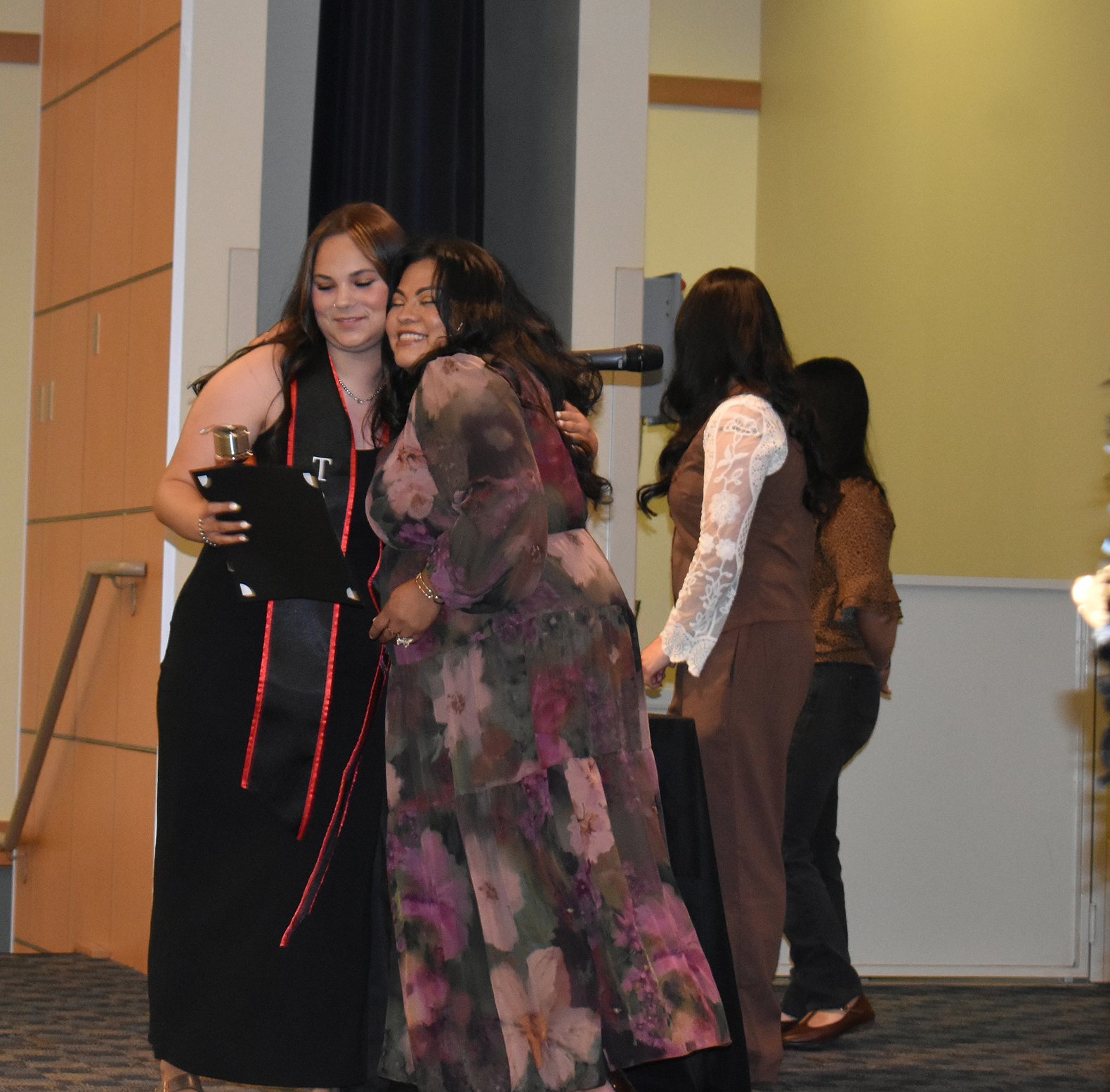 Kallie Kooistra hugs her advisor Astrid Chen at the TRIO program’s final graduation ceremony Tuesday.
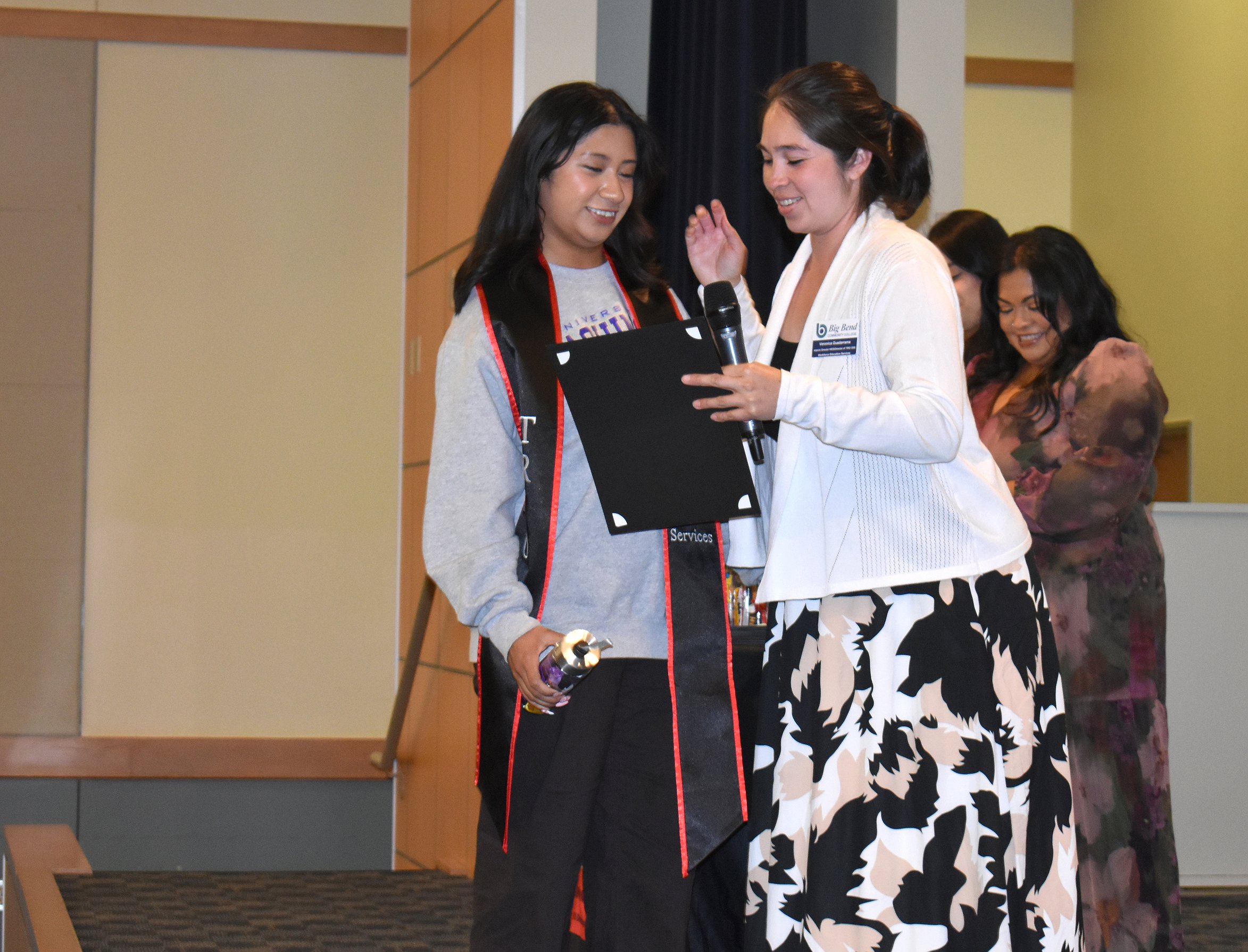 Hereli Mendez receives her TRIO certificate from program director Veronica Guadarrama Tuesday.
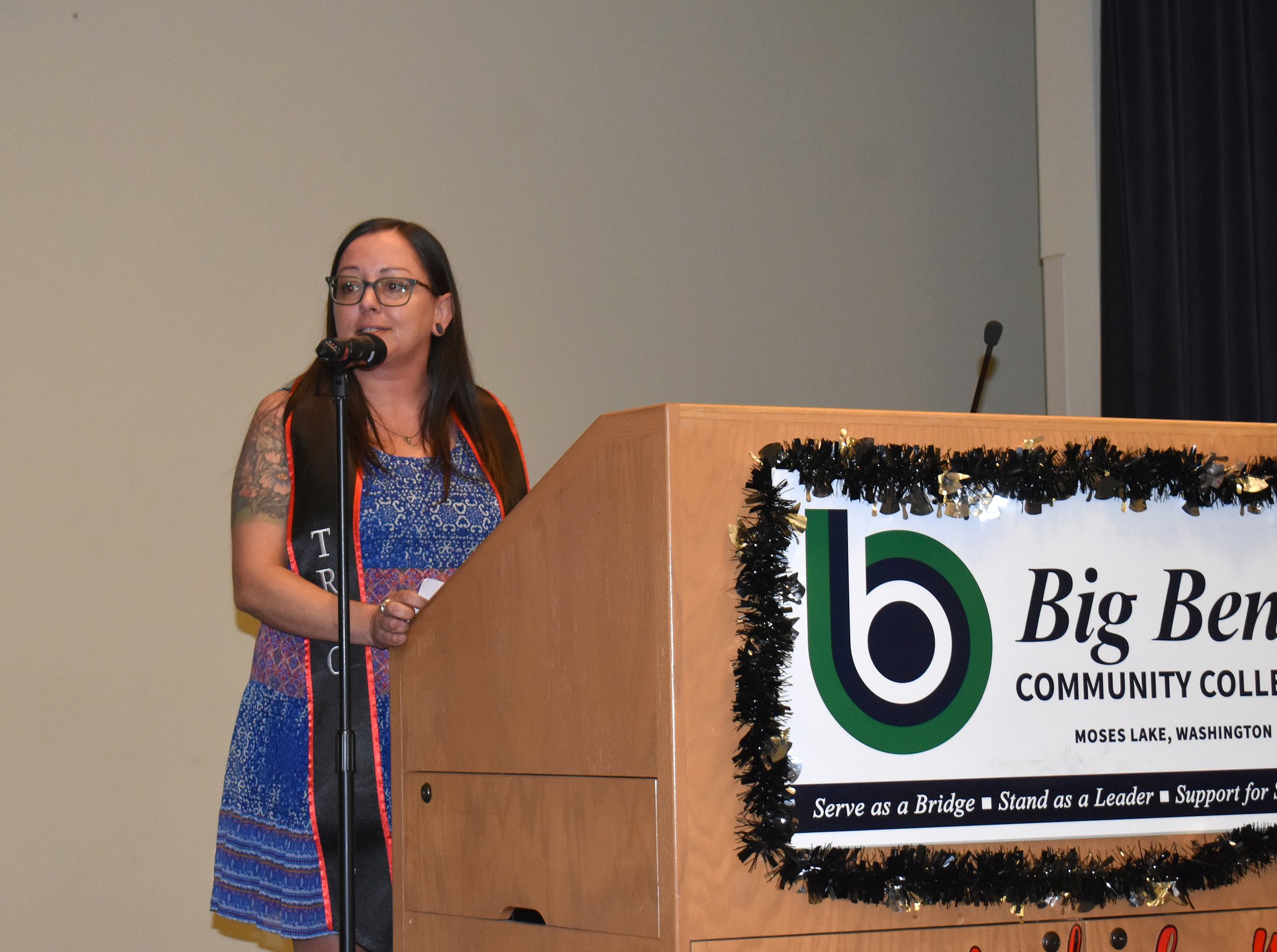 Jessica Huntley talks about what TRIO has meant to her at the program’s final graduation ceremony Tuesday.
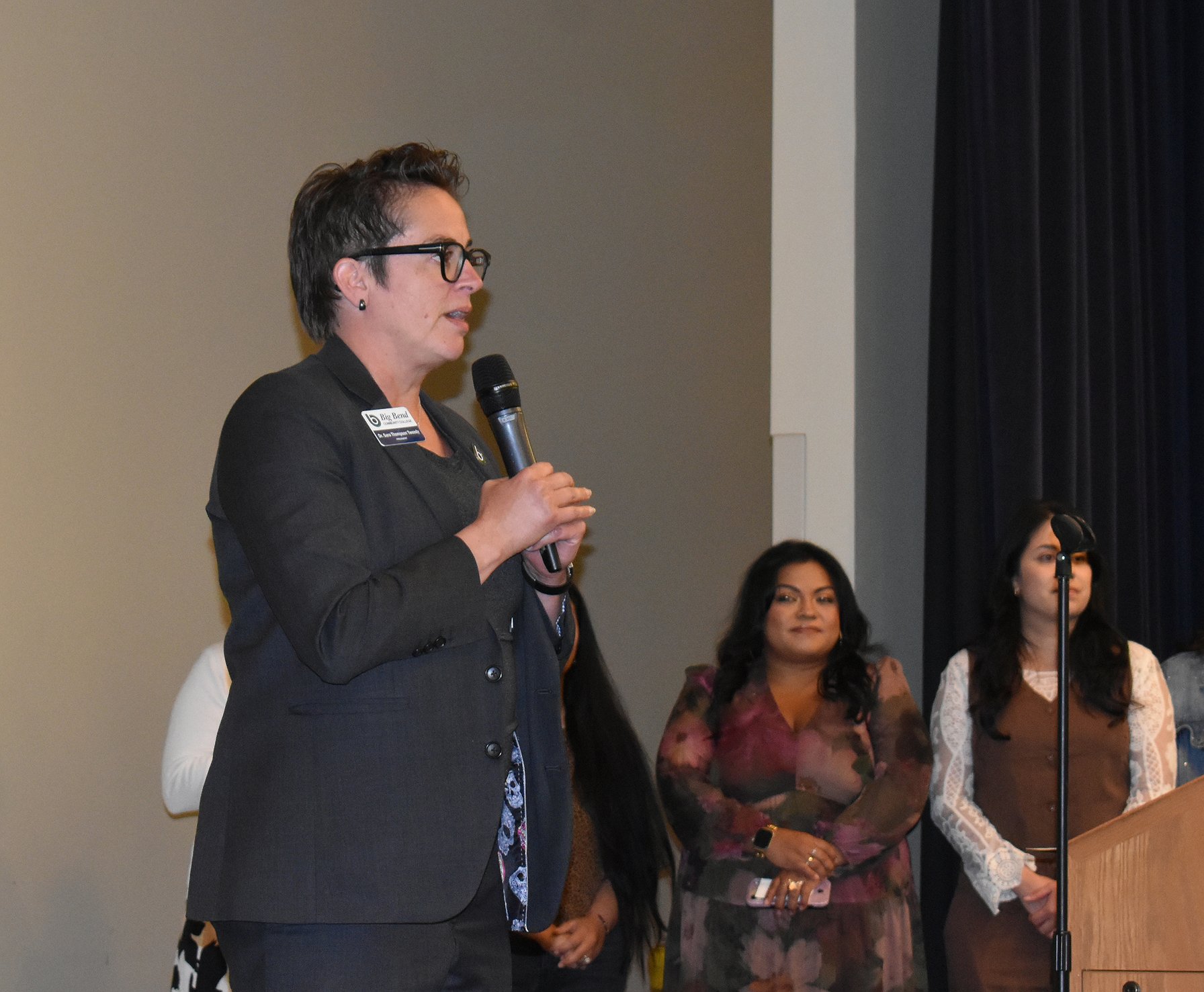 Big Bend Community College President Sara Thompson Tweedy speaks passionately about TRIO at the program’s graduation ceremony Tuesday.
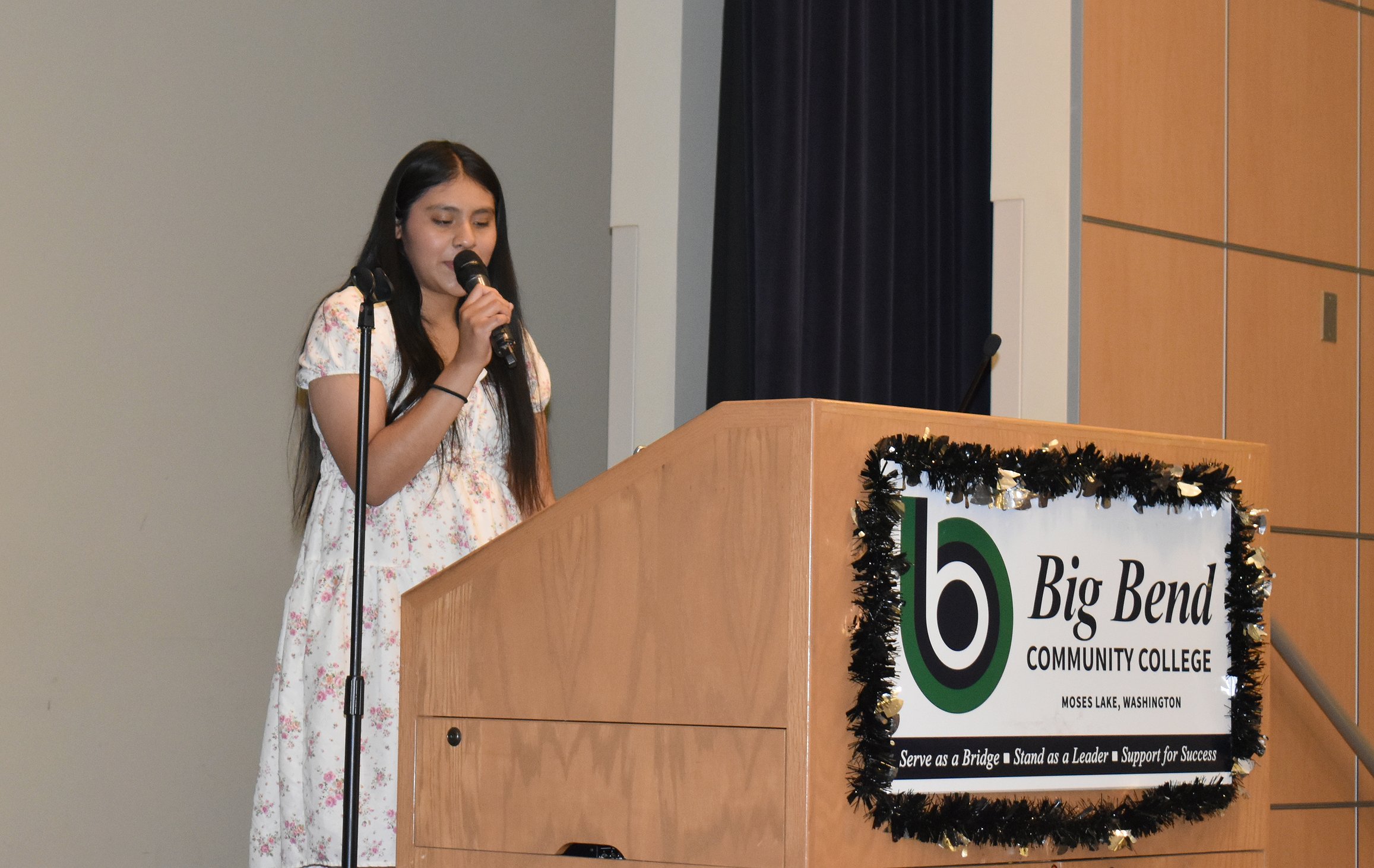 Graduating TRIO student Leslie Pineda thanks God, her parents and her TRIO advisors in both English and Spanish for their support in her educational success.
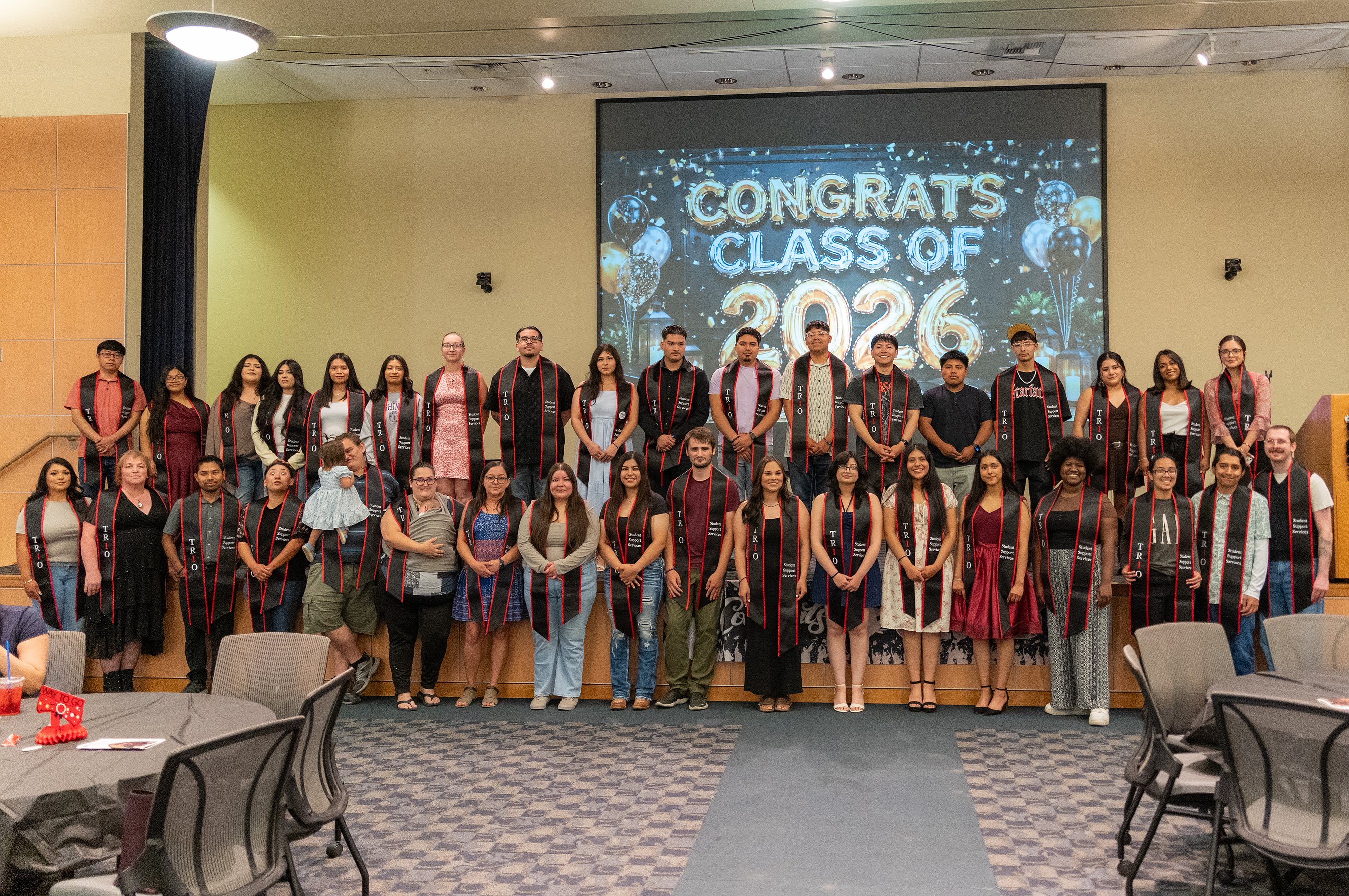 The 77 graduates of Big Bend Community College’s TRIO program take one last photo together Tuesday night.