
Code enforcement, related issues discussed at Moses Lake town hall
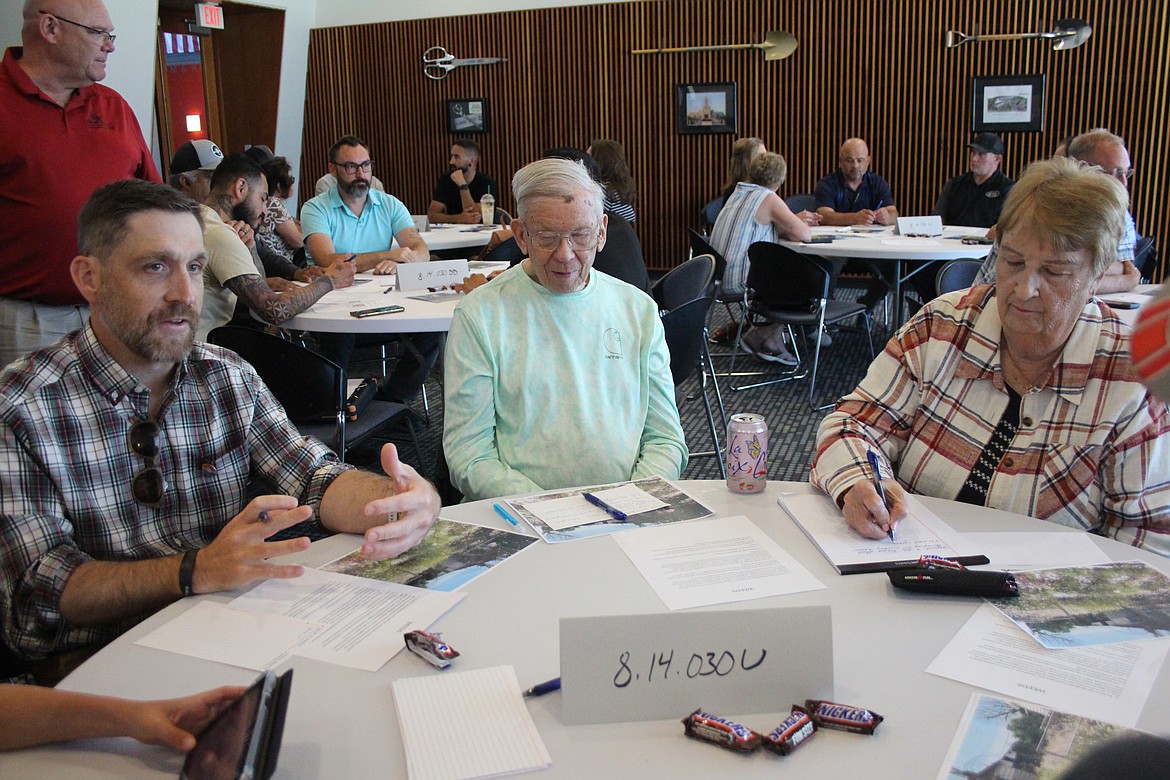
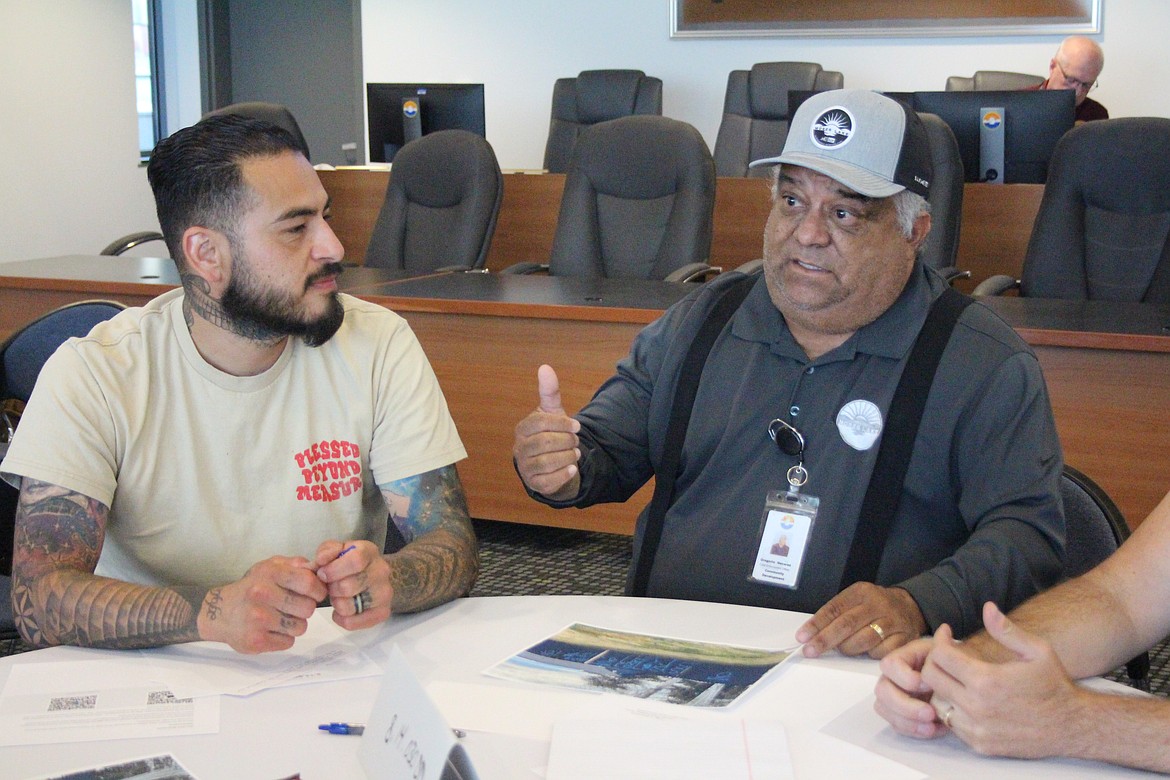
MOSES LAKE — As Moses Lake Mayor Dustin Swartz phrased it, code enforcement “isn’t exactly glamorous all the time,” but a discussion of code enforcement issues drew a crowd to the Moses Lake Civic Center Tuesday.
“I greatly appreciate your comments; complaints are probably warranted in some cases,” Swartz said. “We are here also to hear all of your suggestions.”
Code enforcement can address some sticky topics, like the resident who said tree roots had damaged his sidewalk to the point where he could be subject to a fine. They were planted as part of the development when the house was built, he said.
“The trees are owned by the city. I’m not allowed to remove the trees,” the resident said. “If I pay thousands of dollars to repair the sidewalk, I’ll have to do it again next year, and the city still won’t let me remove the trees.”
It’s a problem throughout his neighborhood, he said, but since the trees cannot be removed, right now it’s an insoluble problem.
Chris Horton, the city’s building official and fire marshal, said city officials do recognize the dilemma.
“That is a pretty hot topic in my office. I get a lot of calls about that,” Horton said. “I think there are some ideas out there on how we can address it.”
Council member Victor Lombardi said homeowners and landowners really don’t have recourse right now, and in light of that, he suggested that council members discuss waiving the fines until a solution can be found.
Tina Jewell, one of three code enforcement employees in addition to Horton, explained the process for addressing code enforcement violations.
The first step is to talk to the person in violation, she said.
“We prefer in person because we get better relationship building with the citizens, and that way we can actually talk to them in person and explain the code, where some of the violations are,” Jewell said. “When they have violations on the property, (owners) don't necessarily see it as a violation, and so we have to explain (the code requirements).”
If the problem persists, the property owner receives a letter, then a notice that gives the owners a 14-day window. If there’s no cleanup, the city can ask for a voluntary cleanup agreement, and if that fails, people can be cited for the code infraction.
Residents have options in addition to code enforcement, which was highlighted in a discussion about weeds.
Weeds must be at least 12 inches high to be in violation, and city officials can’t cite violations they can’t see, which means enforcement for backyard problems is limited. But, Swartz said, participants at the table he was sitting at pointed out that weeds in a derelict backyard can be a fire hazard to the neighbors.
“When does the fire marshal get involved?” he asked.
Horton said there are multiple options when it comes to weeds.
“If somebody calls and says, “My neighbor’s weeds in the back are dry and they're three foot tall,’ we can actually get their permission to go on their property (and) take pictures, and let that person know, ‘Hey, that is a fire hazard,’” Horton said. “The code specifically states if it endangers people, structures, agriculture, anything like that, then it's a nuisance, and it needs to be handled as such.”
There are also options when it’s not a fire hazard, he said.
“The code says if you just screen for public view, you can’t enforce it. Well, there’s another part of our municipal code. The unified development code – it’s basically the planning code, and it says that parcels have to be maintained free of garbage (and) weeds,” Horton said.
Community response is another alternative, and council member Joel Graves cited some advice from local minister Art Brown when it comes to graffiti.
“He talked about the importance of calling it in right away, and he cited that when graffiti is dealt with within the first 48 hours, and you do that multiple times, you sort of frustrate the people that are trying to deface our city. You can actually reduce the amount of graffiti over time,” Graves said. “(Brown) talked about how graffiti is often tied to gang activity, and graffiti often escalates, so you'll have different gangs tagging over one another. But if you remove it rapidly, then you can defer that repeat activity.”
That kind of diligence takes cooperation, Graves said.
“We had a good conversation about community-led solutions and neighborhood watches, and how neighborhood involvement is essential. Residents taking initiative to clean, report, and engage,” he said.