Wednesday, June 17, 2026
81.0°F

OGWRP holds groundbreaking for fourth delivery system
by NANCE BESTON
Staff Writer | June 17, 2026 3:05 AM


“We’ve gone from just a single pump plant in 2021, to four of them now and nine more on the horizon. It’s hard to believe we’re coming this far and this quick.” 

East Columbia Basin Irrigation District Development Coordinator Jon Erickson

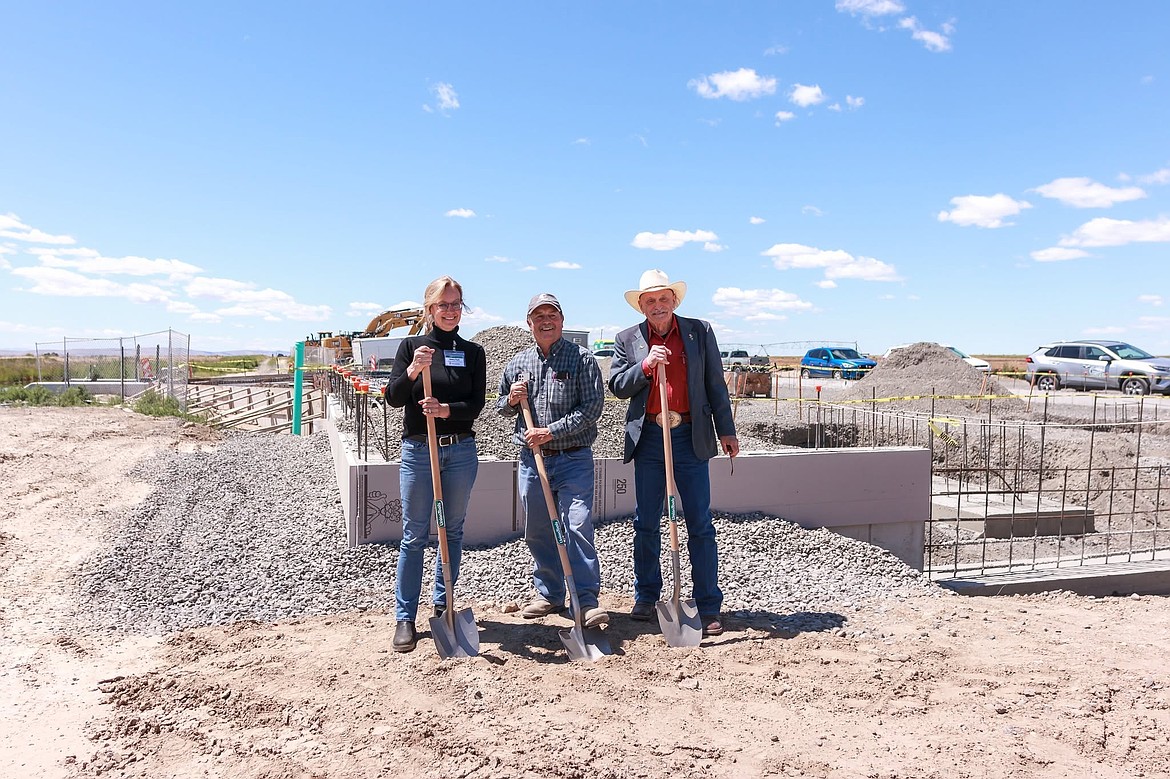
ODESSA — The Odessa Groundwater Replacement Project marked another milestone June 10 with a groundbreaking ceremony for the EL 80.6 delivery system – its fourth system – bringing the long-running effort one step closer to replacing declining groundwater supplies with Columbia River surface water. 

Once completed, the EL 80.6 system will convert 5,862 acres from deep-well irrigation to surface water delivery and serve roughly 13 to 14 contracts, according to East Columbia Basin Irrigation District Development Coordinator Jon Erickson. 

“It’s an exhilarating feeling,” Erickson said. “This program has had its ups and downs and its challenges, but those are dwarfed by the successes we’re seeing today.” 

The new EL 80.6 system is part of a broader expansion effort across the Odessa Subarea, where groundwater levels have been in long-term decline. The OGWRP aims to transition farmers from aquifer-dependent irrigation to a more sustainable surface water supply delivered through the Columbia Basin Project. 

Erickson said the program has grown significantly in recent years, fueled by strong public support and increased funding. 

“We’ve gone from just a single pump plant in 2021, to four of them now and nine more on the horizon,” he said. “It’s hard to believe we’re coming this far and this quick.” 

While Erickson noted that ECBID refers to these installations as “delivery systems” rather than pump plants, the EL 80.6 system is functionally similar, bringing water across large agricultural areas and distributing it to contracted lands. 

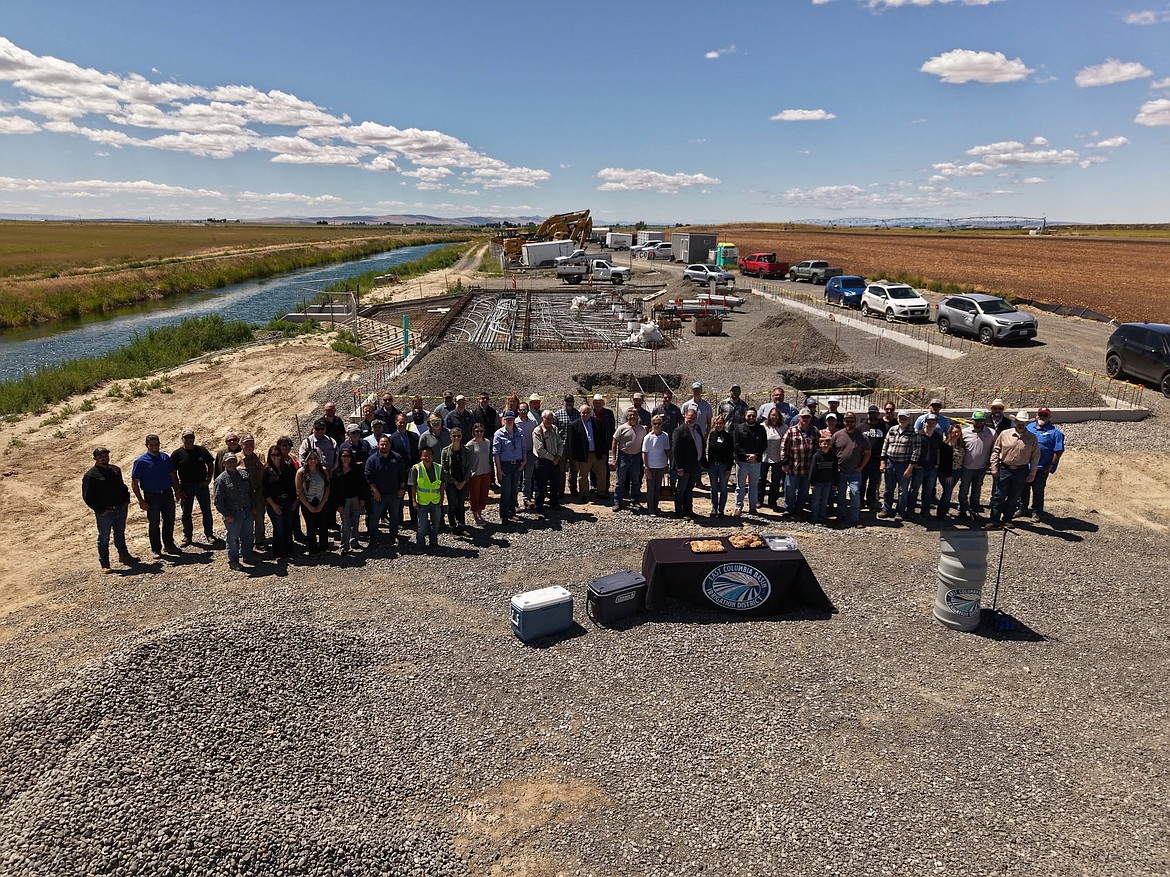
The June 10 groundbreaking drew an unusually large crowd.  

“Typically, our groundbreakings aren’t that large or attended,” Erickson said. “I was pretty excited to see that we had standing room only. I thought maybe 30 people would show up, and I think we were probably over double that.” 

He added that the turnout reflects increasing confidence in the project’s success. 

“They’re seeing the success in the program,” Erickson said. “They’re seeing all these efforts that some days just go unnoticed.” 

A formal ribbon-cutting ceremony is expected once the system becomes operational, around 2027, though no specific date has been set. Erickson said those events are often scheduled around the availability of elected officials and agency representatives who helped secure funding for the project. 

The EL 80.6 system will play a key role in shifting water use away from deep wells and toward Columbia River surface water, a central goal of the OGWRP. 

“These landowners definitely need the water out there,” Erickson said. “The program is doing what it’s supposed to do, we’re replacing that groundwater with surface water.” 

For participating farmers, the shift offers long-term reliability compared to declining aquifer levels. Erickson said the transition also has the potential to reshape agriculture in the region. 

“We are seeing the increase in crop production in those areas that were either dry or fallow ground,” he said. “Ninety thousand acres of reliable water now hitting the ground, it’s definitely going to have some sort of impact on the type of crops and the production rates.” 

Despite the progress, significant work remains. Erickson said ECBID currently has multiple systems at different stages of development, including those under design or moving into construction. 

“We’ve still got a lot of work ahead,” he said. 

The broader OGWRP is nearing a cap of about 90,000 acres authorized for surface water delivery. Much of that allocation is already spoken for, and ECBID is now moving into final design and construction phases for remaining acreage. 

Erickson emphasized that continued public and political support will be essential to complete the project. 

“These projects don’t happen in a vacuum,” he said. “They need to be out there and widely supported by the public and the landowners.” 

He encouraged community members to stay engaged, attend meetings, and recognize the role of state and federal funding in advancing the effort. 

“Thank your legislators and senators,” Erickson said. “Without them, we’re definitely not able to move as fast.” 

Erickson said this project has been a work in progress with ECBID, Quincy Columbia Basin Irrigation District, South Columbia Basin Irrigation District, Bureau of Reclamation, Wash. Dept. of Fish and Wildlife, landowners and public officials.   

“We all had our part to play,” Erickson said. “It takes a lot of people with a lot of dedication to make something like OGWRP happen.”  

As more delivery systems come online, Erickson said the project is steadily delivering promises made years ago – to improve water reliability, support agriculture and stabilize a region long dependent on groundwater. 

“It’s exciting to be a part of it,” he said. “When you’re able to sit and celebrate with a group of landowners that are realizing the fruits of their labor, it chokes a fellow up.” 


    Washington State Rep. Mary Dye (left), Sen. Mark Schoesler (middle), and Rep. Tom Dent break ground on the Odessa Groundwater Replacement Project EL 80.6 delivery system. The system will convert around 6,000 acres of deep-well irrigation to surface water delivery when completed.