
Tuesday, June 09, 2026
72.0°F

Connelly Park repairs begin, aiming for partial reopening by August
by NANCE BESTON
Staff Writer | June 9, 2026 3:15 AM

MOSES LAKE — Cleanup and recovery efforts at Connelly Park are moving steadily forward following the late-May windstorm that caused widespread destruction, with crews now focused on clearing access, removing hazardous trees and preparing for rebuilding work in the coming weeks.  

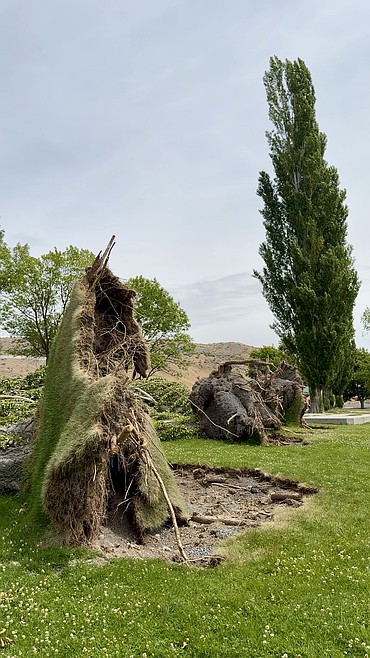
The park was closed indefinitely after the storm, which brought winds of nearly 70 miles per hour and uprooted roughly 15 massive trees, many more than 100 feet tall. The damage also extended to irrigation systems, electrical infrastructure and park amenities, leaving the area unsafe for public use and forcing officials to prioritize hazard mitigation and assessment. 

Since then, according to Moses Lake Irrigation and Rehabilitation District General Manager Sam Castro, progress has centered on stabilizing the site and allowing crews to safely begin large-scale cleanup.  

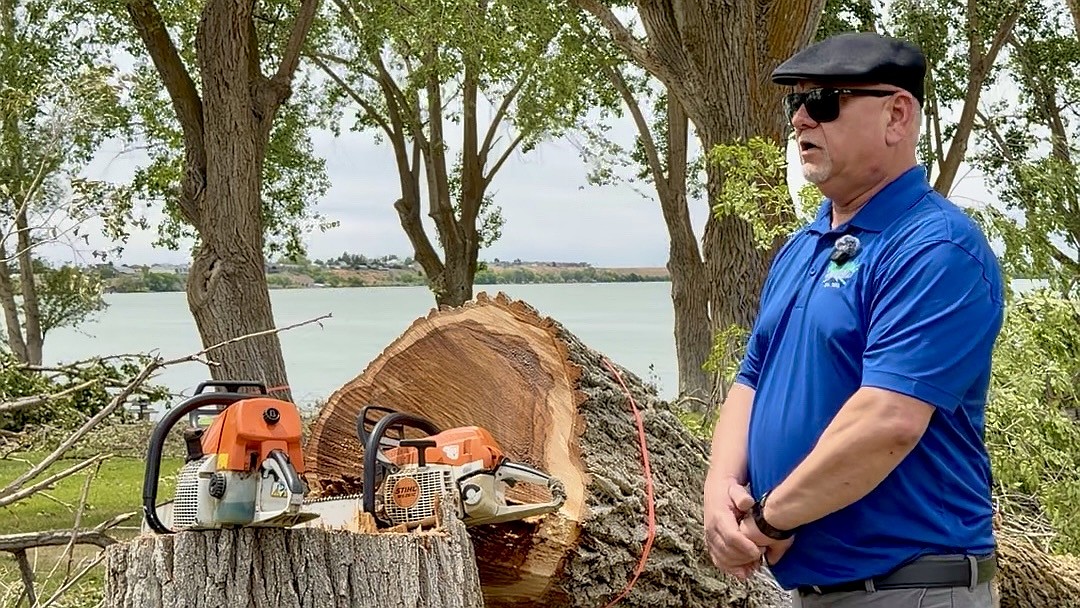
“We’re just working on access right now,” Castro said. “As soon as the access is cleared, then we can deploy the rest of the resources.”  

A single contractor, Basin Tree Service, has been hired to handle the cleanup operation, which Castro said is being approached more like a timber-harvesting project than a standard tree removal job. Crews are currently cutting through fallen trees, some more than 100 feet long and working methodically to open roadways and reach the most dangerous areas.  

An arborist has also evaluated every tree in the park and marked hazardous ones with pink ribbons. In addition to the trees that were knocked down by the storm, Castro estimates roughly 10 more will need to be removed due to safety concerns, bringing the total loss to about 25 trees.  

“The arborist has tagged all the trees that are hazardous,” Castro said. “As crews move through, those trees are going to come down as well.” 

Once access routes are established, heavier equipment – including a large excavator – will be brought in to remove massive root systems and stumps. Many of those uprooted trees left behind large craters, some 20 to 30 feet across and several feet deep, which will need to be filled before restoration can begin.  

Castro said the district’s goal is to have all major debris cleared within about three weeks, though that timeline depends on continued safe access and coordinated work.  

“We’re confident we can do it with the right crew and equipment,” Castro said. “This is what they do day in and day out.”  

Tree debris is being chipped and staged on site to reduce hauling costs, while sections of cut wood will eventually be made available to the public for firewood once the park reopens.  

After debris removal, crews will shift to repairing irrigation systems, which Castro previously described as heavily damaged, as well as assessing underground utilities that may have been exposed or destroyed during the storm. 

One of the most significant concerns remains about the park’s restroom facility, which was recently renovated before sustaining heavy storm damage. Initial estimates placed total damage at around $50,000, though Castro has since indicated those costs could rise significantly as assessments continue. 

In the latest update, Castro said current estimates have grown to include over $100,000 in tree removal costs, with the restroom building alone valued at approximately $250,000 if deemed a total loss. Additional repairs to sidewalks, railings and other features could bring total damages well above earlier projections.  

Engineers are expected to determine whether the building can be salvaged or must be demolished and rebuilt.  

Despite the destruction, Castro said community response has been overwhelmingly positive. Residents, local agencies and even fire district personnel have reached out to offer support, share memories of the park and volunteer for future restoration efforts.  

“There’s a huge push from the community asking what they can do,” Castro said. “We’ve already had people offer to donate trees.”  

While volunteers are not being allowed on site during the hazardous cleanup phase, Castro said opportunities will be available later, particularly for replanting trees and helping restore areas such as the beach and picnic spaces.  

The district is also working with an arborist to develop a long-term replanting strategy, focusing on tree species better suited to the area. Castro noted that some of the large poplar trees lost in the storm were not ideal for long-term stability.  

Although the park remains closed, officials are aiming for a partial reopening as early as late August if repairs proceed as planned. Castro acknowledged that several scheduled events have already been canceled but hopes to have portions of the park ready for future use later in the summer.  

In the meantime, he is urging residents to stay out of the park due to ongoing hazards, including unstable trees and falling debris.  

“This is still a danger zone,” Castro said. “We understand people want to come see it, but for their safety, we’re asking them to stay clear.”  

As cleanup continues, Castro emphasized that the recovery effort is as much about long-term improvement as it is about immediate repairs.  

“We may be small, but we’re mighty,” he said. “With the support of the community and the right resources, we’re going to bring this park back.” 

    Basin Tree Service is working as the sole contractor to handle the cleanup operation at Connelly Park.