


Caregivers help prevent depression in seniors
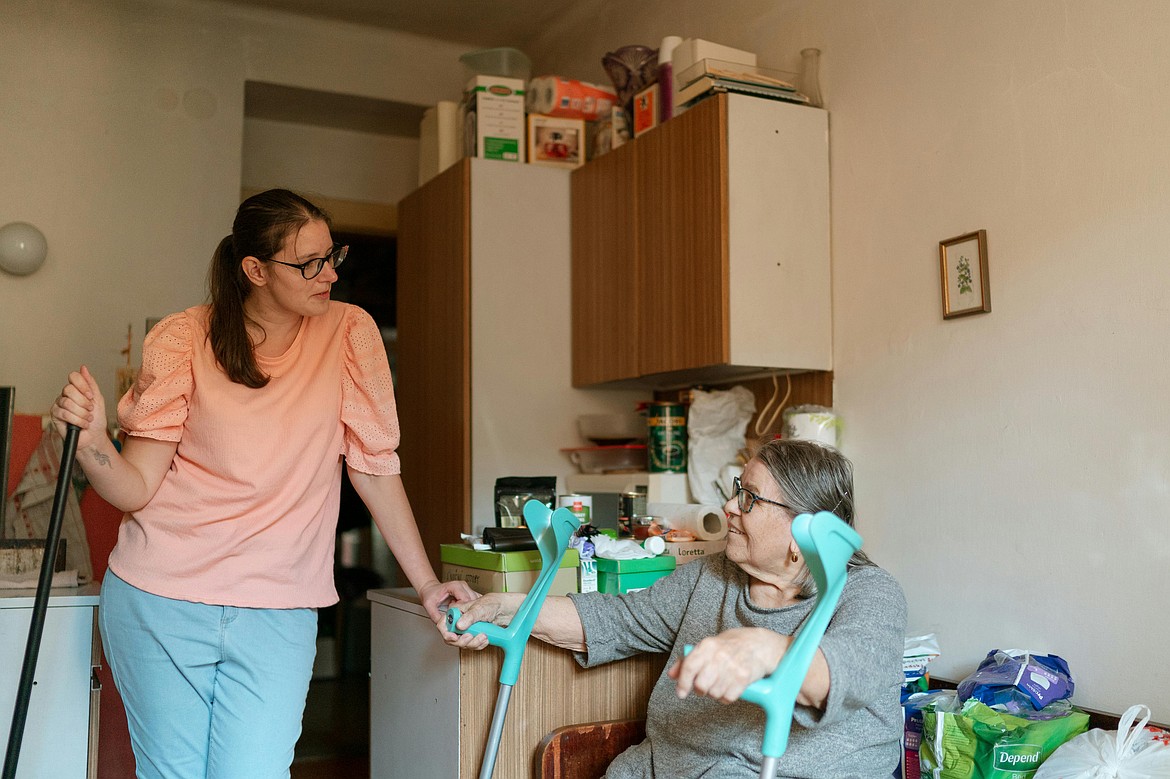
A caregiver can go a long way toward staving off depression in housebound seniors.
COURTESY PHOTO/JSME MILA/PEXELS
MOSES LAKE — It’s not talked about very much, but depression is a very real concern for seniors.
“Aging is not always easy,” said Marisa Martinez, branch manager at Family Resource Home Care. “It’s not always pleasant, but it’s something that eventually has to happen.”
About 15% of Americans 65 and older report having been diagnosed with a depressive disorder, according to the Centers for Disease Control. That’s not counting those whose depression goes undiagnosed, often because they’re reluctant to allow for the possibility after having taken care of themselves and others their whole lives.
“It can become difficult,” Martinez said. “It can irritate or upset them because they can no longer do the things they used to be able to do.”
While many seniors prefer to live as long as possible in their own homes, that can lead to loneliness, said Jim Prussak, CEO of Applause Home Care.
“The more you're isolated and keep to yourself, the more people focus on their own problems,” Prussak said. “What doesn't work anymore? They can't drive anymore. They've seen family members or loved ones pass away, (they) worry about their own mortality. You have the dynamic of people fiercely independent, but also lonely, and that isolation can feed on itself.”
A home care giver can make a difference in that regard, Martinez said, even if that’s not their primary duty.
“Caregivers can have conversations with the clients in an appropriate manner,” she said. “They can read to them, play board games and card games, watch television with them, just keep them company so they’re not feeling so lonely.”
“If you have a companion who can take a walk with you or take you to the grocery store that you can't drive anymore to, or go to the senior center or go wherever you want, now you have freedom and more flexibility,” Prussak said.
When one spouse dies, the living one often has difficulty summoning the will to go on, Prussak said. If they have children or other family who can touch base with them from time to time, that’s great, he said, but sometimes it falls to the caregiver.
“Sometimes we're the only connection to the outside world,” he said. “Sometimes people don't have children or a spouse anymore. Maybe they have a nephew that's across the country and they're concerned about this person, but they can't be there. So having that personal one-on-one ability to interact is just enough for the health of the potential client.”
“We have clients who have zero family members,” Martinez said. “So, the time they get with their caregiver, they’re in a great mood. They’re happy that someone is actually there visiting with them.”
Setting and maintaining a routine is important, Prussak said. “We sit down with the potential client before we start and we ask, ‘What is your routine like? What are your hobbies? Are there things that you don't do anymore that you would like to do?’. Then we can come up with a plan of care. (Maybe) on Tuesdays she really wants to get her hair done, but she doesn't go out to the beauty parlor anymore because she doesn't have reliable transportation. So, we'll establish what the tasks are (that they want to accomplish).”
Besides the daily or weekly routine, Martinez said, consistency with the caregiver is also important.
“(Clients) really don’t like it if their caregiver is repeatedly changing,” she said. “Especially the people who have no family. We tend to keep the (same) caregiver so the client gets familiarized with their face and their name and their personality.”