


Sunday, August 02, 2026
59.0°F

COLUMN: What would happen if we assumed the best about each other?
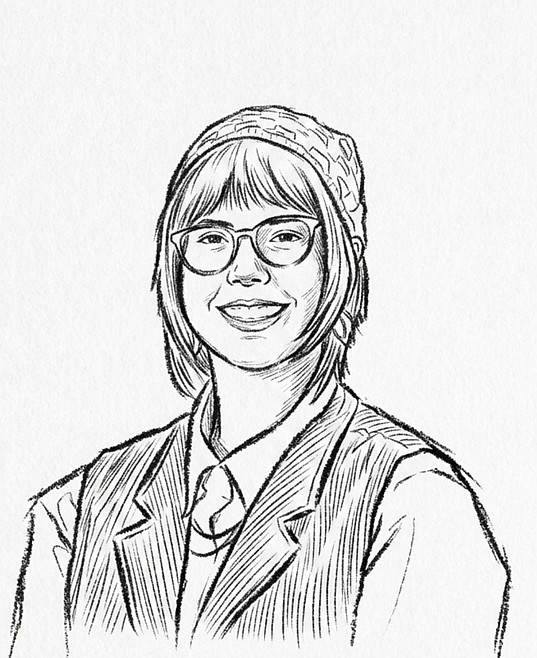
by NANCE BESTON
Staff Writer | July 30, 2026 3:00 AM

Anger has become one of the easiest emotions to find. Open social media, turn on cable news or scroll through the comments section of almost any public discussion, and you will find people questioning one another's motives, intelligence and character. Somewhere along the way, disagreement became evidence that someone must be selfish, ignorant or acting in bad faith.

But what would happen if we assumed the best about each other instead?

Living in the Columbia Basin offers a useful perspective on that question. Unlike larger cities where people can disappear into their own circles, we live in communities where our paths cross repeatedly. We attend the same football games, shop at the same grocery stores, volunteer for the same fundraisers and support the same local businesses. Before anything else, we are neighbors.

Yet even here, it can be easy to assume the worst. Social media has only magnified this tendency.

Someone supports a development project, and we assume they only care about money. Someone opposes it, and we assume they are standing in the way of progress. A parent raises concerns about schools, and we question their motives. A community leader makes a difficult decision, and we wonder what agenda might be hiding behind it.

Anyone who spends time on local Facebook pages has seen the poor behavior happen.

That is not courage. It is not leadership. And it is certainly not productive.

Calling someone names rarely changes minds. Mocking people almost never solves problems. More often, it hardens positions and creates deeper divisions. The ease of posting a comment can make us forget there is a real person on the other side of the screen. Someone we may see at church, at a school event, at the county fair or standing next to us in line at the grocery store.

I often hear my mom's voice in moments like these: "If you don't got anything nice to say, don't say nothing at all."

It is simple advice, but perhaps it is advice worth revisiting. Being nice does not mean avoiding difficult conversations or pretending we all agree. It means treating people with basic respect, even when we disagree. We can challenge ideas without attacking people. We can make our point without being cruel.

Most people are not engaging in these discussions because they hate their community. They are speaking up because they care about it. They may have different experiences, priorities and ideas, but that does not make them enemies.

Most people want many of the same things: safe neighborhoods, good schools, economic opportunity -- and a better future for their children. We may disagree on the path forward, but our destination is often remarkably similar.

Assuming the best about others is not naive, nor does it require abandoning critical thinking. It simply means beginning with the belief that the person across from us is acting in good faith rather than bad.

We will still disagree. But disagreement does not have to become division.

The Columbia Basin itself is proof of what can happen when people work toward a common goal despite different backgrounds and perspectives. Our communities were built by people who did not always see eye to eye, but who shared a commitment to building something larger than themselves.

Every time we choose to listen before judging, we strengthen our community. When we ask questions instead of making accusations, we create space for understanding. And when we give someone the benefit of the doubt, we help restore a little of the trust that seems increasingly rare today.

What would happen if we assumed the best about each other first?

We might discover that our neighbors are not our opponents. We might find more common ground than we expected. We might spend less time trying to score points on Facebook and more time solving problems in our communities.

The Columbia Basin has always been a place where people roll up their sleeves, help their neighbors, and work through challenges together. Perhaps before posting that next angry comment, we should ask ourselves a simple question: Would I say this to that person's face?

If the answer is no, maybe it should not be posted at all.

In a world where it has become easy to assume the worst, choosing to assume the best may be a small act of courage. It will not solve every disagreement, but it may help us remember that the people on the other side of an issue are still our neighbors.