
Railroad Fire nearing full containment -- 10 residences destroyed
MATTAWA — While some hot spots remain, crews have reached the mop-up stage on the Railroad Fire near Beverly as of Monday. No injuries have been reported.
“We’re at 90 percent containment,” said Ben Shearer, public information officer for the Southeast Washington Interagency Incident Management Team.
All evacuation notices for Beverly, Schwana, Smyrna and Lower Crab Creek were lifted at about 7 p.m. Sunday. Lower Crab Creek Road Southwest was reopened at the same time.
As of Monday, the fire was estimated at about 8,200 acres, he said, but that could change slightly as officials map the area. The fire destroyed 10 residences and 22 non-residential structures like barns and outbuildings. It also burned up 18 other structures such as chicken coops and RVs.
“In the end that could change,” Shearer said, as more information is gathered.
While the fire is contained, it’s not completely out, he said, especially in areas like Lower Crab Creek that were difficult for firefighters to access.
“There could be some smoke coming up out of the middle,” he said.
There’s been an increase in blowing dust that’s expected to continue due to the lack of ground coverage along the north face of Saddle Mountain and in the Lower Crab Creek drainage.
“(The burned area) will add to the issue for the rest of the summer, until that grass has a chance to grow back,” Shearer said. “Once it gets a little rain on it, it’ll all come back.”
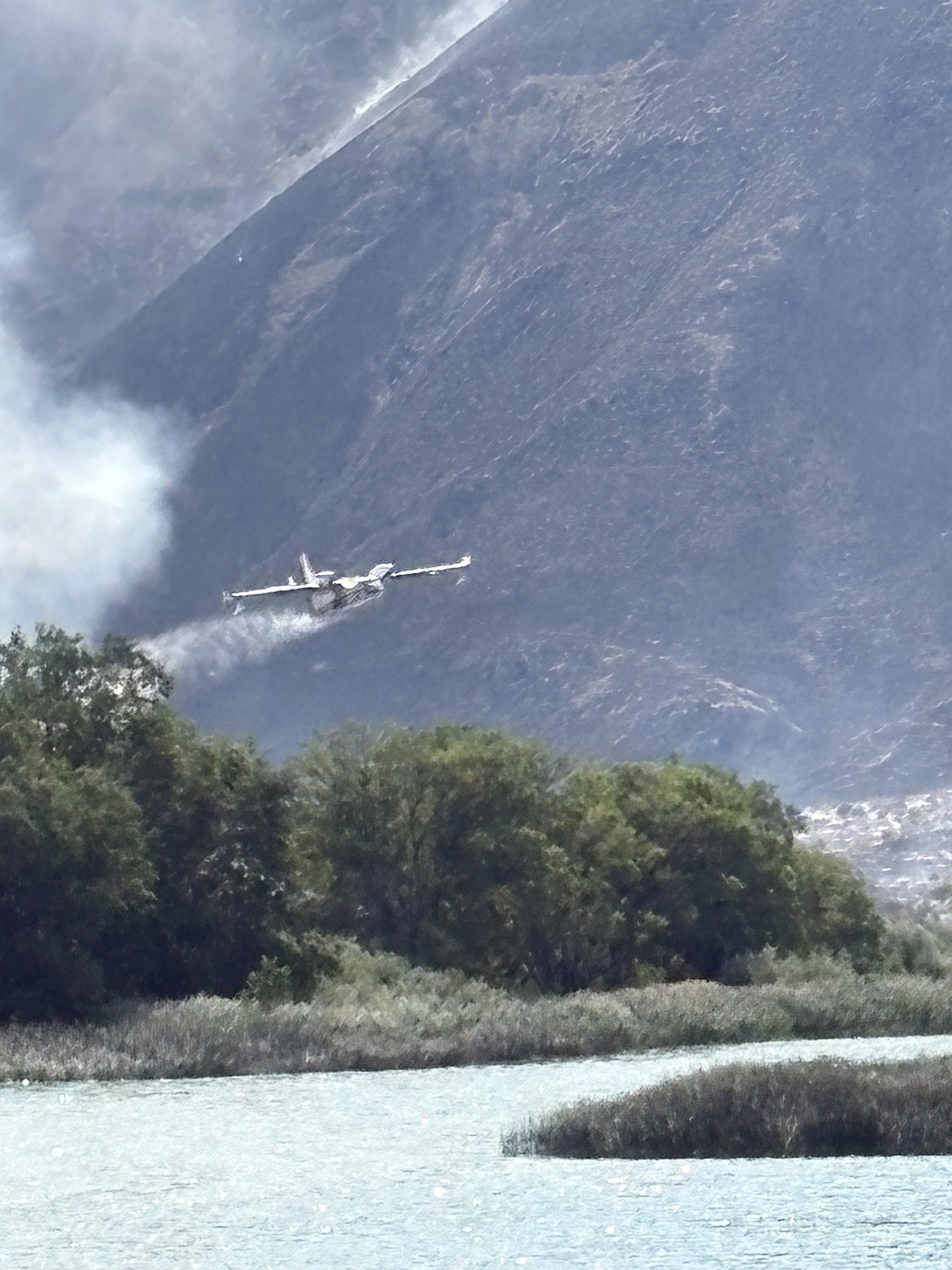
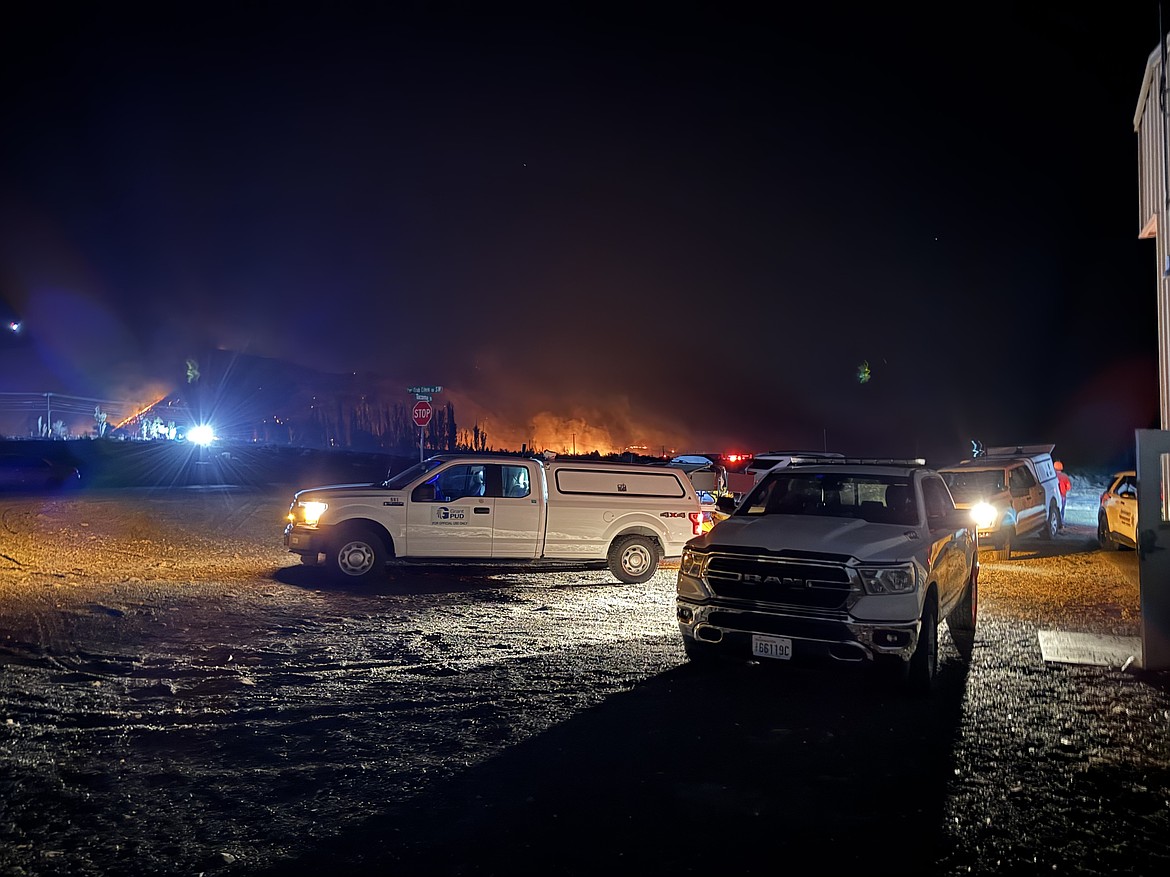
The fire started at about 11 p.m. July 22 near Beverly and burned east along the north side of Saddle Mountain and through the Crab Creek drainage. Shearer said crews were fighting the terrain as well as the fire itself, with steep slopes, a lot of rocks and marshy ground. The dense underbrush around Crab Creek was an especially big challenge.
“Even water drops from helicopters were not getting down there (to ground level),” Shearer said.
Hot temperatures and high winds also hampered fire crews.
“It got very big, very fast,” Shearer said, which prompted local agencies to ask for additional help.
A mild winter contributed to the conditions that have made it a fire-prone summer. Cold and snowy winters help get rid of some of the previous year’s growth.
“The fuel load from last year was still there,” Shearer said.
Moisture was near normal, but most of it fell as rain, which encouraged plant growth in the spring. “The grasses are taller and thicker than they’ve been in years,” he said.
That is translating to a challenging fire season.
“Taller flames, more smoke, more heat,” Shearer said, which means that fires have the potential to burn areas that have survived previous fires. In those conditions fires can grow very quickly, beyond the resources available to local fire crews.
“That’s been the struggle all year,” he said.