Tuesday, July 14, 2026
66.0°F

Gas prices tick upwards nationally, across Columbia Basin, while Wash. average edges down
by NANCE BESTON
Staff Writer | July 14, 2026 2:00 AM

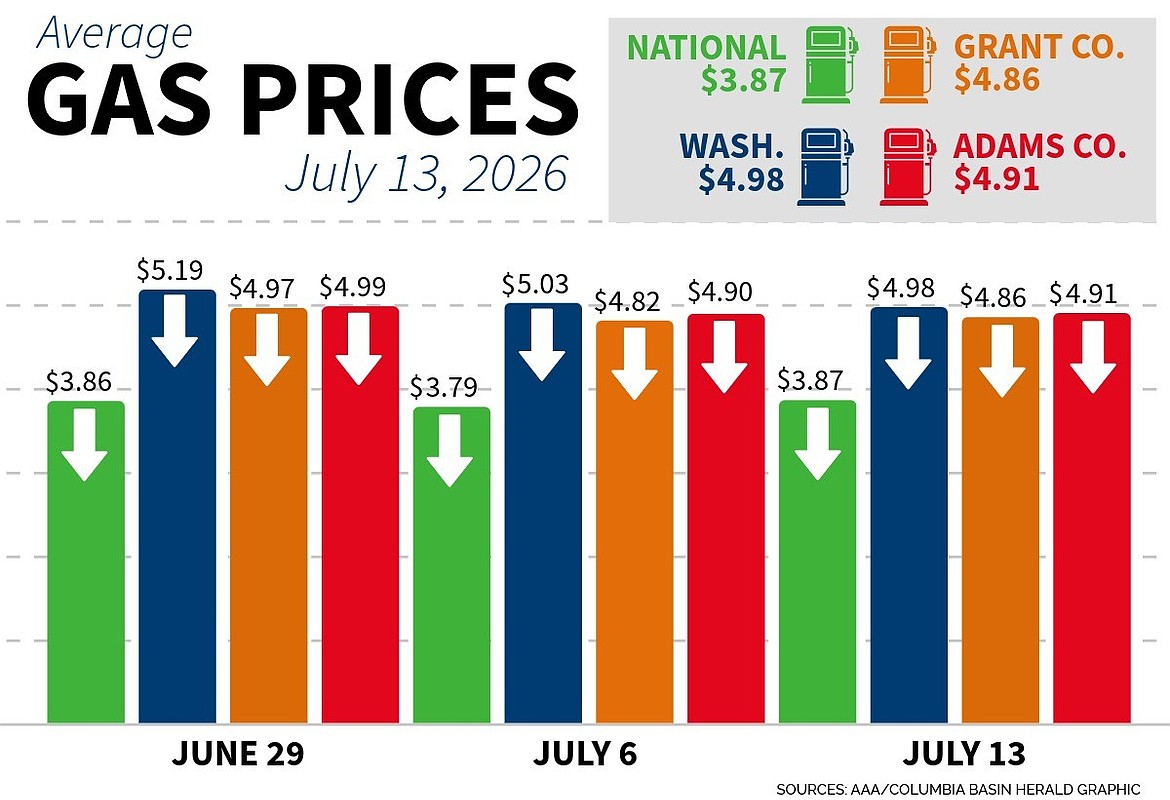
MOSES LAKE — Gas prices have climbed again this week for most U.S. drivers, breaking an eight-week streak of declines, according to AAA data. The national average rose to $3.87 per gallon, up from $3.79 last week. Grant and Adams counties also saw increases, while Washington’s statewide average posted a slight drop in prices. 

Washington’s average fell from $5.03 on July 6 to $4.98 on July 13. But the decrease did not extend to the Columbia Basin; Grant County rose from $4.82 to $4.86, and Adams County increased from $4.90 to $4.91. 

Patrick De Haan, head of petroleum analysis at GasBuddy, said the shift reflects growing instability in global oil markets. 

“The national average price of gasoline has seen its first weekly increase since May 11, snapping a streak of eight straight weekly declines, with prices climbing in nearly four out of five states,” De Haan said in a July 13 statement. “The turnaround comes as oil prices have surged following the collapse of the ceasefire between the U.S. and Iran and the start of new attacks … an ominous sign that could bring additional gas and diesel price increases in the week ahead.” 

Oil prices jumped another 4 percent Sunday evening, De Haan said, adding pressure to refined fuel markets already strained by Ukrainian strikes on Russian refineries. 

Despite Washington’s slight dip this week, the state remains among the most expensive in the country for fuel. June’s statewide average sat at $5.48, and May’s at $5.74, compared with national averages of $4.07 and $4.50, respectively. 

Grant and Adams counties continue to track below the statewide average but above national trends. Both counties have seen steady increases since early June, when Grant County was at $4.97 and Adams County at $4.99. 

De Haan said the pace of increases is not yet expected to match the sharp spikes seen in March and April but warned that continued geopolitical volatility could keep upward pressure on prices.