


July 5 boating accident required effort of well-trained emergency personnel
“It was a busy holiday weekend, so there were actually several private watercraft that ferried injured individuals and helped with taking some of our personnel out to the scene."
Moses Lake Fire Dept. Captain Schrade Rouse
MOSES LAKE — A collision between a boat and a motorized personal watercraft on Moses Lake July 5 sent eight people to the hospital and left some with serious injuries. Moses Lake Fire Dept. Captain Schrade Rouse said treating multiple patients after a collision on the water takes training for individual departments and teamwork among multiple agencies.
“It's an unusual one for us. We do have boat calls, for sure," Rouse said. "The majority of those are watercraft in distress, or maybe some heat stroke, or lost propulsion. For it to be a traumatic incident and involve the boat is definitely a twist in what we get."
The July 5 accident occurred in the afternoon. According to a press release from the Grant County Sheriff’s Office, the operator of the personal watercraft caused the collision.
“The operator, an 18-year-old man from Auburn, Washington, has a lifelong medical condition that may have played a role in the collision,” said Kyle Foreman, GCSO public information officer. “There was no indication of boating under the influence.”
The case is still under investigation.
All fire departments, MLFD included, include even remote possibilities in their training.
“At the Moses Lake Fire Department, everybody is trained to do just about everything, but we do have some specialized teams inside the department,” Rouse said.
Water rescue is included in that training; since MLFD is open 24 hours a day, seven days a week, that expertise has to be spread throughout the department.
“There are several members on every shift that are on that team,” Rouse said. “It can still happen that you only have one or two of those guys here on any given day, but we like having about four people on every shift involved in those specialized teams. That way there’s someone there that is trained to a higher level.”
Boat rescues are different, and not just because they’re on the water. Boats don’t have the kind of safety features available on a car.
“The passengers on watercraft are definitely at a higher risk (of) exposure to traumatic injury,” Rouse said.
The first task, when EMS crews are summoned to a water collision, is basic but crucial – find the boat.
“We try to get people on scene as quickly as possible. We want somebody to visualize those patients and where that accident is,” he said. “Of course, the boat is on its way as soon as that call comes out – somebody's out there hooking it up. Part of the reason why we want those eyes on the accident scene as quickly as possible is so we can tell that boat where to go.”
In this incident, the job was made easier with the assistants of other boat owners on the lake.
“It was a busy holiday weekend, so there were actually several private watercraft that ferried injured individuals and helped with taking some of our personnel out to the scene," Rouse said. "People who saw the event happen, went over and picked up people and brought them in (to shore) for us. In my experience, most people are more than willing to help if given the opportunity.”
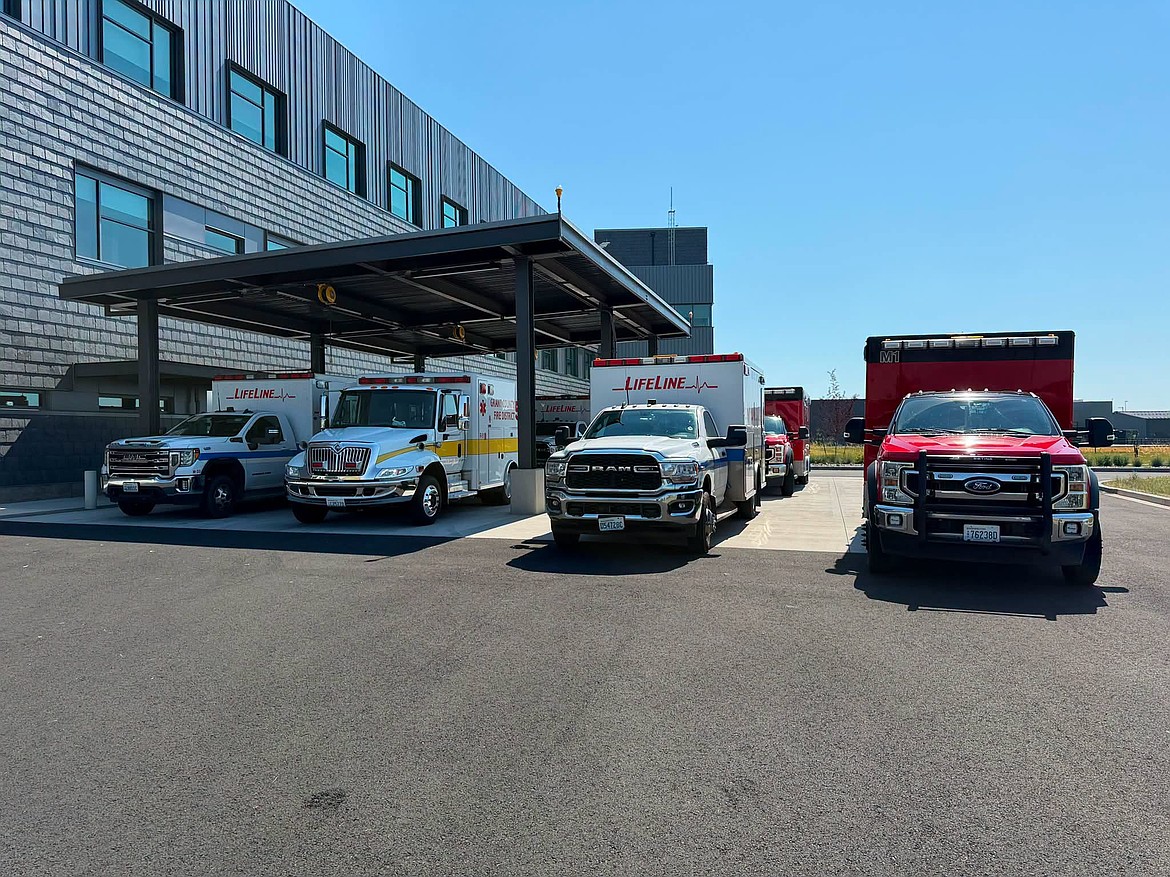
The number of patients and the severity of the injuries meant help was required, which came from the Lifeline Ambulance crew stationed in Moses Lake. The Moses Lake Police Department also plays a crucial role, Rouse said.
“All the resources come to this area, so the MLPD (is) super-helpful for us, controlling that scene, allowing us to get vehicles in there, without pedestrian traffic. You could get somebody in there trying to launch a boat and we need to get in there, so they help us with those kind of logistics. It helps tremendously,” he said.
While EMS crews will start treatment on the water, when it’s possible, patients are landed onshore first, Rouse explained.
“And then the rest of it is just the logistics of getting them treated and transported, per priority," he said. "We definitely had people that were more injured than others, and of course they receive our highest priority."
The collision and water rescue in this incident were examples of the random nature of emergencies.
“There are days. There's not always rhyme or reason," Rouse said. "We expect that we're going to get fires around the Fourth of July. We expect we're going to get traffic accidents and inclement winter weather, but any given day could be the day.”