


4th Congressional District candidates offer views on energy, environment and affordability
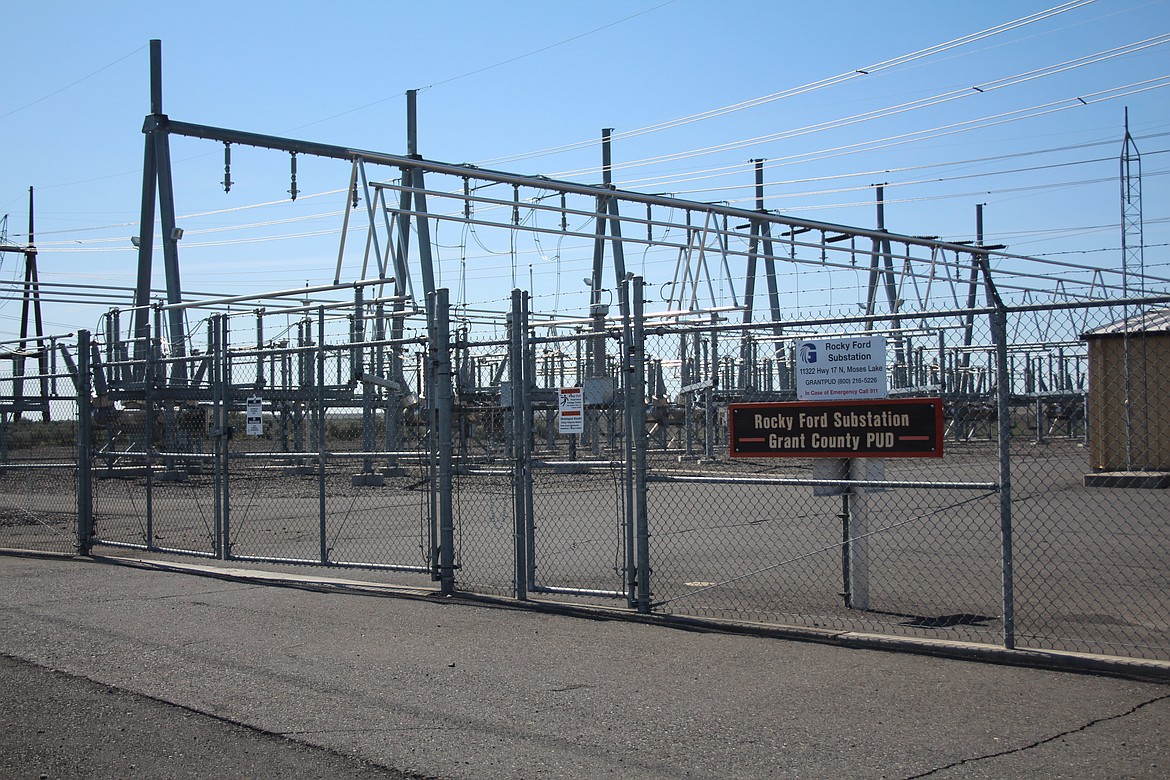
Eleven candidates are seeking to represent Washington's 4th Congressional District, of those six responded to questions from the Columbia Basin Herald. Read about what each of those candidates has to say about energy, environment and affordability in the Fourth Congressional District.
FILE PHOTO
MOSES LAKE — Eleven candidates are seeking to represent Washington's 4th Congressional District, and all were invited to answer a series of questions on issues affecting the region.
Six candidates responded by the deadline to the following question regarding energy policy: "The district includes significant hydroelectric resources and growing interest in renewable energy. How should the federal government balance energy production, environmental protection and affordability for residents?"
Candidates who submitted responses were Jacek "Jack" Kobiesa, No Party Preference; Favian Valencia, Independent; Jerrod Sessler, Republican; Devin Poore, Cascade Party; Matt Boehnke, Republican; and John Duresky, Democrat. Duresky's responses were initially overlooked after being routed to a spam folder but have been included in this publication.
Candidates Amanda McKinney, Republican; John C. Hughs, Republican; Ken Vaz, Republican; Zac Rossi, No Party Preference; and Elpidia Saavedra, Republican did not respond to multiple requests for comment.
County elections officials will begin mailing ballots for the Aug. 4 primary election on July 17. Voters can register to vote or verify their registration status at VoteWA.gov.
Boehnke: Democrats’ Green New Deal‑style mandates, cap‑and‑trade, and war on baseload power are driving up bills and threatening blackouts. As Ranking Member on Energy, Environment & Technology, I’ve been the lead Republican voice against these extreme policies and for advanced nuclear, hydrogen, and a reliable grid. In Congress, I’ll defend our hydro system, formally recognize hydro and nuclear as clean energy, and cut federal red tape so we can build small modular reactors, data centers, and transmission faster and cheaper. I’ll use my cybersecurity and data‑center experience to harden the grid and ensure AI and high‑tech jobs land in Central Washington, powered by our clean, affordable energy, not by unreliable coastal schemes.
Valencia: Keep energy affordable and reliable first. Our hydroelectric resources are a huge strength—Congress should protect and maintain them. Beyond that, streamline permitting so new projects — wind, solar, and nuclear at places like Hanford — actually get built instead of dying in a decade of review. For data centers and new projects, require real transparency on energy and water use so local communities can negotiate fair deals that bring jobs and tax revenue without raising everyone’s power bills. Balance means practical rules: grow clean energy and innovation while protecting ratepayers and the environment that supports our farms. No choosing sides—strong economy and responsible stewardship go together. Central Washington has done this before; federal policy should help us do it better.
Poore: Central Washington has some of the best solar resources in the state - clear skies east of the Cascades - and solar and wind are now the fastest, cheapest power to bring online, roughly half the cost per megawatt of new nuclear. That should lead an all-of-the-above buildout that also includes nuclear, biogas from our dairies and orchards, and continued hydropower. Demand for energy continues to grow in the area. Grant County PUD has roughly 2,900 megawatts of new interconnection requests, mostly from data centers. Those data centers should help build the capacity they require. Residential rates should not be spiking due to data center energy demands. I'd support an ongoing data center kWh usage surcharge, which would be used to help finance ongoing energy capacity buildout, keeping energy costs low over the long term.
Sessler: Our hydroelectric dams are a national treasure providing clean, reliable, affordable power. I completed a documentary on the Klamath River Dam(s) removals to learn how the short-term thinkers went about getting authorization to destroy these great American assets. The government should prioritize all-of-the-above energy: hydro, natural gas, nuclear, and yes, responsible renewables but without subsidies that raise costs for families. We need streamlined permitting and balanced regulations that protect the environment without destroying jobs or affordability. As an engineer, I believe in practical solutions, not ideology. Like Leland Olds taught us, keep energy cheap and abundant allowing our businesses and residents thrive to thrive. Finally, I'll say that we cannot allow big business or data centers energy costs to be subsidized on the backs of the citizens.
Kobiesa: Central Washington’s hydroelectric resources on the Columbia River are a national asset delivering reliable, low-cost, carbon-free power. The federal government must balance energy abundance, environmental protection, and affordability for residents. I will protect existing hydroelectric generation, oppose mandates that reduce output or raise rates, and support science-based modernization and fish passage improvements. I strongly back advanced nuclear development, including small modular reactors at/near the Hanford site, leveraging local infrastructure, PNNL expertise, and workforce for dispatchable baseload power. I also support capturing waste heat (~2,000 MW) from the Columbia Generating Station for cogeneration—providing district heating, greenhouses, industry, or aquaculture—to boost efficiency, lower costs, and create local jobs. Overall, we need permitting reform, data-driven environmental standards, and an all-of-the-above strategy: hydro and nuclear as firm power paired with viable renewables and storage. This delivers reliable, affordable energy, true stewardship, and long-term economic growth for our farms, businesses, and families.
Duresky: Renewables are the future, we need to put politics aside, and do what is right for the common good. We can’t fix the problems caused by outdated energy production by continuing to use that very technology. We will need to balance the needs of all stakeholders by shaping energy production and environmental protections moving forward.