
Ephrata Council expedites approval of kratom ban, raises concerns from local retailer

The Ephrata City Council voted 6-1 Wednesday night to ban the sale, distribution and advertising of kratom and kratom-derived products within city limits. Representatives from the Grant County Health District came to the meeting to discuss the health concerns around the products.
NANCE BESTON/COLUMBIA BASIN HERALD
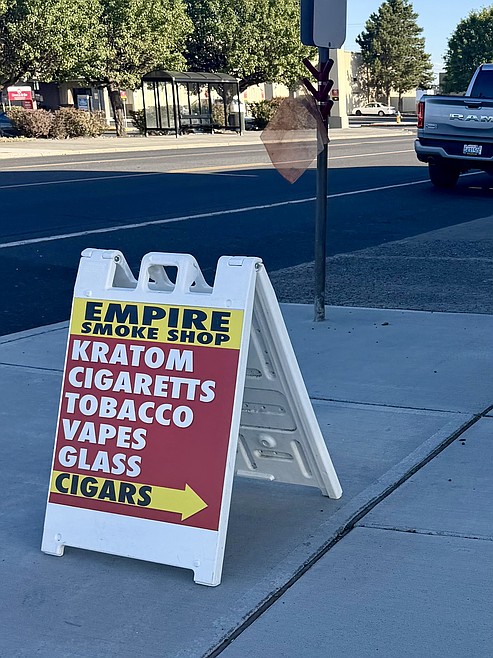
Empire Smoke Shop is one of the several businesses selling kratom within city limits. Owner Henry Abdel said he is frustrated with the city's decision to pass a ban on one of his main products, saying a majority of the customers purchasing it are older and using it for pain management purposes.
NANCE BESTON/COLUMBIA BASIN HERALD
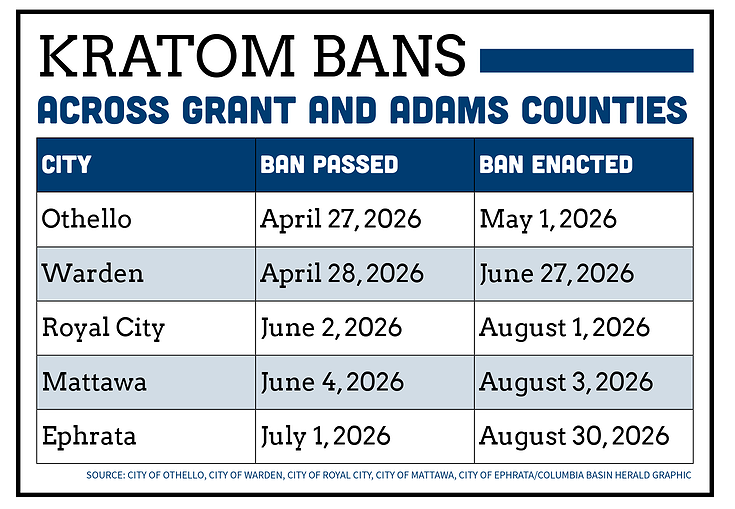
EPHRATA — The Ephrata City Council voted 6-1 Wednesday night to ban the sale, distribution and advertising of kratom and kratom-derived products within city limits, making Ephrata the fourth city in Grant County to adopt such restrictions and the first in the county to do so while businesses are actively selling the substance. The ordinance takes effect 60 days after passage.
Council members expedited the measure, approving it on its first reading rather than advancing it through the city's typical two-reading process. Councilmember Matt Moore cast the lone dissenting vote, saying he supported public health efforts but was concerned that affected businesses had not been given sufficient opportunity to comment before the ordinance was adopted.
"I fully support what the health district and everyone is trying to do," Moore said during council discussion. "My issue from the beginning has been this is not the direction regulation is normally meant to go." He added that he would "hesitate to expedite this" without hearing from retailers or consumers who use the products.
The new ordinance prohibits any person from selling, distributing or advertising kratom products in Ephrata. Violations will be treated as civil infractions, with escalating penalties and the potential loss of a business license for retailers found repeatedly violating the ordinance. Under the penalty schedule approved by council, first violations carry a C-9 civil penalty of $248.05, second violations a C-5 penalty of $530.95 and third or subsequent violations a C-1 penalty of $1,293.55.
The ordinance authorizes the city to revoke or deny a business license for retailers found in violation.
The action follows similar bans adopted in Warden, Mattawa and Royal City. Othello, in neighboring Adams County, has also enacted restrictions on kratom sales.
City officials said the ordinance was drafted following concerns raised by the Grant County Health District, which has urged local governments to prohibit kratom and products containing 7-hydroxymitragynine, or 7-OH, while state and federal regulators consider broader oversight measures.
Grant County Health Officer Dr. Alexander Brzezny told council members that federal regulators recently announced plans to temporarily schedule several synthetic 7-OH-related compounds under the federal Controlled Substances Act. He argued that retailers, consumers and even law enforcement currently have no practical way to distinguish between traditional botanical kratom products and more concentrated or synthetic derivatives that federal regulators say pose greater risks.
"The commercial kratom marketplace contains products posing an imminent hazard to public safety," Brzezny told the council, citing the federal notice.
Brzezny said poison control centers reported a significant increase in kratom-related exposure calls in 2025, with many resulting in emergency medical treatment, hospitalization or intensive care admissions. He urged Ephrata to adopt a broad prohibition until federal regulations are finalized.
The federal action cited by city officials was announced July 1 by the U.S. Department of Health and Human Services and the Drug Enforcement Administration. The agencies said they are beginning the temporary scheduling process for concentrated 7-OH products and three synthetic derivatives, describing them as dangerous opioid-like substances. Federal officials emphasized, however, that the proposed action is not intended to regulate natural leaf kratom that does not contain enhanced levels of 7-OH.
In a statement released Thursday, the Grant County Health District praised the DEA's action and reiterated its support for local restrictions.
"We are eager to continue these conversations and still encourage our local governments to place restrictions or bans on all 7-OH and kratom products," the health district said.
The district noted that while the federal notice focuses on synthesized products, botanical kratom remains largely unregulated.
Not everyone agrees a ban is the appropriate response.
Henry Abdel, owner of Empire Smoke Shop in Ephrata, said the council's action will directly affect his newly opened business. He said he owns around 30 different stores across Washington. Abdel said he opened the Ephrata location about two months ago and believes many of his customers use kratom products for pain management.
"A lot of our customers are elderly people. They're buying it for their pain, for their health conditions," Abdel said in an interview Thursday.
Abdel said he accepts that the city has approved the ordinance but worries about the effect on both customers and retailers.
"It's going to affect my sales," he said. "If sales go down, then that means I can't pay my landlord, and I would have to shut down my business."
Abdel argued that a ban could reduce local tax revenue generated through kratom sales and said city leaders should have considered the impact on businesses before approving the measure.
"It's very sad that they're trying to take money off people's tables," he said.
Abdel said he was frustrated that the city did not communicate the potential ban with him before it passed at council. However, City Clerk Rob Miller said he had contacted the Ephrata Chamber of Commerce to notify them of the potential action prior to the meeting. The Ephrata Chamber of Commerce did not respond to requests for comment prior to press time.
Throughout the interview, Abdel repeatedly questioned whether kratom poses the same public safety concerns as alcohol or other substances and emphasized that he believes most users purchase the products for pain relief rather than recreation.
City officials and public health advocates have countered that the lack of regulation is itself a concern. Documents prepared for the council cited product variability, contamination risks, reports of liver injury, cardiovascular events, withdrawal symptoms, potential dependence and concerns about youth access as reasons for local action.
The council packet also noted that Washington lawmakers considered, but did not pass, legislation during the 2026 session that would have established a statewide Kratom Consumer Protection Act with licensing, testing and labeling requirements for manufacturers and retailers. It would have also set an age restriction on the products to 21 or older. As of now, there is no active age restriction for kratom products in Washington.
Moore echoed concerns about local governments stepping into a regulatory role that could ultimately belong to state or federal authorities.
"The sooner the state, the FDA moves forward and gives us direction and guidance, the better," he said before voting against the ordinance.
Supporters of the ban argued local governments should act now rather than wait for state lawmakers or federal agencies. Several council members said escalating fines and the possibility of losing a business license were necessary to ensure compliance.
With the ordinance approved, retailers have 60 days to remove kratom products and related advertising from their stores before enforcement begins. Under the ordinance, each day a violation continues can be treated as a separate offense, increasing the potential financial penalties for businesses that fail to comply.
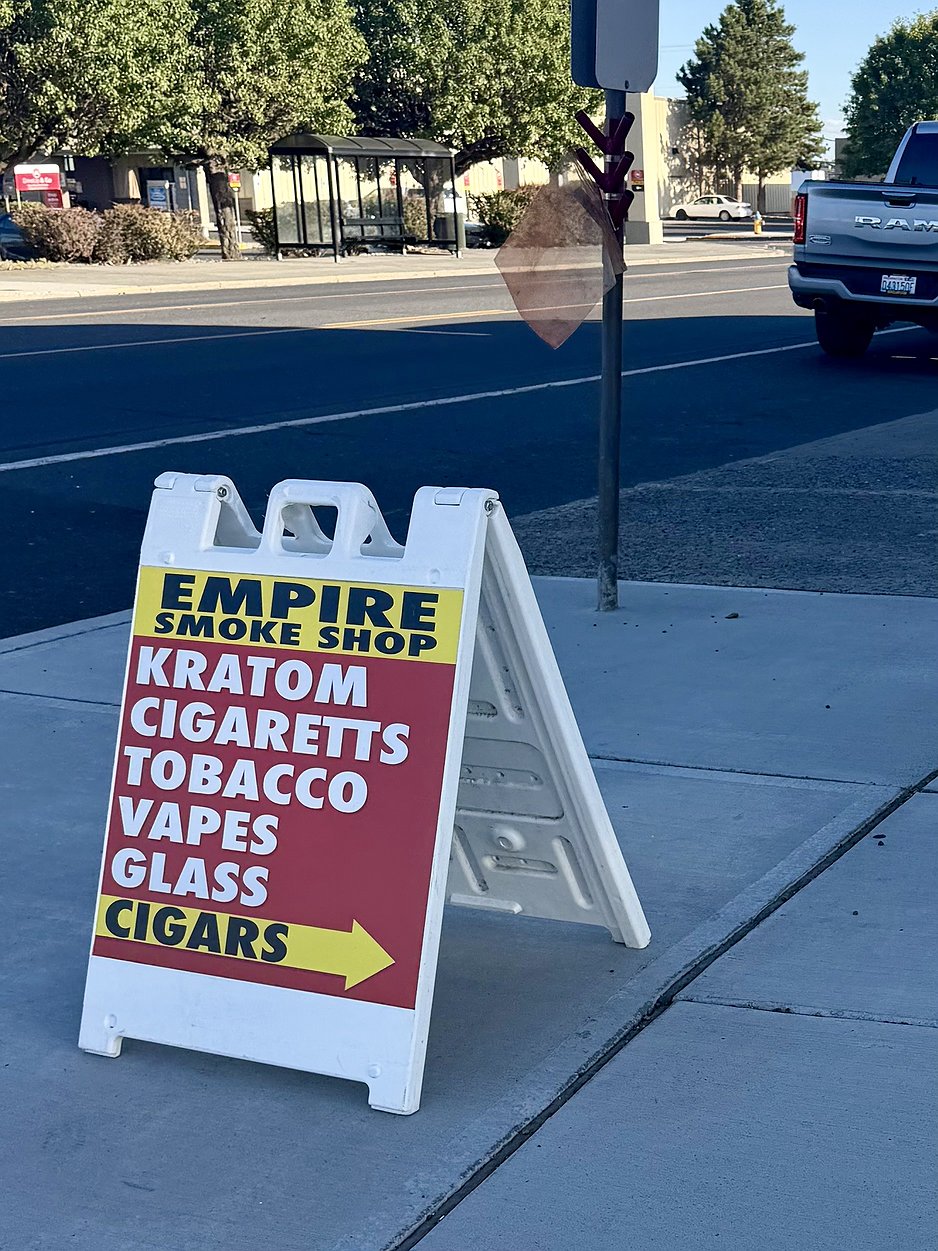 Empire Smoke Shop is one of the several businesses selling kratom within city limits. Owner Henry Abdel said he is frustrated with the city's decision to pass a ban on one of his main products, saying a majority of the customers purchasing it are older and using it for pain management purposes.