
Repair, replacement under consideration for Hansen bridge
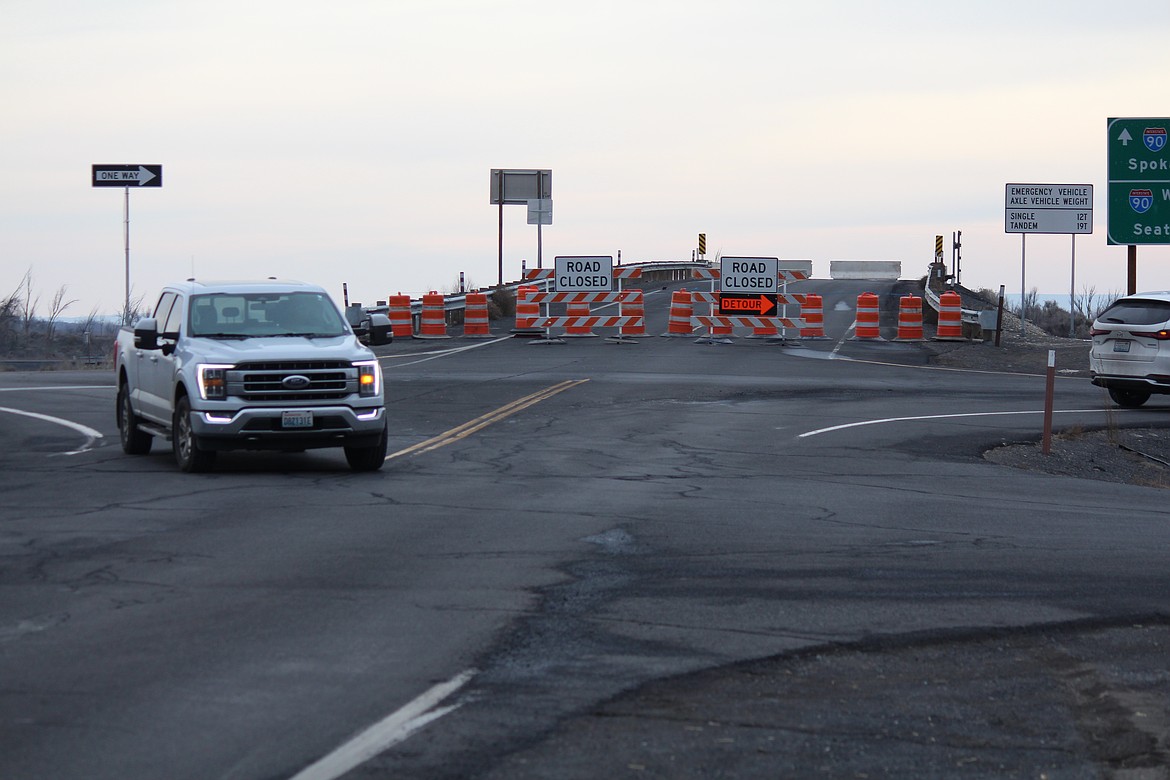
The Hansen Road overpass will remain closed while Washington Department of Transportation officials work on plans – and funding – for repair or replacement.
CHERYL SCHWEIZER/COLUMBIA BASIN HERALD
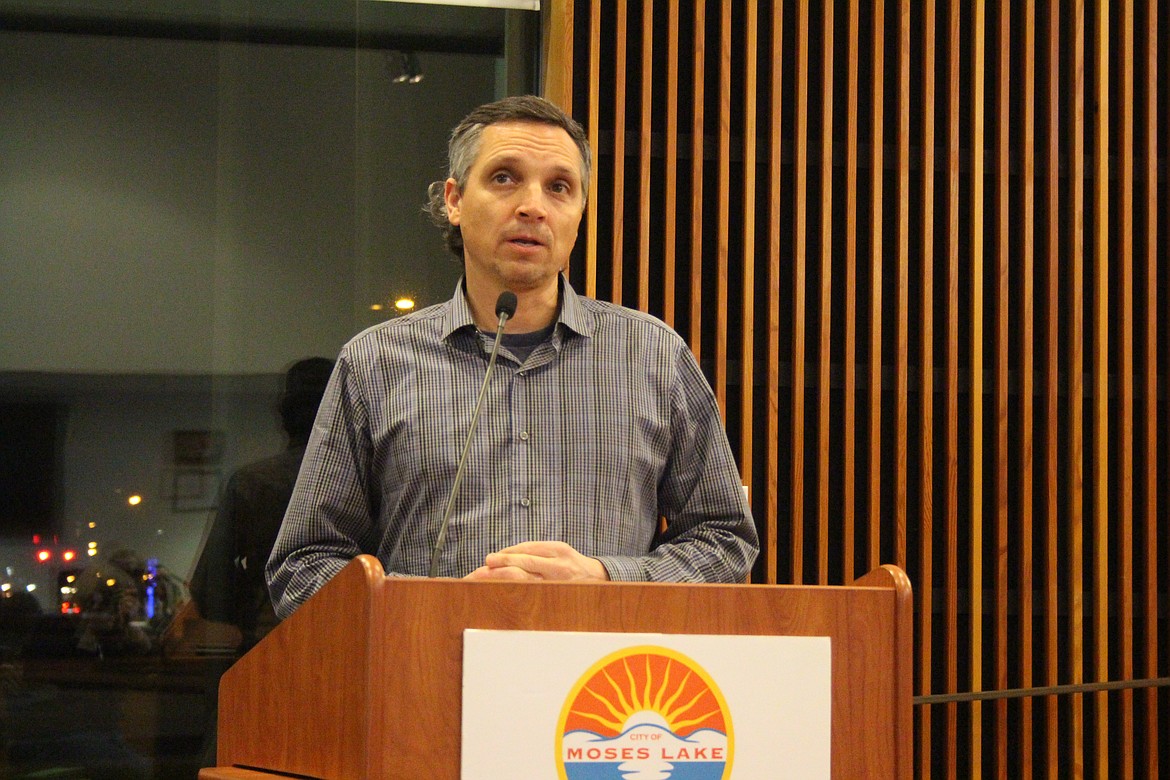
Chris Keifenheim, Washington Department of Transportation, details the options the DOT is considering for the Hansen Road Bridge in Moses Lake.
MOSES LAKE — The Hansen Road overpass could be closed for a maximum of about 24 months. Chris Keifenheim, North Central Region administrator for the Washington Department of Transportation, said Tuesday that DOT officials are considering repairing it or replacing it, but would prefer to replace it. Either solution, he said, will keep the bridge closed for a while.
“Working with our bridge office, we don’t have any quick or temporary fix to open the bridge to any traffic. We explored options to just open to vehicular traffic or things like that, but based on the inspection and advice of our bridge department, that’s not an option,” Keifenheim said during a presentation to the Moses Lake City Council.
Department of Transportation engineers inspected the bridge Jan. 14 and closed it to traffic on Jan. 17. Inspectors found significant damage to the road surface across the bridge in 2023 and found during an inspection in June 2025 that the damage had increased. The Jan. 14 inspection determined that the damage had spread to the bridge columns and beams, Keifenheim said. That led to its closure.
Keifenheim said DOT officials know Hansen Road is an important local route; it’s the shortest route from Mae Valley to downtown Moses Lake, and among other things, it complicates access for first responders and public bus routes.
“We know it impacts, I think, seven different school bus routes,” he said.
Ryan Shannon, director of public relations for the Moses Lake School District, said the closure affects five regular bus routes and two special education buses.
Keifenheim said DOT officials have a preferred solution.
“Our preference, the best decision based on (an analysis) of benefit, cost and lifespan, is to replace the bridge with a new bridge,” he said. “However, the predicament we’re facing is we don’t have the funding readily available within the state to do that.”
Fixing the existing bridge would be cheaper and quicker, but would not solve the ultimate problem, he said
“The cost to do (rehabilitation) work is about five to $10 million, and time for those repairs is somewhere in the nine-to-15-month range. We’re estimating we would get about 10 years of additional life out of the bridge with those repairs,” Keifenheim said. “The cost of (replacing the bridge) is somewhere between $12 million and $20 million, and the time for that work would be in the 15-to-24-month time range, and the design life of that is about 75 years.”
Keifenheim said the challenges at Hansen Road are different than those the WSDOT faced in repairing the Bullfrog Road overpass near Cle Elum. In that case a truck hauling heavy equipment that was too tall damaged the overpass, tearing out parts of the bridge supports. Repairs were completed in about three months.
“The deterioration on Hansen (Road) bridge – it's a four-span bridge. (Deterioration) is widespread throughout the entire bridge deck and throughout the bridge columns, so it’s impacting all of that,” Keifenheim said. “It’s not nearly as quick a fix as at Bullfrog. In addition, the funding is a little different.”
Ultimately, funding will be a crucial factor in deciding what’s done with the bridge. State agencies, including WSDOT, are in the second year of a two-year budget allocation, and most of the money is already committed to other projects, he said. He estimated about 97% of the DOT’s road preservation budget is already allocated for 2026.
“Our funding group over in our headquarters is currently looking through our statewide budget to see if we can procure funds – basically, find additional funds to what we have available. Which isn’t a lot,” he said.
Any money that’s not already in the WSDOT budget would have to come from additional allocations by the Washington Legislature, Keifenheim said.
“If there’s any good news, it’s that this happens when the state legislature is in session,” said City Manager Rob Karlinsey. “The next week or two is going to be really critical in the state legislature on whether we get the funding for the full replacement. Anything the public can do to write their legislators and express the urgency of this would help a lot.”
Whether it’s repaired or replaced, the project will require a design phase before construction can start, Keifenheim said. Once the actual construction starts, he said the goal would be to speed up construction where possible.
“We will be working under emergency contracting procedures,” he said. “The expectation is that (construction) will be expedited.”
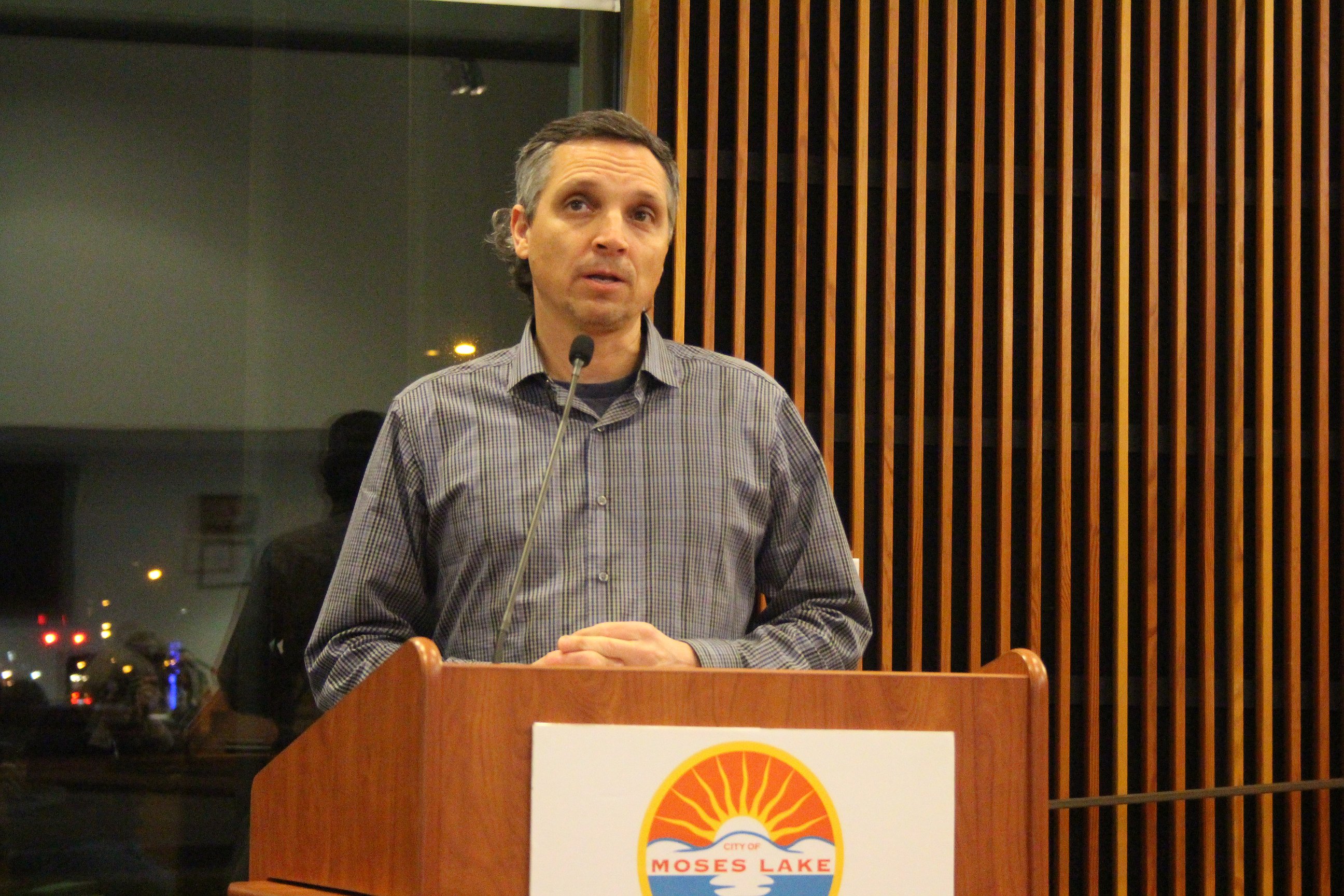 Chris Keifenheim, Washington Department of Transportation, details the options the DOT is considering for the Hansen Road Bridge in Moses Lake.