
Dent working to secure aviation assets for local fire districts
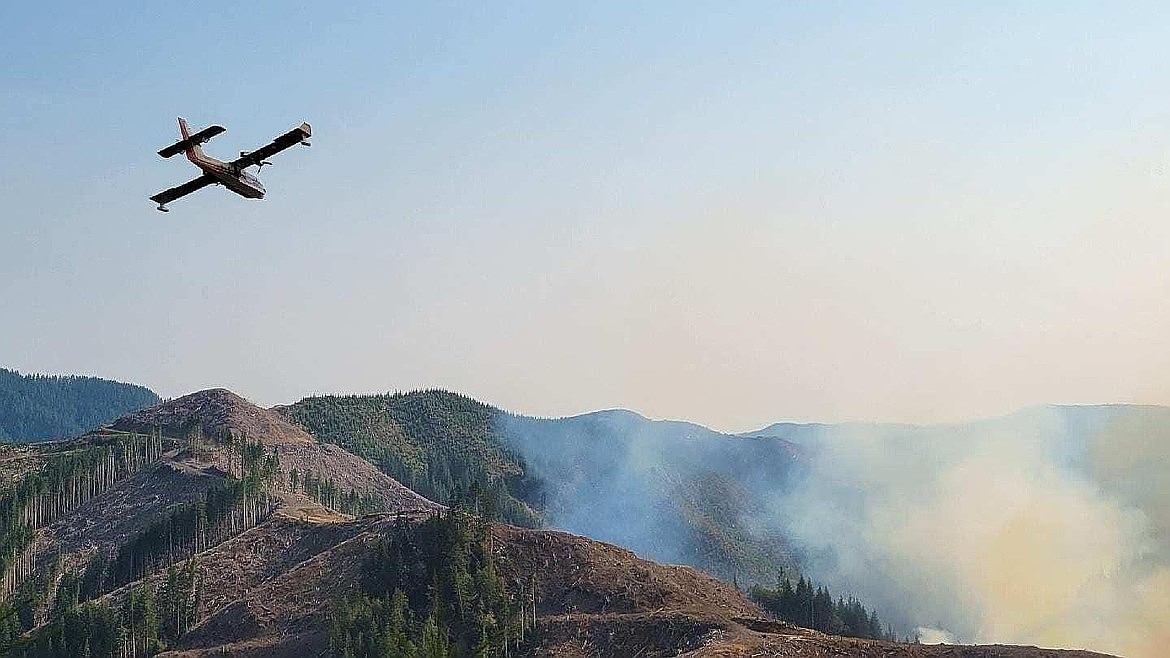
Aerial assets can make a huge difference in keeping a wildfire from getting out of control, especially when one first lights up. Legislation by Rep. Tom Dent, R-Moses Lake, focuses on ensuring local departments have access to aerial resources.
FILE PHOTO COURTESY INCIWEB
OLYMPIA — Rep. Tom Dent, R-Moses Lake, is working on a bipartisan bill that would make funding for aviation wildfire suppression permanent.
The Aviation Assurance Funding Program, enacted in 2023, requires the Washington Department of Natural Resources to assist local fire departments with aviation resources for early wildfire attacks. If passed, House Bill 2104 would continue the program, ensuring local fire departments have immediate, consistent access to aviation support.
“If you hire an aircraft or a helicopter to come out and work through the morning and knock a fire down, it's going to be — be anywhere from $5,000 to $25,000 depending on the name of aircraft, or we can spend a million dollars plus for a state mobilization," Dent said in a public hearing Friday.
According to the DNR’s 2025 Wildfire Legislative Report, as of Sept. the department provided aerial support to 41 incidents, delivering more than 790,000 loads of retardant water, and protecting about $100 million worth of infrastructure through the program.
Ryan Rodruck, wildfire communications manager for DNR, called the program a “big success” for expediting initial response times.
“We stagger our air resources throughout the state in order to minimize those response times,” Rodruck said. “For example, if there's a fire in the basin or in Central Washington, potentially those aircraft could be coming from Wenatchee. They could be coming from Yakima.”
Co-sponsor, Rep. Larry Springer, D-Kirkland, said prior to the program, local fire districts would first contact the State Fire Marshal’s Office, followed by the DNR to coordinate with the dispatch center, sometimes taking as much as a day or two to get air assets onto the site.
According to Springer, local fire districts were sometimes hesitant to call for aerial support, often lacking sufficient funding to pay for pilots and proper aviation assets.
“The program that we put in place was to tell local fire departments that if you detect a fire … Just call (DNR), get them on the fire. We'll pay for it,” he said.
Funding for the program comes from the DNR’s existing wildfire suppression budget that was cut from $120 million to $60 million in the 2025 legislative session. Springer said this year, he is working with the department and Commissioner Dave Upthegrove to restore that funding.
“You can't just fight fires when you have great budgets because fires don't pay any attention to that,” Springer said.
Grant County’s Fire District 3 Chief David Dufree emphasized that aviation resources are the only effective initial attack options for fast-moving wildland fires, especially on Central Washington canyon terrain, where fighting directly on the frontline can be unsafe. He said the program has also strengthened the regional fire defense systems, allowing surrounding rural agencies to protect each other before fires can escalate to full state mobilizations.
“We've seen events that would have normally taken three days be over in an afternoon due to real support,” Dufree said.
Dufree explained that it would be "detrimental" for fire services as a whole without the program, forcing districts to choose between fiscal responsibility and operational necessities.
“Not very rarely do you see a program this effective,” he said.
The bill was heard at the House Agriculture and Natural Resources Committee on Friday, Jan. 22, with an executive session yet to be scheduled.