
A look at the 2026 Northwest Hay Expo: Industry leaders gather amidst challenges
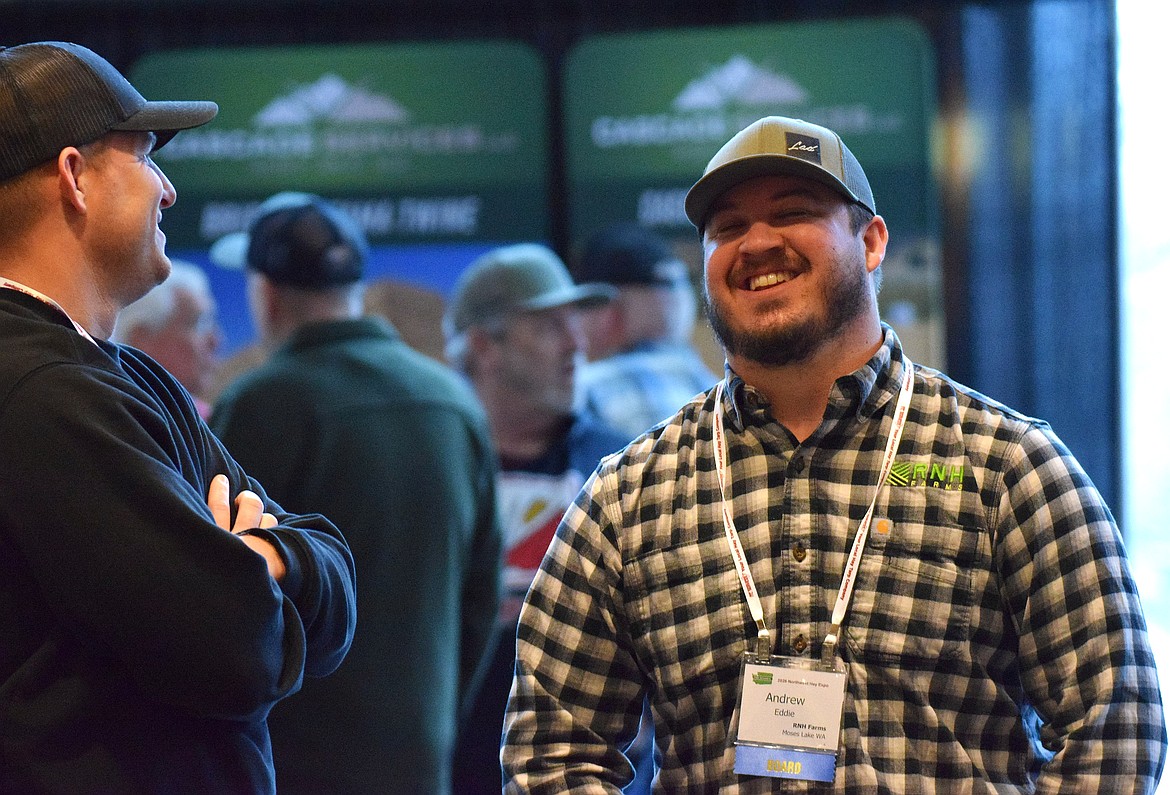
Washington Hay Growers President Andrew Eddie speaks with a Northwest Hay Expo attendee Wednesday. Eddie said last year’s market was particularly tough, but hopefully this year is better.
NANCE BESTON/COLUMBIA BASIN HERALD
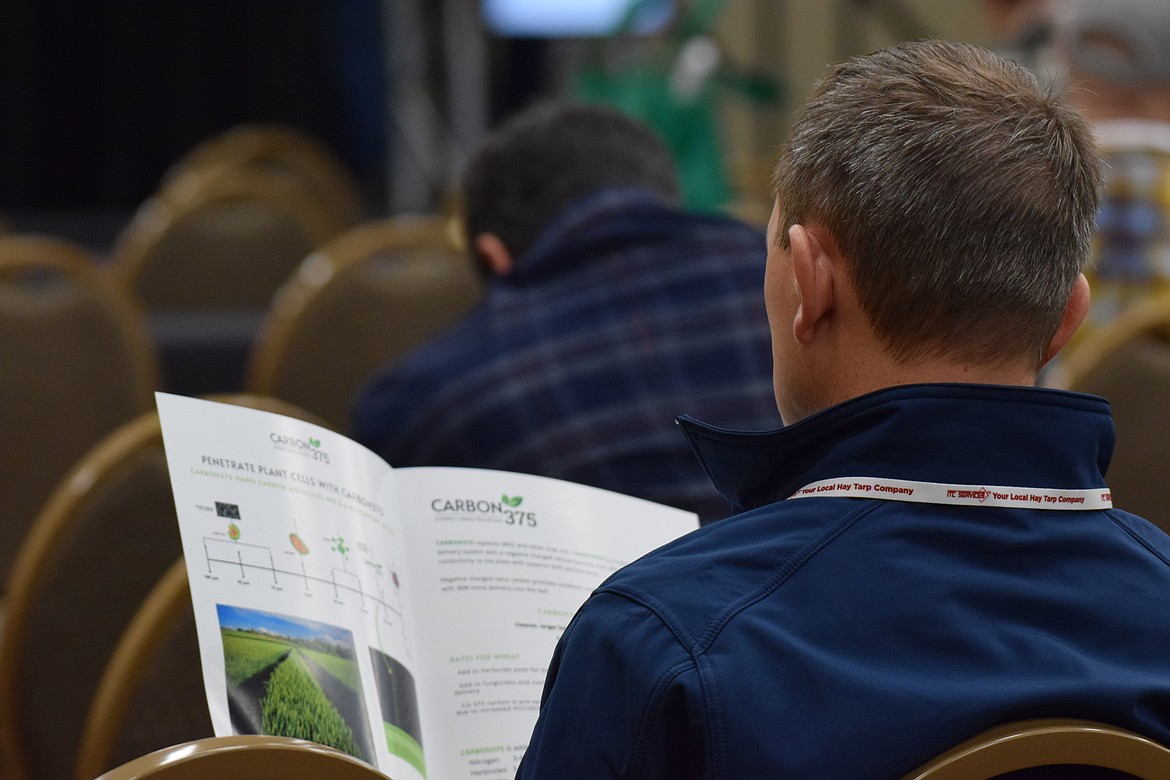
The Northwest Hay Expo had a wealth of information available for hay growers, from presenters to exhibitors to pamphlets of tools and resources lining tables.
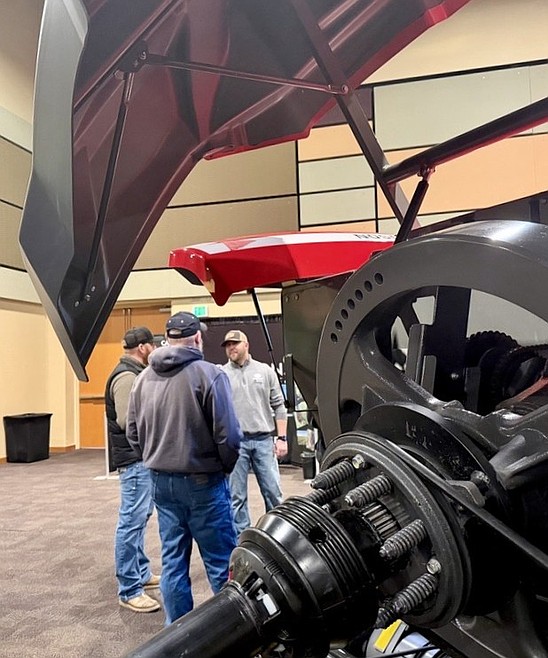
Attendees of the Northwest Hay Expo speak with one another Wednesday.
KENNEWICK — The Northwest Hay Expo, an annual event for stakeholders in the hay industry, attracted a diverse group of attendees this week, despite challenging market conditions. President of the Washington Hay Growers Andrew Eddie said they had expected lower numbers this year because of the difficult hay season.
“So far, the turnout is pretty good, so that’s a bonus,” Eddie said. “We are down on attendance, which is not surprising with the way the current market is.”
The expo featured a robust schedule of presentations and discussions focusing on topics such as fertilizer, crop management, cutting costs and pest control. Eddie said he hoped the event would provide valuable insights.
“Just a whole packed full day of education and learning,” he said.
Eddie said one of the highlights of the expo was the exchange of information and resources among exhibitors and attendees.
“I’ve gone around and talked to most of them and said, ‘Thank you for coming, and being part of this.”
Eddie said it was nice to acknowledge the shared experiences and struggles that all participants faced amid a down market. He said hay prices have been persistently low, with prices hovering anywhere between $30 and $50 below the break-even cost for growers.
“Sales are low, money’s tight, all that kind of stuff. We’re all in it together,” he said.
The economic climate has indeed been tough for hay growers and exporters alike, according to Michael Davidson, Second Vice President of the National Hay Association and owner of Davidson Farms.
“Prices have been very poor. Farmers are really struggling, and I know that because we are also farmers,” he said.
He said although this year – and the four years prior – have been challenging, there are some wins for the hay industry.
“There haven't been a lot of bright spots, but ... if you talk about hay in general, as opposed to just alfalfa, Timothy prices have been good this year. So that’s been positive,” Davidson said.
Davidson's dual role as a grower and exporter provides him with unique insights into the changing market. He acknowledged the difficulties in demand due to disruptions caused by high prices in 2022 and the repercussions of COVID-19 on consumption in key markets like China. However, he expressed cautious optimism regarding emerging trends.
“We’re seeing the demand start coming back, and that’s what has to come back first before prices come back,” he said.
This growing demand is crucial for exporters, said Davidson, who observed that his businesses had suffered during the downturn.
Eddie said around 90% of the hay grown in the Columbia Basin is exported. He explained with the tariffs and international complications that a lot of foreign buyers didn’t purchase this year and domestic demand is low. With this, the market becomes oversaturated with hay.
“It’s been a very challenging couple of years for hay growers,” Eddie said. “We’re all hoping for a turnaround, but it’s uncertain how long it might take to see the light at the end of the tunnel.”
The conversation at the expo also touched on the difficulties associated with producing high-quality hay amidst these volatile market conditions.
“It’s been difficult to get really high-quality hay,” Davidson said. “I’ve seen hayfields turning blue.”
This refers to the premature flowering of alfalfa that can compromise its quality. With farmers facing economic pressure, some may prioritize quantity over quality, which further complicates the market landscape, he said.
Davidson said understanding the numbers is key during downturns and urged fellow growers to be aware of their economic standing.
“Know your numbers, know where your break-even margins are and try to position yourself inside the market that gives you the best opportunity,” he said.
While the challenges were prominent, the spirit of resilience and collaboration remained palpable at the expo. Davidson, who has been in the industry since the early 1980s, expressed his enduring hope in the agricultural system.
“I believe in the economic system that we operate under ... prices go down, and prices come back up,” he said. “There is way more opportunities when things are ugly than there are when everybody’s flying high.”
Both Eddie and Davidson said the Northwest Hay Expo is important as a platform for networking and sharing ideas.
“You can talk to other people who are dealing with the same exact struggles inside the forage world,” Eddie said.
Looking ahead, both leaders expressed cautious optimism.
“The better times are around the corner,” Davidson said. “Don’t give up. We need to collaborate more ... figure out ways to help and encourage each other. Everything will be okay.”
To read more about the Northwest Hay Expo, pick up the February 2026 edition of the Basin Business Journal.
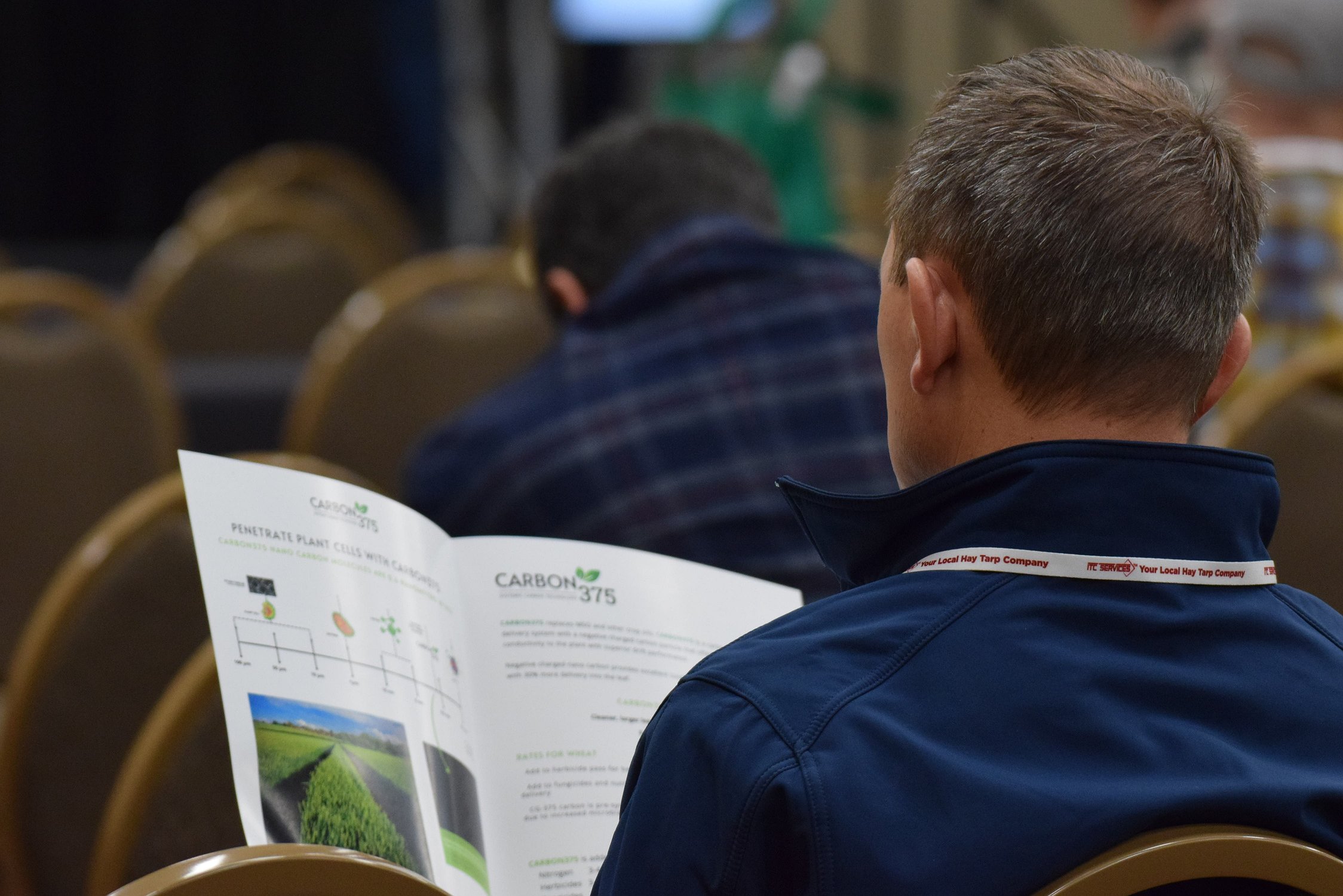 The Northwest Hay Expo had a wealth of information available for hay growers, from presenters to exhibitors to pamphlets of tools and resources lining tables.
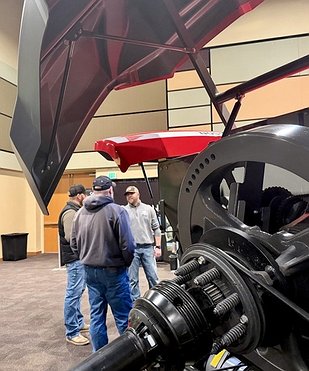 Attendees of the Northwest Hay Expo speak with one another Wednesday.