
Washington lawmakers push to expand collective bargaining for ag workers
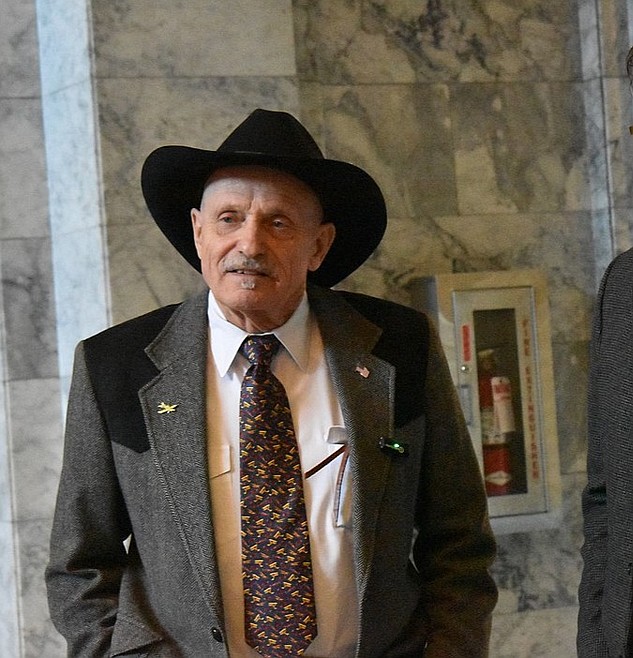
State Representative Tom Dent, R-Moses Lake, shown here during a prior legislative session, says that a bill proposed in the Washington Senate to allow agriculture workers collective bargaining rights would be harmful to the ag industry.
FILE PHOTO
OLYMPIA — The Washington Senate Labor and Commerce committee held a public hearing Tuesday for a bill that would allow agriculture workers to collectively bargain under the Public Employment Relations Commission.
Senate Bill 6045, spearheaded by Sen. Rebecca Saldaña, D-Seattle, aims to strengthen labor protections for farmworkers by establishing collective bargaining and dispute procedures and preserving workers' right to strike for up to three months before being required to enter arbitration with employers.
If passed, Washington would be one of the few states, including California and New York, to expand collective bargaining rights to agricultural workers who have been historically excluded by the federal National Labor Relations Act.
“We’ve seen that agriculture for decades has been challenged,” Saldaña said in an interview. “I think, in part, it's because it’s built on a system that gives the workforce no voice.”
The bill outlines a process for certifying exclusive bargaining representatives either through card cross-check authorization or secret-ballot elections, while also providing support for seasonal and limited-English proficient workers.
According to Saldaña, collective bargaining rights would help balance relations between employers and their workers, improving conditions of the state's agriculture industry, which has been strained by rising operational costs.
“We've seen the cost of labor rise significantly because of our deep reliance on H-2A instead of figuring out how to adopt a business model that attracts and retains local domestic workers … creates a work environment that is dignified,” Saldana said.
Proponents of the bill argued that the legislation is necessary for farmworkers to bargain in good faith for fair wages, safe working conditions and to ensure employer compliance.
“We're tired of hearing the excuse from the agricultural industry that giving farmworkers the same rights as everyone else will run farms out of business,” said Tomas Ramon, president of Familia Unidas por la Justicia, as translated by an interpreter. “It’s an insult to our human health.”
Other labor advocates said that the bill would expedite the unionization process while providing employers with more predictability.
“To get our union, we had to go through three and a half years of litigation of boycotts, of strikes, which caused economic harm to both the employer and the employee,” said Edgar Franks, political director for FUJ. “That's something that we don't want.”
Opponents of the bill, however, contend strikes could be financially devastating to farms.
According to Enrique Gastelum, chief executive officer of the Worker and Farmer Labor Association, the legislation could delay contract agreements ahead of harvest seasons, when labor demands are at their peak.
“Allowing strikes during immovable harvest windows can destroy an entire year's crop overnight, eliminating jobs, not protecting them,” Gastelum said.
Blaine Smith, a second-generation orchardist in Monitor, Washington, echoed a similar sentiment, adding that while most farmers want to pay higher wages, many lack the income to do so.
“They're making less money today than they were five years ago because of all these rules and overregulations,” Smith said.
A 2025 report from the United States Department of Agriculture revealed that Washington ranked last in financial returns for farmers, with gross farm receipts exceeding $13.8 billion while expenses totaled $14.1 billion.
Other opponents raised concerns regarding the card cross-check system, arguing that it could pressure foreign and H-2A workers to unionize.
According to the bill, a union can be certified through a card-cross-check system only if a farmworker labor organization has filed labor management forms for the previous two years to the federal Department of Labor, is the sole organization seeking to represent the employees, and there is at least 50% or more support demonstrated through the signed authorization cards. Otherwise, a bargaining representative would be determined through a secret election.
Rep. Tom Dent, R-Moses Lake, expressed opposition to the bill, saying it would "destroy agriculture” in Washington and increase the regulatory burdens on farmers.
Dent is working on legislation addressing the state’s landmark agriculture overtime law, which requires employers to pay overtime after workers reach more than 40 hours per week. According to Dent, the law has forced farmers to cut hours for workers who previously worked 50 to 80 hours, especially during peak harvest season.
“Agriculture is a culture,” Dent said, "We look out for each other. We care about the people, but there's only so much money.”
The bill received 267 pro votes and 272 con votes prior to the hearing, with no executive yet scheduled for further deliberation.