Monday, January 19, 2026
32.0°F

The benefits of being a 'brat'
by CALEB PEREZ
Staff Writer | January 19, 2026 3:30 AM

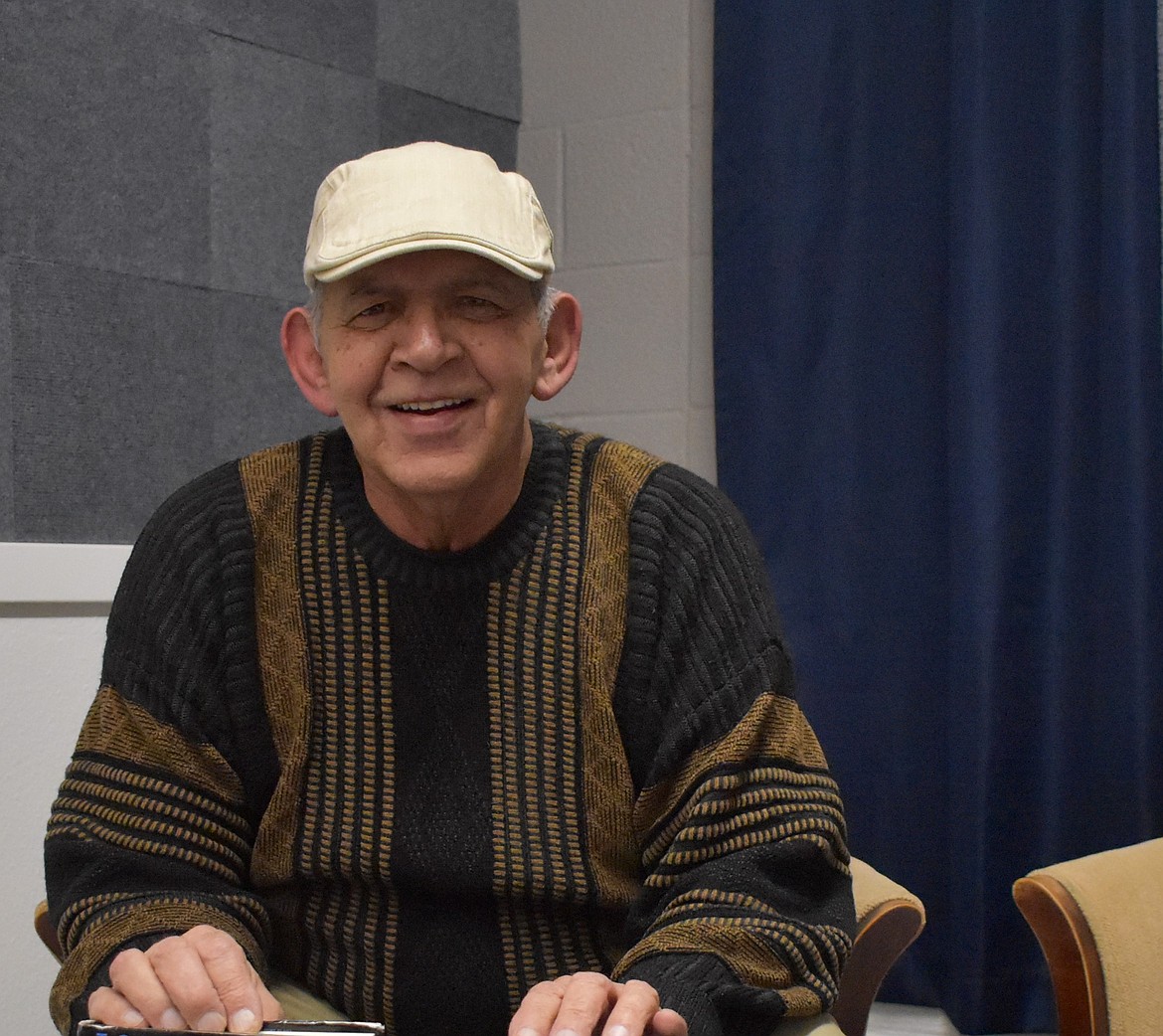
MOSES LAKE — Richard Black, a 71-year-old veteran and resident of Moses Lake, was born the second oldest of five siblings to his parents Hilda and Herbert Black. Growing up the son Herbert, a decorated war vet who fought in three separate conflicts, Richard said brought a lot of opportunity to his life. 

“I’m a brat, and brat has different meanings, but in my case a military brat, an Army brat. I’m a dependent,” he said. “Dad was a career 30-year, three-war combat veteran, and what you get to witness in life as a military brat with traveling (to) wherever you’re going to be stationed, it was an incredible life.” 

Black was originally born in Baden-Wurttemberg, Germany, the same town his parents first met in after the World War II. With his father still being active in the military throughout his childhood, this meant the family spent a lot of their time moving. 

During his Elementary school days Richard said the family was stationed in Hamburg, Germany. While there, he said there were always schools for the children of military personnel staffed by American teachers. 

“Whether it was Europe or wherever you were stationed, you always had great American schools on foreign land, that the teachers came from the States, and so you had your own little community,” said Richard. 

In 1963, his family returned to the U.S. while his father was stationed in Fort Ord – now closed – on the Monterey Bay in California where they fell in love with the area, but his father was given orders for Berlin which returned the family to Germany in 1965. 

“We left Fort Ord and flew to Berlin, which was very interesting; I remember that trip,” he said. “It was great because we did a lot of the old Route 66, but it took several days. We got to New Jersey, and then we flew over and picked the car up and we drove from Bremerhaven to Berlin.” 

Living in Berlin at that time was a special circumstance as the Berlin Wall had just gone up four years prior to the Black family’s arrival. 

“You had the four occupational powers, the Americans, the British, the French, and of course the Russians, on the other side,” said Richard. “There was a lot of special documents that you needed, a lot of protocol to travel and a lot of restrictions.” 

Richard said the family was in Berlin until 1971, and he spent most of his teenage years there. While Richard spent his time with other military household youths, he also found a love for the Berlin nightlife. 

“It was just great and you didn’t need a car because the buses and the trains ran all the time. You could get around so easy,” he said. “What I used to do, school would get out at 3 o’clock and I would run down to the commissary and bag groceries, that was my job, and then I had some money in my pocket and I was able to go downtown.” 

Once done with his daily tasks, Richard hopped on the train and got off at Friedrich Strasse in Berlin to mingle with the locals and attend concerts. Berlin had always been a  hub for music and during this time, acts from around the world performed there. 

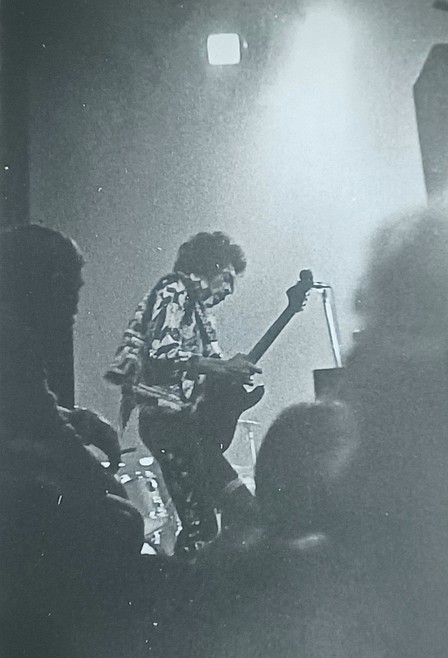
“Every weekend, there were concerts in Berlin and tickets were (around) $5,” he said. “I remember some of the early concerts: bands like the Rolling Stones, Pink Floyd, Uriah Heep, Led Zeppelin. I saw Black Sabbath just a few months after they were formed.” 

Richard said he will never forget getting to meet Jimmi Hendrix at backstage at one of those shows. The moment was very surreal for him, and Hendrix was very kind and was truly a unique person. 

Richard said he spent most of his life listening to music and radio, especially after his mother bought him a four-band radio with a cassette player when he was 10. He spent countless hours listening to Radio Luxembourg’s pop and rock music. 

“I remember the first British Invasion, hearing the songs for the first time,” he said. “But beside my love for rock and pop music, I was all into rhythm and blues and Motown.” 

Throughout high school, Richard stayed glued to the radio, and in his last year of high school the Armed Forces Network in Berlin allowed him to watch them broadcast, produce and learn how to use the equipment. They also allowed him to record public service announcements. 

“I said, ‘This is cool, I’m going to do this profession one day,’” he said. 

In 1972, Richard graduated from high school; his father retired from service that year as well. The family moved back to Monterey for a short time before his parents decided they wanted to live in Berlin.  

Being out of school and back in Berlin, Richard began working jobs selling stereo and camera equipment in the day and DJed at night. While it was fun, he wanted to get back to the states and attend college but lacked the resources to do so. 

In January 1973, Richard said he went to the American Embassy in Berlin and join the Army. 

“I was on the last draft call, they would have gotten me anyway, but I joined the Army,” he said. 

Richard was sent to basic training in Fort Dix, New Jersey during the winter, which he said was particularly challenging. 

“I remember freezing, man, low crawling with my M16 rifle and snow coming down. Ice. I’m cold, even with long johns,” said Richard. “And I’m watching those Air Force planes above me land at the McGuire Air Force Base and I’m saying to myself, “Man, I should have enlisted for four in the Air Force.’” 

Once he finished basic training, Richard said his recruiter decided to send him somewhere he had never been before, Florida, where he joined in the U.S. Air Defense. After going to missile school in Fort Bliss, Texas, Richard was on his way to be stationed at a Nike Hercules Missile site in South Florida. 

After 16 months in Florida, Richard was sent to Germany to serve his final year. 

“My last year was in Germany, which was really cool,” said Richard. “It gets even better because I had a residential stamp for Berlin in my passport, so on the weekends, if I had a three-day pass, I could just jump on the train and go home.” 

Richard spent three years active and four years reserve before finishing out his time with the Army. Afterward, he followed in the steps of Tony Bennett, who remained close to the family through the years after serving with Richard’s father in WWII, and used his G.I. Bill to go to broadcasting school in San Jose, Calif. 

After earning his broadcasting license, Richard moved back to Monterey once again where he worked on the air for 22 years. During his time Richard said he once again had the opportunity to meet a large variety of celebrities at his workplace. 

At the age of 50, he said the radio industry began to change, and it was time to shift gears. For years after exiting broadcasting Richard was a limo driver — yet another opportunity to meet new people. 

“I met a lot of people, drove a lot of people,” said Richard. “One of the nicest people I ever met was the actor, Idris Elba. I spent three days with him... He was so nice. I remember when I was done on the third day, he gets out of the limo and I looked at him and I said, ‘Young man, you just keep doing what you’re doing.’” 

Eventually, he said it was time to retire and he decided to settle down in Moses Lake.  

Growing up in a military family is something he said shaped his life. Through his father’s stories he also heard another part of serving that is often hard. 

When he was younger his father told him stories from his time in the war, but one of the stories that stuck out the most was from Vietnam. He said his father once told him Vietnam was different, because in World War II and Korea you could see the enemy, but in Vietnam, they didn’t know who was who or where the enemy would come from. 

“War is Hell, man; it’s just terrible for all sides,” said Richard. “I don’t care what you think about war and combat. Both sides suffer.” 

Richard didn't see combat himself, but he said the experience of being in the military and growing up around it taught him a lot. 

“I cannot say enough about being a dependent of a military member... It was just wonderful,” said Richard. “It’s hard because you meet friends and then in a short period of time you have to say goodbye to them because you’re moving somewhere else. But, on the plus side, what you get to witness in life, the different cultures, the traveling... you’re just really appreciative and very thankful for what you saw.” 

    A photo from the first time Richard Black saw his favorite artist, Jimi Hendrix in Berlin at the Sportpalast. Richard said he spent a lot of time growing up listening to music and attending concerts in Berlin.
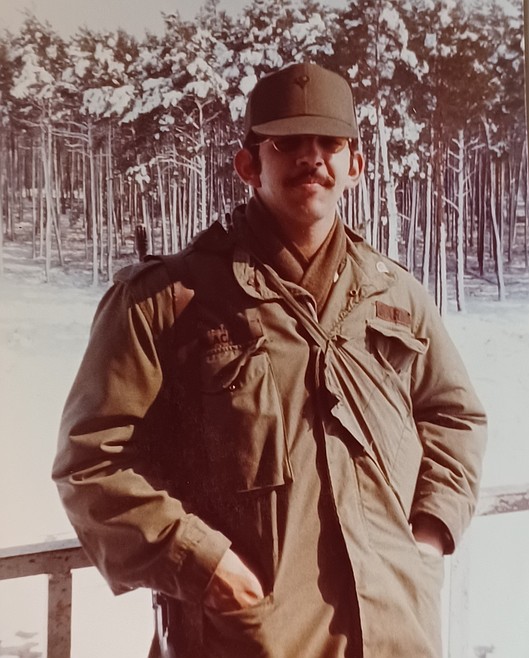
 
 
    Richard Black pictured during his time with the army when he was stationed in Germany in 1975.
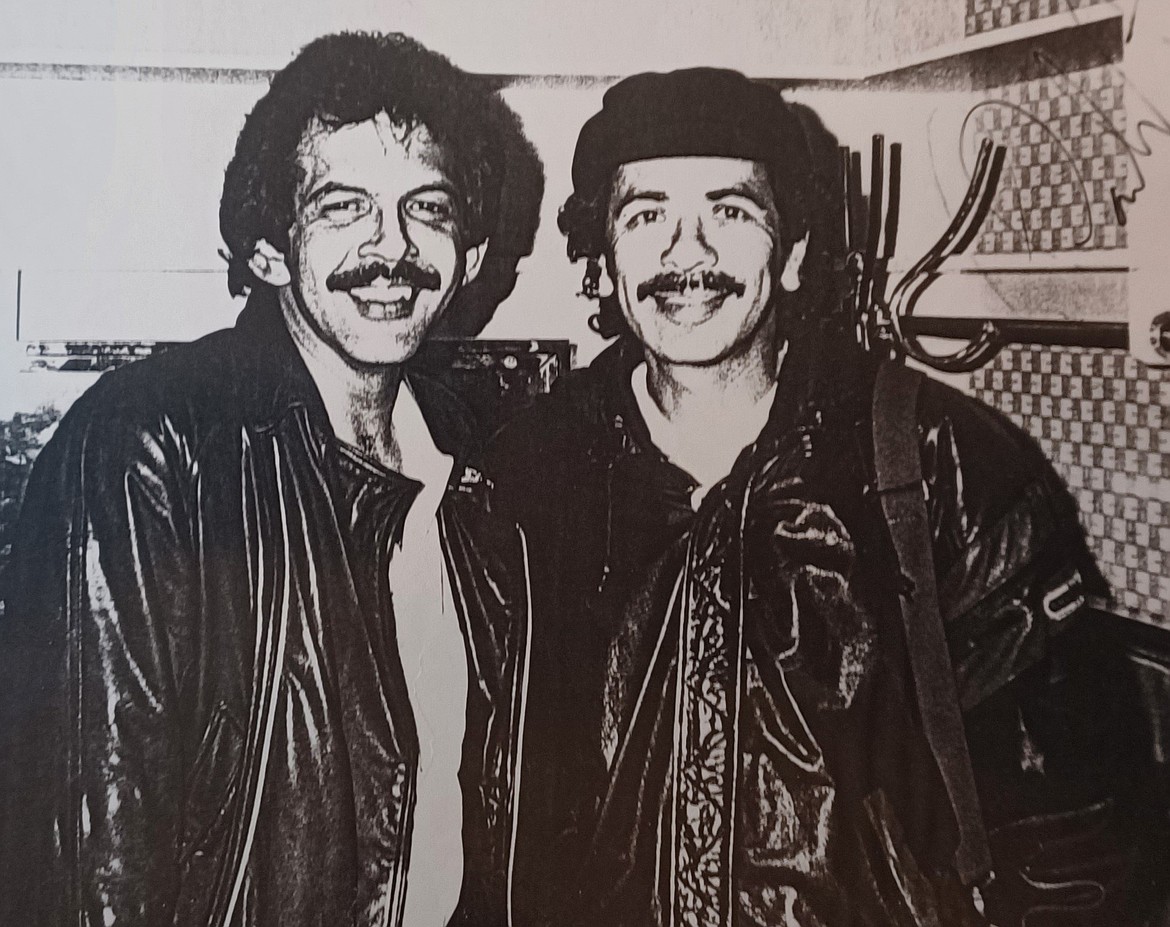
 
 
    A photo taken in 1988 with Richard Black, left, and Carlos Santana at the studio. After becoming a broadcaster in California, Richard met a variety of celebrities.
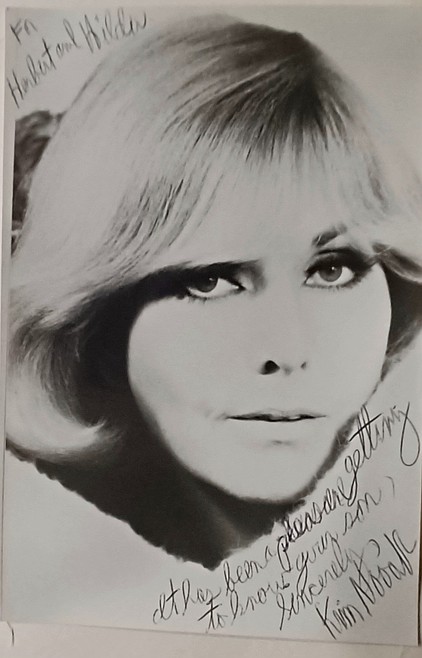
 
 
    A message and signature from actress Kim Novak to Richard Black’s parents that she signed after the two worked together on a public service announcement. Richard said Novak knew his parents loved her movies and made sure he had this sent to them in Germany. The message on the photograph reads: “It has been a pleasure getting to know your son. Sincerely, Kim Novak.”