
Army Corps to look at $1.5B underwater Columbia River power line project, asks for public comment
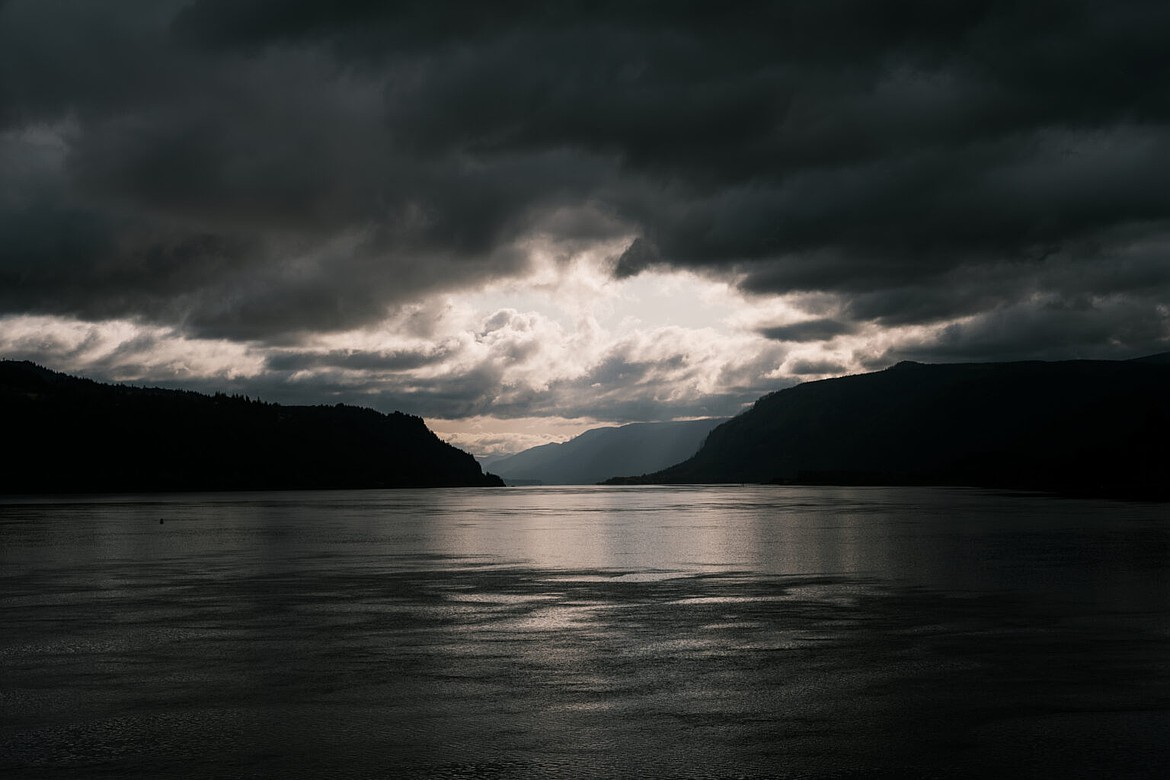
The sun breaks through a stretch of clouds along the Columbia River, in Hood River County, Oregon in 2024.
Jordan Gale/Oregon Capital Chronicle
The U.S. Army Corps of Engineers announced last week it will hold two online public meetings later this month to get feedback on a $1.5 billion project to run a 100-mile-long high-voltage power line under the Columbia River.
The announcement closely followed a notice from the federal agency earlier this month that it will do its most thorough type of environmental assessment into the project, which would connect power generation infrastructure east of the Cascade Mountains to where electricity is consumed along the Interstate 5 corridor.
The meetings about the Cascade Renewable Transmission project will focus on problems the project may cause and identify alternatives to the project.
“Public input is crucial to ensure we consider all potential impacts and alternatives,” Joe Brock, a project manager with the Corps’ Portland District, said in the press release. “This process helps us better understand community concerns and make informed decisions.”
The Corps’ two virtual meetings are 1-3 p.m. Jan 28 and 6-8 p.m. Jan. 29. The agency asks people to email [email protected] by Jan. 23 to preregister.
The agency said its forthcoming review will look at the potential environmental, ecological, aesthetic, historical, cultural and social impacts of the project, which has faced wide-ranging opposition.
In December, key shipping groups expressed alarm about a lack of information on the project’s potential impacts to routine barge shipments of crucial fuels from Portland to the Tri-Cities.
Environmental advocates and Native groups have also fought the project. They argue it may harm endangered species in the river and undermine Native nations’ treaty-reserved rights.
“It’s death by 1,000 cuts,” Julie Carter, a lawyer and longtime policy analyst for the Columbia River Inter-Tribal Fishing Commission, said last summer. “They want to dig into critical habitat — habitat that’s needed for … salmon and steelhead, for Pacific lamprey.”
Opponents like Carter worry in particular about lamprey, a species Native nations in the Columbia Basin have worked hard to save. So little is known about lamprey that the project could dig its channel right into the middle of their migration route, compounding significant harms caused by the federal hydropower dam system.
Critics also argued last year the project had not put out enough public information to be properly assessed.
Permitting slog
The Corps echoed that sentiment last spring when it said the project’s permitting applications didn’t have enough information.
But Chris Hocker, the project lead for its developer, PowerBridge, said the company has been sending the Corps all the information it wants. He takes the agency’s latest move as a sign the project’s permits are being officially considered again.
Over the summer, PowerBridge turned down expedited federal permitting from the Trump administration.
In addition to permits from the Corps, the project also needs a green light from Washington and Oregon before it can start. PowerBridge’s choice was partly due to still having to navigate the states’ long permitting processes either way, and partly to stay in the good graces of the two Democrat-controlled states.
By the end of last year, the Washington permitting process was underway with a Washington Energy Facility Site Evaluation Council hearing in Washougal.
Marching forward
Hocker said he’s happy the project is continuing to move forward through the Corps’ permitting process.
“We expected that they would require an EIS (environmental impact statement),” he added, “so that’s not a surprise and we’re anxious to go through that process.”
Hocker said federal permitting timelines vary but in general he expects the process to take about two years. The Corps’ webpage for the project says the process should be done by next winter.
In the meantime, the region faces a power transmission crisis of its own making as growing regional power consumption — especially from power-hungry data centers — blows up old demand projections, threatening to take Washington and Oregon’s climate goals with them.
This article was first published by The Columbian through the Murrow News Fellowship, a state-funded program managed by Washington State University.