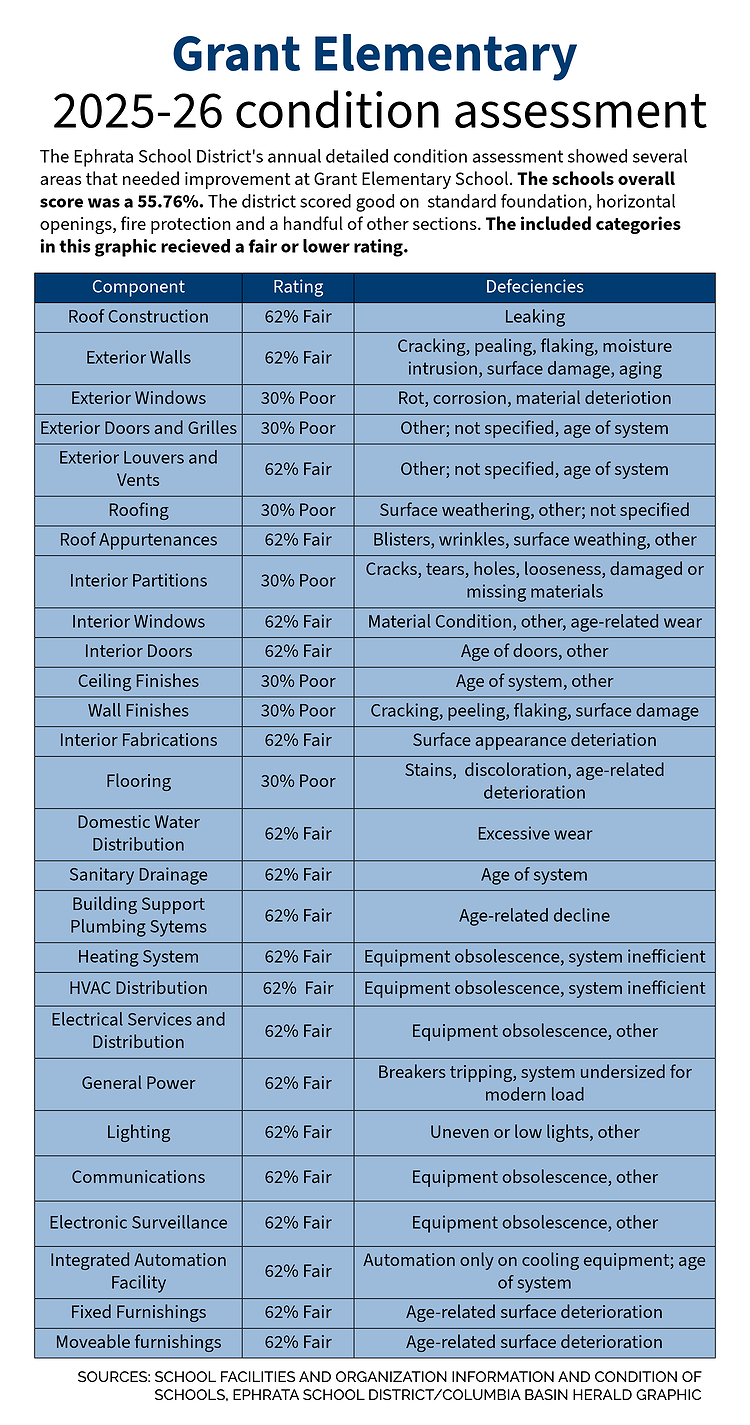
Ephrata School District proposes Grant Elem. replacement
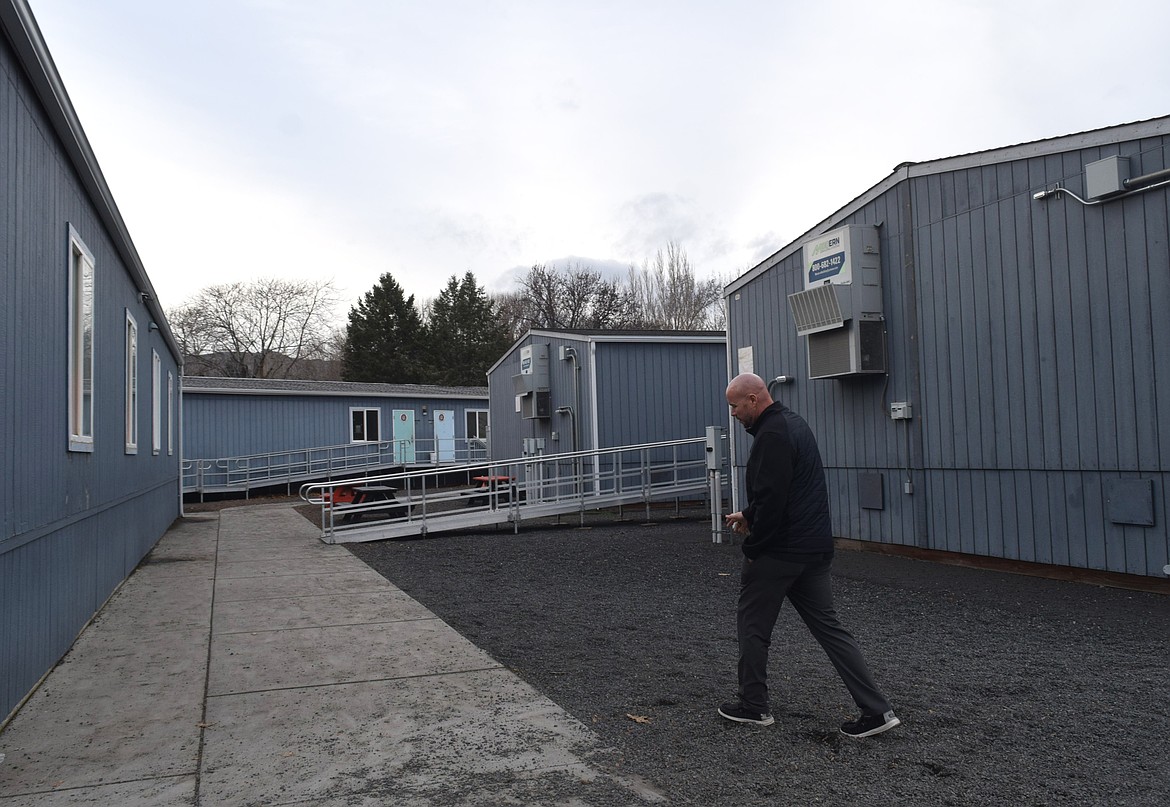
Ephrata School District Superintendent Ken Murray walks through the portable classrooms located at Grant Elementary. As of this year, 40% of students spend most of their day in a portable classroom.
NANCE BESTON/COLUMBIA BASIN HERALD
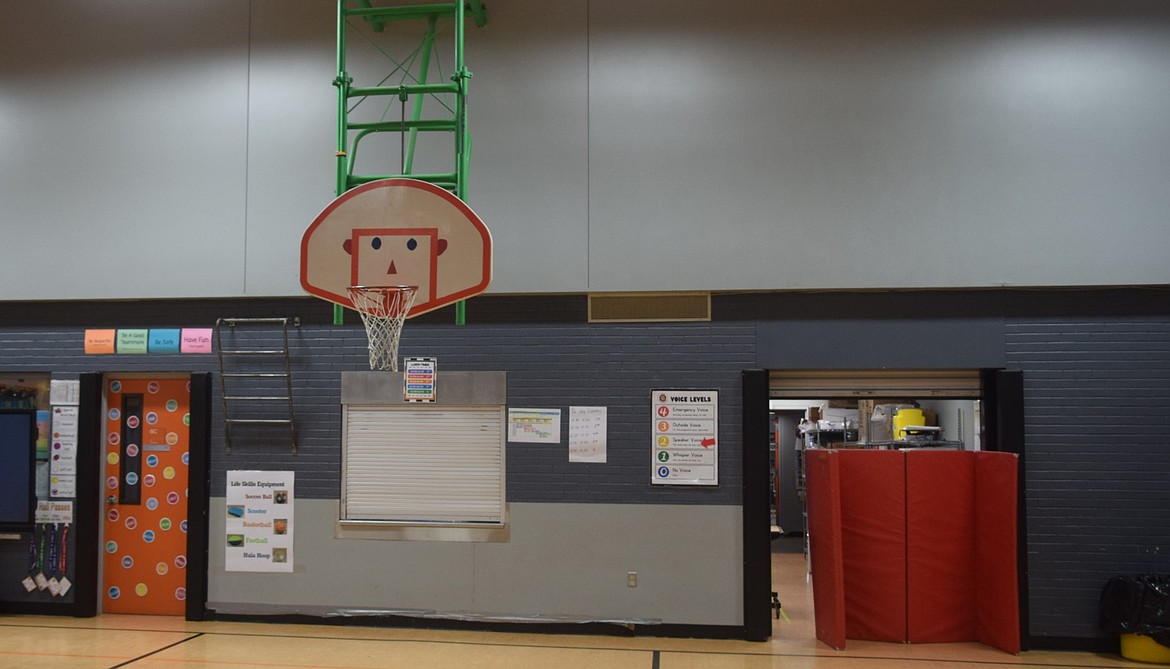
Grant Elementary’s gym is also the school’s cafeteria. This year, the school has students eating breakfast in classrooms because they don’t have enough time to clean the space and transfer it back to a gym before the first class of the day.
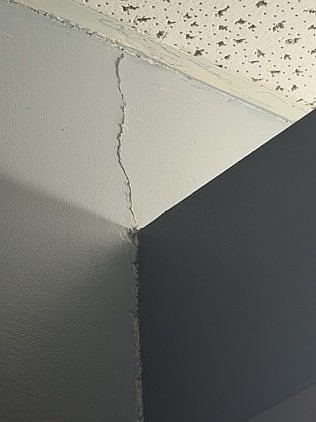
A crack has started to form in the back hallway of Grant Elementary. Even though repairs have been made, it has managed to spread from one wall, through the floor and up the facing wall. The structural flaw has spread to a classroom which is beginning to droop in the middle. While it doesn’t present a safety issue now, it could develop into one.
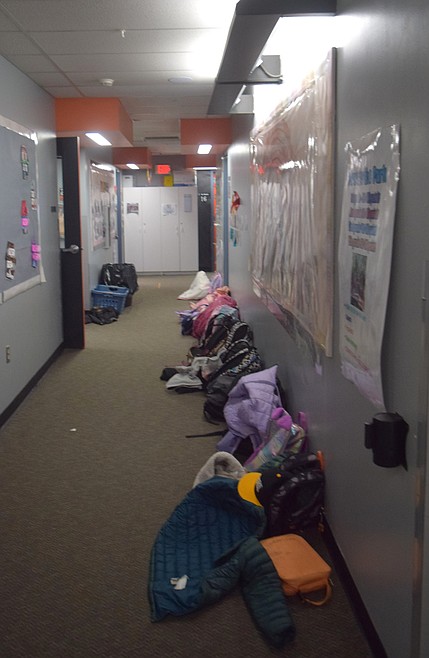
Backpacks line the hallway at Grant Elementary. However, when it rains, buckets take over the hallways, catching rainwater seeping through the roof.

EPHRATA — Grant Elementary – an overcrowded, nearly 70‑year‑old school where more than 40% of students learn in portables – has become a driver behind the Ephrata School District’s $75 million February 2026 bond proposal to replace the aging campus, according to Ephrata School District officials.
If approved by at least 60% of voters, it would fund a complete replacement of the 1957 school, alongside Parkway Intermediate and upgrades at Ephrata High School.
"In 2019, our community approved a bond that included plans to renovate Grant Elementary,” Superintendent Ken Murray said. “When the project went out to bid, construction costs came in more than 63% higher than originally anticipated, which is an increase no one could have reasonably predicted at the time.”
Factors such as the COVID-19 pandemic were involved in the cost increases. The district opted to defease the remaining bond funding from the 2019 bond package, effectively paying off the bond early in order to save taxpayers money.
"Since then, the needs of Grant Elementary have only increased,” he said. “The proposed 2026 bond reflects today’s cost realities and our continued commitment to providing safe, modern learning environments for our students."
An aging building
A survey of the building’s ability to meet student, staff and faculty needs rated Grant at 54.7% compared to Columbia Ridge Elementary, which scored 99.1% after being remodeled recently.
The assessment lists a wide range of concerns – many expected in a school approaching 70 years old, Superintendent Ken Murray said. Roofing components rate as poor, with surface weathering and damaged areas described as “commensurate with advanced age.” Exterior windows show rot and corrosion, and electrical systems suffer from undersized circuits, which result in tripped breakers. Interior finishes - walls, ceilings, and flooring - fall in the poor to fair range, marked by peeling surfaces, stains and deterioration. A variety of structural deficiencies are also present.
Murray said maintaining the building requires constant work.
“When you’re in a building that was built in 1947 or 1957, you can imagine, to keep it very operational, it takes a lot of time and effort,” he said during a recent walkthrough of district schools.
During the tour, Murray pointed out a crack in the back of the school. The crack, although patched several times, has made its way down one wall, through the hallway floor and up the facing wall. The same crack is now impacting a classroom, which has begun drooping in the middle.
“There isn’t a safety concern,” Murray said. “Well, yet. We have been monitoring this room to make sure it doesn’t get worse.”
He also pointed to stained ceiling tiles.
“The students don’t notice a lot of these issues; it doesn’t directly impact the learning,” he said. “But they definitely notice when it rains, and we have to place buckets throughout the school.”
Portables
More than 40% of Grant Elementary’s students learn in portable classrooms all day. Moving in and out of the main building for music, special education, counseling or reading support – spaces which often exist in converted closets or re‑purposed storage rooms.
“Every portable is a sign that you’re overcrowded,” Murray said.
Grant has five portable classrooms.
Architect Ned Warnick, who helped guide the district’s facility study, said eliminating dependence on portable classrooms was one of the community’s top priorities.
“It was a high priority for the portables to be replaced,” he said. “Whatever buildings are built need to be sized to handle these students without needing to use modular classrooms.”
According to the Partner Alliance for Safer Schools, portable classrooms offer a variety of concerns, including security. Western University studies indicate that poor air quality, mold and water intrusion, noise issues, energy inefficiency and poor lighting are also concerns.
Inside the portables at Grant, teachers report both functional and safety challenges. Students leave the building multiple times a day—sometimes in the dark, sometimes in winter weather. Storage is limited, and ventilation units originally designed for temporary structures now struggle to meet classroom needs, Murray said.
The district estimates the building was designed for approximately 300 students but has served as many as 450 to 460 recently, according to district officials.
With the space issues, Principal Shannon Dahl’s office is located in the hallway of the school. The school restructured to fit more staff into the main office and as a result, Dahl moved her desk to sit outside the front entrance. Dahl said the district also uses Grant’s gym as its cafeteria, which has resulted in recent problems.
“We have students eating breakfast in classrooms now,” Dahl said. “We don’t have the time to have them eat here, clean and switch it back to a gym before the first class of the day.”
With the gym size, the school is also unable to host its own events.
“We gather everyone up, and we walk over to the high school for concerts,” Dahl said. “We just don’t have the space in here to host them here.”
Replace vs. renovate
Grant’s structural issues are only part of the picture. District officials say renovation would trigger expensive requirements for asbestos removal and code upgrades, quickly ballooning costs.
Warnick said that prior renovation work at the campus led to several surprises from unforeseen needs to mitigate issues that can’t be seen until work begins.
Warnick said new construction is more predictable and more durable.
“We’ll be trying to build onto 50‑ to 100‑year buildings; we have no idea what issues may arise. If we start new though those buildings, we know what we are getting into,” he said.
Another factor is the current Grant Elementary location is hard for parents and students to navigate during pick-up and drop-off.
“Parents line up on these skinny roads, kids are walking across busy roads. This location is just not set up to handle the traffic we see,” Murray said.
If the bond passes, the new Parkway Intermediate school would be built behind the high school, and the Grant Elementary building would be demolished after a new building is finished near Columbia Ridge Elementary. The space where Grant sits would become expanded parking for parents and students. Murray also mentioned adding a bus loop to connect the new Parkway campus and the high school in the future.
Community‑driven
The bond proposal is the product of an 18‑month process involving about 50 teachers, parents, retirees, and residents. Ephrata Fire Chief Jeremy Burns, a member of the study group, said the diversity of voices helped shape the final package.
The group unanimously recommended replacing Grant, replacing Parkway, and beginning work on the high school to prevent multi‑decade delays in future upgrades. The Ephrata School Board, after the facility study group's presentation, unanimously passed putting the measure on the ballot.
School Board Chair Jim Adams described the proposal as the result of “careful community planning and shared vision.”
The proposal
If approved, the bond would fund a nearly 28‑classroom Grant Elementary on district‑owned land near Columbia Ridge. The current Grant building — landlocked by traffic and surrounded by limited parking — would remain in use until the new high school renovations complete, which would allow flexibility for high school students as construction happens.
Afterward, it would be demolished and the site repurposed to improve vehicle circulation and safety for the larger campus shared with the high school.
The new school would feature purpose‑built learning spaces, rather than retrofitted rooms, modern HVAC and ventilation systems, an updated secure vestibule at the main entry, adequate space designed specifically for today’s enrollment and no reliance on modular classrooms.
Warnick said this is a goal of equity.
“We are trying to eliminate the disparity between what kids have at Columbia Ridge and what kids are in at Grant right now,” Warnick said.
What comes next
To fund the overall bond package, the district estimates a tax increase of $1.07 per $1,000 of assessed property value, with up to $27 million expected from state school construction matching funds. According to the district, this would be a fiscal impact of nearly $392 annually for a home valued at $300,000.
The total estimated costs of the three projects are $102 million, with around $75 million coming from local dollars. The Grant Elementary project is the most expensive, costing nearly $45.8 million, with around $34 million coming from local dollars.
Murray said he acknowledges the impact on homeowners but said there was a lot of long‑term planning behind the proposal.
“This proposal reflects both the realities of our facilities and a shared commitment to providing equitable, high‑quality learning spaces for every Ephrata student,” he said.
If voters reject the measure, Murray said the district will “continue to be great for kids” the next day, but will need to reconvene with the community and school board to determine what comes next.
The Ephrata School District will be hosting a Coffee/Cocoa with Ken at the Bookery from 8 to 11 a.m. Jan. 22, for community members to talk directly with the superintendent about the bond or other matters related to the district.
To read the Columbia Basin Herald’s coverage on the Parkway Intermediate replacement visit: bit.ly/ParkwayBond. The Columbia Basin Herald will follow up on this report with information on the Ephrata High School campuses.
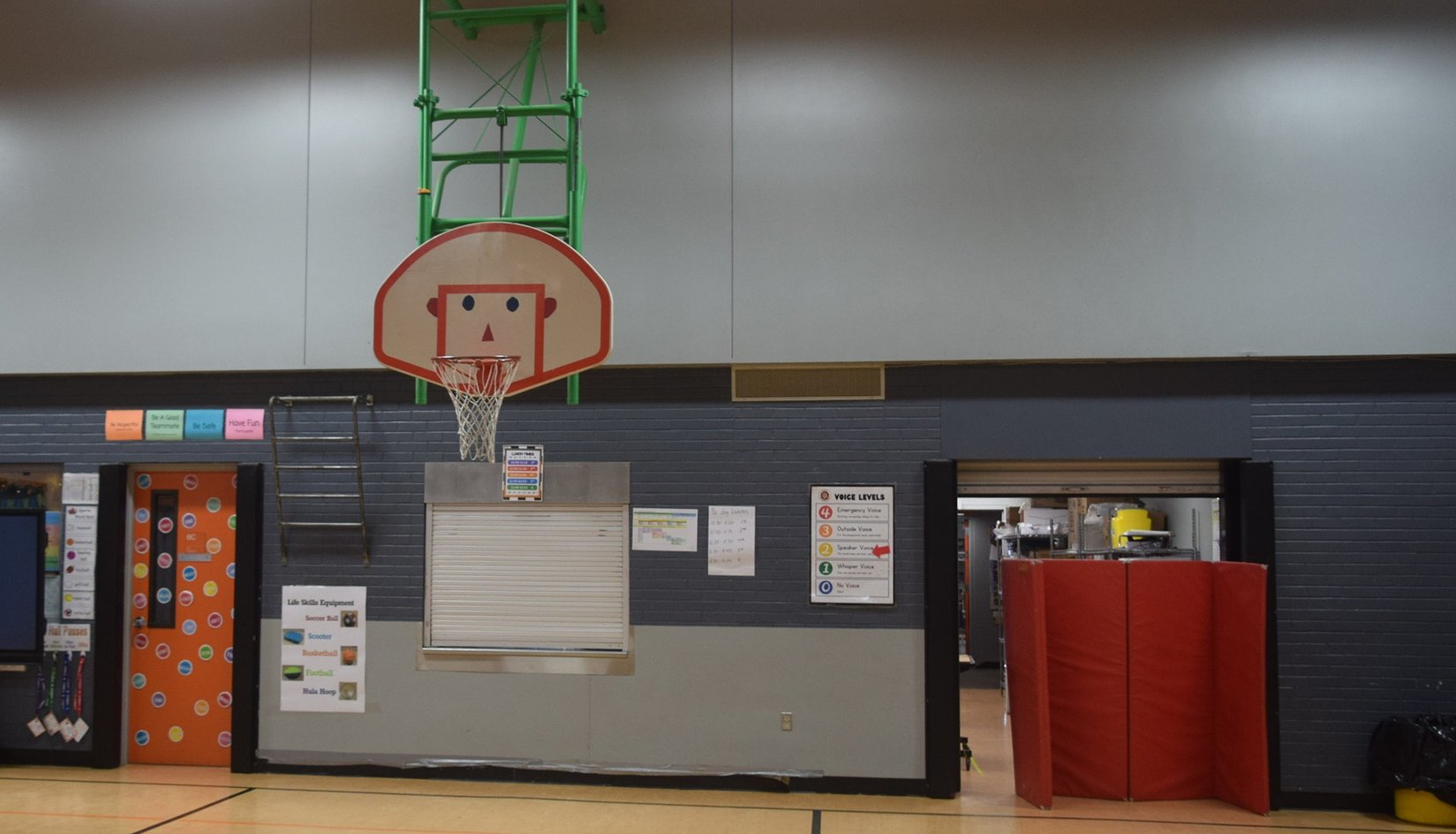 Grant Elementary’s gym is also the school’s cafeteria. This year, the school has students eating breakfast in classrooms because they don’t have enough time to clean the space and transfer it back to a gym before the first class of the day.
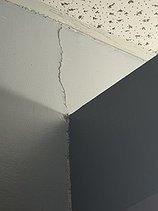 A crack has started to form in the back hallway of Grant Elementary. Even though repairs have been made, it has managed to spread from one wall, through the floor and up the facing wall. The structural flaw has spread to a classroom which is beginning to droop in the middle. While it doesn’t present a safety issue now, it could develop into one.
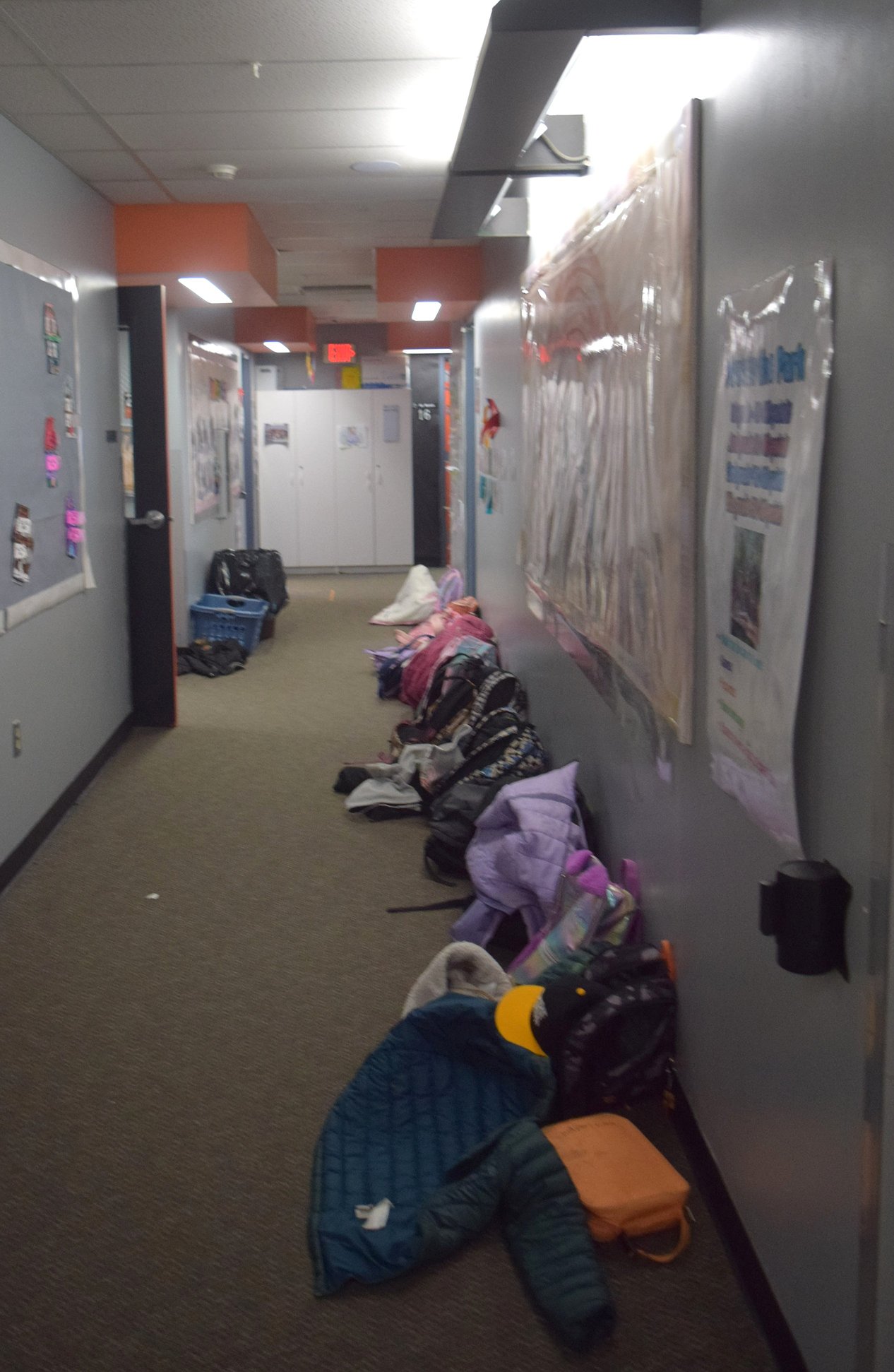 Backpacks line the hallway at Grant Elementary. However, when it rains, buckets take over the hallways, catching rainwater seeping through the roof.