Ephrata Schools bond: Parkway Intermediate
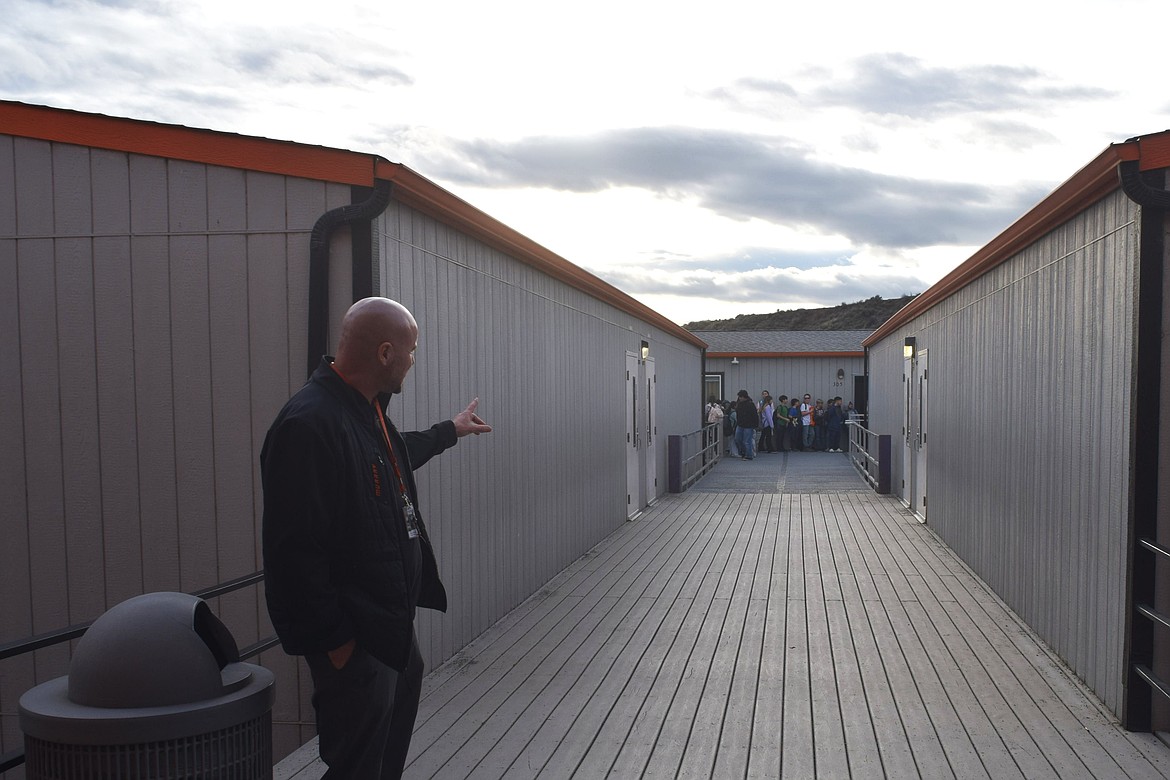
Superintendent Ken Murray points to a group of students waiting outside the portable classrooms at Parkway Intermediate School. The campus is old and no longer serves the student body as well as it did when there were fewer students.
NANCE BESTON/COLUMBIA BASIN HERALD
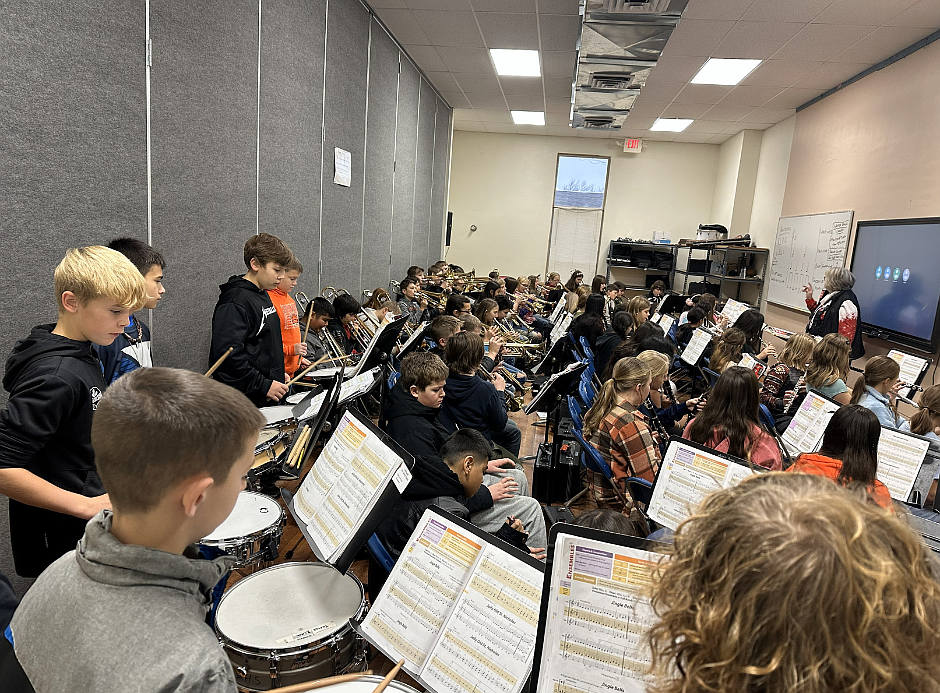
The Parkway Intermediate band classroom is packed with students practicing music. The classroom also serves as a stage for concerts.
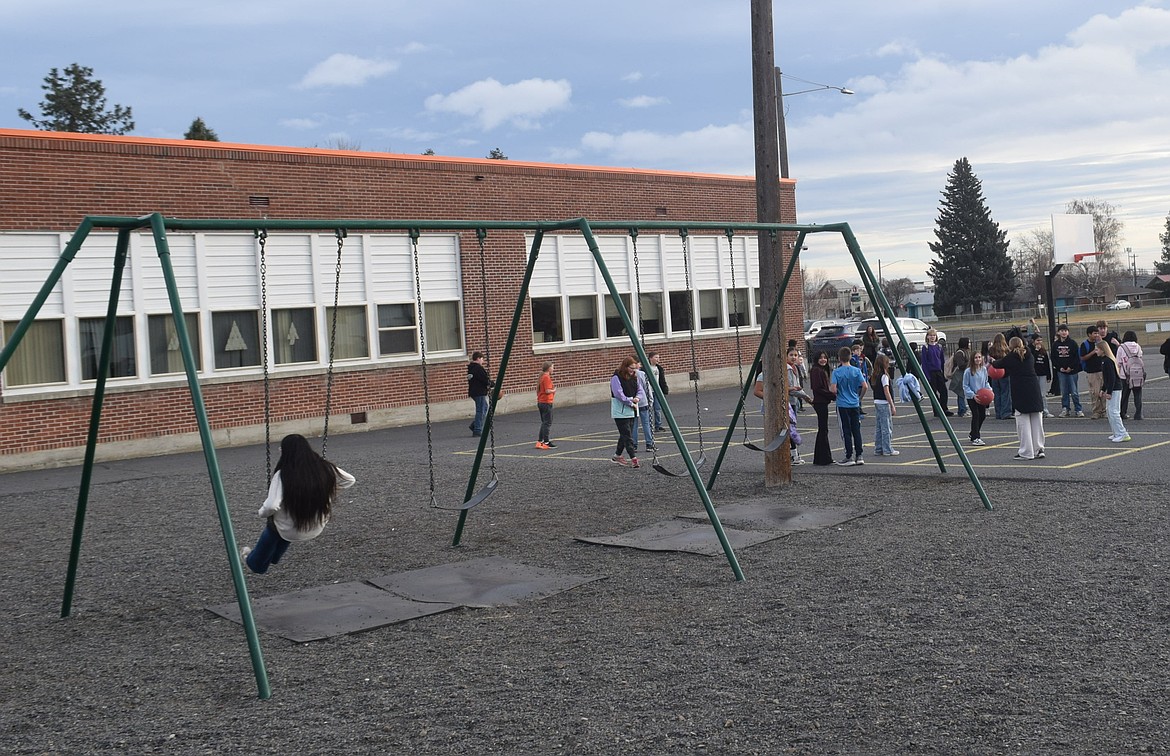
Students enjoy some free time on the Parkway Intermediate playground Monday. The playground is dated and students generally spend recesses on Parkway Fields next to the campus, a facility owned by the city rather than the school district.
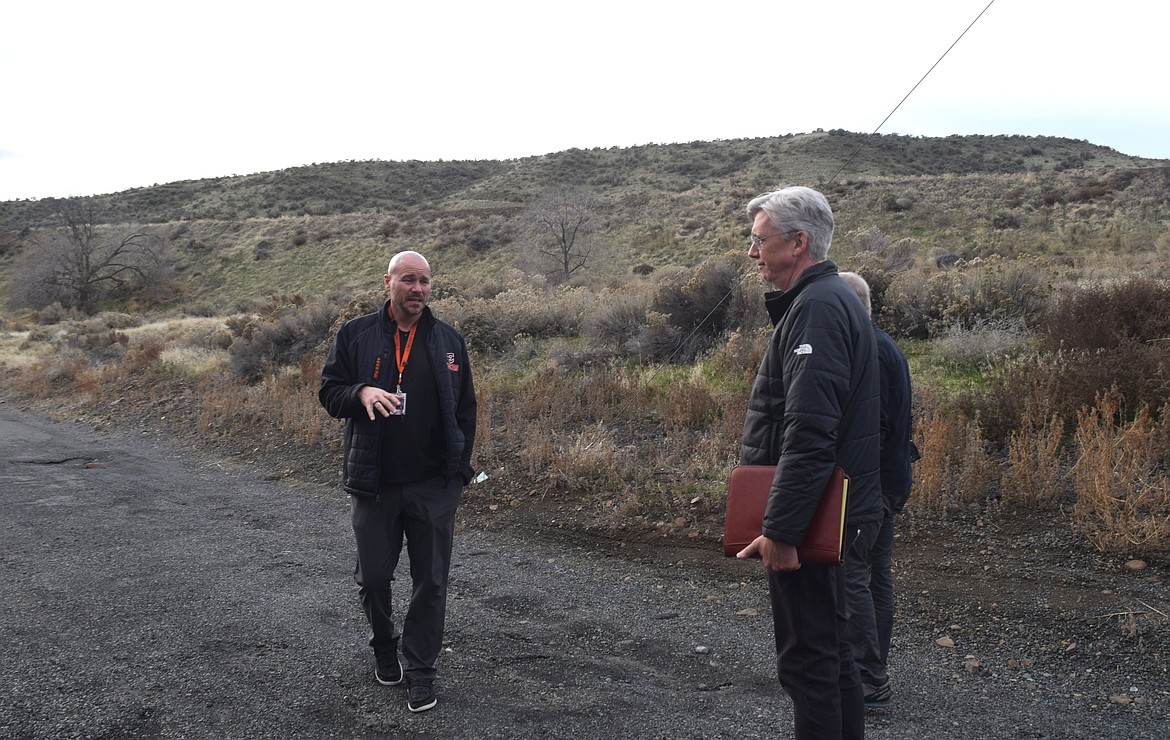
Superintendent Ken Murray, left, and Architect Ned Warnick talk about the issues of the current Parkway location, pointing to the canal located behind the school.
EPHRATA — Parkway Intermediate School is one of the campuses the Ephrata School District is looking to replace with a proposed $75 million, 25-year school construction bond. The bond measure is set to appear on the Feb. 10, 2026, ballot, and will fund not only a replacement of Parkway but also Grant Elementary’s replacement and improvements at Ephrata High School.
The facility’s condition is what added it to a community group’s recommendation for replacement, as the Ephrata School District analyzed its facilities needs over the course of the last year and change. For the district, the conversation is not simply one of modernization, Superintendent Ken Murray said, but of safety, equity and the future of education.
Dated campus
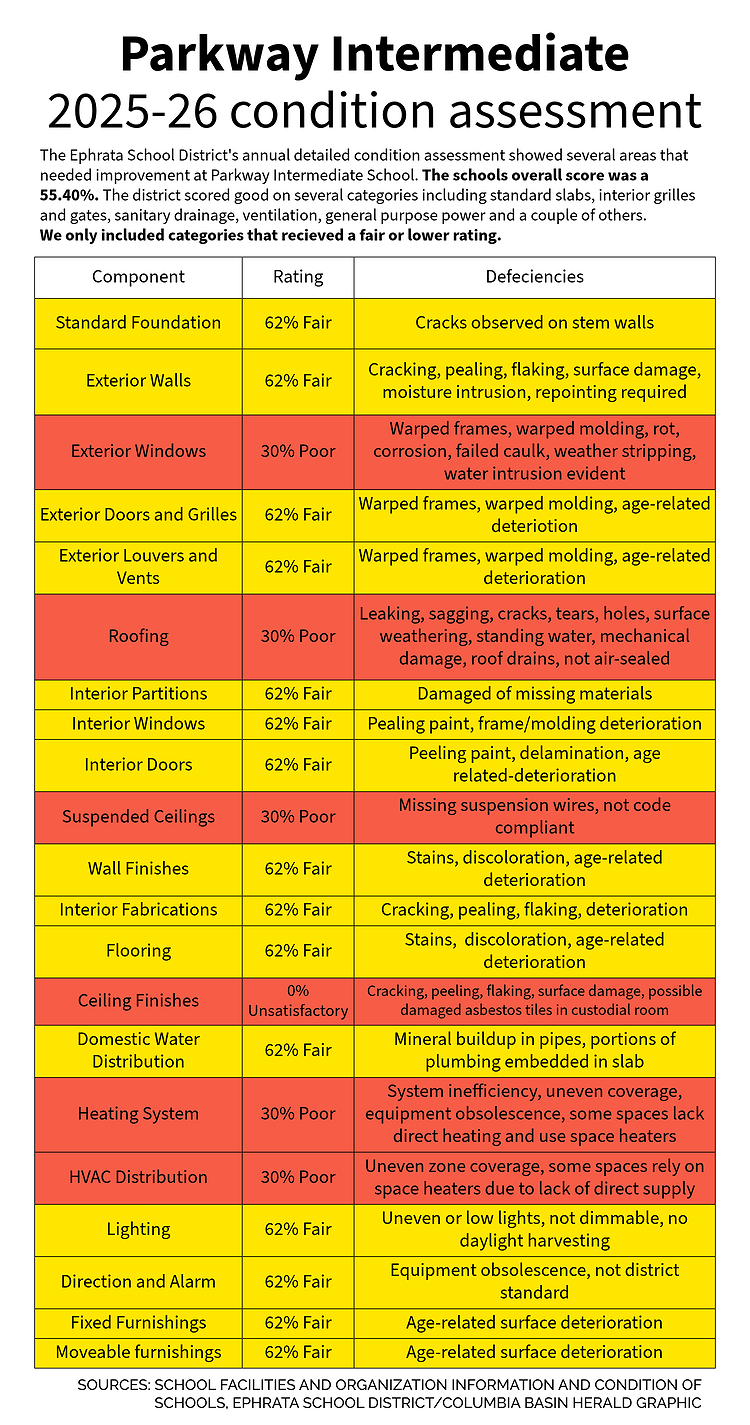
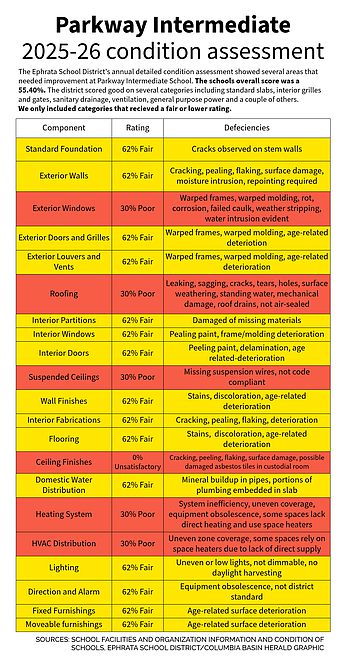
A district‑commissioned evaluation recently scored Parkway at 55.4% — one of the lowest ratings among Ephrata’s schools. According to the comprehensive condition assessment, nearly every major system within the building shows signs of deterioration, from exterior cracking and water intrusion to outdated heating and ventilation systems.
Architect Ned Warnick, who participated in the facility study, offered a blunt assessment of the building’s condition:
“This building is no longer worth putting large amounts of money in to try to bring it up to the level that would be needed for modern education.”
The physical issues extend beyond comfort. Murray pointed to failures emerging in core infrastructure.
“We’ve had a huge sewer issue, for example, that just is a result of aging infrastructure,” he said.
District staff and consultants said the sewer issue is just one of several expensive maintenance issues with the facility.
Many of the building’s shortcomings also have direct implications for learning. Poor insulation and outdated HVAC systems contribute to temperature swings that disrupt classroom focus. Water damage and moisture issues affect indoor air quality. Portions of the plumbing are embedded within the concrete slab, making even routine repairs difficult. Flooring, ceiling tiles and wall finishes show visible age. These problems create a daily backdrop for students and staff – one that district leaders say can’t be improved with simple patchwork repairs.
Spaces & Learning
The reliance of portable classrooms further complicates Parkway’s learning environment. As of this school year, around 70% of Parkway students attend at least one class in temporary buildings—structures never meant to serve as permanent instructional spaces.
“It was a high priority for the portables to be replaced,” Warnick said, reflecting concerns raised consistently during district planning sessions.
While portables provide flexibility, they also create challenges, Warnick said. They often lack the same security features, insulation and soundproofing as traditional buildings. Transitions between classes or to support services frequently require students to walk outdoors, exposing them to weather and limiting integration with the main campus.
Alongside the portables, some students are learning in spaces that were formerly storage rooms. The current band classroom is a former storage space located behind the gym – long and narrow; the room packs a classroom full of students, with little room to move and poor acoustics.
“I don’t know if you have ever seen the room full, but it’s bursting at the seams,” Murray said. “We cannot house all of our parents and all of our kids, so our students don't get a chance to see their peers perform. We get about half of our student population, half of our parent population coming in, watching kids perform, the kids leave, and another group of kids come in. Ideally, you want your kids to be able to see their peers perform. You just can't do it in this facility. That's the size that this is. If you've ever been here with about half of our parent population, it feels like the entire community is here. We can't put enough seating in there for our parents. We're lining the walls. We're poking our head in from the entry doors.”
Further, Murray said the combined gym and cafeteria is inadequate for the growing student body.
“If you look around, you will see there isn’t even enough room for all of the students to participate. They have to take turns during gym class because there simply isn’t the space,” Murray said.
The district sees these issues as central to the discussion about educational equity: students at Parkway, Murray said, deserve the same quality of campus as children in the district’s newer facilities.
Community planned
The effort to address Parkway’s condition is not new, nor was it developed in isolation. Over the past 18 months, the district convened a group of roughly 50 community members - including teachers, administrators, former board members, business owners and local residents—to discuss the long‑term needs of Ephrata schools.
“We had former board administrators, teachers, residents and business owners all contributing to this vision,” Ephrata Fire Chief Jeremy Burns said.
He said their discussions centered on how to balance immediate safety needs with long‑term educational goals. The group’s consensus pointed to a full replacement of Parkway as a priority. The facility’s low condition score, coupled with ongoing maintenance challenges and instructional limitations, reinforced the current building is no longer meeting student needs.
New campus
If the election reaches the minimum voter turnout and 60% of voters approve the bond, the district plans to construct a completely new Parkway Intermediate School. Early descriptions of the project show a facility designed for modern educational practices, including roughly 20 permanent classrooms, a new gymnasium with a full‑size court, expanded activity spaces, up‑to‑date safety and energy systems and technology‑ready learning environments.
Warnick said the design is intended to support both current instructional approaches and future flexibility as educational needs evolve. Such a facility would also allow students and staff who currently operate from detached portables to return to a unified, secure campus—something district leaders describe as a significant improvement to daily educational life.
Funding
Financially, the bond would cost property owners an estimated $1.07 increase per $1,000 of assessed value over a 25‑year period. According to the district, this would be a fiscal impact of nearly $392 annually for a home valued at $300,000.
The total estimated cost of the project is $102 million. The district anticipates that the State of Washington’s School Construction Assistance Program would contribute as much as $27 million toward the project. Of the total project, around $35.2 million will go to Parkway’s replacement, with nearly $26.5 million coming from local dollars.
“This proposal reflects both the realities of our facilities and a shared commitment to providing equitable, high-quality learning spaces for every Ephrata student,” Murray said.
The Ephrata School District will be hosting a Coffee/Cocoa with Ken at the Bookery from 8 to 11 a.m., Jan. 22, for community members to talk directly with the superintendent about the bond or other matters related to the district.
The Columbia Basin Herald will follow up on this report with information on the Grant Elementary and Ephrata High School campuses.
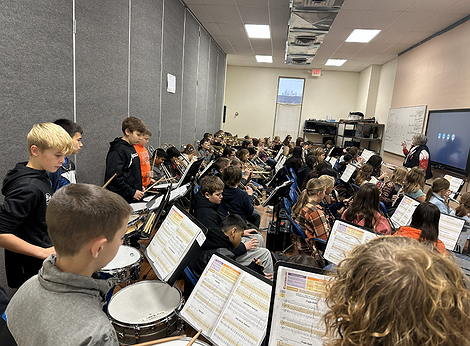 The Parkway Intermediate band classroom is packed with students practicing music. The classroom also serves as a stage for concerts.
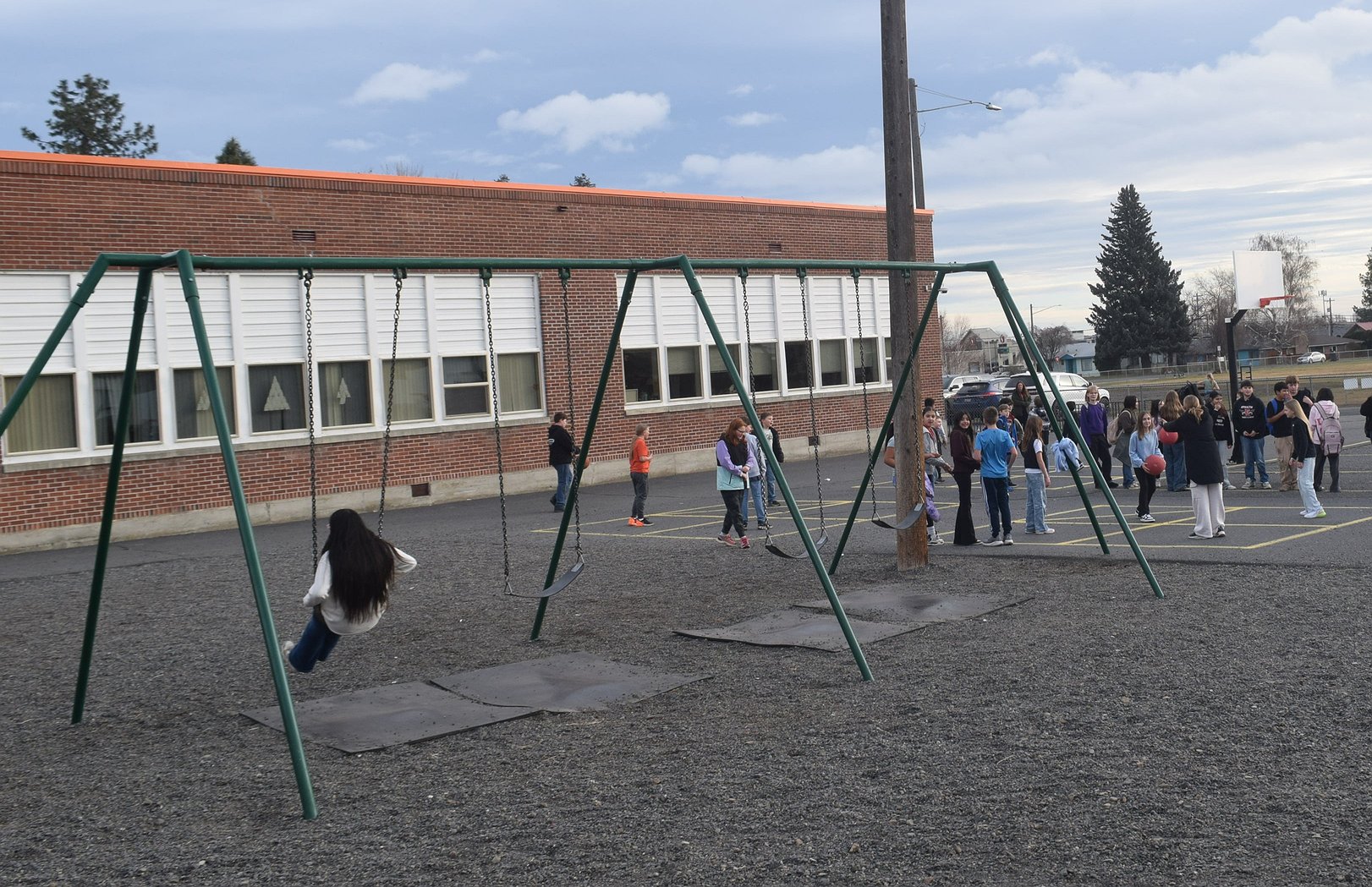 Students enjoy some free time on the Parkway Intermediate playground Monday. The playground is dated and students generally spend recesses on Parkway Fields next to the campus, a facility owned by the city rather than the school district.
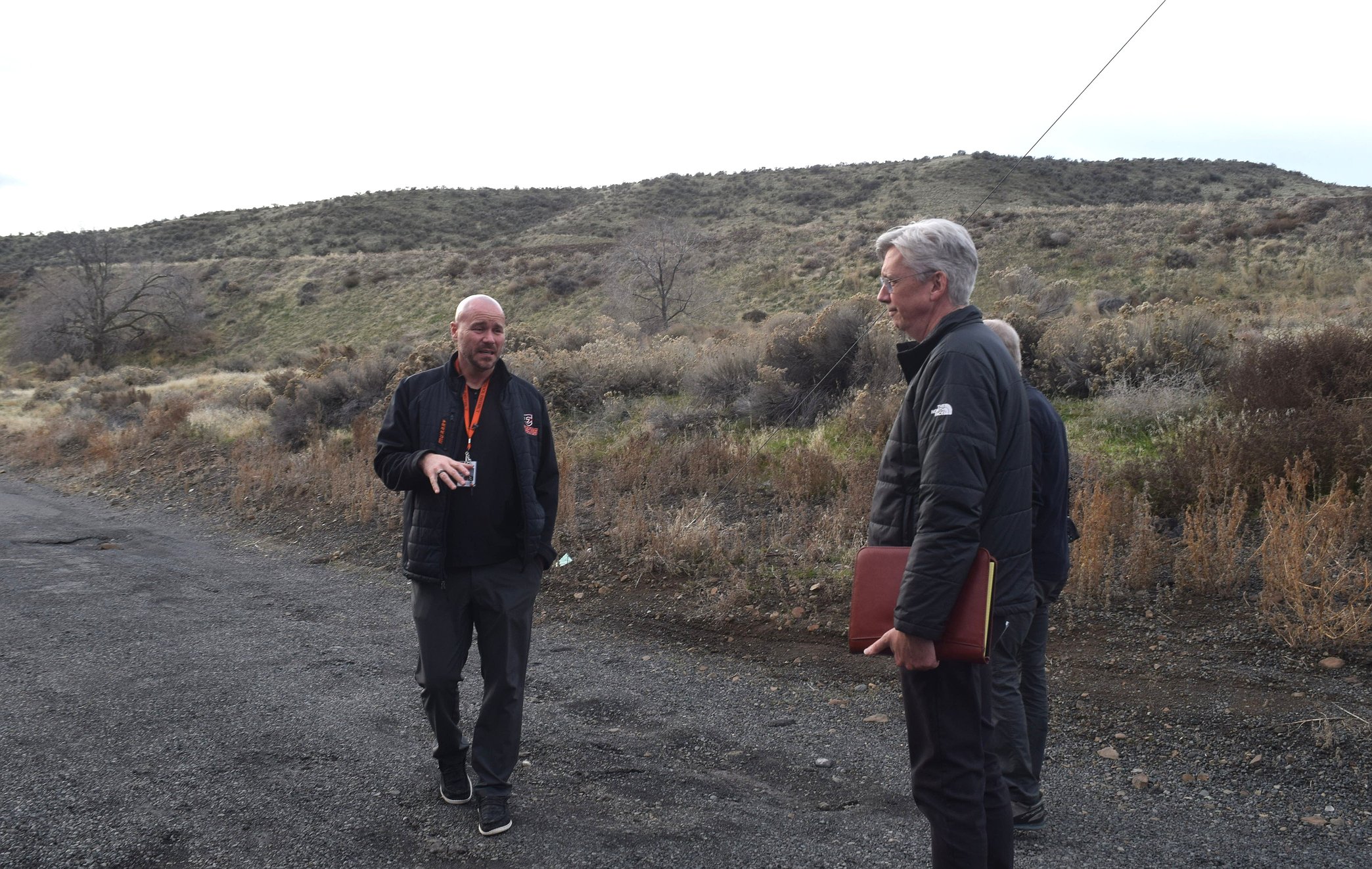 Superintendent Ken Murray, left, and Architect Ned Warnick talk about the issues of the current Parkway location, pointing to the canal located behind the school.