
WA Legislature kicks off session
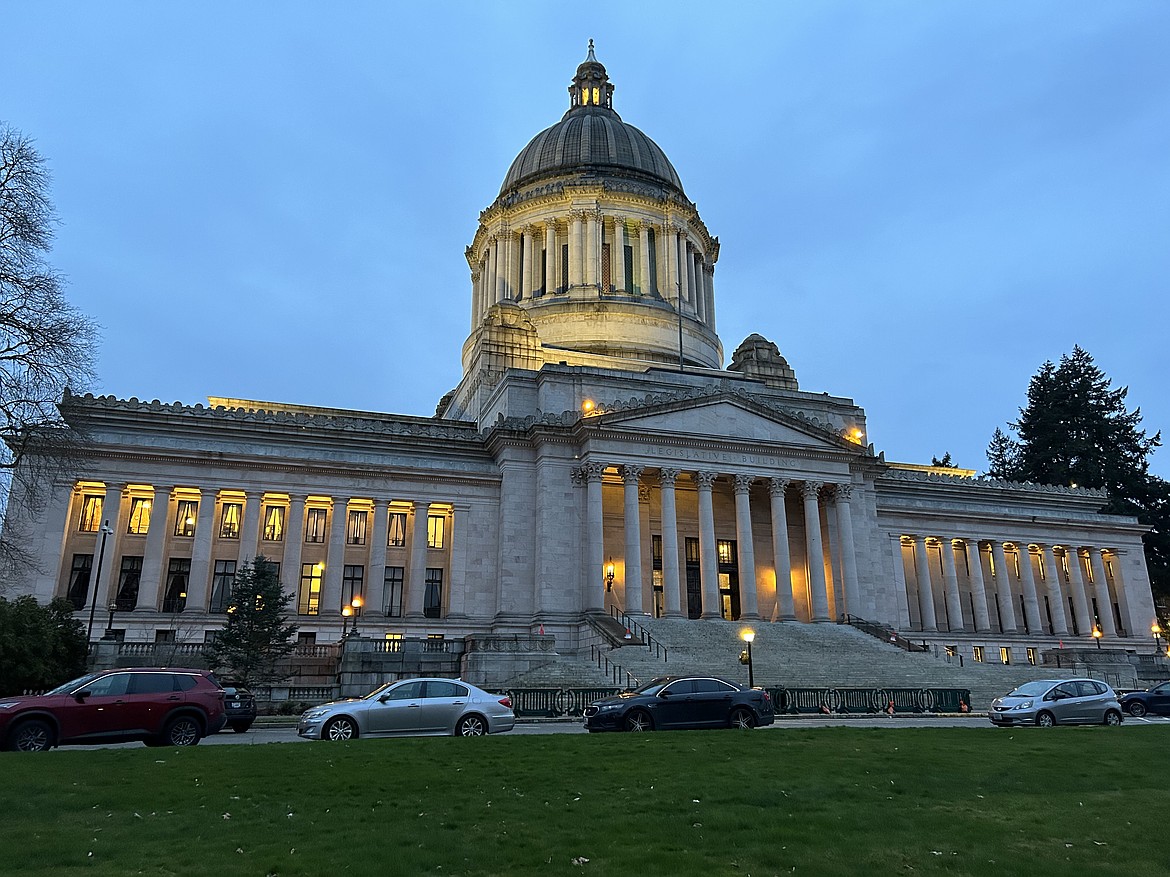
Senators and representatives reconvened in Olympia Monday for the 2026 Washington Legislative Session with a variety of challenges to address, not least of which is an additional budget shortfall.
FILE PHOTO
OLYMPIA — Washington legislators convened in Olympia last week for the 2026 Legislation Preview, highlighting priorities ahead of the short 60-day session that began Monday.
The briefing featured panels from the Transportation and Budget committee chairs, state House and Senate leadership, and Gov. Bob Ferguson as they discussed a proposed income tax on those earning $1 million or more, voter initiatives, and the state’s affordability crisis alongside a $2.3 billion operating budget deficit.
Last month, Ferguson outlined his plans to close the gap in his supplemental budget proposal with a series of spending cuts and reallocating revenue from separate state accounts. He proposed approximately $800 million in reductions across state agencies while redirecting about $569 million from the Climate Commitment Act and $1 billion from the state’s rainy day reserve.
Ferguson said money from the CCA will be used to cover the expense of the Working Families Tax Credit program that offers an annual tax refund to low- and middle-income households.
While some Democrats expressed concern regarding spending CCA revenue on tax credits rather than on reducing air pollution, many Republicans advised against the use of the rainy day fund.
Rep. Travis Couture, R-Allyn, ranking member of the Appropriations Committee, labeled Ferguson’s proposal as “wholly unserious,” criticizing the Democrats' continued government spending.
“We don’t have a revenue problem; we have a spending problem,” Couture said. “We have never had more revenue in the state of Washington than we do right at this very moment, and it does continue to grow, although the growth has slowed.”
Ferguson also announced support for a proposed 9.9% income tax on residents earning more than $1 million annually, despite previously rejecting a “wealth tax” last session. If passed, revenue would not be available until 2029, raising $3 billion per year with less than 0.5% of Washingtonians affected by the tax.
“We will see if it's feasible to pass the millionaires tax this session or not,” Sen. June Robinson, D-Everett, chair of the Senate Ways and Means Committee, said. “It’s a proposal that’s obviously talked about for a few months. It seems to have momentum.”
The governor, however, emphasized that to have his support, the new tax must be used to expand eligibility and increase payments under the Working Families Tax Credit program as well as allow for tax relief for small businesses.
Republicans sternly opposed, contesting that the million-dollar threshold will eventually be lowered to form a broader income tax despite Ferguson assuring that the tax would not apply to those making less than $1 million per year.
“I don’t think any of us should ever call this a millionaire tax again because we know where this is headed,” Sen. Chris Gildon, R-Puyallup, ranking member of the Ways and Means Committee, said. “We should call it the first slice of the pie tax because this is just the first slice of the pie. It is going to expand to everyone eventually.”
The Transportation Committee discussed efforts to invest in road preservation and bridge maintenance, especially in light of last December’s severe flooding that heightened the urgency for a more efficient infrastructure spending policy.
While Democrats discussed using funds from the increased gas tax that added six cents of tax per gallon last summer, both Rep. Jake Fey, D-Tacoma, and Sen. Marko Liias, D-Edmonds, also expressed support for Fergon’s proposal to borrow money through bonds to expedite repairs.
Both Sen. Curtis, R-Yakima and Rep. Andrew Barkis, R-Olympia, opposed bonding and insisted on using current revenue, specifically from the CCA, to be reallocated to cover repairs.
“We currently carry about a $1.8 billion, if not more, debt load on the current bonding that we have in the state,” said Barkis. “I agree that we need to reserve that capacity for the bigger issues of growth that we are going to need to do in infrastructure over the next many years.”
Senate Majority Leader Jamie Pedersen, D-Seattle, and House Speaker Laurie Jinkins, D-Tacoma, said they have no plans to hold hearings on two citizen initiatives backed by the political committee, Let’s Go Washington, after garnering more than 400,000 signatures.
Initiative IL26-638 seeks to bar transgender athletes from participating in interscholastic women's sports in Washington public school districts, while Initiative IL26-001 aims to undo the parental rights measures that were passed by Democrat legislators last year.
The secretary of state’s office is verifying the signatures before they can be submitted to the Legislature, which then will decide to either adopt the initiative or send it to Washington voters on the November ballot.
“I’m certain that we will not be passing either of those initiatives,” Pedersen said. “They’ll be up to the voters to decide.”
While both parties agree on the need to focus on the state’s high cost of living, Democratic leaders said they plan to push back on federal government policies that target vulnerable communities and harm the local economy.
“President Trump's tariffs are causing much higher inflation in the state,” Jinkins said. “They're causing a lot of uncertainty because they go back and forth daily, so there's no way for our business community to really plan for or around them. They are causing greater prices for our families here in Washington state.”
Republicans, however, argued that the affordability crisis Washingtonians face is due to state policy rather than federal.
“Tariffs don't explain why Washington has the second-highest gas price of any state in the country,” Rep. Drew Stokesbary, House minority leader, said. “Tariffs don’t explain why Washington has the fourth-highest grocery prices … the fourth-highest housing prices… the seventh-highest most costly childcare…Washington is uniquely expensive compared to nearly every other state. This is not a result of the federal policies.”
Recent data by GasBuddy has shown Washington fluctuating between second and third place when it comes to fuel prices. California and Hawaii are the other two states in the top three.
Stokesbary urged that focus should remain on state issues, emphasizing that Republicans' top priority this session is to make Washington more affordable and proposes to reduce sales tax on prepared foods and groceries.
With the 60-day session now open, the legislature will have until March 12 to tackle incoming bills on top of a central budget proposal expected to be reviewed and signed this spring.