
Othello museum to extend season
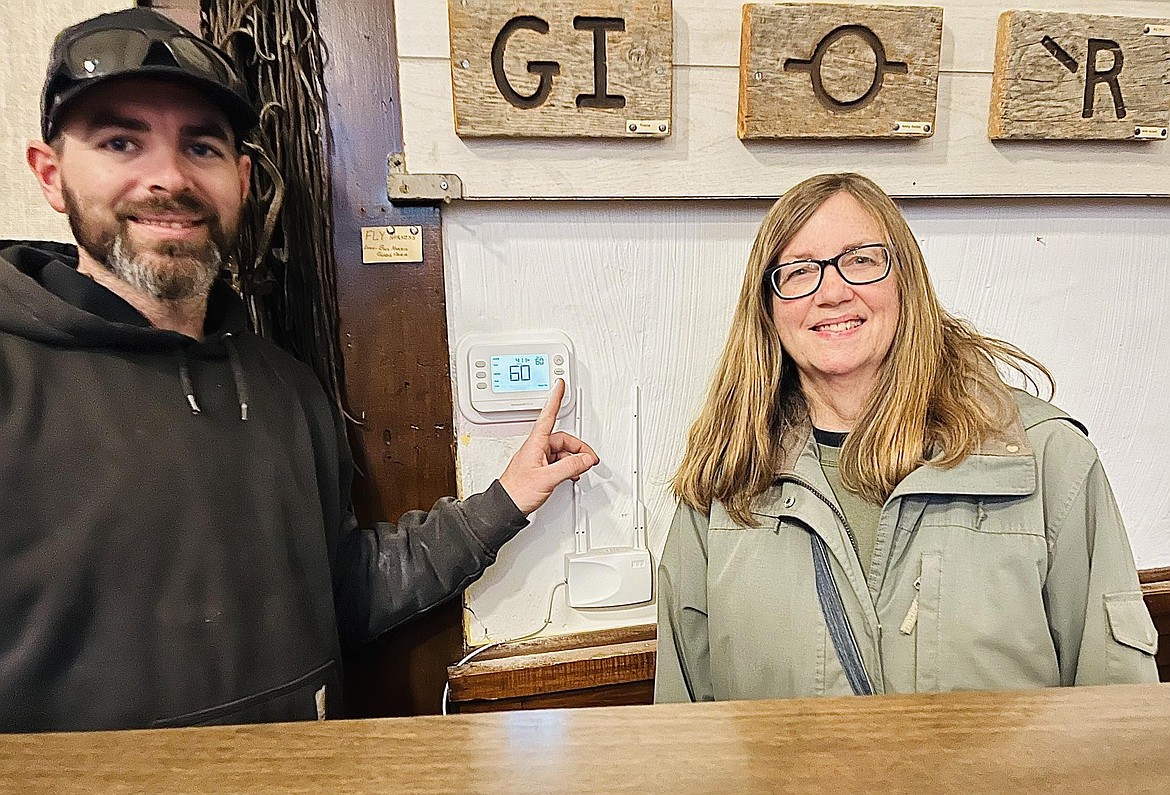
The new heating system at the Othello Community Museum is turned on for the first time by contractor Steve Lichtenegger, left, and Manager Rebecca Mohs.
COURTESTY PHOTO/OTHELLO COMMUNITY MUSEUM
OTHELLO — Operators of the Othello Community Museum want to take advantage of upgrades to its heating-cooling system by opening earlier in the year and staying open later.
“Our season will be longer, hopefully April to October. But we’ll still be open from 1 to 5 p.m. on Saturdays,” said project Manager Rebecca Mohs.
The new heating-cooling system was paid for through donations, including a major one from Othello native Dean Kisler. Residents and visitors can get an early look at the 2026 season during the Othello Sandhill Crane Festival on the weekend of March 20. Mohs said museum operators have a list of projects they’re working on, but it’s going to take a while to complete them.
The museum opened in 1972 in what was one of Othello’s first churches.
“This building is from 1908. And it still has its original altar,” Mohs said.
Refurbishing the altar is one of the projects on what Mohs called the wish list. At the top of that is a bathroom accessible to people with disabilities. Operators want to build a library of rotating exhibits from the museum’s permanent collection, which includes artifacts from many Othello pioneers.
“But that’s a way off,” Mohs said. “We’ve got to build up funds.”
One of the museum’s biggest draws for bird lovers is an extensive display of species that live in and around Othello, along with birds that use the Pacific Flyway. It was the years-long project of Bertram Betterly, who donated the results to the museum, Mohs said.
From its founding until the 1950s, Othello and the surrounding area were home to dryland farmers and crews working on the Chicago, Milwaukee and St. Paul Railroad. Back in the day, it was a growing community, sustained by years of above-average rainfall and relatively high farm prices. The good times lasted until a change in weather patterns reduced the rainfall and commodity prices plummeted. The combination drove a lot of farmers away. The town’s population stabilized at about 500 people, and there it stayed for decades.
Then the water came – Grand Coulee Dam and the Columbia Basin Project started delivering irrigation water. The dryland wheatfields were replaced by orchards and row crops sustained by irrigation. Agriculture is still the basis of Othello’s economy, along with ag — related businesses like fruit and vegetable processing.
Preparation for the 2026 season is beginning with a good dusting and general cleaning following installation of the new climate control system, Mohs said.
“There’s a layer of dust on everything,” she said. “It definitely needs deep cleaning.”