
Bad debt, charity care expenses rising at local medical facilities
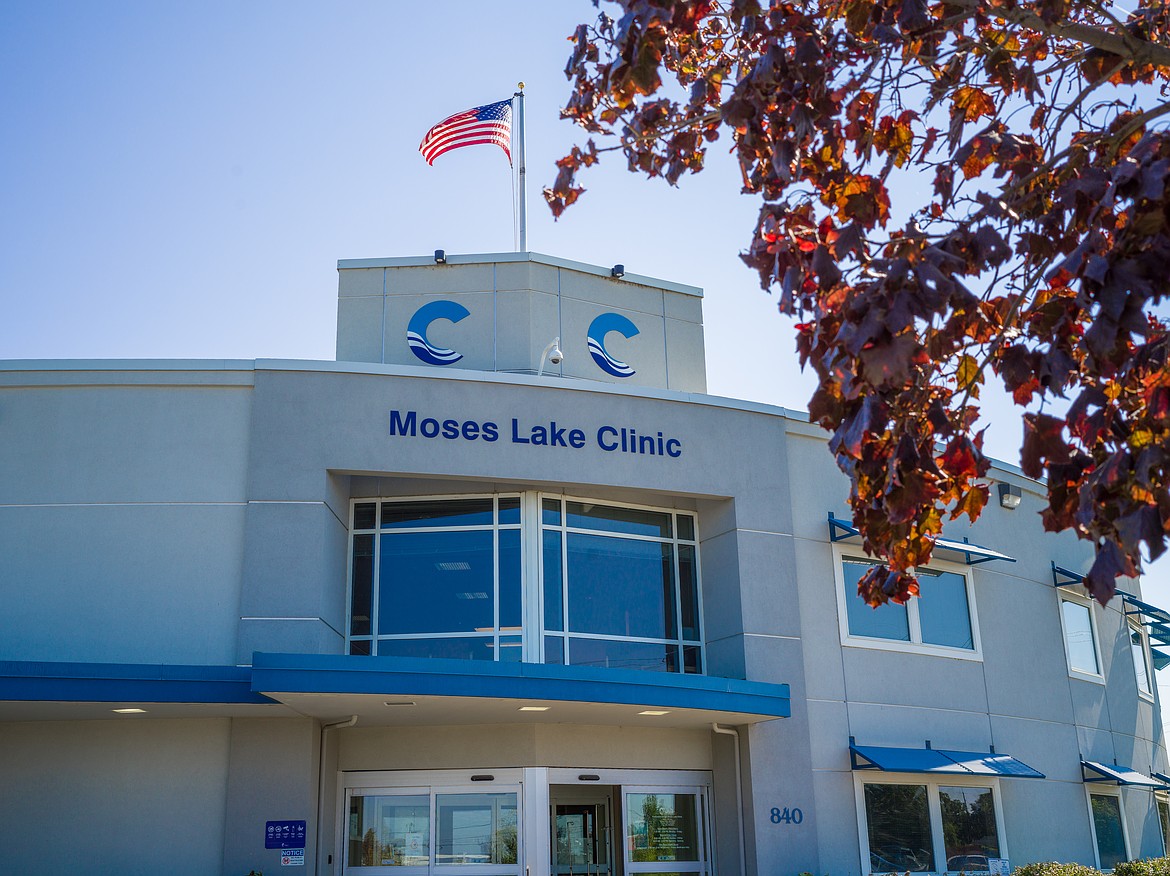
Bad debt and charity care expenses rose significantly at Confluence Health between 2023 and 2025, according to Janette Townsend, Confluence chief financial officer.
COURTESY PHOTO/CONFLUENCE HEALTH

Bad debt and charity care expenses at Samaritan Healthcare are projected to be about $18 million in 2026, said Chief Administrative Officer Alex Town.
MOSES LAKE — For everyone in healthcare, from patients to hospitals to medical professionals, the challenge is who pays the bill. Sometimes the answer is that some or all of the bill doesn’t get paid, and the hospital or clinic has to absorb the costs.
Janette Townsend, chief financial officer at Confluence Health, and Alex Town, chief administrative officer at Samaritan Healthcare, said it’s becoming a bigger problem.
“Both bad debt and charity care have gone up in the last few years,” Townsend wrote in response to questions from the Columbia Basin Herald. “Bad debt has increased 214% and charity care has increased 63% from 2023 to 2025.”
Bad debt and charity care, usually called uncompensated care, are those cases where the bill doesn’t get paid. There are requirements for charity care; when a person qualifies, Confluence writes off the expense, Townsend said.
Cases of bad debt usually involve people who couldn’t, or didn’t, pay their portion of the bill. Town said changes in regulations and the market have contributed to the increase in bad debt at Samaritan.
“We’ve noticed a lot of the increase in our bad debt is our uninsured population coming into our ER and having to have surgery,” he said. “That’s been a huge factor. Another piece is that we have a number of patients in our (medical-surgical unit) and ICU that stay for a duration of time, and they have no insurance. We’re trying to place them (in another facility), and working with the state to get them placed.”
Samaritan’s analysts are still reviewing the data from 2025, but Town estimated that uncompensated care would be $12 to $13 million at Samaritan for the year. For 2026, Samaritan officials are estimating uncompensated care expenses at about $18 million, he said.
“Ours has jumped up significantly, because with the expansion of the financial assistance guidelines in the state of Washington, it makes it easier for patients to qualify. The other piece is the significant increases in (insurance) deductibles this year,” Town said.
Patients getting treated at Confluence may have insurance, but sometimes they don’t have enough, Townsend said.
“There is an unpaid cost when using Medicare and Medicaid. The payment rates from Medicare and Medicaid at times do not cover the cost of providing the service to people covered by those programs,” she said.
Charity care also has a significant impact.
“Besides the unpaid cost of Medicare and Medicaid, the next biggest portion of uncompensated care is our charity program, which includes people who don’t have insurance coverage, but also people that have insurance and are at income levels that qualify them for the charity program,” Townsend said. “Often these patients are covered through high-deductible plans that have large deductibles, co-pay and co-insurance that they cannot afford to pay. They qualify for charity write-offs based on their income levels.”
The data isn’t complete for 2025, but in 2024, charity care and the unpaid costs from Medicare and Medicaid cost Confluence about $124.6 million, she said.
“That does not include the $21.8 million in charges that were written off to bad debt from patients that did not qualify for charity and did not pay their bill,” she said.
Town said most Medicare patients at Samaritan buy supplemental insurance to pay for most costs not covered by the program. Most patients with private insurance also pay the portion not covered, he said.
“It’s that growth in your Medicaid and growth in your self-pay that impacts your bad debt,” he said.
What’s called the payer mix makes a difference in the bottom line of any place that provides medical care.
“Within a given month or a given year, our payer mix is the division of how much of our revenue is coming from Medicare patients, Medicaid patients, commercial (insurance) patients or patients that don’t have insurance at all,” Town said.
Samaritan used to get about one-third of its revenue from Medicare patients, Town said, another third from Medicaid patients and one-third from patients with private insurance.
“Now we’re starting to see a shift. An increase in our Medicare (and) Medicaid population and self-pay, which is increasing our bad debt and charity care,” he said.
Changes in federal regulations revised credit reporting and removed medical debt from the report, Town said.
“There is no incentive for patients to pay their bills anymore,” he said. “I know that’s contributed significantly.”
The employment picture is ever-changing, in Grant County like everywhere else, and layoffs in 2025 had an impact on Samaritan’s bad debt, Town said. Insurance coverage was affected while people looked for new jobs
“Those patients who still receive medical care are struggling to pay their bills,” he said.
Hospitals and other medical care providers are working to adjust spending and revenue to compensate for the bad debt and charity care losses.
“A focus on expenses – managing your expenses,” Town said. “And then, secondly, on service line development to increase our revenue. Lastly, focus on our employees and our patient satisfaction – our frontline professionals are engaged and understand we work together as a team and we provide a great patient experience. If our team can focus on that, we’ll be able to manage our expenses, we’ll be able to grow our revenue, and we’ll be able to retain our staff.”
 Bad debt and charity care expenses at Samaritan Healthcare are projected to be about $18 million in 2026, said Chief Administrative Officer Alex Town.