
Energy critical in 2026 WA Legislative Session, Ybarra says
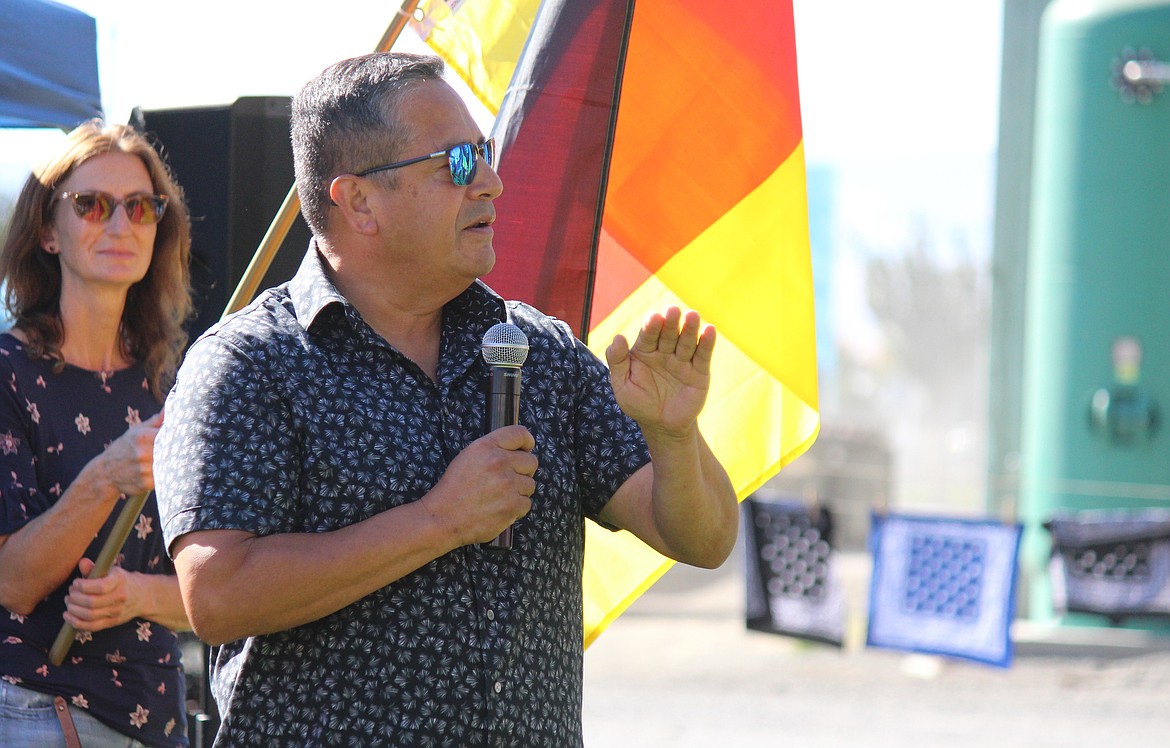
Alex Ybarra, 13th District Representative, talks about growing up in Quincy at the 2024 Celebration of Harvest and Culture sponsored by the Quincy Valley Historical Society and Museum.
FILE PHOTO
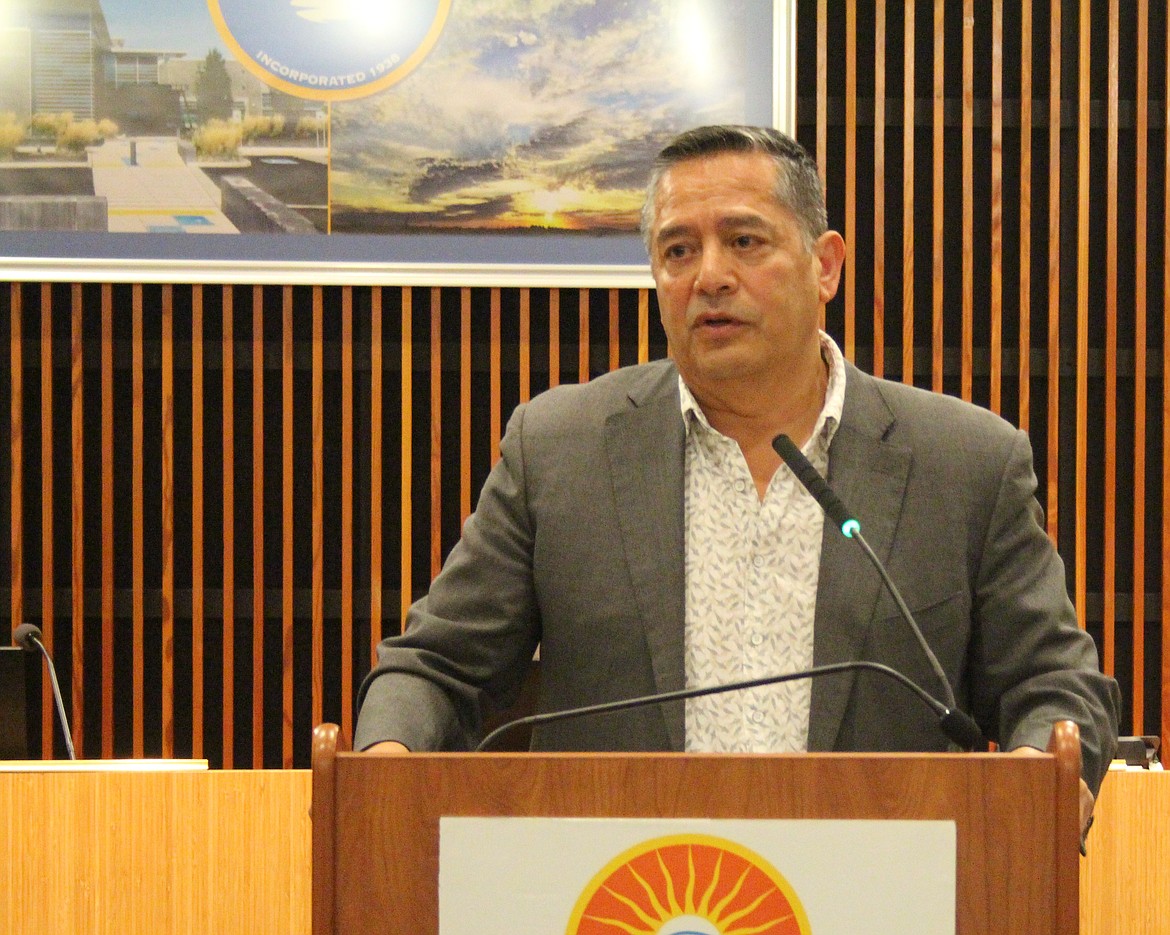
Alex Ybarra, R-Quincy, talks about the 2026 Washington Legislative Session during a legislative kickoff meeting in Moses Lake in December.
QUINCY — While there will be a lot going on during the 2026 Washington Legislative Session, 13th District Representative Alex Ybarra, R-Quincy, said energy is going to be one of the biggest topics. It’s going to be a tough subject because there are tough decisions ahead, he said.
“We’re out of choices. There’s no more (hydropower) to be had. We don’t have hydrogen — it's not coming yet. And nuclear is still 10-15 years away,” Ybarra said. “We’re out of energy, especially in Grant County.”
Energy will be a big issue, but only one of many in the 2026 legislative session, which starts Jan 12. The session is scheduled to last a maximum of 60 days. While a two-year budget was approved in 2025, spending and taxes will still be major topics, Ybarra said. The 2025 budget included about $9.5 billion in new taxes, but state spending has outpaced revenues. Ybarra said he believes additional taxes will be coming out of the 2026 legislative session.
“They'll probably be more taxes after everything comes out. I think that the Democratic Party has enough votes out there to pass whatever the heck they want, and they will,” Ybarra said.
The Republican party is in the minority in both chambers, he said, and its ability to affect legislation is limited. Republicans do have some options, however.
“What we can do is try to stop a lot of the bad bills that they're going to push forward, like every year,” he said.
A lot of legislation is proposed every year, he said, much of it counterproductive, at least from the Republican perspective.
“The only thing we can do is just to talk them to death or try to amend bills in order to not make them as bad as they were before,” he said.
The state’s energy crisis is largely self-inflicted, Ybarra said, due to restrictive regulations, especially rules governing carbon emissions.
“These programs basically said, ‘You can’t use fossil fuels anymore,’ and they gave a date (to comply),” he said. “Basically, what they’re doing is taxing carbon. For the last three years, I think they’ve probably collected about $6 billion, maybe more. And little or none or that money has been used for what they said they would use it for, which is more programs that are going to reduce the amount of carbon we put in the air. In fact, we've been waiting for a year or so for the carbon analysis to see how much carbon we have not put in the air because of the program.”
Ybarra was employed by the Grant County PUD for more than a decade, and said in his experience, there are ways to reduce carbon emissions that still allow for the use of fossil fuels.
“My job right now is to change the CETA requirements. We can start using what's called natural gas generation plants that have a machine called a carbon sequester machine, which basically captures the carbon from the fumes that get burnt off from the natural gas,” he said. “If you have to burn natural gas (to) turn the turbine to make electricity, you get fumes out of the stack, but we can capture that carbon before it goes out into the air. But I can't use carbon capture machines on natural gas plants until I change the CETA requirements. I've got a bill coming out for that.”
That kind of technology is expensive, he said, but he will propose using money from the state’s carbon tax revenues to pay for it.
“Here's what I'm going to suggest to the other side of the aisle. You've got $6 billion in cap and trade money that is supposed to be used to keep carbon out of the air. Well, a carbon capture machine captures the carbon so it doesn't go in the air,” Ybarra said. “I’m going to suggest they use those funds to pay for the for the carbon capture machine.”
There are other alternatives for energy, he said, and he’s working to explore some of the opportunities. There’s the potential to use geothermal energy in the Ellensburg area, he said, and he’s working with Central Washington University, among others, to use that.
Ybarra is a former Quincy School Board member and said that he believes education funding is inadequate, especially in light of rising costs.
“We still haven’t fully funded special education,” Ybarra said. “(The state) still needs, I think, about $150 million to fully fund special ed. We’re trying to work on that, and I’m also working on trying to get funding for maintenance and operations funding for all the schools. Because insurance has gone up, the prices of gas has gone up for buses and things like that. The prices of just maintaining the buildings has gone up, but the amount of funding we give to schools has not gone up. So we need to change that.”
Ybarra said he will be working to restore funding for colleges and universities, as well as amending rules for state financial aid.
“The private schools like Gonzaga, you know, Whitworth, Whitman. Heritage — any kids that go to those private schools, only got half the financial aid allotted to the kids that go to public schools.” Ybarra said. “I'm going to try to get those funds back. The way I see it, the state decided that kids from the state of Washington should go to public schools and not private schools. And my opinion is, the kids should make their own choices to where they want to go and not let the state decide where they're going to go to school.”
 Alex Ybarra, R-Quincy, talks about the 2026 Washington Legislative Session during a legislative kickoff meeting in Moses Lake in December.