
East Adams Rural Health expects emergency rural hospital approval soon
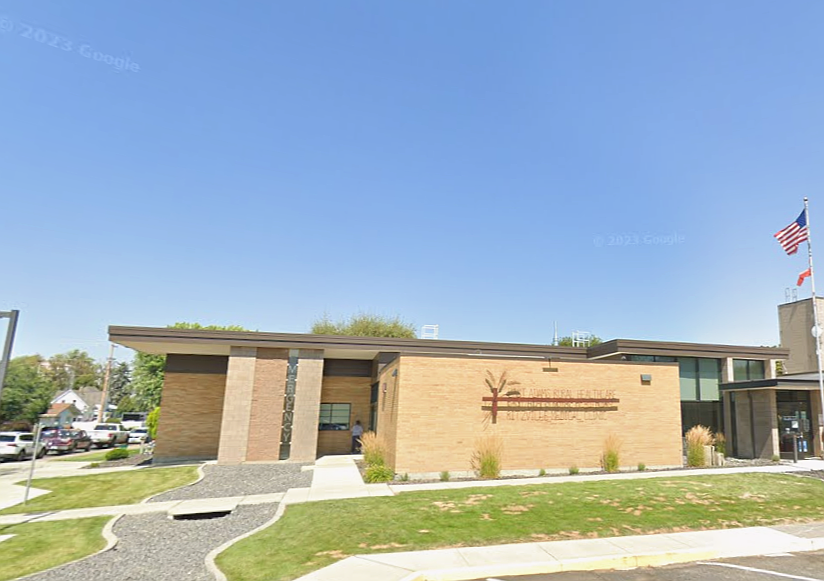
East Adams Rural Healthcare would no longer provide inpatient care if its application for conversion to a rural emergency hospital is approved.
COURTESY PHOTO/EAST ADAMS RURAL HEALTHCARE
RITZVILLE — East Adams Rural Healthcare could be converted to an “emergency rural hospital” as early as this summer.
“The application to become a REH typically takes 90 to 120 days,” said EARH Chief Financial Officer Viola Babcock Tuesday in response to an email from the Columbia Basin Herald. “We’ve had great support from (Fifth Congressional District) Representative Baumgartner. We are already at the final approval stage and expect final approval within the next week or so.”
If EARH’s application is approved, the hospital would no longer be able to provide inpatient care. Ritzville’s license to operate wouldn’t change, Babcock said, but it would have to apply for reclassification to treat inpatients. The hospital is licensed to treat up to 12 inpatients.
“Closing the inpatient and swing bed departments does reduce costs. (Ritzville) didn’t have sufficient inpatient and swing bed volume to cover the costs from 24/7 staffing that is required,” Babcock said.
A swing bed patient is no longer in need of acute care but can continue to stay in the hospital rather than be transferred to a skilled nursing facility, according to the Center for Medicare and Medicaid Services.
Under the emergency rural hospital designation, Ritzville would maintain its emergency room and walk-in clinic. The hospital would keep its laboratory and imaging departments open.
Emergency rooms typically operate at a loss, but Babcock said the ERH designation would give the hospital a different source of funding from the Center for Medicare and Medicaid Services.
“CMS/Medicate financially supports (rural emergency hospitals) with a monthly deposit of $295,000-plus in 2026. Each year that support is increased based on the CMS/Medicare market basket (which is) inflation for healthcare entities based on the annual increase of healthcare costs,” she said. “That support more than covers the loss in the emergency department.”
Because it can’t accept inpatients, people who need to stay in a hospital would be transferred to different facilities. Babcock said that while the rules limit the amount of time patients can be at EARH before they have to be transferred, the hsopital does have some flexibility.
“The (rural emergency hospital) allows for an ‘average’ of 24 hours stay for the year. Most emergency patients are in and out in a few hours, so we could keep patients two or three days, if needed, in what is called an ‘observation’ status,” she said.
Patients that need extended care will have to be transferred, however.
“We are putting into place transfer agreements with surrounding hospitals, so our transferred-out patients will continue to go to facilities based on a combination of factors. Level of care, the patient’s desire and if the facility has an opening are the three most determining factors,” Babcock said.
Ritzville hospital officials announced Feb. 15 that its financial review showed EARH lost about $10.5 million between 2022 and 2025. The hospital hadn’t filed its required audits for those years, and EARH commissioners hired SVZ, a Spokane accounting firm, to catch up on the backlog. The results led hospital officials and commissioners to notify the Washington Auditor’s Office of suspected fraud.
“The situation involving Ritzville hospital’s finances is complex, involving multiple agencies. We cannot comment directly on it, other than to say we have an open investigation,” said Adam Wilson, WSAO assistant communications director, in response to an email from the Columbia Basin Herald.
Wilson said the investigation timeline depends on what investigators find.
“Governments in Washington have a statutory responsibility to report a suspected loss of public funds to our office. Our responsibility is to investigate those losses and, if possible, provide an account of how they were lost and who may have misappropriated them. We follow the facts where they lead us and therefore do not know how long a particular investigation will take,” Wilson said.
Auditors also have to find out if there really was fraud, he said.
“It’s also important to note that not all investigations lead to a determination of misappropriation,” he said. “If we do determine a misappropriation occurred, we publicly report it and file our report with the local county prosecutor, who makes the decision whether to pursue criminal charges.”
As a rural emergency hospital:
East Adams Rural Healthcare would no longer treat inpatients
People in need of additional care would be transferred to other facilities
Would continue to operate its emergency room
Would keep its lab and imaging departments open