
Local REC Silicon plant remains closed as more stock issued
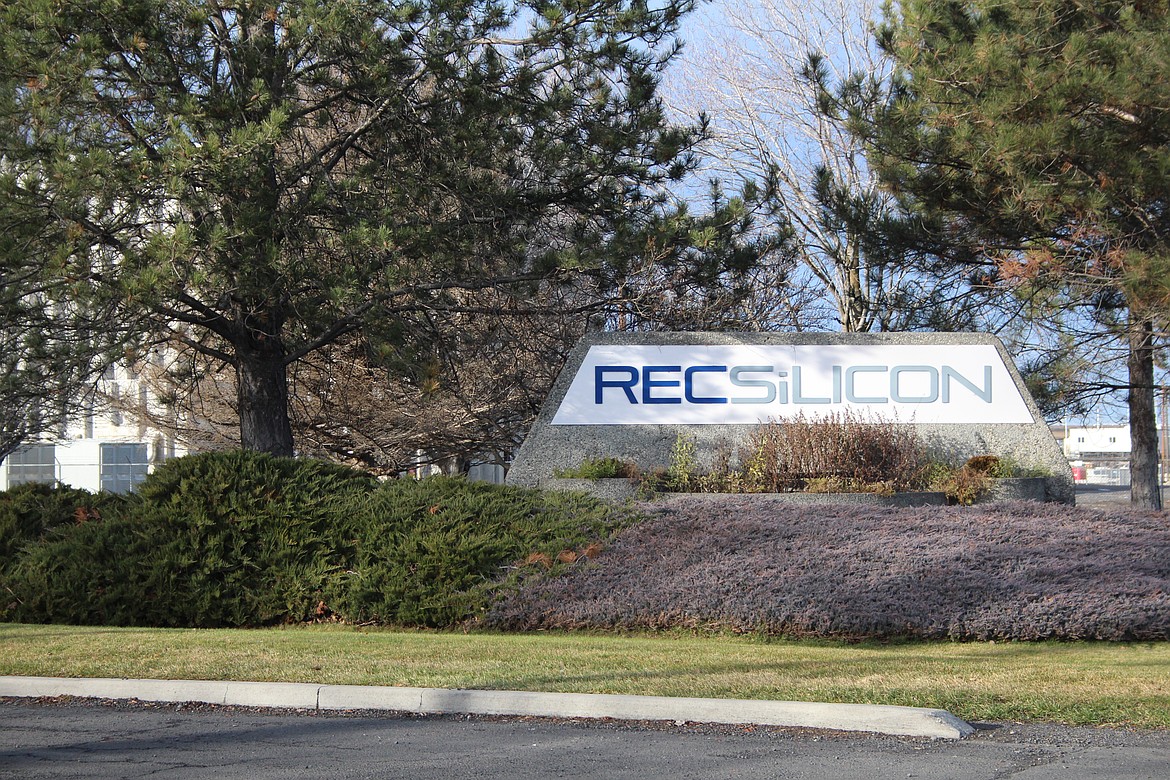
REC Silicon owners will be issuing more stock to raise money sometime this spring. The local facility is closed, but other plants remain open and the local plant is being maintained in the event that it can be reopened.
FILE PHOTO
MOSES LAKE — The Moses Lake REC Silicon facility will remain closed, at least for now, as its owners announced an issuance of new stock to raise money for continuing operations and pay off debt.
“There are no changes to the Moses Lake facility,” said Chuck Sutton, vice president of polysilicon sales and government relations, in an email in response to questions from the Columbia Basin Herald.
The Moses Lake facility was closed in December 2024. The company had been making polysilicon materials that are used in the production of solar panels in Moses Lake, but got out of that business completely when the facility closed. Sutton said in an earlier interview that it was, and is, possible to produce silicon gas in Moses Lake, and the company is keeping its options open for that.
“Equipment involved in the production of silicon gases will be maintained in a safe and recoverable mode that incurs minimal interim costs, allowing the unit to restart with reasonable notice,” according to a company press release issued in December 2024.
The company shut down its Moses Lake operations in 2019 and reopened them again in 2022 before the December 2024 closure.
REC Silicon produces silane gas at its Butte, Mont., facility. In its fourth quarter 2025 earnings report, company officials said the company shipped about 540 metric tons of silane gas from October through December. The company shipped 543 metric tons in the fourth quarter of 2024.
Sales were slightly higher in the fourth quarter of 2025 than they were in the third quarter, when REC Silicon shipped 524 metric tons.
The earnings report said there’s less demand for silane gas in some market sectors like flat panel displays and solar panel components. Production has been affected by uncertainties in trade policy, it said.
The company has been losing money as a result. It has used a series of short-term loans from Hanwa Corporation, its parent company, and other lenders to meet the cost of operation.
REC Silicon owners plan to issue more stock as a way to raise money, with the target of $100 million. The stocks are “fully underwritten,” which means that the underwriters have agreed to buy a lot of the stock. That allows the company to raise the money, even if the stock price falls.
The money will be used to pay back some of the loans and pay for operations, the report said.