
Sales tax on advertising poses threat to local news
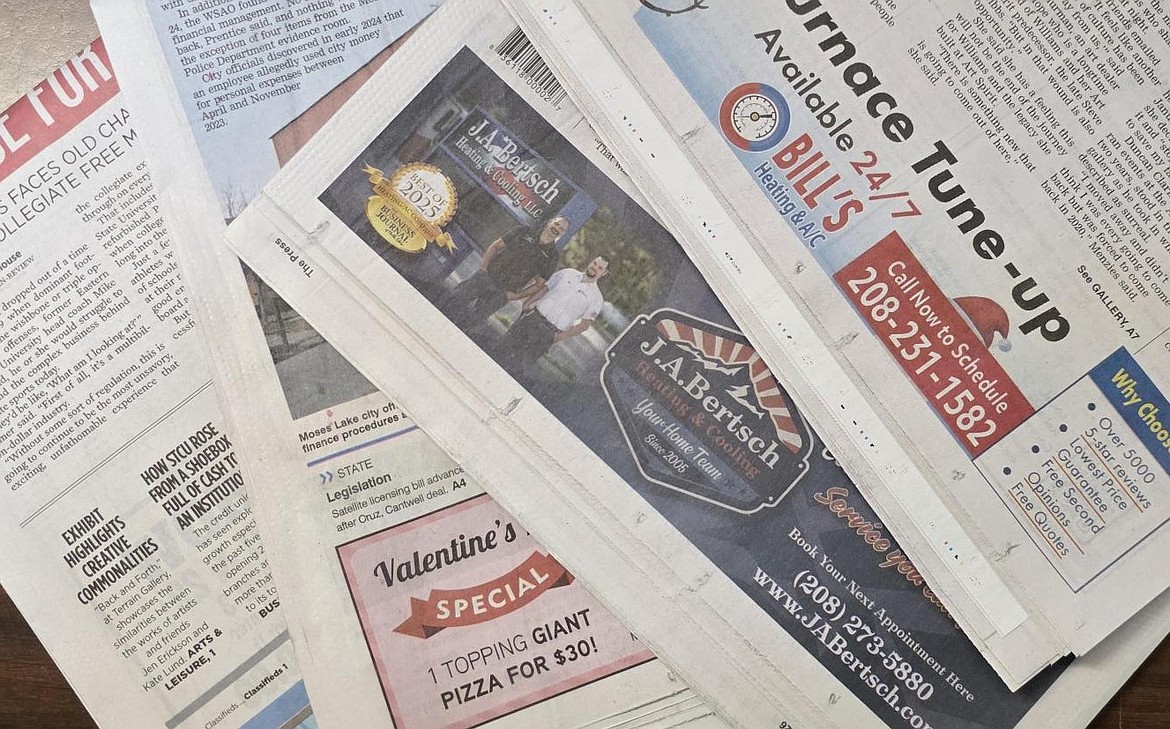
Advertising in newspapers covers the bulk of operating expenses for the publications they're printed in. Under proposed legislation, the taxes assessed against newspapers, especially those that serve small rural communities with a limited advertising base, could seriously harm or altogether eliminate publications. Over the last several years, staffing in newsrooms across Washington has already declined by about 75% on the editorial side of the business.
R. HANS MILLER/COLUMBIA BASIN HERALD
OLYMPIA — Washington lawmakers voted to keep a provision that would extend sales tax on advertising to businesses previously exempt under last session’s digital ad tax, including newspapers and radio and television broadcasting.
Last Monday, Feb. 9, members of the Senate Ways and Means Committee voted to keep section 26 (section 27 in the most recent version of the bill) in Senate Bill 6113. The provision would implement a sales tax on all advertising services if the state loses its lawsuit filed by Comcast in Thurston County Superior Court that challenged last year’s legislation, Senate Bill 5184. Some opponents of the bill argue that, regardless of the outcome of the Comcast lawsuit, the bill would implement the tax, thus rendering the lawsuit irrelevant.
The cable giant filed a lawsuit against the state Department of Revenue, contending that a sales tax on advertising services violates the federal Internet Tax Freedom Act, which prohibits states from levying “discriminatory” taxes on electronic commerce. In other words, the state government cannot tax digital advertising services unless analogous services, such as printed ads in newspapers or on stadium billboards, are taxed too.
Sen. Mark Schoesler, R-Ritzville, proposed an amendment that would remove Section 26 for local broadcasting; however, the amendment was struck down with a voice vote.
If passed, the legislation would impose a sales and use tax rate ranging from 6.5% to 10% to all advertising services, depending on the organization's location.
Ellen Hiatt, executive director of the Washington Newspaper Publishers Association, said the tax would be devastating to not only local papers that already operate on thin margins but all professional media that heavily depend on advertising revenue.
“We're not talking about the guy blogging, you know, the social media critic,” Hiat said in an interview. “We are talking about people who have to invest labor and time in investigating and covering stories in their communities.”
Hiatt explained further that last year’s legislation offered little guidance on how the tax was going to be implemented or enforced, leaving many organizations unsure of its long-term effects.
“If they implement this tax, they are cutting the knees off on an important piece of the fabric of our democracy in this state,” she said.
Rowland Thompson, executive director of the Allied Daily Newspapers of Washington, argued that legislators are not specifically looking to put a sales tax on advertising performed by broadcasters and newspapers, but are pushing Comcast to abandon the lawsuit.
Thompson said that as the state continues to grapple with another multi-million dollar budget deficit and falling revenues, a tax adjustment to protect professional media is not a priority.
“Comcast can't abandon the suit for the reason that they need this tax to be as painful as possible,” Thompson said in an email to publishers statewide. “They need to make an example of Washington so that the other states in which they do business will not go down the road of imposing a sales tax on advertising.”
The sales tax on advertising was a part of a major expansion of business taxes that Democratic lawmakers passed last year, expecting to raise about $1.1 billion in this biennium and $2.7 billion by 2029. The legislation also expanded the retail sales and use tax on other services, including security services and temporary staffing and ultimately received no Republican support from either caucus.
Both Thompson and Hiat have called upon local newspapers, broadcasters, businesses, and community organizations to educate themselves on the bill’s potential impacts and help spread the message to legislators as the session enters its second half.
“(The bill’s) passage ultimately will mean fewer media resources, fewer people doing the job, less information in our local communities, less oversight of our government agencies large and small, and less of the community news that is the glue to various communities across the state,” Hiatt said.
The Capitol is hosting its Newspaper and Broadcast Day on Thursday, Feb. 19, where newspaper and broadcast organizations can lobby with House and Senate leaders regarding the potential tax.